Politics

Read about the latest political news, views and analysis

Why the exams debacle was so predictable – and predicted

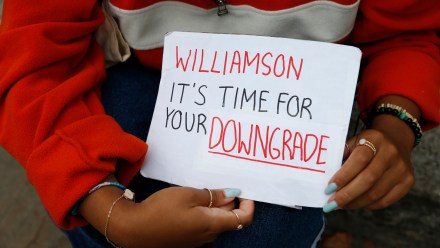
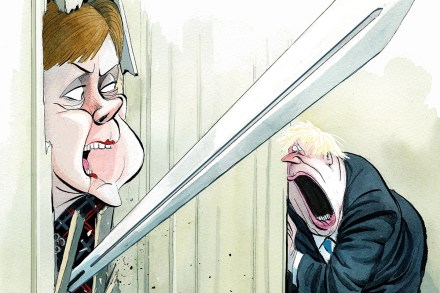
Bit late now, isn’t it, to complain about the exams debacle? Where were they, Angela Rayner, Keir Starmer, the teaching unions, Nicola Sturgeon and the BBC on 18 March when Gavin Williamson fatally decided to scrap this year’s A-levels and GCSEs? If they were throwing their rattles out of the pram, it wasn’t loud enough to be heard.  The grounds for that idiot move was ‘to give, pupils, parents and teachers certainty, and enable schools and colleges to focus on supporting vulnerable children and the children of critical workers'. That, you note, was before the start of lockdown. Yet if ever there was a problem that could be seen a mile off, it was the consequences of this disastrous decision.
The exams U-turn is an act of damage limitation

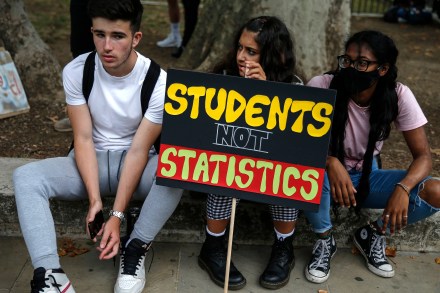
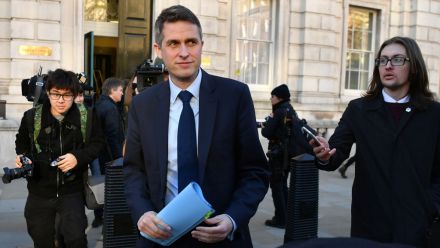
After a bruising few days for Boris Johnson and his ministers over the grading system for A-levels and GCSEs, the government has today performed a U-turn. Following growing outrage both from disappointed students and frustrated MPs, the chair of exams body Ofqual has announced a change in the grading system. In a pre-recorded clip, Roger Taylor said:  Expecting schools to submit appeals where grades were incorrect placed a burden on teachers when they need to be preparing for the new term and has created uncertainty and anxiety for students. For all of that, we are extremely sorry.

In defence of Claire Fox

I have been so unremitting and harsh a critic of the IRA and Sinn Fein since the early 1990s, that Gerry Adams and Martin McGuinness tried hard to have me silenced. Sinn Fein still try to shut me up with the help of libel lawyers, and an army of Shinnerbots hurl insults at me on social media, often begging me to die. I have also worked for years with organisations representing victims of terrorism, including Innocent Victims United, whose spokesman, Kenny Donaldson, recently called the Brexit Party’s endorsement of Claire Fox ‘appalling and indeed borderline contemptuous’ because of her past membership of the Revolutionary Communist Party (RCP) which supported the Provisional IRA, and her refusal to ever account for this.

Is the government about to U-turn on exams?

10 min listen

As the backlash to the government's exams fiasco continued over the weekend, Gavin Williamson has been steadfast in not U-turning. But with GCSE results out later this week and Ofqual's algorithm revealing significant inequalities, is this position sustainable? John Connolly talks to Katy Balls and Fraser Nelson.

Keir Starmer’s potential Brexit playbook

Throughout the last four years, you could be forgiven for thinking that everyone in Britain has been extremely passionate about Brexit one way or another. The truth is, most people are sick to death of the whole debate. This was the reason ‘Get Brexit Done’ was such an effective slogan; most voters wanted the topic laid to rest. It is this general apathy that I believe is informing Keir Starmer’s approach to Brexit as Labour leader, combined with the knowledge that while most people are sick of Brexit, we are about to enter a whole new phase of it that can’t be ignored. Passionate Remainers complain that Starmer hasn’t been anti-Brexit enough since he became leader – where was the plea to extend the transition period?

Why Gavin Williamson must go

You could not make it up – and if you did, no-one would believe you. I am trying to think of a more comprehensively farcical example of total, grotesque ineptitude in the history of modern British politics. Trying, and failing.  Fortunately, there are two instant remedies. The first is a U-turn: dump the algorithm and grant pupils the grades which their schools had predicted. The same would apply to GCSEs. This is anything but an ideal outcome, but it would at least prevent the collapse of the university admissions system, mass legal action and mass unhappiness. The second also involves dumping – of Gavin Williamson. It seems inconceivable that he is still clinging to office.

Russell Brand: Margaret Thatcher was a ‘woman-man’

Was Margaret Thatcher a feminist icon? Given that the Iron Lady was Britain's first female prime minister, you would think so. But not according to Russell Brand.  The comedian and Corbyn fan has released a video in which he explains feminism. Brand then asks whether Thatcher – who defied the odds to rise to the very top of British politics – could in any way be seen as an inspiration to women. 'No', according to Brand. Why? '...because the values she extolled, espoused and conveyed were male values. She was a woman-man. She was a very, very powerful person...but her premiership did not lead to more opportunities for women...conventional female values such as nurture, caringness, equality'.

Why Keir Starmer is failing against Boris Johnson

The way to beat Boris Johnson is to offer a stark contrast to his political persona. At all points radiate seriousness, professionalism and competence and in times such as these the electorate will soon tire of his joshing and clown-like antics and flock to your banner instead. That’s the theory anyway and it seems to be working fine for Nicola Sturgeon, as evidenced by the SNP’s stratospheric poll ratings. But it isn’t working for Keir Starmer, whose Labour party remains way behind Johnson’s Tories in UK-wide polls, despite the Labour leader matching Sturgeon’s demeanour comb for comb and furrowed brow for furrowed brow. Starmer overshadows his own party’s top team every bit as much as Sturgeon does hers.

Coronavirus and the BBC’s anti-American bias

One keeps hearing, particularly on the BBC, that the United States is ‘the worst in the world’ for coronavirus, stated as fact. The next worse, by the same BBC measure, is Brazil. Not coincidentally, the BBC hates the presidents of both those countries. Statistically, this is fiction, although neither Trump nor Bolsanaro has done well. It is true that the US has more known cases than any other country, but comparisons are hard since figures in countries like China and Iran are highly unreliable.  Besides, the key measure is proportion, not overall size. The most telling Covid-19 statistic is deaths per million of population. Currently, the United States stands at 498, Brazil at 485. The United Kingdom, however, comes in at 699. Belgium is the world-beater, at 864.

Public Health England scrapped over handling of Covid crisis

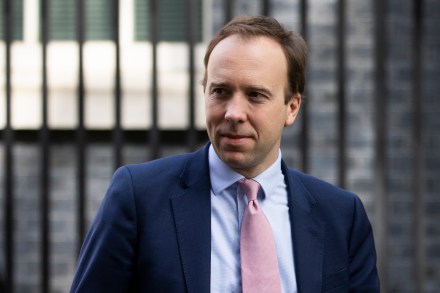
Health Secretary Matt Hancock is set to scrap Public Health England (PHE) – the body that was tasked with preparing the UK for a pandemic – according to the Sunday Telegraph. The paper reports it will be replaced by the National Institute for Health Protection. Its remit will include pandemic planning and oversight of the NHS Test and Trace programme. The government is moving quickly, with plans to overthrow PHE and have the new body up and running by September. The timeline of a potential resurgence of Covid-19 this autumn is firmly in mind. PHE, a seven-year-old quango, has faced waves of criticism during the Covid crisis.

Dawn Butler’s VJ Day blunder

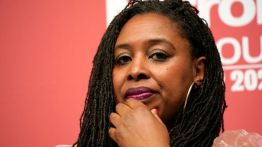
When Dawn Butler was stopped by police last weekend she was not in a forgiving mood: It later turned out that the vehicle Butler was travelling in was stopped after an officer made a mistake when typing in the car's number plate. 'As a result of an officer making a human error as he inputted the car registration, the Police National Computer returned details of a car from another part of the UK', the Met's deputy commissioner Steve House said. But it seems that Butler herself isn't immune from making a typo. After attending an event to mark VJ Day today, the Labour MP got her J and E muddled up, using the VEDay75 hashtag by mistake: Don't worry, Dawn, it can happen to the best of us...

Kaya’s story: why the government’s exams triple lock doesn’t help

20 min listen

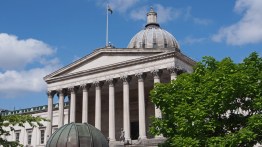
Kaya Ilska is a free school meals student, coming from a single mother family. She is incredibly bright - and was predicted 4 A*s by her teachers, a set of grades high enough to meet her offer to study Medicine at UCL. But the government's exams algorithm this week downgraded her results down to AABB, which means she not only misses the UCL offer but also her back-up at Cardiff. On the podcast, Kaya and Fraser go through her options to conclude that the government's so-called 'triple lock' does very little to help cases like hers.

What price is too high in the war against Covid?

Wars reshape states. The powers and size of governments grow. Economic activity is controlled or subsidised. Liberties are curtailed. Identity cards, rationing, censorship: the rights of the individual and freedom of speech are subjugated to a national effort to win the war. Lifestyles change, and so do societies. The struggle against Covid, if not exactly a war, is beginning to have a similar impact on our economy and society. Not since 1939 has government action transformed societies to the extent we have seen in the last six months. Swathes of the economy have been shuttered, while states have propped up businesses and paid millions of workers’ salaries.

Should France have been kicked off the greenlist?

12 min listen

After much speculation, France has been put on the quarantine list, along with Netherlands, Monaco, and Malta. But do the numbers really back it up? Cindy Yu talks to Fraser Nelson and Kate Andrews about this decision. Also on the podcast, further lockdown easing and, are schools actually returning?

Boris’s French quarantine makes no sense

Covid-19 has brought us a Dunkirk spirit alright. Once again we have hundreds of thousands of Brits in a mad scramble to get back to Britain from France, as soon as a flotilla of ships will let them. It is just that this time around it feels a little more self-inflicted than last time. Have ministers learned nothing from the fiasco of Spain a couple of weeks ago? Holidaymakers then were given a few hours notice before quarantine rules were brought in, leaving many desperately trying to book flights at horribly inflated prices or else risk having to self-isolate for 14 days upon their return. It went so well that the government has repeated it with France, where 450,000 Britons are currently thought to be on holiday.

Keir Starmer would be wise to avoid a Lib Dem alliance

The myth that is developing goes like this: Labour can’t win enough seats to form a majority government at the next election, however much the Tories may tank. They will need the SNP and almost certainly the Liberal Democrats to rule. Therefore, Labour needs to stand down in English seats where the Lib Dems have a clear shot at the Conservative party. There are several problems with this myth, but one that isn’t being talked about: the price the Lib Dems would extract for bringing a Labour minority to power would be steep, and not worth it from a Labour perspective. If Labour leader Keir Starmer is wise, this must inform Labour’s strategy in Lib-Con seats at the next election.

Here’s Nicola: can Boris Johnson stop Scottish independence?

36 min listen

Poll after poll is showing the surge in support for Scottish independence - so what can Boris Johnson do about it? (00:35) Plus, how many more pandemics does nature have in store for us? (13:20) And finally, is it time to bring back the British holiday camp? (28:00).With our Scotland Editor Alex Massie; commentator Angela Haggerty; author of The Pandemic Century Mark Honigsbaum; ecologist Peter Daszak; Reverend Steve Morris; and historian Kathryn Ferry.Presented by Cindy Yu.Produced by Cindy Yu and Sam Russell.

Levelling down: the results day fiasco

17 min listen

It's A-Level results day and much as expected, a large minority of A-Level grades from across England, Wales, and Northern Ireland have been downgraded. For some schools and colleges, more than half of their students have been affected. On the podcast, Cindy Yu talks to Fraser Nelson and Mary Curnock Cook, former head of Ucas about the government's approach, educational inequality, and why a new cap on university places may have made the situation a whole lot worse.