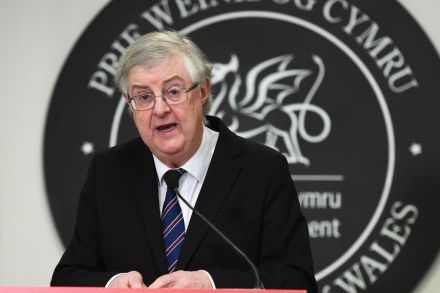
Theo Davies-Lewis

Theo Davies-Lewis is an associate director at FGS Global and a political commentator on Welsh affairs

‘Independence is scary to many’: an interview with Plaid’s new leader

From our UK edition

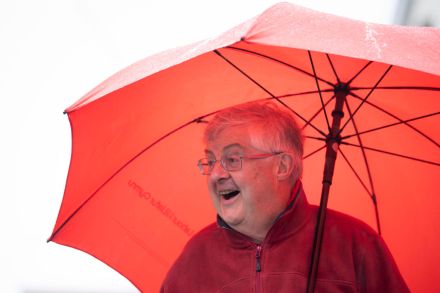
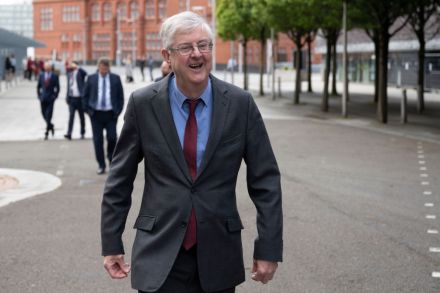
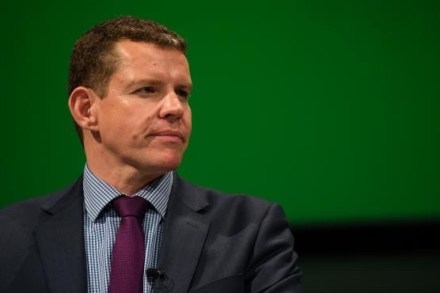
Plaid Cymru’s office in the Senedd is quiet. This is perhaps apt for a party that finds itself lost in the political wilderness. Unlike its sister party, the SNP, Plaid are no closer to government after two decades of devolution. To boot, they have also recently found themselves awkwardly overshadowed by a report that found misogyny, harassment and bullying are rife in the party. Its former leader, Adam Price, heralded not long ago as the key to unlocking the dream of Welsh independence, was forced to step down days after its publication.   The opportunity for Plaid Cymru will be a Keir Starmer government in Westminster, ap Iorwerth suggests I am meeting his replacement, Rhun ap Iorwerth, after his coronation as Price’s successor.
The brutal downfall of Plaid Cymru’s Adam Price

From our UK edition

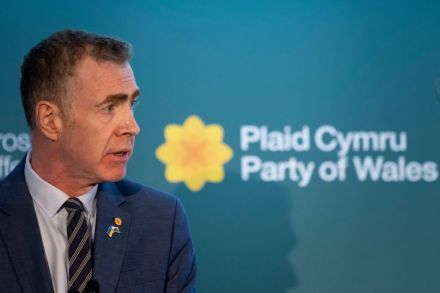
The mantra was simple: ‘Yes Wales Can’, as Adam Price declared after ousting Leanne Wood in a brutal leadership contest in 2018. Wood had been unable to halt the ruthless coup launched by Y Mab Darogan, the son of prophecy, as Price was known to his followers. Plaid Cymru has been in Labour’s shadow in Wales for close to a century. Yet Price was deemed to have the intellect, oratorical flair and media savvy to launch a nationalist turnaround to replicate the fortunes of the SNP. At times, if paraphrasing Obama was any evidence, Price indulged the intoxicating legend that surrounded him. It was bound to end in tears.

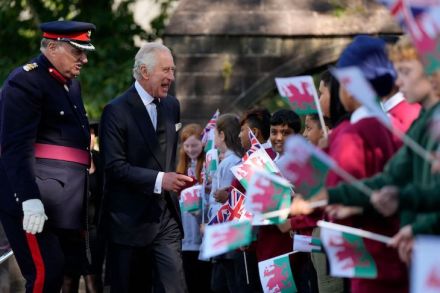
How Welsh nationalism shaped the King

From our UK edition

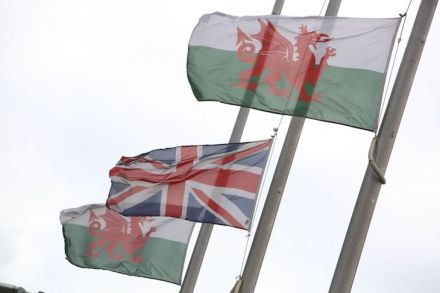
Royal Mail needs a history lesson. In preparation for this weekend it has dedicated four special post-boxes emblazoned with a coronation emblem and Union Jack, sent to every corner of the UK. But what did it expect by placing the box in Cardiff city centre directly outside the pub named after Owain Glyndŵr, rebel and hero of the Welsh independence cause? Within hours it was covered in nationalist and republican stickers. How amusing, especially during the week of the coronation, that this small protest offered a glimpse into the real tension that exists between the royal family and Wales. It is a complicated relationship, mostly because the Welsh are a complex and disparate people.

The backlash to ‘renaming’ the Brecon Beacons is a gift to nationalists

From our UK edition

‘As tedious as a tired horse…worse than a smoky house’ was how Shakespeare’s Hotspur described Wales’s national hero, Owain Glyndŵr. Perhaps, as the late Jan Morris wrote of these words for The Spectator, it could be a timeless characteristic of all Welshmen. The Welsh can be defensive, melancholic and (whisper it quietly) prone to self-pity, particularly when it comes to relations with England. Having the English next door, medieval conquerors turned modern ignorant neighbours, will always transfix Welsh imagination and provoke tension. Yet how futile Anglo-Welsh relations have become that the modern-day battlefield of two nations with a rich, shared history, has been entangled into the culture war, with the ‘renaming’ of the Brecon Beacons national park.

We don’t need Westminster: An interview with Wales’s ‘radical’ Archbishop

From our UK edition

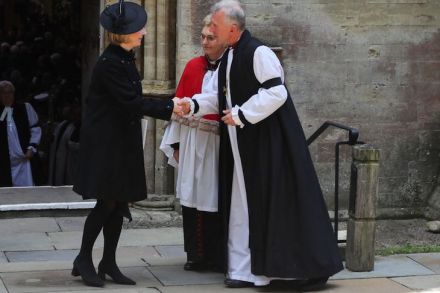
Andrew John is a ‘radical’, not a politician – or so he claims. The Archbishop of Wales stated his mission when he was elected to the post barely two years ago after a swift and overwhelming majority among the Church in Wales’s electoral college. John is low-key, humble and mild mannered in person, but is also unafraid to speak his mind: he has aired uncompromising views on migration, integrity in public life and nationalism. His most outspoken opinions are on the issue of Welsh independence. Earlier this year, John went further than any of his predecessors in expressing his personal thoughts on the subject: he said the 'situation we have received from Westminster is not sufficient' – and that he is 'in favour of independence' to help 'solve' the country's problems.

Welsh rugby is on the brink of collapse

From our UK edition

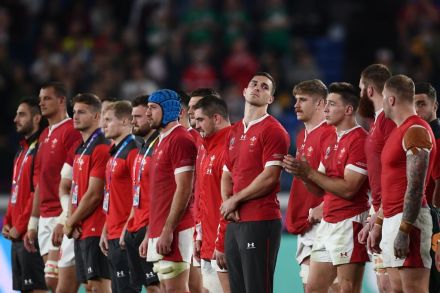
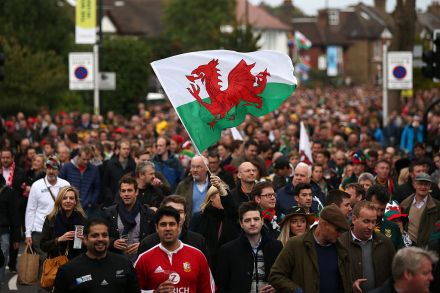
Rugby is a gladiatorial game – as Wales’s Six Nations match today against Ireland will surely prove. But even the greatest commentators in the sport, such as the late Eddie Butler and Cliff Morgan, would wince reading the script of Welsh rugby’s spiralling decline.  Wales has been more reliant on rugby to form the guardrails of national identity than almost any other country. Now the sport faces an ‘existential crisis’ in Wales. If anything those words, from the new head of the Welsh Rugby Union (WRU), are an understatement. They follow a BBC Wales investigation into the WRU last month which unearthed serious allegations of misogyny, sexism and racism inside the governing body.

The race to replace Mark Drakeford has already begun

From our UK edition

In Britain it is rare for politicians to be able to decide how their career ends. But that’s not the case in Wales. Welsh Labour leaders enjoy such a tight grip over events that they can pick the exact moment they leave the damp stage at Cardiff Bay, even after a remarkably long time in power. Rhodri Morgan served as First Minister for close to ten years; Carwyn Jones was in the job for nine. Neither experienced serious challenges to their leadership.  In the absence of parliamentary drama, electoral upsets and competent opposition, this slumberous pattern will continue. After four years, Mark Drakeford has indicated it will soon be time for him to go.   As so often with the First Minister there has been little theatre when it comes to his departure.

How William can win over the Welsh

From our UK edition

‘The demands on a Prince of Wales have altered,’ 20-year-old Charles said at his Caernarfon investiture in 1969, with some trepidation. ‘But I am determined to serve and to try as best I can to live up to those demands, whatever they might be in the rather uncertain future.’ Half a century later that future is certain: William has become the new Prince of Wales. The demands of the role are far greater than when Charles spoke in North Wales some 50 years ago. And every modern Prince of Wales faces a dilemma: how to deal with the Crown’s complicated relationship with the Welsh. Charles established a high bar over half a century.

A new era of Welsh football has begun

From our UK edition

As Britain toasted seven decades of the Queen’s reign outside Buckingham Palace, the Welsh basked in their 1600-year survival. Dafydd Iwan, the republican nationalist folk singer, bellowed Yma O Hyd around the Cardiff City Stadium as Wales took on Ukraine in their World Cup qualifier. A simple title – We’re Still Here – makes you want to weep and, then, fight.  What was once a marginal protest tune, composed at the height of Thatcherism after Wales rejected devolution in 1979, is now an apt anthem for spurring on Welsh footballers. Until recent years they were not a celebrated or well-known species but Gareth Bale, Aaron Ramsey and Joe Allen have changed all that.

Mark Drakeford’s mission to create a Welsh super state

From our UK edition

Few appreciate how mischievous Welsh devolutionists are when it comes to embedding themselves in the national consciousness. Take the Welsh translation for ‘first minister’, prif weinidog, which means ‘prime minister’. What was once a linguistic trick has now become an informal touch point in Wales. Regardless of his title, Mark Drakeford behaves, looks and sounds like a powerful national leader rather than a devolved minister. Few politicians exude such confidence but it should be no surprise: in the last year, Drakeford guided Welsh Labour to two triumphant victories in national and, more recently, local elections. He lectures the British Prime Minister on the future of the Union and then calls for him to resign.

Why the Welsh are turning their backs on rugby

From our UK edition

In the space of a few days last month, two games were held a mile apart in Cardiff. The first was the concluding episode of the Six Nations tournament, the second a crucial World Cup football qualifier. Beyond jubilation and disappointment, the occasions exposed the gulf between the two most popular sports in Wales: the former highlighting the crisis of datedness that has engulfed rugby, the latter demonstrating why football has gone on to reflect a more confident, vibrant and relevant Welsh identity. The age-old debate of what is Wales’ national sport has never been so easy to settle.

Interview: Rowan Williams on Wales, independence and the King Lear of Westminster

From our UK edition

Rowan Williams is no stranger to politics. As Archbishop of Canterbury he was as comfortable criticising Tony Blair over Iraq as passing stern judgment on David Cameron’s austerity measures. Even in these pages, at the height of the global crisis in 2008, Williams was arguing that Marx could teach us a thing or two about financial markets. Still, in recent weeks it just might be that he has embarked one of his most controversial projects yet: a commission to help define Wales’ constitutional future in the UK. As the spectre of Scottish independence haunts Westminster and Welsh nationalism gains momentum, it is a timely mission. In October, Williams was unveiled as head of a Welsh government independent commission on the constitution, set up by Mark Drakeford.

Wales is terrified of a repeat of the Aberfan disaster

From our UK edition

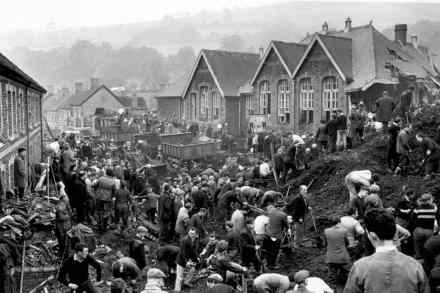
While the Westminster bubble has spent the last few weeks focusing on Tory sleaze and COP26, the Welsh have been facing a far more consequential challenge. The problem is the country’s coal tips: monstrously black, heavy slag heaps, omnipotent and ever-present reminders of the great industry that once dominated Britain’s economy and fuelled the furnace of the Empire. Rarely do I find myself agreeing with the rabble rousing Rhondda socialist, Leanne Wood, but the former Plaid Cymru leader (who unexpectedly lost her South Wales seat in the Senedd election in May) sounded a prescient warning this month. She argued that unless action was taken to manage these tips properly, another Aberfan was ‘on the cards’.

It’s time to upgrade the office of the Welsh first minister

From our UK edition

Some of the most revealing detail from newly released 1997 government files relate to Welsh constitutional affairs. The Home Office advised against the Queen opening the new Welsh Assembly, for instance, judging the institution to be ‘wholly subordinate’ to Westminster even before the people of Wales had voted for it. Tony Blair and John Prescott even thought the leader of the Assembly should be known as ‘Chief Executive’, unlike the ‘First Minister’ title bestowed in Scotland. It has taken more than two decades, but attitudes to Welsh politics have finally changed, from both the public and politicians in Wales and Westminster.

Welsh independence faces an existential crisis

From our UK edition

Wales has never embraced the notion of independence and perhaps never will. So it was unsurprising that YesCymru, a grassroots nationalist movement formed to support Scottish secession in 2014, was more or less irrelevant for the first five years of its existence. Its official launch in 2016 went without notice. Wales’ decision to follow England – not Scotland – in voting to leave the EU also complicated arguments for separation. And despite a march in 2019 through Merthyr Tydfil featuring celebrity guests, the group’s 2,000 members at the start of last year was a modest figure – signalling they had little hope, like Plaid Cymru, of winning popular support. Then Covid came along, with constitutional fissures growing across the UK and Wales.

Drakeford draws up his battle lines on the Union

From our UK edition

A little over two years ago, a relatively unknown First Minister of Wales unveiled his blueprint to repair intergovernmental relations across the UK. As he delivered the annual Keir Hardie lecture at Merthyr Tydfil College, Mark Drakeford said that he had been forced to ‘take up the baton where the UK government itself has dropped it.’ A reform of the constitution was deemed ‘both urgent and vital’ if the Union was to survive post-Brexit, while a ‘fairer, more equitable and more sustainable settlement’ should follow. Such language peppered the most provocative constitutional speech by a modern Welsh politician. The trouble was that hardly anybody listened.

King of Fortress Wales: an interview with Mark Drakeford

From our UK edition

Mark Drakeford sits opposite me in a small conference room on the third floor of Cathays Park, the nucleus of Welsh government operations during Covid-19. The First Minister of Wales is in bullish mood. Last month, he almost single-handedly delivered a thumping election victory for Labour in Wales – securing 30 seats in the Senedd and extending Labour’s 22-year-grip over the devolved parliament. The party in Wales enjoys starkly different electoral fortunes to its comrades across the border, with Drakeford now Labour’s only leader with experience winning national elections across the UK. I meet him a few hours after the first devolved Covid summit, where he and other devolved leaders spoke with the Prime Minister, the Chancellor and Michael Gove.

Welsh Labour proves again it’s a distinctive, winning brand

From our UK edition

After the news of a Tory landslide in Hartlepool was announced early Friday morning, senior Welsh Labour figures were worried. The scale of defeat in the North of England was worse than expected, and represented nothing short of a disaster for Keir Starmer’s leadership. Could the same fate be expected for Labour’s Red Wall in North and South Wales, which started to crack in the 2019 general election? The answer, in short, is no. Welsh Labour stormed to a breathtaking victory in the Senedd election, gaining a seat from its 2016 hall to win thirty of the sixty places in Cardiff Bay.

Number 10 should fear a Welsh nationalist coalition

From our UK edition

As Disraeli’s famous maxim goes: England does not love coalitions. In Wales, by contrast, we can’t get enough of them. Throughout the devolved era deal-making has created and sustained governments, including the current Labour-led administration – backed by the sole remaining Senedd member for the Liberal Democrats, Kirsty Williams, and the independent statesman Lord Elis-Thomas. After the votes are counted in next month’s Welsh election, history looks likely to repeat itself. A slurry of recent opinion polls project various outcomes on May 7 but none suggest an outright majority for any party.

Wales’s election is finally heating up

From our UK edition

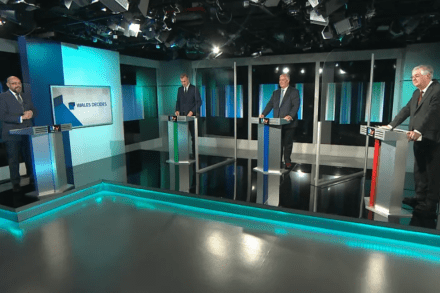
You could be forgiven for forgetting that there is an election happening in Wales. The looming possibility of an SNP majority in Scotland, violence on the streets of Belfast and the death of the Duke of Edinburgh have led to a somewhat lulled campaign in recent weeks. Thankfully, last night’s ITV Wales television debate got things going, to a point. First Minister Mark Drakeford was at the crease to defend his government’s performance throughout the pandemic, as well as Welsh Labour’s record over 22 years in Cardiff Bay. Snapping at his heels was Andrew RT Davies, the Welsh Conservative leader, and Plaid Cymru’s Adam Price, regarded generally as the most impressive debater.