Lee Jones

Lee Jones is reader in International Politics at Queen Mary University of London.

Online learning is bad news for students

From our UK edition

Education Secretary Gavin Williamson's announcement that universities can resume face-to-face teaching this autumn has been welcomed by many students. But vice-chancellors are not so happy about the news. Most Russell Group universities have said they will continue to keep some elements of their teaching online – so-called 'blended learning' – revealing their opportunistic embrace of a digital 'new normal'. For cynical university leaders, it seems that lockdowns weren’t a disaster, but an opportunity to accelerate their pre-existing plans for digital education. Since the disastrous marketising reforms of 2011, most universities have been locked into a ferocious competition to attract students and maximise fee income.

Students are trapped between consumerism and safetyism

From our UK edition

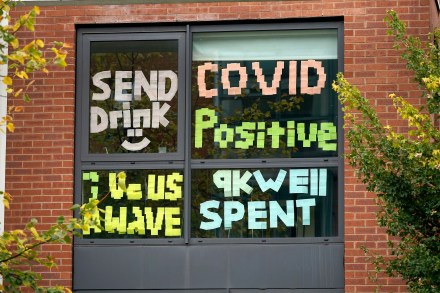
Some of our most illustrious universities now look more like juvenile detention centres, all in the name of stopping the spread of Covid-19. This last week has seen police raids and strict lockdowns on students' lives, many of whom will have been leaving home for the first time. Young people compare their campuses to prisons, complaining of illegal detention and displaying only half-joking distress messages in their windows — which university authorities have then ordered them to remove. Even where infections are absent, students are stuck in their rooms, attending classes online, which they could have done from home.

The myth of China’s ‘debt-trap diplomacy’

From our UK edition

It is hard to remember now, but just five years ago David Cameron’s No. 10 was declaring a ‘golden era’ of Sino-British ties. Now the US sees China as a ‘strategic rival’ and Britain has joined a growing coalition of Western nations attempting to limit Beijing’s power. There are certainly good reasons to be wary of China’s regime. But there’s also a clear risk that growing Sinophobia distorts the reality of Chinese behaviour, which is often far less strategic than is widely supposed. This is particularly clear with respect to China’s ‘belt and road initiative’, an attempt to build a rail and maritime trade network across the globe. Launched in 2013, the belt and road is Xi Jinping's signature foreign policy.

The A-levels fiasco will cripple our crisis-ridden universities

From our UK edition

The fiasco over A-Level results has only deepened the suffering of a university sector mired in market-driven chaos. Analysis suggests that, thanks to the U-turn on predicted grades, as many as 100,000 students could now meet the entry requirements for their first-choice university. The usual figure is 40,000.  Universities simply cannot accommodate this many additional students. Indeed, they cannot actually accommodate – physically or in terms of teaching staff – their existing students under social distancing regulations, which is why all teaching is being shifted online for 2020/21. And yet, universities feel not only morally obliged, but perhaps also legally mandated, to try to do so.