Politics

Read about the latest political news, views and analysis

Boris needs a minister for banana skins

Every prime minister needs a Willie, said Margaret Thatcher to a soundtrack of great national tittering. She was of course referring to William Whitelaw, her massively experienced deputy upon whose advice she relied to moderate her zanier impulses and views. Whitelaw fitted the bill as a non-ideological Conservative who had pledged his loyalty to her and genuinely had no further hankering for the top job himself, having been roundly defeated by Thatcher in the Tory leadership contest of 1975. Just one of Whitelaw’s responsibilities was to act as ‘minister for banana skins’, using his man-of-the-world and resolutely non-intellectual outlook to spot impending problems and put forward practical solutions before they became full-blown crises.

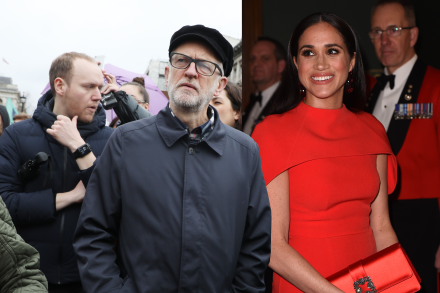
When Corbyn met Meghan

What happens when a lifelong anti-monarchist meets a pair of vocal young royals? Might one expect a statement of principles from the republican, politely reminding the couple of their illegitimacy as would-be rulers? Or perhaps just a quiet detachment, civil but aversive.  It seems that when Jeremy Corbyn and his wife Laura Alvarez met Harry and Meghan, the foursome actually hit it off. According to the Sunday Times, the two couples met at Westminster Abbey back in March during the annual Commonwealth Day.

Scotland’s Hate Crime Bill would have a chilling effect on free speech

Among the encroachments on Milton’s three supreme liberties contained in Humza Yousaf’s Hate Crime Bill is a cloturing of the debate on gender identity and the law. Proposals to remove medical expertise from the gender recognition process have either stalled or been shelved, but not before their radical scope prompted a lively dispute about the ethics of gender identity, sex-based rights and the freedom to dissent. That freedom will be meaningfully reduced in Scotland if the Hate Crime Bill becomes law because it is a piece of legislation that begins from the position that all legitimate debate has already concluded. The Bill creates an offence of ‘stirring up hatred’ against a list of protected characteristics, including ‘transgender identity’.

Spectator Out Loud: Lionel Shriver, Simon Cooper and Gerri Peev

22 min listen

On this week's podcast, Lionel Shriver says that the real determinant of coronavirus isn't race - it's obesity (01:00) Simon Cooper asks whether the return of beavers to English rivers is really something to be celebrated (09:35) Gerri Peev asks why the European Union keeps backing Bulgaria's kleptocratic government.

Rejoice for the return of the church choir

Not all coronavirus research sounds like fun, but wouldn’t you just loved to have been at the session where 25 choristers were asked to sing Happy Birthday at varying volumes to determine whether or not it would be safe for choirs to get back to business. The exercise was carried out by academics collaborating with Public Health England (while it lasted) and the Department for Culture. And you know what? It turns out that the quieter the singing, the lower the risk of transmitting droplets. The researchers found that singing did not produce much more aerosol than speaking at a similar volume, but singing or speaking loudly increased the production of droplets by a factor of between 20 and 30 compared with lower volumes.

Without Black Wednesday there would have been no Brexit

Last Sunday, BBC Radio 4’s The Reunion devoted 40 minutes to ‘Black Wednesday’, as our exit from the ERM was mistakenly called. No one mentioned that the underlying aim behind the ERM was to help create the conditions for a European single currency, and that our falling out ensured that Britain would not join.  Only in the 39th minute of the programme, did anyone — Kenneth Clarke — point out that ‘Europe’ was at the heart of the matter. If Black Wednesday had not exposed in one day’s trading the folly of the euro project for Britain, there would almost certainly have been no Brexit. No one came near to discussing this — a feat comparable to remembering Dunkirk without noting that it was followed by the Battle of Britain.

New polling: Half of Brits think Scotland will break away

Boris Johnson is desperate to avoid becoming the prime minister who oversees the break-up of the Union, yet it appears many voters are already resigned to the prospect of an independent Scotland.  A new poll for Coffee House has revealed that 46 per cent of Brits think it's likely that Scotland will leave the UK within the next ten years. Only a quarter believe such an outcome is unlikely. The survey of 2,000 British voters by Redfield & Wilton Strategies found that: Around 34 per cent think Scotland should become an independent country, compared to 46 per cent who disagree.

Britain’s £2 trillion debt problem

12 min listen

UK debt has hit £2 trillion, the Office for National Statistics said today - an increase of over £200 billion on last year. What does this mean for the economy, how does the UK compare to the rest of Europe, and does Boris Johnson plan to keep on spending? Katy Balls speaks to Fraser Nelson and Kate Andrews.

Brexit blame game as latest talks stall

Despite Boris Johnson's call for Brexit negotiations to speed up, the seventh round of talks has today ended with little progress. Neither side is bothering to suggest the latest round was particularly productive. Instead, the comments today from Michel Barnier and the UK's lead negotiator David Frost were focussed on attributing blame for the current deadlock. Barnier said that, if anything, the talks had at times 'felt as if we were going backwards more than forwards'. His outlook for a potential deal is gloomy – suggesting it seems 'unlikely'.

Is this the end of American democracy?

21 min listen

Joe Biden accepted the Democratic Party's nomination at their virtual convention last night, bringing his three-day coronation to an end with a well-received speech. Throughout this year's DNC, speakers have warned that America's political foundations are at stake in the upcoming election - Barack Obama urged voters not to let the Republicans 'take away your democracy'. Is the country on the brink, and what's the verdict on the Democratic convention? Matt McDonald, managing editor of Spectator USA, speaks to Matt Purple, senior editor at the American Conservative.

Joe Biden’s Republican Convention

Joe Biden’s range of emotional expression has narrowed with age – when he wants to convey feeling now, he shouts. Anger is the only thing that gets through, even when he’s trying to be hopeful or inspiring. And his acceptance remarks at the Democratic convention were well short of inspirational: the nominee didn’t seem tired, but his words did. From the first day of the convention, viewers had to wonder, ‘Why is Joe Biden the nominee of this party?’, a party that neither looks nor sounds like the almost octogenarian ex-VP. Biden has testified to his friendships with segregationists in the Senate. He was the sponsor of a historic anti-crime bill.

Ending the eviction ban makes sense

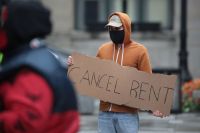
With GCSEs out of the way, we didn't have to wait long for the next campaign to make out the Tories to be a bunch of heartless monsters – and for the Tories to fold. This one revolved around the temporary ban on evictions for tenants of privately-rented properties, which was due to come to an end on Monday but has now been extended for a month. Shadow house secretary Thangam Debbonaire took to Twitter this morning to denounce it as an ‘extraordinary thing to do’, to lift the ban when so many people are facing problems paying their rent. That there are a great number of tenants in financial difficulty is clear. According to the charity Shelter, 227,000 private tenants have fallen into arrears with their rent.

University Challenge: the next education mess

31 min listen

While the government’s U-turn on A-level and GCSE results has been widely welcomed, universities are still in a dire state – why? (00:55) Plus, has Boris Johnson got the right approach in his war on fat? (15:00) And finally, are illegal raves during the pandemic socially irresponsible, or just young people sticking it to The Man? (25:45)  With academic and author Matthew Goodwin; chair of the Education Select Committee Robert Halfon; Spectator columnist Lionel Shriver; weight loss doctor Andrew Jenkinson; Spectator contributors Leaf Arbuthnot and James Delingpole. Presented by Cindy Yu. Produced by Cindy Yu, Max Jeffery and Alexa Rendell.

Where will the next local lockdown be?

10 min listen

Birmingham and Oldham are on the brink of reentering lockdown, with cases in both rising significantly in comparison to the rest of the country. But how severe is the outbreak, and can the government risk shutting down the UK's second largest city? Cindy Yu speaks to Kate Andrews and Katy Balls about the contenders for Britain's next local lockdown, and also asks whether there are alternatives to the 14-day quarantine for returning holidaymakers.

Don’t put Oldham into lockdown

The Manchester Evening News reports that political tensions are simmering as Oldham battles to avoid lockdown. Manchester itself could break through the 50 cases per 100,000 level by the end of the week – placing the city in the ‘red alert’ bracket. Andy Burnham, Mayor of Greater Manchester, is opposed to Oldham going into lockdown, saying he would like no new restrictions on Oldham beyond those already in place. He sent out a tweet last night with data showing that cases are coming down. In the week ending the 8th of August, there were 109.7 per 100,000 in Oldham: in the week ending the 15th cases were down to 83.1 per 100,000. Data from the Digital.nhs.uk 'Progression dashboard' is more up to date. It shows Oldham at the top of the dashboard with 70.

Is this the end of the line for public transport?

News that rail fares are to rise by 1.6 per cent in January, and public transport fares in London by 2.6 per cent, would normally be met with outrage – how dare they jack up the fares again when the trains are late and I can’t get a seat. Yet this time around the news has hardly raised a whimper. After all, who uses trains any more? There’s some sort of semblance of normality returning to shops, pubs, restaurants. But larges parts of the public transport network have been all but abandoned – even though the government is no longer officially telling us not to use them.  Department for Transport figures from Monday show use of national rail services to be running at just 23 per cent of the level they were at the beginning of March.

Justin Trudeau’s prorogation memory loss

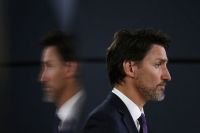
A prime minister better known for his charisma than his policy achievements proroguing parliament to ride out a political storm. Sound familiar? No, it is not Boris Johnson, but the quintessential liberal heartthrob Justin Trudeau. Trudeau’s party promised not to use prorogation to ‘avoid difficult political circumstances’ When Johnson suspended parliament a year ago, Nicola Sturgeon immediately branded him a ‘tin-pot dictator’. Mr Steerpike will wait with bated breath for a similar SNP comment on the Canadian PM.