Politics

Read about the latest political news, views and analysis

Will Tory MPs rebel over the Tier system?

15 min listen

England's tier system returns today. With some areas in a stricter tier than they were before the lockdown, as well as a general mistrust amongst Tory lockdown sceptics for the government, many MPs are not happy. But is there anything they can do about it? Katy Balls and James Forsyth discuss.

Will the Biden presidency mean more wars?

34 min listen

Joe Biden's supporters say he will restore America's standing in the world, but with his foreign policy team looking like an Obama-era reunion, will the country simply become more interventionist? Freddy Gray speaks to Kelley Beaucar Vlahos, senior adviser at the Quincy Institute, about whether a Biden presidency will mean more wars.

Meet Boris Johnson’s new chief of staff

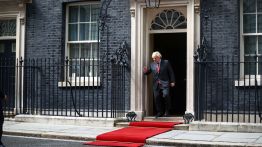
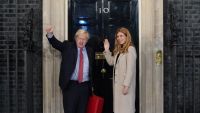
Boris Johnson's search for a chief of staff to bring order to 10 Downing Street has proved so difficult that earlier this month civil war erupted in No. 10 after he offered the role to his longstanding director of communications Lee Cain. In the face of a backlash from figures including the Prime Minister's partner Carrie Symonds and new press spokesperson Allegra Stratton, Cain ended up handing in his resignation — Dominic Cummings followed him out the door — and the search for a chief of staff continued.  Now Johnson has made his pick. Dan Rosenfield is the Prime Minister's new chief of staff, beginning work in Downing Street next month before officially taking on the role in the new year.

Watch: Lindsay Hoyle blasts the online tiers

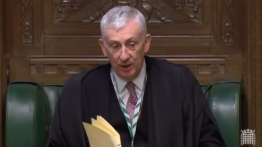
Mr Steerpike was not exactly impressed when the government launched a new website feature this morning to tell people which tier they were going to be in – and which promptly crashed, leaving people in limbo. But if you were left disappointed by the tech blunder, that was nothing compared to the Speaker of the House’s reaction, when he found out in Parliament the government had put the new tiers list online. After being told by Labour’s Valerie Vaz that the government had dropped the information online, before alerting the House, a furious Lindsay Hoyle lambasted the government for treating the Commons with disrespect.

Tiers website ends in tears

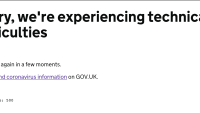
The government is set to announce today which areas will be moved into the three tiers, once the national lockdown ends on 2 December. To help the anxious public find out if they will be allowed to visit their friends and family, depending on their area, the government helpfully launched a new feature on its website. All you have to do is enter your postcode, and the government will tell you if you’re in tier 1, 2, or 3. That was the idea anyway. It appears though that the government’s tech gurus perhaps weren’t planning for a surge in interest in the restrictions that will affect the lives of millions.

‘I wish her well’: inside Westminster’s secret language

An Apology An apology is a series of words strung together to absolve one of sins committed in private or in one's professional life, usually uncovered by a newspaper, which allows one to carry on one’s duties as if nothing had happened, and very often to repeat the sins for which one has apologised. It needn’t be sincere — indeed, that is considered rather poor form — and it is only ever to be used as a measure of last resort. If in doubt, simply apologise for how you have made someone feel rather than the action itself.

Left behind: how Labour betrayed its base

I love the labour movement. I love its history, its traditions, its brass bands and banners. I love its rousing songs, anthems and festivals. I love its slogans and rallying cries, inspired, as they are, by an abiding faith in the collective spirit and the seductive vision of the New Jerusalem. For all that tribalism is given a bad name these days — sometimes with good reason — I feel tribal about my attachment to the labour movement. And I offer no apology for that. As it was for millions of others who grew up in working-class communities, tribalism in the cause of labour was for me less a matter of choice and more one of imperative.

The Conservatives are losing the fiscal high ground

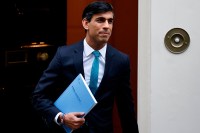
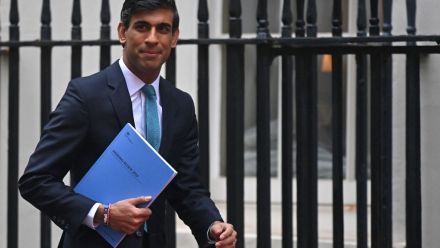
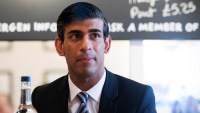
Every country was blindsided by the pandemic; few governments responded to it by borrowing as much as Britain. The figures that Rishi Sunak laid out in his spending review this week boggle the mind. He has been Chancellor barely ten months, yet has already borrowed more than Gordon Brown did in ten years. The upshot of his Commons statement this week is that Sunak will carry on spending money as fast as the Bank of England can print it. But as he knows, debt bubbles have a habit of bursting. The response to this crisis may sow the seeds of the next one. It’s a point which Sunak has a hard time making in Downing Street, let alone with his party. The Prime Minister likes to use the language of low taxes, economic dynamism and fast recoveries.

The public sector delusion

I wonder how much more money we will have to bung the teachers in order to inculcate within them an amenability towards doing a spot of teaching? They still seem terribly averse to the whole idea. During the first lockdown, 60 per cent of young children received no virtual lessons at all from teaching staff, and one in five pupils over 12 was given no work to do, according to the Children’s Commissioner. Virtual lessons shouldn’t have been terribly difficult to arrange, but most of the time there were none. My own daughter had no virtual lessons from March to July (which is why she’s no longer in the state sector). She did, however, complete five physics papers and, being scatty, sent them — one after the other — to the wrong email address. Nobody noticed.
Soft-left squatters have taken over the Lib Dems

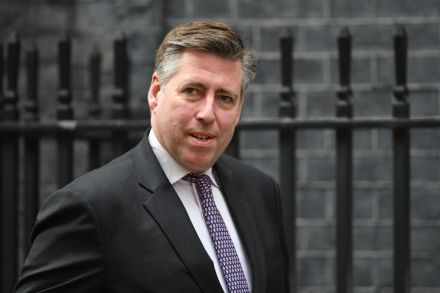
I was never afraid of Jeremy Corbyn, never afraid of Momentum. I’ve never really feared Britain’s hard left at all. They’re wrong, of course, and they can do some serious localised damage; but their ideology is so obviously daft and has so comprehensively failed wherever in the 20th century it was tried that they occupy in my mind a position similar to that of Satanists. Grisly, yes, but a threat to civilised society? Hardly. The hard left always gets found out in the end, and always will. Their doctrines have no natural appeal to the middle-of-the-road British (which is most of us) and in the unlikely event they were ever elected to government, they’d soon enough crash the car.

The Co-op Bank isn’t worthy of its name

We’ve heard a lot this week about infrastructure spending, and how much more will be needed if the UK is to achieve the ‘Green Industrial Revolution’ that the Prime Minister seems to have sketched on the back of a pizza box. We’ve also heard that the Chancellor is looking at ways to squeeze billions for Treasury coffers out of the private pension sector. What we haven’t heard so far is a plan to join those two pieces of the economic jigsaw — by encouraging pension managers to become committed investors in infrastructure projects.

The foreign aid cut marks a change of priorities

The proposed reduction in international aid from 0.7 to 0.5 per cent of GDP has elicited a furious reaction from some quarters. It has been condemned by five former prime ministers, three of whom never met the target when they were in office. What is missing from this debate is the historical context. The rise in development spending was part of the peace dividend that followed the end of the cold war. But the just-concluded defence spending settlement marks a UK recognition that this peace dividend is over — great power competition is back and this country’s military spending now needs to increase. Over the next decade or so, military spend is likely heading back to the level it was when the Berlin Wall fell.

Why is Rishi Sunak going back on a manifesto pledge?

20 min listen

Pandemic finances are different to normal finances, as seen by today's new figures from the OBR which show that the UK's economy will not be back to pre-pandemic levels until 2022. In today's spending review, the Chancellor broke a manifesto pledge by cutting the overseas aid budget. Is this a taste of things to come? Katy Balls speaks to Kate Andrews and James Forsyth.

Rishi Sunak’s New Labour pretensions

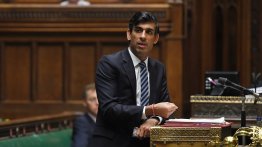
The House welcomed the Chancellor, Rishi Sunak, as he announced his spending commitments for the coming year. Rish the Dish delivered all kinds of goals and priorities for the UK but he left his personal plans in obscurity. Or did he? The Chancellor’s naked ambition may be sheathed in a Jermyn Street suit but his strategy is easy to read: knife the Honey Monster and evict him from his lair. Today he was addressing himself to his colleagues in cabinet, and in the wider party, and he wanted to show political intelligence and presentational shrewdness. His critics have already accused him of betraying the NHS by freezing pay settlements for the next 12 months, and he dodged that bullet by guaranteeing to boost the earnings of a million health workers.

Have Boris and Starmer worked out each other’s weaknesses?

Sir Keir Starmer is continuing to use his Prime Minister's Questions to build a narrative about the government's lack of competence, particularly when it comes to awarding contracts. This has had varying impact in each session, but by returning to the matter on a weekly basis, the Labour leader is developing a theme. Today he attacked the government's procurement process for personal protective equipment, pointing to an admission from ministers that they have purchased around 184 million items of PPE which are unusable.

Could Saudia Arabia and Pakistan soon recognise Israel?

Mohammed bin Salman and Benjamin Netanyahu's meeting – albeit denied by Riyadh – shows it is surely only a matter of time before Saudi Arabia and Israel formalise their covert relations.  Israel’s recent peace deals with Bahrain and the UAE could not have materialised without Saudi backing. MBS is also arm-twisting Pakistan to help ‘normalise normalisation’ by extending the Muslim world’s recognition of Israel to South Asia. Such political manoeuvrings are not isolated; they are accompanied by religious rationale for Muslim-majority states to establish relations with the Jewish state.

The Tory case for overseas aid

There may be worse times to slash international development spending than the middle of a pandemic but it’s got to at least be in the top five. The reduction from 0.7 per cent of GDP to 0.5 represents a drop of £4 billion in investment. As Katy Balls notes, the current level was not only a manifesto commitment in 2019 but is enshrined in law, so ministers will have to ask parliament to legislate to allow them to break their own manifesto promise. International development is like foreign policy: there are no votes to be gained from it. In fact, abolishing it altogether would make the Tories more popular with their target voters. Even so, Rishi Sunak is making a mistake.

Sunak’s Spending Review and the devastating impact of Covid

It’s been no secret that Covid-19 has sent the UK's finances into disarray — but today we received a further insight into just how bad the books are looking. Alongside Rishi Sunak’s Spending Review came updated forecasts and scenarios published by the Office for Budget Responsibility, which confirm the UK economy is set to shrink by 11.3 per cent this year — the largest economic fall in 300 years. The road to recovery is forecast to be a long one: economic output is not expected to return to pre-Covid levels for another two years: Q4 in 2022. There is still no sign of a sharp, V-shaped recovery, but rather another dip in 2020, before lacklustre rises in 2021.