Politics

Read about the latest political news, views and analysis

Covid is a nightmare for libertarian Tories

These are confusing times for all of us. But for small-government libertarian Tories, Covid-19 is all their worst nightmares compressed into nine months. It is hard to think of any basic civil liberty that hasn't been impinged in the cause of limiting the spread of coronavirus, except perhaps freedom of speech. As for Thatcherite constraints on the expansion of the state, we've not seen growth in public spending as fast or as large since 1945. Nor have we witnessed such encroachment by government in markets and enterprises (from underwriting almost all employment, through to banning evictions and creating a whole new diagnostics and vaccinations infrastructure).

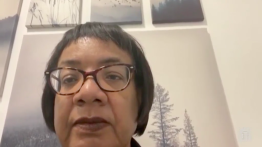
Watch: Diane Abbott forgets her own voting record

What should we do with foreign criminals, people who come to this country and then commit cruel and violent crimes against law-abiding British residents? If your answer is to deport them, then that is, according to Diane Abbott, 'cruel and potentially dangerous'.  During an urgent question from Labour earlier this afternoon, the former shadow home secretary criticised the decision to return a flight full of convicted foreign criminals to Jamaica. These are criminals who, according to Home Office minister Chris Philp, were found guilty of 'sexual assault against children, murder, rape, drug dealing and violent crime'.  Abbott suggested it was potentially dangerous to deport these 'vulnerable people' during a pandemic.

What can pubs serve as a ‘substantial meal’?

When the new tiered restrictions come into force this week, many pubs and bars around the country will be wondering if they can keep their doors open. While Tier 3 venues have effectively been forced to close, pubs in Tier 2 (which covers around 50 per cent of England) have been told they can only serve alcohol to customers alongside a ‘substantial meal’. But what counts as substantial? Environment minister George Eustice attempted to clarify this on LBC radio this morning, when he suggested that a scotch egg would probably count, as long as it was brought over on a plate.  But Mr Steerpike has noticed that ministers seemed to be a little confused when it comes to the guidance.

Were tiers working before lockdown?

Beware data that is released on the eve of a Commons vote on lockdown restrictions. That was the lesson of the graph presented by Sir Patrick Vallance at the Downing Street press briefing on 31 October, which included a scenario of 4,000 deaths a day by December unless drastic action was taken. The figure quickly fell apart when it was revealed that the data was several weeks out of date and the curve shown on the graph was already running well ahead of reality. What, then, to make of the React study published this morning, reported on the BBC news and elsewhere this morning, claiming that Covid cases have 'fallen by about a third over lockdown'? Does the research show that cases fell because of lockdown?

Is no deal better than a bad deal? We’re about to find out

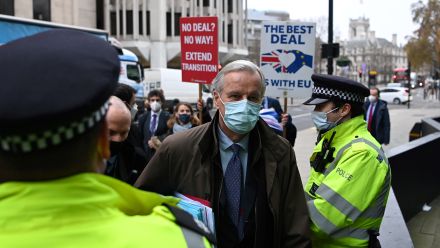
Has a Brexit deal already been done? You'd be forgiven for thinking so if, like me, you listened to talk radio over the weekend. Much of the discussion on Brexit now focuses on whether or not Labour will vote for or against, or even abstain on the 'deal'. What deal? In reality there is, of course, yet to be a trade agreement between the UK and the European Union and it actually looks fairly unlikely at this stage. The clock is ticking, but still the assumption remains that either side will fold before the year is out. I'm not convinced. At the end of last week, an offer was made by the European Union on fishing. EU countries would accept a cut of 15 per cent to 18 per cent in their share of the catch in British waters.

(photo: Getty)

In defence of British institutions

‘Terms and conditions will apply.’ That, or something near it, was Dan Rosenfield's initial response when Boris Johnson invited him to become Chief of Staff in No.10. Naturally, Mr Rosenfield was tempted. But he wanted assurances that he would have the authority to run a serious political outfit. He was not interested in becoming a zoo-keeper. That was not a problem. The zoo has been closed down. The Dominic Cummings era is over. Boris's willingness to hire a completely different character, following the appointment of Simon Case as Cabinet Secretary and Head of the Civil Service, suggests that the PM can recognise and value seriousness in others, even if he himself has problems in displaying it. Yet there are bigger issues in play.

Is a no-deal Brexit underpriced?

As the Brexit talks enter what is expected to be the last full week of substantive negotiations, opposition leaders are blasting the government for the lack of progress while No. 10 has issued a warning that no deal is 'arguably underpriced'. So, is this more fighting talk for the purpose of the negotiations or is no deal now a likely prospect? Given that Boris Johnson agreed a deal at the last minute in the first stage of Brexit talks on the withdrawal agreement, the working assumption among many Tory MPs for some time has been that the same will occur this time around.

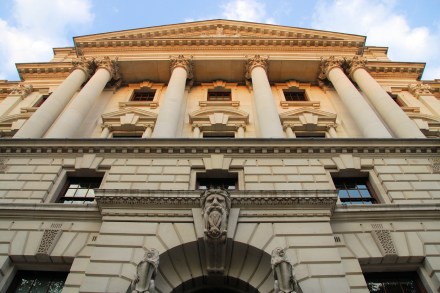
Why the Treasury always wins

One of the abiding flaws of British political discourse is that it overlooks the importance of organisation and institutions. The political village where I’ve spent my career talks too much about politics and personality; a bit – but not enough – about policy; and almost not at all about organisations. This creates blind-spots and surprises. Many people at Westminster were surprised by the election of Jeremy Corbyn and his resilience as leader in the face of internal challenge. That’s because they overlooked the vital importance of the Labour Party membership – which Corbyn successfully changed – and the party’s internal structures.

Sunday shows round-up: Brexit talks ‘in last week or so’, says Raab

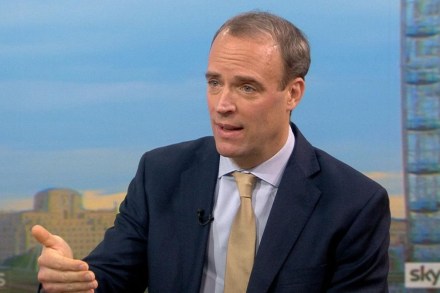
Dominic Raab - 'We want to come out' and 'stay out' of lockdown This week, the government will put its tiered system of coronavirus restrictions to a vote in the Commons. A sizeable rebellion is anticipated from the government's own MPs, who have raised concerns about the effect on the economy, as well as personal liberty and mental health. The Foreign Secretary Dominic Raab sought to ease some of their fears: https://twitter.com/RidgeOnSunday/status/1332967040903208962?ref_src=twsrc%5Etfw DR: We want to come out of national lockdown and stay out of it. There is hope... We are starting with a more restrictive approach than previously... but that allows us to ease up when we are confident that the virus is going down... There [will also be] a review every two weeks.

Are the Lib Dems too soggy?

17 min listen

In this week's Spectator, Matthew Parris asks why the Lib Dems have lost their ideological backbone. On the podcast, he discusses this 'soggification' of the party with Katy Balls and Polly Mackenzie, former special adviser to Nick Clegg and now chief executive of the think tank Demos.

Spectator Out Loud: Rod Liddle, Paul Embery and Rachel Johnson

24 min listen

On this week's episode, Rod Liddle reflects on the public sector pay freeze, and wonders why teachers won't teach. (00:50) Next, Paul Embery argues that the Labour Party has become disassociated with the working class. (07:03) Finally, Rachel Johnson explains why she wishes Christmas was cancelled.

Are the Tories still the party of Sound Money?

When Philip Hammond delivered a notably parsimonious Spring Budget statement in 2017, his predecessor George Osborne put out a congratulatory tweet. ‘Well done Phil. Sound money and fiscal responsibility are the only secure foundations of a fair and strong economy,’ wrote Mr Osborne. Hammond’s Budget took place on the tenth anniversary of a seminal speech made by Mr Osborne to the CBI. In March 2007, the then 35-year-old Shadow Chancellor told the gathered captains of industry: ‘I do not want any uncertainty over our commitment to Sound Money. We will not seek to spend our way out of Britain’s problems – that would simply make the problems worse in the long term.

The gamble Boris feels he must take

Both Boris Johnson and Robert Jenrick have used their media appearances today to try and calm Tory MPs after yesterday’s announcement of the new Covid tiers. But the problem, as I say in the Times today, is that Tory MPs know these restrictions are unlikely to be eased anytime soon. Downing Street has been driven by a dread that the NHS may be overwhelmed It would be surprising if the government decided to loosen things up before it has seen the effect Christmas relaxations will have on the case rate. We know that government advisers think that for every day of Christmas easing there will need to be five days of tighter restrictions. We can’t be sure yet if this analysis is correct. But it would be a surprise if places were moving down the tiers in January.

Nicola Sturgeon’s pandemic politics

Nicola Sturgeon had some choice words to say about Brexit last month. Speaking at one of Scotland’s daily coronavirus briefings, the First Minister said she was ‘deeply frustrated and depressed’ about the prospect of no deal in the new year, and suggested that to talk about Brexit in the middle of a pandemic was not only dangerous, but deeply irresponsible. The country doesn’t need ‘another big thing to be dealing with’ when the focus should be on coronavirus, the First Minister lamented. So you can imagine Mr Steerpike’s surprise when Sturgeon appeared to embark on her own political pet project yesterday.

Can the government appease disgruntled Tory MPs?

14 min listen

The return to the tier system will be voted on in the Commons next week, but from the grumblings in the Conservative party, it sounds like the government may need Opposition votes in order to get the legislation through. That's never a comfortable position for a government, so on the podcast, Katy Balls discusses with James Forsyth and Fraser Nelson what the government needs to do in order to appease its backbenchers.

Ideological purity is a grave threat to the Tory party

One of the main reasons why the centre-right has been in the political ascendancy across the western world over the past decade has been the behaviour of the left. In Britain, Jeremy Corbyn became Labour leader and brought with him a distain for consorting with anyone who wasn’t ideologically pure. Labour only wanted ‘good voters’ and told everyone else to ‘sod off’ (or stronger words to that effect) and vote for the Tories. In 2019, a lot of voters did just that. The Tories and the British centre-right generally have been able to capitalise on this by doing the opposite. They welcomed voters, whether they were socially conservative or socially liberal; or statist or passionate free marketeers.

The Gillian Keegan Edition

41 min listen

Gillian Keegan is the minister for apprenticeships and skills, and Conservative MP for Chichester. She previously worked at Natwest, Mastercard, Travelport and Amadeus. On the podcast, she tells Katy about growing up in a Labour stronghold, working in a car factory, pitching to be apprenticeships minister, and having her social life ruined by a friend's advice to have a perm.

Aftermath: when will the country truly recover from the virus?

31 min listen

The vaccine might be just around the corner, but can the country truly recover? (01:00) How can the Labour party win back the working class? (11:15) And finally, should we celebrate the new statue of Mary Wollstonecraft? (23:10)With The Spectator's political editor James Forsyth, chair of the Health Select Committee Jeremy Hunt, firefighter and writer Paul Embery, Times Radio presenter and former Labour MP Gloria de Piero, The Spectator's radio critic Kate Chisholm, and Spectator contributor and feminist writer Julie Bindel. Presented by Lara Prendergast.Produced by Cindy Yu, Max Jeffery, Matt Taylor and Sam Russell.

Tory MPs see red over the new tiers

Boris Johnson began the week with an optimistic message of an end to the English lockdown and hopes of a vaccine breakthrough to rid us of coronavirus restrictions altogether. However, until then his revised three-tier system is becoming a major cause of frustration for Tory MPs. The three tiers have been bulked up from their pre-lockdown incarnation. While gyms and hairdressers now can remain open under any tier, socialising is stricter than before. The level of disquiet means No. 10 will likely have to offer more to backbenchers However, the point of contention among Tory MPs is which areas are under which tier. The hope among many in the parliamentary party was that a four-week lockdown would allow a significant relaxation of restrictions in its aftermath.