Politics

Read about the latest political news, views and analysis

Farage’s Channel migrant rescue

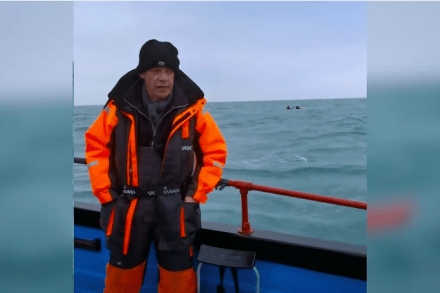
Over the weekend, Nigel Farage was involved in a rescue operation in the English Channel. Having headed out for a Sunday morning of sea fishing, Farage spotted two men adrift in an inflatable kayak about five miles off the Kent coast. The ex-kipper turned skipper called the coast guard before trying to pull the pair onto his boat. 'One of them was clearly in a very bad way,' Farage told Mr S, 'We had to get this bloke on board, there's no way he could have survived in the sea. We did our best but we could not lift him over the gunwales.' When Border Force did arrive, it seems they and Farage had a standoff.
Piers Morgan tries to jump the vaccine queue

This morning the UK became the first country in the West to licence a vaccine, after regulators approved the Pfizer/BioNTech shot. The ruling opens the way for the vaccine to be rolled out nationwide, after the UK purchased 40 million doses of Pfizer’s vaccine. The Health Secretary has said we will have 800,000 doses ready next week. So far, it seemed fairly clear who would be first to receive the vaccine. The government has published a list of ‘priority groups’ who will be first in line, starting with those who live and work in care homes, followed by the over-80s and NHS workers, before progressively moving down the age bands. The idea is to make sure the most vulnerable have access to the vital protection they need while vaccines are still in short supply.

Pfizer vaccine approved for use in UK

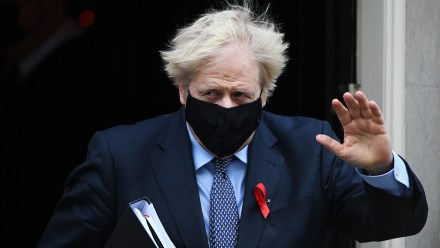
Boris Johnson may have just suffered his biggest Tory rebellion since the election but he is unlikely to be too down this morning. The Prime Minister is the receiver of some good news that could soon transform the political landscape. After positive soundings from several vaccine trials, the UK has approved the Pfizer-BioNTech coronavirus vaccine for widespread use. The UK is the first country to see its regulator approve the vaccine — which offers up to 95 per cent protection against coronavirus. The expectation in government is that jabs could start to take place within days. However, the logistics are not simple — as well as the complications of mass vaccination, the Pfizer vaccine must be stored at around -70C.

Jeremy Corbyn, Covid rebel

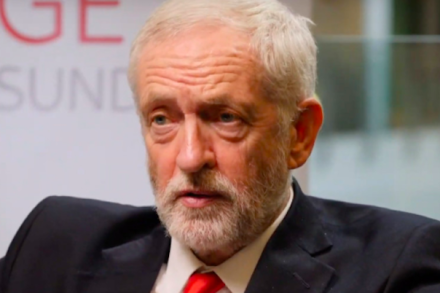
What would the Labour party look like if Jeremy Corbyn was still in charge? On the long list of things that would be likely be different to Labour now under Keir Starmer are Brexit, the response to the EHRC inquiry and even whether Corbyn was still classed as a Labour MP. Now there's a new item to add to the list: coronavirus. This evening Corbyn has voted against the government's proposed restrictions and new tier system. Explaining his decision, the former Labour leader took to social media to question both the measures and the financial support packages.

Full list: the Tory tier rebels

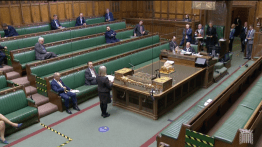
This evening, the House of Commons voted to enact the new tiered system, which will come into force when the national lockdown ends this week. Boris Johnson did not emerge unscathed though, with 78 MPs voting against his proposals, including 55 MPs from his own party. Labour leader Keir Starmer instructed his MPs to abstain on the vote, but 15 decided to vote against the government's plans.

Boris Johnson suffers his biggest Tory revolt since the election

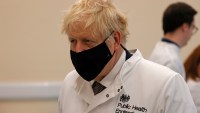
When Boris Johnson addressed MPs this evening on a Zoom call ahead of the Commons vote on his new tier system, his message to would-be rebels was simple: the unity of the Tory party is important so don't give Labour the satisfaction of seeing a disunited Conservative party.  Pointing to the light at the end of the tunnel when it comes to vaccines, he urged MPs to keep their eye on the prize – and used a car analogy to make his point. He likened the past few months of Covid restrictions to a six hour car journey, with everyone asking 'when do we get there?' But you do eventually get there, he said, so patience is needed. However, this message appears to have fallen short when it comes to convincing his party to back him.

Britain is set for the slowest economic recovery in the G7

Britain is set for the slowest economic bounce-back in the G7 and one of the slowest recoveries among wealthy nations, according to new forecasts published today by the Organisation for Economic Cooperation and Development. The OECD has updated its forecasts for global economic recovery, showing a return to pre-Covid GDP levels by the end of next year. The central scenario estimates a 4.2 per cent fall in global GDP this year, matched by a 4.2 per cent lift next year – while suggesting that its 'upside scenario' becomes more likely if successful vaccines are rolled out at a relatively fast pace. But while these latest forecasts bode better for the global economy, the findings are a blow to the UK.

Has Boris Johnson’s optimism backfired?

11 min listen

The government looks set to win today's Commons vote on the return of the tiers system for England, but tens of Tory backbenchers are unhappy. For them, the Prime Minister's reassurances have lost credibility, so on today's podcast, Isabel Hardman discusses with Katy Balls and James Forsyth whether or not Boris's optimism has backfired.

Boris’s optimism has eroded backbench trust

After hoping that MPs wouldn't notice that they'd been given a dud impact assessment of the new tiered system, Boris Johnson is now trying to reduce the size of the rebellion against these measures with the enticing prospect of areas moving down tiers within the next two weeks. Johnson is trying to reduce the size of the rebellion against these measures The Prime Minister opened the debate on the new tier regulations by telling MPs that they 'have it in their powers, in our power, to help move our areas down the tiers'. He also hinted at a more localised approach to the tiering system, which is something many Tory MPs have demanded, and promised to 'look in granular detail' at the 'human geography' of each area on a regular basis.

Labour’s abstentions show Keir Starmer at his worst

A vote will be held in the House of Commons today, which will decide the freedoms Britons will have from this week, possibly until spring. Yet the official opposition is planning to abstain. There have also been rumours that if Boris Johnson does somehow get a Brexit deal with the EU this week, Labour will abstain on that vote as well. Two of the biggest Commons votes of our era – one built around the greatest health crisis of our times and what that means for individual freedoms in this country, the other about our future trade relationship with our immediate neighbours – and Labour appear to have decided not to decide on either. This demonstrates the worst of Keir Starmer’s leadership. Starmer has done a lot for Labour since taking charge.

A response to Steerpike’s review of Michael Gove’s lockdown claims

Steerpike ran the rule over Michael Gove's article in the Times in which he argued ‘lockdown was the only way to stop the NHS being broken’. Here, the Cabinet Office responds to Steerpike: 1. Claim: Steerpike claims Michael Gove, the Chancellor of the Duchy of Lancaster, used his essay in the Times on 28 November to set out 'his new argument: the only strategy for stopping the NHS from being overwhelmed now is the government's new tougher three-tier system'. Rebuttal: the argument that social distancing and non-pharmaceutical interventions are necessary for protecting the NHS is not a new argument. It has been at the heart of the UK Government’s approach since spring and is an approach shared by all the devolved administrations in the UK.

Could we be asked to self-isolate if we catch flu?

How will coronavirus change our approach to seasonal illnesses? We are heading into the NHS's most difficult months as winter flu season is upon us, and ministers have been urging people to get a flu jab in order to keep demand in the health service down. Matt Hancock, meanwhile, has been justifying the enormous expense of the beleaguered test and trace system by suggesting that it could continue once the pandemic dies down, being used 'for everything'. He also told MPs last week that he wanted to end the culture of presenteeism in Britain, saying: 'If you have flu-like symptoms you should have a test for it and find out what is wrong with you and stay at home. We are peculiar outliers in soldiering on and going to work and that culture, that should change.

Ministers aren’t making it easy for potential Tory rebels

It isn't clear how many Tory MPs will rebel against the new tiered system of Covid restrictions this evening, not least because the Covid Recovery Group has said it isn't whipping its members. Senior CRG members are suggesting there could be 30 to 40 MPs in the ‘no’ lobbies tonight, which could be expectation management, as the whips are trying to talk the numbers up. But one thing is clear: ministers have not made it easier for would-be rebels to climb down. The publication of the government’s impact assessment last night was widely derided, not least because it didn't really contain an assessment of the economic impact at all.

Leaving the Union would harm Scotland more than Brexit

The Spectator recently ran a piece by Andrew Wilson, author of the SNP’s Sustainable Growth Commission, under the headline 'Scotland can’t afford to remain part of the Union'. For those seeking any fresh insight into either the moral or economic case for breaking up the United Kingdom, it was thin gruel.  Instead of coherent arguments, we were offered bold and unsubstantiated assertions. We are asked to believe that the separatists’ position is 'highly sophisticated' and that because of Brexit, 'staying in the Union is riskier than independence'.

Labour to abstain in vote on Covid tiers

Boris Johnson is the receiver of good news and bad news this evening. He is on course to win Commons approval for his new tier system when it's put to a vote on Tuesday. However, it will likely be down to support from Labour. While a Tory revolt is brewing, Sir Keir Starmer has announced that his party will abstain in the vote — meaning even a sizeable rebellion on the Tory benches won't be enough to stop it passing.  Explaining his decision, Starmer said his party would not vote against the restrictions on the grounds that Labour will 'always act in the national interest'. His reason for not voting for the restrictions? The lack of a 'credible health and economic plan in place'.

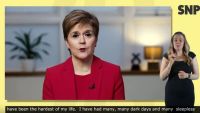
Nicola Sturgeon’s vainglorious conference speech

In March this year, as the country went into Covid-prompted lockdown, the SNP and the Scottish government put their campaigns for independence on hold. 2020 has been a year of few consolations and it is typical that even its better things must come to an end. Then again, there was no need for the SNP to put their demands for independence into cold storage, for a temporary cessation of outrage requires nobody to forget the party’s sole reason for existence.

Boris’s tier assessment says nothing new

In an attempt to win tomorrow's vote on the new tier system — without relying on Labour's support — Boris Johnson promised to publish analysis of the health, social and economic impact that the new tier system would have on the nation. But potential rebels are unlikely to be satisfied with the resulting document, published earlier this afternoon.  The intention was to show sceptical MPs that the government is seriously weighing up the trade-offs between the effects of Covid and the effects of stopping its spread. But it did not include a rigorous economic analysis of the tier system: in fact, it provided no cost-benefit analysis of any specific restriction.

Michael Gove’s lockdown claims: a review of the evidence

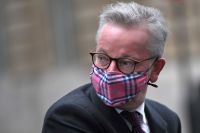
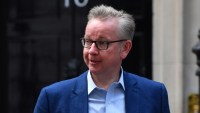
In a 2,000-word essay published over the weekend, Michael Gove sought to win round Tory rebels by arguing that ‘lockdown was the only way to stop the NHS being broken’. In the article, the cabinet minister paints a picture of an NHS all set to be flattened until lockdown 2 was introduced: 'Infections were doubling fast’ at the time of lockdown — and only lockdown saved the day. Gove uses this to make his new argument: the only strategy for stopping the NHS from being overwhelmed now is the government's new tougher three-tier system. While the article won some applause online it has also irritated several of Gove's colleagues. Colleagues who the government hopes will vote for the new tier system come Tuesday.