Kunwar Khuldune Shahid

Kunwar Khuldune Shahid is a Pakistan-based correspondent for The Diplomat

Asia is paying a very heavy price for the Iran war

From our UK edition

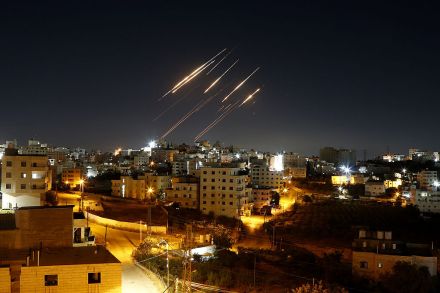
This week, Sri Lankans took Wednesday off. They’ll be doing the same next week – and for as long as the Iran war continues to disrupt global oil supplies. The country’s president Anura Kumara Dissanayake announced a four-day week in order to preserve fuel. Around 90 per cent of all energy supplies that pass through the Strait of Hormuz are imported by Asian countries, which are bracing for the impact of the strait currently being choked by Tehran. Oil prices have crossed the $110 per barrel mark, surging by almost 40 per cent since the start of the conflict on 28 February.

The Middle East’s Muslims are cheering Khamenei’s death

The killing of ayatollah Ali Khamenei in US-Israeli strikes on Saturday was cheered by many Iranians who have suffered innumerable atrocities under his ruthless Islamist rule of the country. While the diaspora were vociferous in their jubilation over the death of Iran’s supreme leader, many in the country also braved violent crackdowns to rejoice in the streets. These Iranians chanted the slogan that has become a common anti-Khamenei refrain over the past four decades: ‘Death to the Islamic Republic’.

The origins of the Pakistan-Afghanistan war

From our UK edition

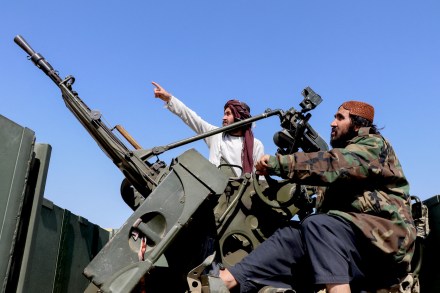
Pakistan and Afghanistan are at war with each other. Early Friday morning, Pakistan struck major Afghan cities including Kandahar and the capital Kabul, targeting Taliban military offices. ‘Ghazab Lil Haqq’, or Operation Righteous Fury, began after the Pakistani government said it had ‘run out of patience’ with the Taliban. On Thursday, the Taliban launched cross-border attacks on Pakistani security forces after Islamabad struck what it claimed were terror camps on Afghan territory last weekend. The roots of this war go back five years to the Taliban’s takeover of Kabul, following the departure of US-led Nato forces.

Pakistan’s terror problem is of its own making

From our UK edition

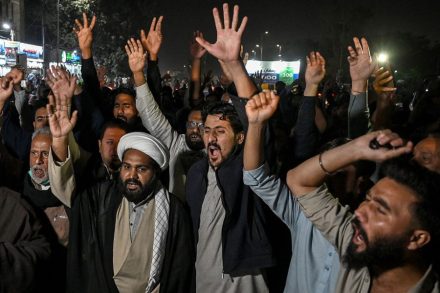
At least 31 were killed and over 170 wounded in a suicide bombing targeting a Shia mosque in Islamabad on Friday. The deadliest attack on Pakistan’s capital since 2008 comes just months after a bombing targeting one of the district courthouses jolted the city in November. These successive terror raids in the capital – already on high alert and full of security – signify that the militancy, largely confined to the country's western frontier in recent years, is now vying for Pakistan’s heartland. The Islamic State claimed responsibility for Friday’s bombing, releasing a blurred image of the purported attacker. The jihadist outfit has frequently targeted Shia Muslims, dubbing them ‘heretics’.

Tulip Siddiq can’t turn her back on Bangladeshi politics now

From our UK edition

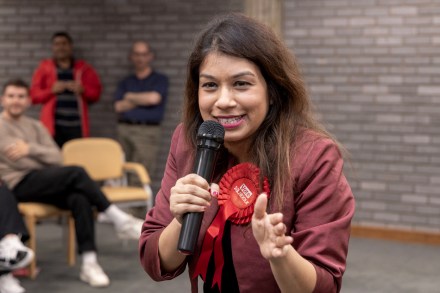
A Bangladeshi court sentenced the Labour MP Tulip Siddiq to two years in prison in absentia on Monday. Siddiq, who stepped down as anti-corruption minister earlier this year, has been found guilty of ‘influencing’ her aunt, the former Bangladeshi prime minister Sheikh Hasina, to secure a plot of valuable piece of land for her family outside Dhaka. Hasina was pushed out of power following massive demonstrators last year and has since been sentenced to death by Bangladesh’s International Crimes Tribunal. She is currently living in exile in India. It does appear that Siddiq is now complaining about the very forces in Bangladesh that propelled her to power in the first place Siddiq strongly denies the corruption charges and claims the evidence against her has been forged.

Nigeria’s mass school abduction is its worst yet – but the West doesn’t seem to care

From our UK edition

The kidnapping of over 300 students and teachers from a Catholic school by armed men in the Papiri area of central Nigeria is one of the worst mass abductions the country has ever witnessed. The horrifying incident on Friday is far from isolated: more than 2,500 students have been taken in at least 70 raids on schools in the last decade. The St Mary’s School attack came in the same week that gunmen killed a teacher and abducted 25 students from a girls’ secondary school in Nigeria’s Kebbi State.

India and Pakistan are edging closer to war

From our UK edition

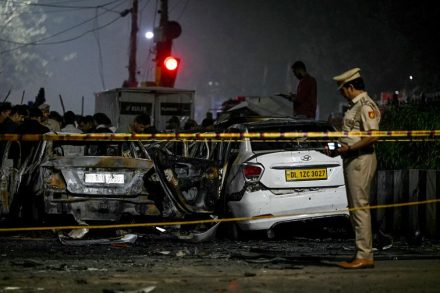
At least eight people were killed in a car blast near New Delhi’s historic Red Fort on Monday. Less than 24 hours later, a district courthouse was targeted by a suicide bombing in Islamabad. A dozen people died. These successive blasts in the capitals of India and Pakistan have raised tensions between the two nuclear-armed rivals, who clashed in May following a terror attack in the disputed territory of Kashmir. The situation is in danger of spiralling out of control. Pakistan has already accused New Delhi of being responsible for the Islamabad bombing. Prime minister Shehbaz Sharif called it one of the ‘worst examples of Indian state terrorism in the region’, asking the world to ‘condemn such nefarious conspiracies of India’.

Robert Jenrick is right about a burqa ban

From our UK edition

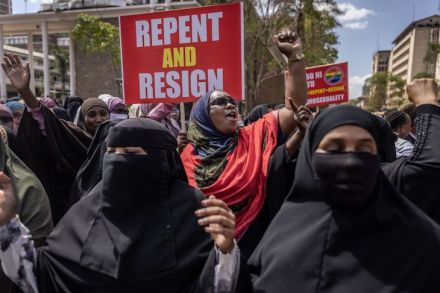
Robert Jenrick, the shadow justice secretary, has expressed his support for Britain banning the burqa. ‘I probably would ban the burqa… There are basic values in this country and we should stand up and defend them, and… whether it’s sharia courts or wearing of the burqa, these are issues we’re going to have to confront,’ Jenrick said on Talk TV, while discussing the growing number of European countries outlawing the burqa, with Italy introducing a bill this month. If Britain were to pass a law banning face coverings, it is Muslim women who would be the first to benefit The laws in place in European countries such as France, Switzerland, Austria and others are religiously neutral and applicable to all face coverings, from masks to balaclavas.

Why Nepal’s Gen Z overthrew its government

From our UK edition

Nepal's prime minister KP Sharma Oli has resigned after nationwide demonstrations descended into bloodshed. At least 22 people have been killed and hundreds injured in the country’s deadliest protests for nearly two decades. Spearheaded by the Nepal's disaffected youth, the ‘Gen Z protest’ has evolved into one targeting the corruption of the government coalition led by the Congress and Communist parties. The protests were triggered by the government’s decision last week to issue a blanket ban on 26 social media platforms After events took a violent turn on Monday when authorities unleashed fury on the protestors, killing at least 19, demonstrators responded by targeting state institutions in Kathmandu.

Why do western activists keep quiet about Africa’s LGBT crackdown?

From our UK edition

Burkina Faso’s transitional legislative assembly passed a bill this week to outlaw homosexuality – making it the 32nd out of 54 African countries to criminalise homosexuality. The legislation, enacted under the military junta-run country’s new Persons and Family Code, penalises ‘behaviour likely to promote homosexual practices’ with prison sentences up to five years. The move is part of Burkina Faso’s military leader Ibrahim Traoré’s vocal crackdown on ‘western values’. Burkina Faso has now become the 32nd out of 54 African countries to criminalise homosexuality. Neighbouring Mali, also run by a military junta spearheaded by Assimi Goïta, passed a similar ban in November.

How the Taliban will deal with Afghanistan’s earthquake

From our UK edition

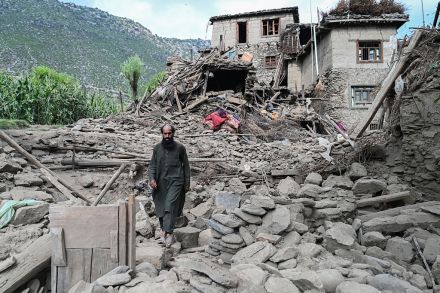
More than 800 people have been killed, and thousands more injured, as of Monday evening after a magnitude-6 earthquake struck eastern Afghanistan late Sunday night. With the epicentre around 27km away from Afghanistan’s fifth-largest city, Jalalabad, the capital of Nangarhar, heavy tremors were felt as far as Kabul, around 130km westwards, and also eastwards in Pakistan’s capital Islamabad. The death toll is expected to rise ominously, with entire villages collapsing in Nangarhar’s bordering Kunar province where much of the rugged region is difficult to access, amid relief teams’ best efforts to reach the worst-hit sites in time. In 2022, a 6.

Queers for Palestine burst Pride

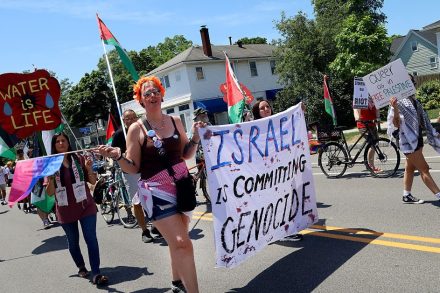
The annual Ottawa Pride rally was cancelled on Sunday after the group, Queers for Palestine, blocked the parade, owing to the refusal of the organizers, Capital Pride, to agree to the demands of “pro-Palestine” activists. Among the demands was for Capital Pride to back a complete boycott of Israel, and for Ottawa Mayor Mark Sutcliffe to apologize for not attending last year’s parade, which was described by Jewish groups as more a ‘protest against Israel’ than a rally for LGBT rights.

Queers for Palestine

The hypocrisy of Tulip Siddiq

From our UK edition

The corruption trial of Tulip Siddiq formally commenced in Bangladesh on Wednesday. Among other allegations linked to £3.9 billion worth of embezzlement, the Bangladeshi-origin Labour MP has been accused by the Anti-Corruption Commission of securing luxury property for her family in Dhaka, using her relationship with the country’s former prime minister Sheikh Hasina, who was ousted and fled the country last August following mass protests against her rule.

The plight of the Druze

From our UK edition

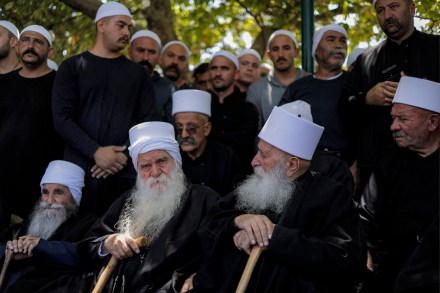
Over 500 people are estimated to have been killed in the ongoing sectarian clashes between the Druze and Bedouin populations in Syria’s southern Suweida province this week. Vowing to protect the local Druze, and backing the community’s militia, Israel has bombed Syrian government forces around Suweida and launched missiles on Damascus. While Syria’s interim president Ahmed al-Sharaa has promised to safeguard the minority community, and has announced the withdrawal of troops from the area, his government forces have been directly involved in attacks against the Druze. Druze civilians have been indiscriminately killed in ‘field executions’ by Syrian government forces and their allies.

Zohran Mamdani wouldn’t mock his own faith

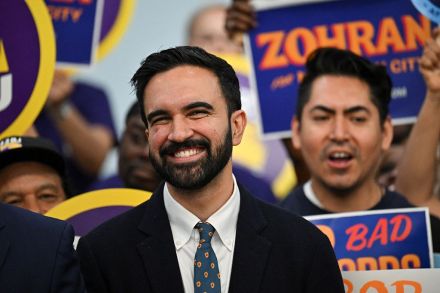
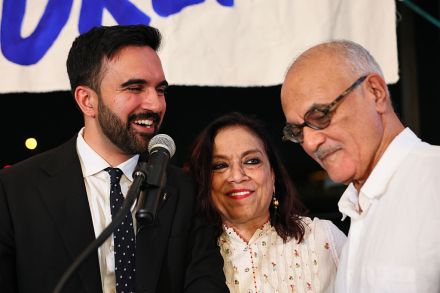
Zohran Mamdani is defensive about his faith and has maintained that his culture is “not a costume.” Why then, New Yorkers might wonder, does he not extend this courtesy to others? In December, he shared an Indian dance video about Hanukkah by comedy group the Geeta Brothers who performed behind a menorah, spinning dreidels, while singing Hey Hanukkah. The Punjabi track features lyrics: tera dreidel bara ghummay (your dreidel spins a lot), taazi roti kosher howay (let’s have fresh kosher bread), with a repeated chorus of mombatiyan, which means candles. Mamdani also wished his followers a merry Christmas using a video for the Geeta Brothers’ Jingle Bells track where the group woos a woman.

Zohran Mamdani

Islam has a rich history of depicting Muhammad

From our UK edition

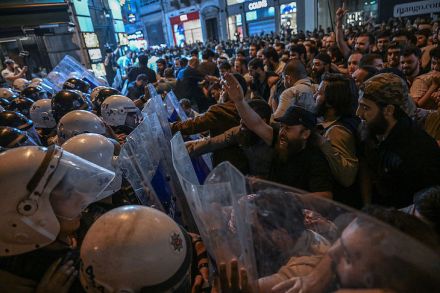
Journalists at LeMan are in fear for their lives after the Turkish satirical magazine published cartoons appearing to depict the Prophet Muhammad. The publication’s editor-in-chief Tuncay Akgun denied that the picture showed Muhammad, but his pleas have fallen on deaf ears. A mob gathered outside the magazine's office in Istanbul on Monday. In the days since, Turkish president Recep Tayyip Erdogan has slammed the cartoon as a 'vile provocation', and Foreign Minister Hakan Fidan described the image as an 'immoral…attack against our Prophet'. But LeMan's critics appear to be blind to Islam's rich tradition of depicting Muhammad.

Zohran Mamdani’s selective scrutiny

Within weeks of launching his campaign to be mayor of New York City, Zohran Mamdani declared that he was also running to be the first South Asian mayor. He began aggressively courting this demographic, which accounts for around five percent of the city’s population, as well as the seizable total Asian population of almost 15 percent. Mamdani reached out to the desi community with the help of the Indian subcontinent’s great unifier, Bollywood. The Hindi film industry that even those who don’t speak the language in South Asia can relate to. He used a 1980 Bollywood song "Meri Umar Ke Naujawano", roughly translating to "my fellow youngsters", to explain the NYC’s ranked choice voting system using popular desi drink, the lassi, as prop.

Zohran Mamdani

Why Muslim-majority countries have turned against Iran

From our UK edition

Swift condemnations have poured in from the Muslim world castigating Israel for bombing Iran. The UAE condemned Israel ‘in the strongest terms’, Jordan spoke up against Israeli attacks ‘threatening regional stability’, Saudi Arabia denounced ‘blatant Israeli aggressions’, Turkey espoused ‘an end to Israel’s banditry’, while various Muslim diplomatic groups, including the Organisation of Islamic Cooperation (OIC), demanded ‘international action’ against the Jewish State. But cloaked underneath this predictably farcical rhetoric of ‘Muslim unity’ are the evolving interests of many of these states, which today align seamlessly with Israel.

Reform’s burqa ban isn’t ‘Islamophobic’

From our UK edition

MPs from Nigel Farage's Reform party are calling for a burqa ban in Britain. Sarah Pochin, who won the Runcorn by-election last month, asked Sir Keir Starmer in the House of Commons this week if he would consider outlawing the garment. Her demand attracted the ire of Reform chairman Zia Yusuf, who has since stepped down from the job after saying the idea was 'dumb'. Labour MPs, who shouted ‘shame’ at Pochin, also didn't like the idea. But those who suggest that it is ‘Islamophobic’ to restrict the burqa are under a misapprehension. The number of Muslim-majority states outlawing the face veil is increasing After all, at least ten Muslim-majority countries have enforced bans, not just on the burqa, but also on the niqab, a partial face covering.

Hamit Coskun’s life will only get harder now

From our UK edition

Hamit Coskun has been found guilty of a ‘religiously-motivated public order offence’, after he burnt a Quran in front of the Turkish embassy in London. This is Britain’s first formal capitulation to Islamic blasphemy laws. Not only does it suggest that Islam deserves special protection against sacrilege, and shielding from the freedom to offend, but it also rewards the radical Muslims for exercising violence against expressions of irreverence. In accordance with the Crime and Disorder Act 1998 and the Public Order Act 1986, Coskun was found guilty of disorderly behaviour ‘within the hearing or sight of a person likely to be caused harassment, alarm or distress,’ motivated by ‘hostility towards members of a religious group, namely followers of Islam.