Politics

Read about the latest political news, views and analysis

The true cost of the coronavirus debt

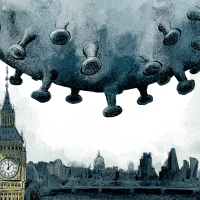
There is a view that we don't have to worry about the record debt the government has accumulated since coronavirus laid waste to our way of life and our economy. And in two senses I would half agree – though the other half of me is wracked with anxiety.  First, this is not a uniquely British problem; it is a problem of all developed economies. However, you should not underestimate the geopolitical significance of the explosion of debt in the rich West, because it represents by implication the fastest transfer of wealth and power to China and Asia in our lifetimes.  Second, there is the important counterfactual – namely what would have happened if the government had not borrowed and spent all that cash. Which does not bear thinking about.
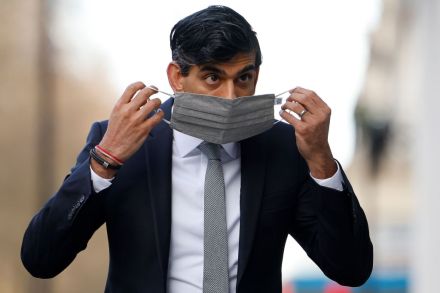
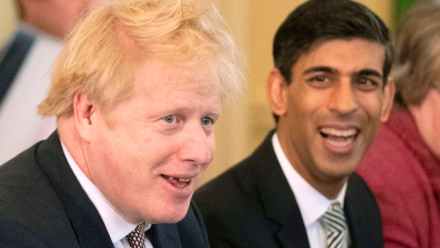
Does Rishi Sunak understand the scale of the mental health crisis?

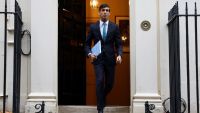
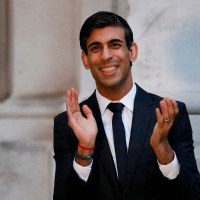
Unsurprisingly, health spending will be a key part of Rishi Sunak's spending review announcements this afternoon, with the Chancellor expected to pledge £3 billion for the NHS as it recovers from the pandemic. Part of that will be a £500 million boost for mental health, which accompanies a 'winter care plan' that was published earlier this week. Ministers are very keen to say they recognise the pressure that the pandemic has put on services and people who may be developing mental health problems for the first time, as a result of the strain they have found themselves under this year. But this money won't go very far.

Why Boris should go for no deal

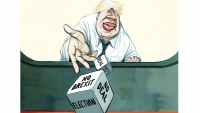
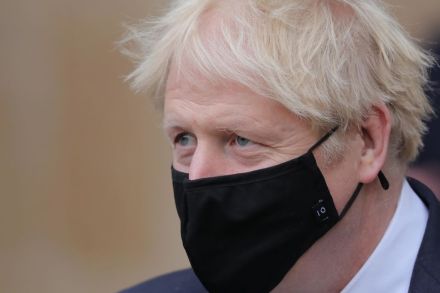
Boris Johnson has negotiated his way into a corner. With the naïve view that the EU would eventually buckle and accede to the UK’s desires, we are now just over five weeks away from the end of the transition period. The choices in front of Boris are to either cave in to the EU’s demands in order to sign a weak, thin, bad deal – or walk away without a deal. I think he should do the latter. Of course, there are obvious advantages for the Prime Minister in signing a deal (even a bad one) with the EU at this stage. It would cause slightly less disruption than no deal. And it would leave the two negotiating sides with some goodwill left. A deal would also put Labour in a tight spot.

A defence of Priti Patel

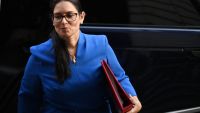
Claims that Priti Patel broke the Ministerial Code and the resulting furore have exposed one of the greatest problems facing modern politics. No, not the widespread bullying of civil servants by ministers. But rather a systematic breakdown in the effectiveness of the fundamental ideals of liberal democracies. We politicians have for years increasingly outsourced political power to various incarnations of an unelected establishment: civil servants, bureaucrats, experts, committees and quangos. In so doing, we are giving away something that is not ours to give, effectively disenfranchising the voters.  Political power is owned by the electorate and only lent to their representatives for a few years at a time.

Easing Covid rules for Christmas comes with a risk

Ministers have been keen to stress that Christmas this year will not be normal. Boris Johnson went so far to say on Monday that it 'tis the season to be 'jolly careful'. However, as expected, there will be a softening of the current rules. Following a Cobra meeting this afternoon, the UK government and devolved administrations have agreed on a joint approach to socialising over the Christmas period. The rules will be relaxed so that people can form a 'Christmas bubble' made up of three households for the period from December 23 to 27. During this time, travel across the UK will be permitted, including between tiers so that people can meet up with their household bubbles.

Should London be split into different tiers?

What will the new map of tiers look like when England exits lockdown next week? It certainly won’t be the same system we left behind when we went into lockdown on 5 November. For one thing, we have been told that restrictions are tightening and that more areas will be shunted into Tier 3. The epicentres of new infections at the moment are not as much in the cities as relatively low-income suburban and semi-rural areas in Lincolnshire and North Kent. Swale (528 new infections per 100,000), East Lindsey (467) and Boston (433) currently top the infection charts. Liverpool by contrast — the first place to go into Tier 3 — can now make the case that it should be the first place to come out of it: infections are down to 173.

Will there be a Tory revolt over Tier 3 restrictions?

13 min listen

The Prime Minister announced yesterday that the nationwide lockdown would come to an end on December 2. In the updated tier system, pubs and restaurants will be closed at the highest level of restrictions, but gyms and non-essential shops will remain open. Isabel Hardman speaks to Katy Balls and James Forsyth about whether Conservative MPs will accept the changes.

Laura Pidcock stages walkout of Labour NEC

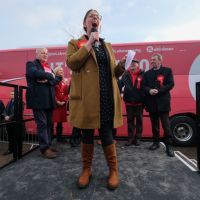
After a brief spell in the Labour hinterland after losing her Durham seat in 2019, the former MP and Corbynite Laura Pidcock returned to frontline politics this year, after being elected to the party’s National Executive Committee (NEC). Unfortunately though it didn’t take long for the former Durham MP to once again indulge in the Labour left’s favourite pastime: factional infighting. At an NEC ‘away day’ today, Pidcock and 12 of her colleagues decided to stage a digital walkout of the Zoom meeting, after the committee elected Margaret Beckett to be chair of the committee. The group appeared to be particularly aggrieved that Beckett had described herself as a 'moron' for nominating Jeremy Corbyn for the Labour leadership contest in 2015.

Another Tory revolt looms, this time on cladding

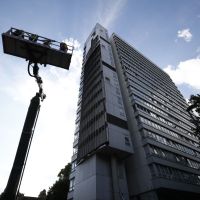
It's becoming increasingly difficult for Boris Johnson to keep track of the many different revolts within his own party. There are the groups pressuring the government on its response to coronavirus, on its treatment of Northern seats, and on Brexit. Now there's a new row brewing on a completely different matter: cladding. As Emma Byrne recently explained, this scandal has been building for months, but ministers seem to be doing very little about it. Currently, there are hundreds of thousands of people stuck in properties which have flammable cladding similar to that used on Grenfell Tower. Many of them are facing eye-watering bills of tens of thousands of pounds because as leaseholders, they are liable for the work to remove the cladding.

How MPs lost their pay rise

When Rishi Sunak gets up at the despatch box tomorrow to announce his spending review, the Chancellor is expected to commit to a public sector pay freeze — with NHS workers exempt. Ever since this was first reported in the media, the idea has met heavy opposition from Labour while Tory politicians have had to get used to being asked on air why their own pay is set to go up at a time when the bulk of public sector workers' pay is not. That well-trodden answer tends to go along the lines of 'it's a matter out of our control as Ipsa (the Independent Parliamentary Standards Authority) sets MPs’ salaries'. However, that is now changing. The Times reports that MPs will not get their expected 4.1 per cent pay rise of £3,300, next year.

The problems with Boris Johnson’s ‘freedom pass’

In one of his early lockdown press conferences, the Prime Minister suggested that those who tested positive for Covid could be released from lockdown because they’d be immune. The idea of an 'immunity certificate' was then dropped, as it raised obvious questions of unfairness: would you really have a caste of immuno-privileged people exempt from the lockdown rules?  But now the idea seems to be back. The Sunday press reported on an Orwellian-sounding ‘freedom pass’ that would be granted to those who complied with a government-mandated testing regime. A source told the Sunday Telegraph that such a pass would 'allow someone to wander down the streets and if someone else asks why they are not wearing a mask, they can show the card, letter or an app.

Ian Blackford polices the border

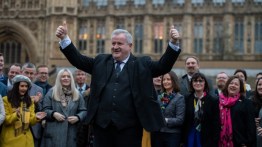
In case you missed the memo, it's now illegal to cross the border to Scotland unless you have a 'reasonable excuse' that meets the First Minister's requirements. Nicola Sturgeon's new law – which limits the number of people who can travel from England to Scotland – is said to be aimed at protecting public health north of the border.  Luckily Sturgeon has her close allies on standby to support her in policing this new restriction. Step forward Ian Blackford. The SNP's leader in Westminster is so devoted to the cause that he has even taken to social media to look out for those who may have fallen foul.

Tiers until March, Boris tells MPs

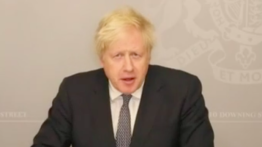
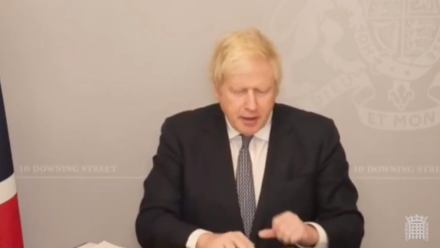
Boris Johnson's statement to the Commons announcing the end of the national lockdown was meant to hit an optimistic note. However, he faced two hurdles when it came to achieving this.  Firstly, his internet connection in No. 10 broke down and Johnson was cut off from MPs midway through the session. Secondly, the measures he announced in place of the national lockdown can't really be described as a great liberation; social distancing is here for the foreseeable future. What's more, those who find themselves in the new ramped up Tier 3 – with the tiers for each area to be announced on Thursday – could struggle to see much difference at all with what came before.  There were bits of good news.

Corbyn’s Glastonbury blunder

Jeremy Corbyn is gone but at least we still have the memories. His son Tommy Corbyn shared one earlier from happier times, when Corbyn led the Labour party. Corbyn junior said watching his dad on stage at the festival was 'one of the proudest moments of my life': After Jeremy had finished speaking, he said, 'one of the Glastonbury staff tapped me on the shoulder and said "you know he just got a bigger crowd than Rihanna'.  It was a touching moment, but Mr S spotted a problem. Rihanna has never played Glastonbury. Oh dear. Well, we'll always have the memories...

A vaccine won’t solve all our Covid problems

Today’s Oxford-AstraZeneca vaccine update has raised hopes that life in Britain could start getting back to normal by spring. But cheers in Downing Street didn’t extend to AstraZeneca’s share price, which fell by nearly three per cent in response to the news. Why the dip in the wake of such good news? AstraZeneca vaccine’s effectiveness – recorded at 70 per cent – is notably lower than its Pfizer and Moderna competitors. What's more, the 70 per cent figure has been reached by averaging results from two groups who received the vaccine in different doses: a smaller group, who were given half a dose at first, recorded a 90 per cent efficiency rate, and the larger group, who were given two full doses, only a 62 per cent efficiency rate.

Will Oxford’s vaccine bring back normality?

13 min listen

Oxford University's vaccine could be up to 90 per cent effective, data from phase III trials shows today. With the UK government ordering 100 million doses of the jab, could it mean a return to normality is on the horizon? Katy Balls speaks to Fraser Nelson and James Forsyth.

Why is Sadiq Khan talking London down?

Sadiq Khan's powers as London mayor are relatively limited, but part of his remit is to act as a salesman for London. He is there to talk up the virtues of one of the greatest cities in the world. It was surprising then to see him concede at the weekend that we have to 'accept the fact that there is potentially an existential threat to central London as we know it.' This surely is the opposite of what the mayor of London should be saying at this moment in time. It also demonstrates why Sadiq Khan deserves to lose the election in May. Sadiq Khan already lost my vote months ago when he announced that the next mayoral contest would be a referendum on rent control.