Politics

Read about the latest political news, views and analysis

Oxford’s vaccine success could mean a return to normal by April

One consequence of the positive Oxford vaccine news this morning is that the UK will shift to a strategy of attempting to vaccinate as much of the adult population as possible. We know from NHS documents obtained by the Health Service Journal that the aim is to have 75 per cent of the population vaccinated by April. If this was the case, all social distancing measures could be ended that month, with even nightclubs open as before. The Oxford vaccine is particularly well suited to a mass vaccination programme. Unlike the Pfizer one, it can be stored at fridge temperature making distribution of it far easier. Rolling this vaccine out will, obviously, be a logistical challenge.
What will the new tiered system look like?

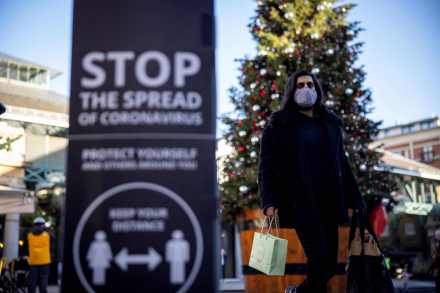
Anyone who was hoping that things would go back to normal when the national lockdown ends next month will be sorely disappointed today. This afternoon, Boris Johnson is expected to outline in Parliament a new tougher tiered system, which will come into force on 3 December, when the national lockdown ends. The Prime Minister is then expected to reveal which areas will be in each tier on Thursday, after consulting the latest coronavirus infection data. Most areas are expected to be moved into Tiers 2 and 3. So what will the new tiers actually involve? The papers report this morning that the rules on socialising will stay roughly the same in the new tiered system, with the ‘rule of six’ in place in Tier 1.

It will be a three-family, five-day Christmas

Nothing will be decided in a formal sense until all four nations of the United Kingdom are as one. And the decision is slightly harder because Northern Ireland's leadership wants a Christmas consensus with Dublin. But it is looking highly probable that all four UK governments’ special Christmas exemption from coronavirus restrictions will allow us to socialise with people from two households in addition to our own household over five days beginning on 23rd of December and ending on 27th December. Or to put it another way, for those five days, a typical family will be able to enjoy festive meals indoors with both sets of grandparents, or two groups of friends, or whomever is most special to them.

Keir Starmer should purge Labour of the far-left

Sir Keir Starmer was having such a good year. He broke cover early on to attack the government’s handling of Covid-19 and did so by speaking explicitly to traditional Tory voters. He repeatedly bested Boris Johnson at Prime Minister’s Questions and gave a good first conference speech in the job. He brought his party’s poll numbers to within a hairsbreadth of the Conservatives, just as Number 10 descended into the dullest soap opera this side of The Archers. Even that cringe photo of him and Angela Rayner taking a knee in the Shadow Cabinet room — like your parents after listening to Stormzy for the first time — can be forgiven because, bless their hearts, they meant well. Then there was Jeremy Corbyn.

Sunday shows round-up: Rishi anticipates ‘more economic stress’

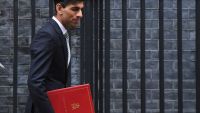
Rishi Sunak - There is more economic stress to come The Chancellor of the Exchequer will deliver the 2020 spending review this Wednesday, and it will shock no one to hear that the public finances are not in good health. Joining Andrew Marr in the studio, Rishi Sunak said that the economy was not out of the woods yet, and may not be for a long time: https://twitter.com/BBCPolitics/status/1330449174450606080?ref_src=twsrc%5Etfw RS: The economy is experiencing significant stress. We've seen that particularly in the labour market... [There is] more stress to come, and that is very sad to see... and it's something that we're going to grapple with for a while to come sadly.

The difficult decision Rishi Sunak has to make

This week Boris Johnson is expected to announce an end to the national lockdown. However, with a return to normal still far away with the UK to move back into a stricter form of the three tier system, good news remains limited for the time being. That's also the case with the Chancellor's spending review. When Rishi Sunak gets up at the despatch box on Wednesday to announce his funding decisions, there will be hints of the difficult decisions he and Johnson face in the coming months and years as a result of coronavirus spending. Sunak and Johnson must decide whether to implement tax rises in this parliament, or fight the next election not being able to rule out 'hard choices'.

Spectator Out Loud: Douglas Murray, Lara Prendergast and Andrew Wilson

20 min listen

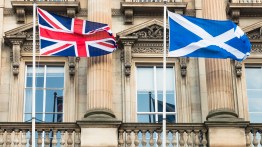
On this week's episode, Douglas Murray is first, reflecting on the US election, and wondering why people who see the same thing can come to different conclusions. (00:51) Lara Prendergast is next, with her profile of the Prime Minister's fiancee, Carrie Symonds. (09:07) Finally, Andrew Wilson, who makes the case for an independent Scotland.

Boris’s green industrial revolution is doomed to fail

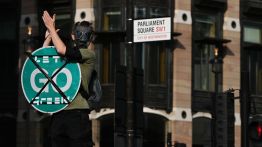
Boris Johnson's ‘green industrial revolution’, which was announced this week, looks doomed from the outset. From our heating to how we transport food, the proposals would mean a complete overhaul in the way we live. Yet barely a word has been said about the immense practical difficulties involved in Johnson’s ten-point plan for Britain to go carbon neutral by 2050. Make no mistake, it will be close to impossible to achieve – and even trying could prove catastrophic. Nowhere is the flaw in the government’s plan more clearly exposed than in the announcement that sales of new petrol, diesel and hybrid cars will be banned by 2030. There are more than 38.9 million cars, vans and lorries on our roads today.

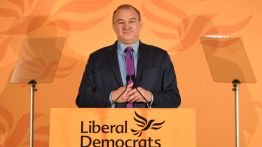
Why are Ed Davey’s Lib Dems keeping such a low profile?

Paddy Ashdown once joked that he was the only leader of a major party to have presided over an opinion poll rating represented by an asterisk, denoting that no discernible support could be found anywhere in the land. While he was granting himself poetic licence in the telling of that anecdote – it was an occasional foible of one polling company only to list the Tory and Labour scores on the front page of its survey results – it was indeed the case that Lib Dem poll ratings of five per cent or less peppered the early stages of his leadership. This week an opinion poll by Savanta ComRes recorded that same risible rating of five per cent for the Lib Dems under current leader Sir Ed Davey, compared to 38 per cent for Labour and 41 per cent for the Conservatives.

A minister for men would help solve one problem

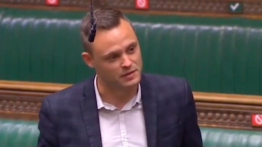
Why don't we have a minister for men? That's the question Tory MP Ben Bradley asked this week, and he's found himself the centre of a great deal of social media fury for doing so. I say 'found himself', but it's highly unlikely Bradley really thought anything else was going to happen, not least because he made this call during a backbench debate he had organised with his Conservative colleague Philip Davies, who has a specialism in winding people up. In that debate, Bradley argued that 'men are talked about, all too often, as a problem that must be rectified', and complained that the equalities agenda seemed to exist to exclude them, rather than help with their specific problems such as higher rates of suicide and lower educational attainment.

Boris Johnson’s anti-bullying week gaffe

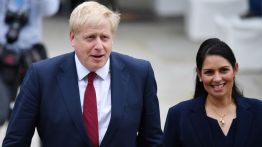
Boris Johnson has been forced into an embarrassing row today, after the government published a report into allegations that Home Secretary Priti Patel bullied her staff – and which found that she broke the ministerial code. Despite this, the Prime Minister declined to punish Patel, which then led his advisor on ministerial standards to stand down. A protracted dispute with the civil service about bullying would be awkward enough, merely days after Downing Street promised a grand reset of its communications. But Mr S wonders if the Patel row may have come at the worst possible moment for the government: considering that it is currently anti-bullying week.

No, Ben Bradley: we don’t need a minister for men

Happy International Men’s Day! Sorry I’m late by one day, it’s just that I don’t really know what it’s for. I mean, yes, I’m grateful for its existence on International Women’s Day whenever someone says 'Ah, but when is International Men’s Day?', and I can reply: '19 November'. But even then, it basically spoils a much better answer, which is to say, 'Every other day of the year is International Men's Day.'  Anyway, it was International Men’s Day, and as usual the vast majority of men did not care. But one man who cared very much indeed was Conservative MP Ben Bradley, who gave a speech in Parliament about how men are neglected in politics. You know, men. The taller kind of human with fewer bumpy bits in front and back.

A public sector pay freeze is completely fair

They’ve only received a fraction of their old salaries. Many have missed out on months of work. And their pension contributions and holidays have been completely scrapped. So it is perhaps understandable that teachers, town planners and tax officials are feeling a little aggrieved. Except, er, no, sorry I made a mistake there. That was a description of what happened to the self-employed over the last eight months, not the average public sector worker. Instead, it now looks likely that the government will impose a pay freeze on everyone who works for the government this year, and possibly next as well. The 5.5 million affected will reportedly include the police, armed forces, teachers and civil servants.

Why Priti Patel is staying put

13 min listen

Sir Alex Allen, a top civil servant in charge of the report into allegations of bullying at the Home Office, has resigned, but the Home Secretary Priti Patel, who is at the centre of it all, has not. Why is the Prime Minister so keen to 'stick with Prit'? Fraser Nelson talks to James Forsyth and Katy Balls.

Brexit could help Boris’s green revolution come to life

Boris Johnson announced his new ten-point plan for Britain’s transition to a net-zero carbon emissions economy this week. It is expected that other countries will follow. The EU has a stated aim of achieving a net-zero economy by 2050, with a 60 per cent reduction in emissions from 1990 levels by 2030. This presents an opportunity to develop British industry to a position where it can capitalise on the opportunities presented. The word 'develop' is doing a lot of work in that sentence, of course. What might it involve? There is certainly an emphasis in the plans announced on more R&D, including innovations around hydrogen and nuclear power, low emission shipping and aviation, and carbon-capture and storage (CCS).

Why Boris, not Rishi, will lead the Tories into the next election

Some Tory MPs are hoping that Dominic Cummings’ departure from Downing Street will bring with it a vital lift to Boris Johnson’s premiership. Other Tory MPs have made up their minds about Boris already. Either they think he was always a flawed character whose only use was winning them the 2019 general election, a job long since passed; or they have been turned off by any number of things that have transpired in 2020. Basically, some Conservative MPs will be disappointed in 2021 when Boris turns out to be Boris; others are past caring. In spite of this, it seems almost certain that Boris Johnson remains in Number 10 for the next three-and-a-half years and contests the 2024 general election as leader of the Conservative party.

Tory MPs rally to Priti Patel’s defence

In the weeks before the seriousness of the coronavirus pandemic became clear, Priti Patel was the biggest story in Westminster. In March, her most senior Home Office civil servant, Philip Rutnam, resigned and when doing so read out a statement in which he said he had been subject to a 'vicious and orchestrated campaign'  against him after he challenged the alleged mistreatment of civil servants by Patel. To deal with the furore that followed, a Cabinet Office inquiry into allegations of bullying by the Home Secretary began. It concluded some time ago yet nothing had been made public until now. That is now changing. The report has found that Patel’s behaviour could be described as 'bullying' and that she was in breach of the ministerial code.