Middle East

How America could help bring down Iran's Islamist regime

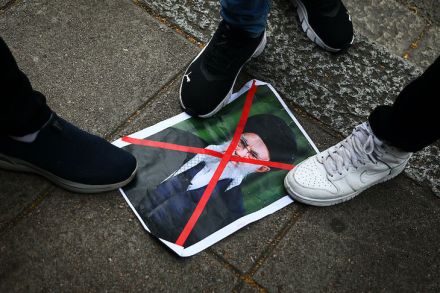
The near-total internet blackout imposed by the regime in Iran has now continued for nearly a week. Behind the veiled effort to cut the country off from the world, sufficient evidence has emerged to establish a clear picture of what the authorities are attempting.  In a move wearyingly familiar to all observers of the contemporary Middle East, the leaders of the Islamic Republic of Iran are seeking first to isolate the masses of protestors now in the streets demanding an end to their regime. Then, under the cover of the resulting darkness, they are slaughtering a sufficient number of them so as to drive the remainder back into a terrified silence. 

Iran, the Shah and the revival of kingship

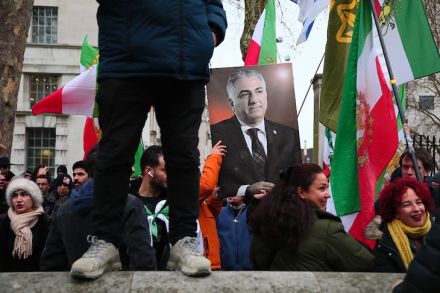
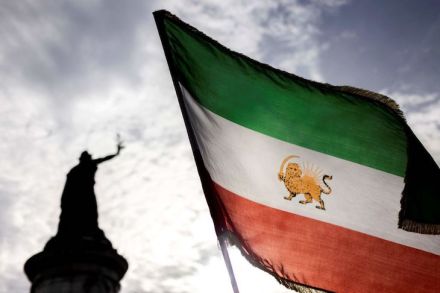
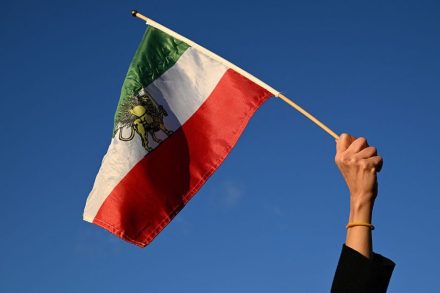
Earlier this week in Los Angeles – home to the largest Iranian community in the United States – thousands gathered in solidarity with protests unfolding in their homeland. Amid the sea of national flags and chants against the Islamic Republic, some demonstrators carried Lion and Sun banners and invoked a return to the pre-1979 monarchy, signalling a strand of sentiment that looks back to Iran’s last Shah. The rally took a darker turn when a truck drove into the crowd, underscoring the depth of division within the diaspora debate over Iran’s future. For some Iranians, particularly in the diaspora, the monarchy represents a lost period of national pride and state

What’s really going on in Iran?

24 min listen

Spectator contributor and author Charlie Gammell and Freddy Gray discuss what is really happening as protests play out on the streets of Iran. They discuss imams turning on the Shah, whether Trump could actually be seeking talks rather than war, what the Middle East wants from a fractured Iran, and what issues could arise from replacing the regime with Reza Pahlavi.

How Trump can squeeze the Iranian regime

The Iranian people have shown true courage as they protest against the Islamic Republic. As the pressure mounts, some elements of Iran’s regime have been pushing to negotiate with the Trump administration – trying to create the impression they are ready to drink from the ‘poisoned chalice’ as the Islamic Revolution’s founder Ruhollah Khomeini did to end the Iran-Iraq war in 1988. Saeed Laylaz, a reformist economist, told Euro News last week that, ‘I have information that Iranian political officials are ready for dialogue with the other side’. More pragmatic figures within the Islamic Republic – namely Supreme National Security Council Secretary Ali Larijani, President Masoud Pezeshkian, Iranian Foreign Minister Abbas Araghchi

Why Iranians like me long for the Shah’s return

As Iranians defiantly take to the streets, many outsiders wonder why the crowds are chanting the name of the late Shah and his heir, the Crown Prince. What is it about the last dynasty that ruled Iran that has such a great fascination for Iranians, both at home and abroad? The Shah’s return would not be the first time that this dynasty has helped to rescue Iran Many Iranians – including those, like me, who were born there but forced to flee – look to the past as a golden time. The Crown Prince has repeatedly said that he has every interest in overseeing a transition to a democratic and

The Shah can't save Iran

When authoritarian regimes start to wobble, outside observers often reach instinctively for the single, familiar idea of ‘the alternative’. It is a human reflex, but a dangerous one. In Iran, as the clerical theocracy shows signs of fracture and the country’s crisis deepens, some Western voices have begun to flirt with a thought that feels neat and historically legible: the return of the Shah’s son. That would be a profound mistake. Iran doesn’t need a restoration Iran’s tragedy since 1979 has been that an autocracy was replaced by another autocracy. The lesson should be plain: changing the personality at the top is not enough. What matters is the nature of

Western feminists should be standing up for Iran's women

As Iranians revolt against the brutal Islamic theocracy that has throttled their civilisation since 1979, striking images of young Persian women have been circulating online. They are lighting cigarettes by burning photographs of Ayatollah Khamenei. With their insouciant attitude, tumbles of curls, kohl-lined eyes and lolling fags, they could be on the cover of an Arcade Fire album. Originally a symbol of protest among the Iranian diaspora, the trend has now caught on in Iran. These women have reignited the same spirit that sparked widespread protests across the country in September 2022, when Mahsa Amini died in custody following her arrest for disobeying the country’s modesty laws. In the aftermath

When will Iran finally be free?

An Iranian friend of mine once told me that ever since fleeing his homeland in the early days of Iran’s Islamic Republic, his grandfather had kept a packed suitcase by his front door, awaiting the day he may return. Alas, in his case, that day never came: the old man was buried before he could ever revisit the places and people he most cherished. As a new wave of protests sweeps through Iran, nearly 47 years since the establishment of the current regime, once more I, and many other lovers of Iran but despisers of the Islamic Republic, find ourselves daring to hope again. Or, at least, hoping to dare

Unrest is spreading across Iran

‘If they shut down the internet, you know it’s serious,’ said a well-informed observer of Iran to me yesterday morning. The internet blackout came yesterday afternoon – along with over a million Iranians marching in streets across the country. Strikes are continuing in bazaars and the cries for the end of the Islamic Republic are becoming more brazen. A video was sent to me before the blackout from Iran’s upscale northern suburbs, home to the sons and daughters of the regime elites, in which the cries of ‘death to the dictator’ could be heard loud and clear. ‘We are excited,’ was the caption to the video. And this morning there

Why the Iran protests feel different this time

The most recent spate of protests in Iran have escalated since 28 December and raised hopes once again that the end of the Islamic Republic may be imminent. As the security forces ignore the government’s offer of dialogue and the death toll rises, how realistic is that? Iranians – much like the French – are healthily predisposed to taking to the streets to voice grievances Protests in Iran are nothing new. In fact, Iranians – much like the French – are healthily predisposed to taking to the streets to voice grievances. In France, marches tend to focus on the Champs-Élysées and Place de la Concorde; in Tehran, protestors habitually march along

The end is drawing near for Iran's mullahs

As a wave of protests swept across Iran last night, the internet was completely shut down. I have no idea what is happening to my friends, my family, or anyone else. My best friend Champ was at the demonstration. I desperately hope he is safe. Iran is a nation wanting its soul back. Protesters burn the Islamic Republic flag and replace it with Iran’s real flag Overnight, there were protests throughout Iran. From Qom and Mashhad, the most religious cities, to Rasht and Anzali, the most secular, people took to the streets. In Tehran, there were protests in the poorest parts to the richest parts of the city. I couldn’t believe

It's a matter of when, not if, Israel steps up its war on Hezbollah

Israeli aircraft struck targets in Lebanon on Monday. Hezbollah and Hamas military infrastructure was targeted in the Hezbollah heartland of the Beka’a, and in Hatta and Aanan villages in the south of the country, according to a Israel Defense Forces (IDF) spokesman. The Israeli strikes came days after the expiry of the 31 December deadline set for the Lebanese Armed Forces (LAF) to complete the disarmament of Hezbollah south of the Litani River. This runs according to the terms of the ceasefire agreement which ended the last war between Israel and the Iran-supported Shia Islamist militia in November 2024. The LAF has predictably failed to complete its mission. No one

Iranians feel emboldened – but protestors are paying a heavy price

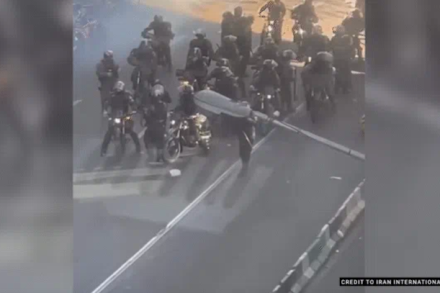
For the past fortnight, Rozita (not her real name) has been out on the streets of Tehran, calling for an end to the Islamic Republic. The 37-year-old witnessed the anti-riot police shooting indiscriminately at her fellow citizens. ‘They don’t think about who or where they are shooting. I’ve been beaten up by them many times before,’ she tells me. Fortunately, Rozita’s quick on her feet. She learned her lesson from the Woman, Life, Freedom protest in 2022. Rozita was hit in the face with tear gas and she needed medical treatment, which she still takes to this day. She was also shot with plastic bullets. She would have been hit with real

The keffiyeh crew’s curious silence on Iran

And just like that, the left loses interest in the Middle East. In 2025, they spoke of little else. They culturally appropriated Arab headwear, poncing about in China-made keffiyehs. They wrapped themselves in the Palestine colours. They frothed day and night about a ‘murderous regime’ – you know who. And yet now, as a Middle Eastern people revolt against their genuinely repressive rulers, they’ve gone schtum. It is especially electrifying to see Iran’s young women once again raise a collective middle finger to their Islamist oppressors What is it about revolts in Iran that rankle the activist class? These people love to yap about ‘resistance’ and ‘oppression’. Yet the minute

Iran wants its monarchy back

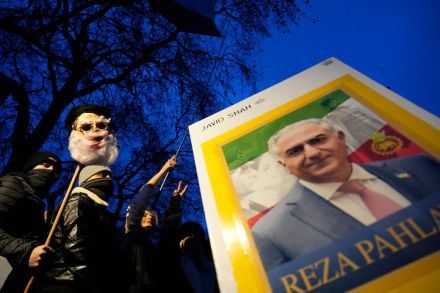
There are protests in Iran again. But this time, something is different. In the uprisings of 2019, 2022 and 2023, the dominant slogan was negative: what Iranians did not want. ‘Death to the dictator’ echoed through the streets. Today, the country has moved beyond rejection. Now there is affirmation. A name is being chanted: Crown Prince Reza Pahlavi. More than ten Iranian cities have risen up in recent days, from the most conservative quarters of society to elite universities. Across Iranian cities one hears slogans: ‘Pahlavi will return’, ‘Javid Shah’ – the Persian equivalent of ‘Long live the King’ – and simply, ‘King Reza Pahlavi’. For the first time since

Are we witnessing the end of Iran's Islamic Republic?

Iran’s clerical establishment has spent nearly half a century insisting – always with that brittle certainty peculiar to ideologues – that history culminated in 1979. That the Shah is a hushed embarrassment, monarchy a quaint relic, and the very notion of a crown something to be packed away with mothballs and other discarded finery. Yet politics, like biology, evolves in defiance of official catechisms. And Iran, in these final days of 2025, looks less like a regime in command than a contraption still whirring chiefly because no one has yet found the off-switch. Iran, in these final days of 2025, looks less like a regime in command than a contraption

Saudi Arabia and the UAE’s proxy war in Yemen

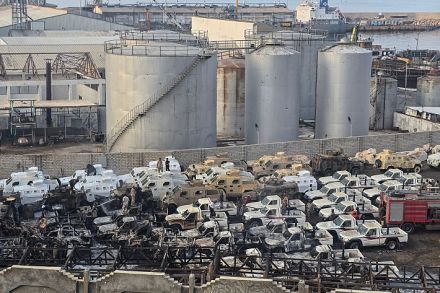
The escalation that emerged overnight in southern Yemen did not originate on the battlefield but in a relatively quiet logistical operation. It began with the arrival of two ships carrying weapons and military vehicles from the United Arab Emirates, docking at the port of Mukalla in Hadramawt. The cargo was unloaded without coordination with the Saudi-led coalition or with Yemen’s internationally recognised authorities. Early this morning, Saudi aircraft struck it at or near the port.  Mukalla marks a shift from managed rivalry to overt confrontation between Saudi Arabia and the UAE inside Yemen Saudi Arabia described the strikes as action against unauthorised external military support entering Yemen. It stated that

Why is Alaa Abd el-Fattah's return a 'top priority' for Keir Starmer?

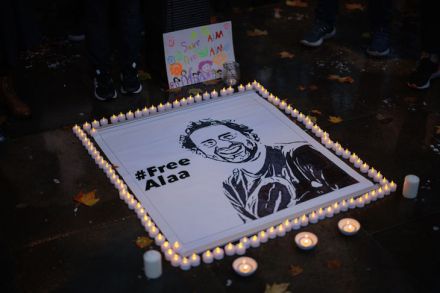
Apparently it has been a “top priority” for Keir Starmer and his government, since the moment they came to office, to return Alaa Abd el-Fattah to the United Kingdom. A man granted British citizenship only in December 2021. A man who had previously described Britons as “british dogs and monkeys”, who wrote that he “rejoice[s] when US soldiers are killed, and support[s] killing zionists even civilians”, and who declared, without equivocation, “I’m a violent person who advocated the killing of all zionists including civilians, so fuck of [sic]”. Top priority. The Prime Minister’s enthusiasm was echoed in chorus. Yvette Cooper expressed her ‘delight’. Hamish Falconer assured the world that ‘the

Israel is turning the screws on Hezbollah

The killing of Lebanese Hezbollah military chief Haytham Ali Tababtabai by Israel this week reflects how much the balance of power between Jerusalem and the Iran-backed Shia Islamist group has shifted since the year-long war between the two in 2023 and 2024. Yet, paradoxically, Tabatabai’s killing also shows that nothing has been finally settled between the two enemies. While Hezbollah has now been shown to be much weaker than Israel, it nevertheless remains stronger than any internal faction in Lebanon, including the official Lebanese government. The practical consequence of this is escalation: Hezbollah is seeking to repair and rebuild its capacities, no force in Lebanon is willing or able to stop

A lethal standoff is playing out deep beneath Gaza

In 1929, René Magritte painted a picture that has since become iconic in both art and philosophy. The Treachery of Images depicts a finely detailed tobacco pipe with a caption beneath: Ceci n’est pas une pipe – ‘This is not a pipe’. Magritte’s point is subtle and enduring. It is indeed not a pipe, but an image of one. You cannot fill it with tobacco, light it, or smoke it. It is a representation, not the object itself. Israel manoeuvres within it, cautiously. Hamas exploits it, selectively. Saudi Arabia nods along, calculating Magritte was exploring the gap between signifier and reality, between the name and the thing named. His visual paradox