Middle East

Even Khamenei’s death might not finish the Iranian regime

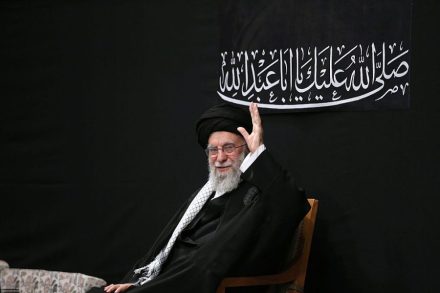
As of now, it is possible to draw a number of immediate conclusions from the war currently under way between the alliance of the United States and Israel, and the Islamic Republic of Iran. Firstly, the range and nature of US and Israeli targeting indicates that a determined attempt to destroy the 47 year old regime in Iran is now finally under way. The most senior leadership, up to and including Supreme Leader Ali Khamenei, appear to have been targeted – and possibly killed – by Israel. Action of this kind make sense only as part of a comprehensive attempt at regime destruction. History provides no unambiguous examples of regimes removed by
Can Trump’s strikes topple the Ayatollah?

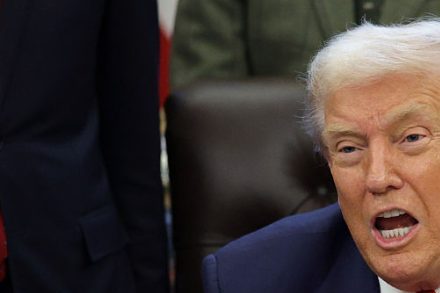
“We’re going to destroy their missiles and raze their missile industry to the ground,” said Donald Trump, as he stood at the podium in his white USA cap and announced the launch of a “massive and ongoing” military operation against Iran. “It will be totally, again, obliterated.” He had to say “again” because he has insisted over and over that Iran’s nuclear facilities had been “utterly obliterated” last summer, after Operation Midnight Hammer. But the objective of these latest midnight or very early morning strikes, conducted again by US and Israeli forces working together, is already far broader than the wiping out of weapons of mass destruction – whether that

Donald Trump makes his move against Iran

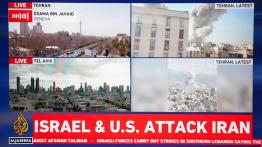
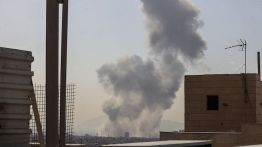
This morning, the long-anticipated Israeli and American strikes on Iran finally arrived. At 08:10 am local time, Israel and the United States began a coordinated military operation against Iran. Dozens of Israeli Air Force aircraft took part in the opening strike. Blasts were heard in Tehran. Within hours, explosions were reported in Isfahan, Qom, Karaj and Kermanshah. Videos circulated of Iranian citizens laughing and cheering as Israeli and American aircraft crossed the capital’s skies The news established something that had been contested for months: Donald Trump meant what he said. The thresholds he articulated were fixed and public. Those who accused him of bad faith, those who doubted that he

The US and Israel launch a major attack on Iran

Donald Trump has urged Iranians to ‘take over’ their government after the United States and Israel struck targets across the country. A multitude of Iranian military and government targets were hit by missiles in what is turning out to be a joint operation far more comprehensive than the 12-day air campaign last June. Back then, Trump’s objectives were limited: degrade Iran’s three largest nuclear facilities. This time, Trump’s eyes are on a bigger prize – a full-scale decapitation of the Iranian leadership and a degradation of Tehran’s military power. Trump has just rolled the dice and plunged the United States into yet another war in the Middle East “We are

The Iranian case for bombing Iran

Think about how bad things would have to be for ordinary Iranians to plead for Donald Trump to carry out military intervention against their own country (though in reality, against their hostage takers, the Islamic Republic). Iranian women, children, men, flora and fauna are dying at the hands of the Iranian regime. Killing is what they do Iran, the world’s oldest country, has been ruled by a theocratic authoritarian terrorist regime for the past 47 years. Following the Islamic Revolution in 1979, when the ayatollahs took over, a mafia of clerical families took the Iranian people hostage. In the ensuing half decade, the country with the fourth largest oil reserves

The US is offering Iran a lifeline – will it take it?

The talks are still alive. Just. Iranian and US diplomats, engaging indirectly through Omani intermediaries, have yet to make any substantive progress towards a framework of understanding that governs further talks – as Kafkaesque as that might sound – but they are talking, and that is the best that the diplomats can hope for right now.  What separates Iran and America is a vast chasm between their respective red lines, and beyond that, the very substance of the talks themselves. The US is not willing to countenance an Iran that enriches uranium, has a ballistic missile programme and arms proxies throughout the region.  Iran, for its part, perhaps unwisely – as

The question we keep asking after Afghan sex attacks

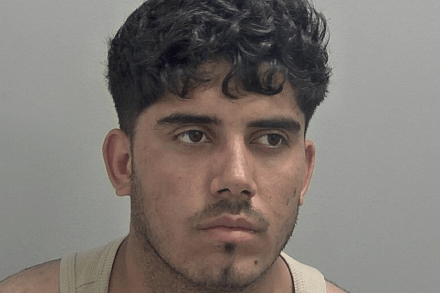
Why was he here? It’s a question we are forced to ask over and over again in borderless Britain, after another asylum seeker is convicted of another monstrous crime. This time, it is the rape of a 12-year-old girl in Nuneaton. Twenty-three-year-old Afghan national Ahmad Mulakhil was found guilty on Tuesday of rape, child abduction, sexual assault and taking indecent photos of a child following his ten-day trial at Warwick Crown Court. The details boil the blood. Mulakhil came across the girl playing in a park The details boil the blood. Mulakhil came across the girl playing in a park. He took her to a cul-de-sac, where he repeatedly raped her. He

Trump must help Iranians bring down the Islamic regime

With diplomatic talks between the US and Iran set to take place in Muscat, Oman, today, the prospects for de-escalation between the two countries appear slim to non-existent. Teheran is clear that it is prepared to discuss only its nuclear programme and has so far refused the White House’s demands to put its ballistic missile programme, support for regional proxies, and internal repression on the agenda.   With diplomacy on the verge of faltering, preparations for an American military strike are proceeding apace. The USS Abraham Lincoln carrier group has now reached Middle Eastern waters and the area for which United States central command is responsible. Additional military assets – F15E

Britain’s shameful tolerance for terrorism

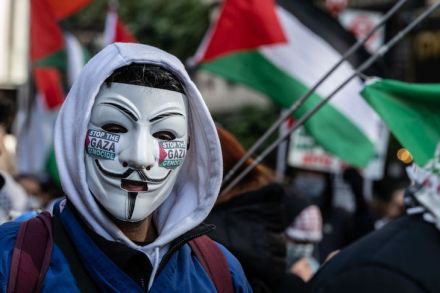
The news that Shahid Butt, a man convicted of terrorism who served five years for conspiring to bomb the British consulate in Yemen, is standing as a pro-Gaza candidate for Birmingham City Council has shocked many. Butt was jailed in 1999 as part of a terror plot linked to Abu Hamza, yet now seeks public office representing constituents in the Sparkhill ward. The spectacle of a man with a terror conviction campaigning on a platform of Palestinian solidarity while dismissing his past as youthful ‘mistakes’ has understandably provoked outrage. From Birmingham to Gaza, the pattern is consistent: British institutions have developed a tolerance for terrorism and extremism But if Butt

The West will regret not intervening in Iran

The longest war of the twentieth century was between Iran and Iraq and lasted for eight years. Yet during those eight years, Iraq killed fewer Iranian civilians than the Islamic Republic has reportedly killed in the past two weeks. The regime’s security forces enter hospitals, not merely to arrest protesters, but to shoot them in the head. In the piles of bodies visible in the tragic videos circulating online, some corpses, with bullets in their heads, still have hospital monitors attached. This is a government at war with its own people. It is an occupying force that does not see Iranians as citizens, but as expendable sacrifices for the larger goal of spreading Islamic

Iran’s regime is failing at home. Prepare for it to export its revolution abroad

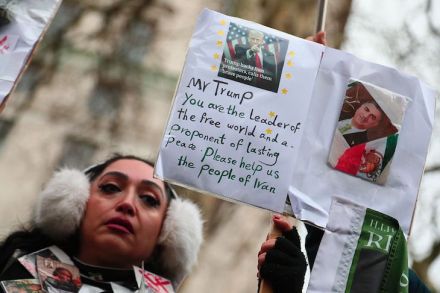
The mullahs are learning – again – that one can beat a crowd, but not indefinitely beat a people. A state founded on permanent emergency eventually discovers that emergency is its only language, and coercion cannot persuade forever. The protests convulsing Iran, met with familiar brutality, are not just street politics. They are a referendum on clerical rule, the terror apparatus sustaining it, and the international indulgence keeping it alive. Britain’s complacency in the face of Tehran’s terror isn’t naïve; it’s strategic self-harm Britain’s response to foreign despotism is tepid: ‘urge restraint,’ ‘call for calm,’ ‘monitor closely.’ As Tehran accelerates punishments and enforcers hunt the defiant, Westminster persists in therapeutic

Iran: why theocracies survive – with Peter Frankopan

25 min listen

In the 21st century, the theocratic nature of the Iranian regime – ruled by senior Shia clerics – appears to be a rarity. The constitutional role of religion is perhaps matched only by the Vatican City and Afghanistan, though these vary in terms of autocracy – as evidenced by the brutal suppression of protests across Iran in the past few weeks. The regime, installed following the 1979 revolution and led first by Ayatollah Khomeini and now Ayatollah Khameini, has proven remarkably resilient; how has it survived so long? Peter Frankopan – professor of global history at Oxford University – joins Damian Thompson to discuss the tensions associated with state control

How America could help bring down Iran's Islamist regime

The near-total internet blackout imposed by the regime in Iran has now continued for nearly a week. Behind the veiled effort to cut the country off from the world, sufficient evidence has emerged to establish a clear picture of what the authorities are attempting.  In a move wearyingly familiar to all observers of the contemporary Middle East, the leaders of the Islamic Republic of Iran are seeking first to isolate the masses of protestors now in the streets demanding an end to their regime. Then, under the cover of the resulting darkness, they are slaughtering a sufficient number of them so as to drive the remainder back into a terrified silence. 

Iran, the Shah and the revival of kingship

Earlier this week in Los Angeles – home to the largest Iranian community in the United States – thousands gathered in solidarity with protests unfolding in their homeland. Amid the sea of national flags and chants against the Islamic Republic, some demonstrators carried Lion and Sun banners and invoked a return to the pre-1979 monarchy, signalling a strand of sentiment that looks back to Iran’s last Shah. The rally took a darker turn when a truck drove into the crowd, underscoring the depth of division within the diaspora debate over Iran’s future. For some Iranians, particularly in the diaspora, the monarchy represents a lost period of national pride and state

What’s really going on in Iran?

24 min listen

Spectator contributor and author Charlie Gammell and Freddy Gray discuss what is really happening as protests play out on the streets of Iran. They discuss imams turning on the Shah, whether Trump could actually be seeking talks rather than war, what the Middle East wants from a fractured Iran, and what issues could arise from replacing the regime with Reza Pahlavi.

How Trump can squeeze the Iranian regime

The Iranian people have shown true courage as they protest against the Islamic Republic. As the pressure mounts, some elements of Iran’s regime have been pushing to negotiate with the Trump administration – trying to create the impression they are ready to drink from the ‘poisoned chalice’ as the Islamic Revolution’s founder Ruhollah Khomeini did to end the Iran-Iraq war in 1988. Saeed Laylaz, a reformist economist, told Euro News last week that, ‘I have information that Iranian political officials are ready for dialogue with the other side’. More pragmatic figures within the Islamic Republic – namely Supreme National Security Council Secretary Ali Larijani, President Masoud Pezeshkian, Iranian Foreign Minister Abbas Araghchi

Why Iranians like me long for the Shah’s return

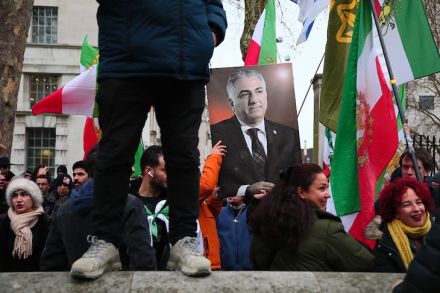
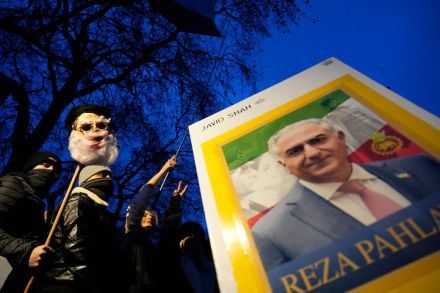
As Iranians defiantly take to the streets, many outsiders wonder why the crowds are chanting the name of the late Shah and his heir, the Crown Prince. What is it about the last dynasty that ruled Iran that has such a great fascination for Iranians, both at home and abroad? The Shah’s return would not be the first time that this dynasty has helped to rescue Iran Many Iranians – including those, like me, who were born there but forced to flee – look to the past as a golden time. The Crown Prince has repeatedly said that he has every interest in overseeing a transition to a democratic and

The Shah can’t save Iran

When authoritarian regimes start to wobble, outside observers often reach instinctively for the single, familiar idea of ‘the alternative’. It is a human reflex, but a dangerous one. In Iran, as the clerical theocracy shows signs of fracture and the country’s crisis deepens, some Western voices have begun to flirt with a thought that feels neat and historically legible: the return of the Shah’s son. That would be a profound mistake. Iran doesn’t need a restoration Iran’s tragedy since 1979 has been that an autocracy was replaced by another autocracy. The lesson should be plain: changing the personality at the top is not enough. What matters is the nature of

Western feminists should be standing up for Iran’s women

As Iranians revolt against the brutal Islamic theocracy that has throttled their civilisation since 1979, striking images of young Persian women have been circulating online. They are lighting cigarettes by burning photographs of Ayatollah Khamenei. With their insouciant attitude, tumbles of curls, kohl-lined eyes and lolling fags, they could be on the cover of an Arcade Fire album. Originally a symbol of protest among the Iranian diaspora, the trend has now caught on in Iran. These women have reignited the same spirit that sparked widespread protests across the country in September 2022, when Mahsa Amini died in custody following her arrest for disobeying the country’s modesty laws. In the aftermath

When will Iran finally be free?

An Iranian friend of mine once told me that ever since fleeing his homeland in the early days of Iran’s Islamic Republic, his grandfather had kept a packed suitcase by his front door, awaiting the day he may return. Alas, in his case, that day never came: the old man was buried before he could ever revisit the places and people he most cherished. As a new wave of protests sweeps through Iran, nearly 47 years since the establishment of the current regime, once more I, and many other lovers of Iran but despisers of the Islamic Republic, find ourselves daring to hope again. Or, at least, hoping to dare