David Loyn

David Loyn

David Loyn is a visiting senior fellow in the War Studies Department at King’s College, London and author of ‘The Long War – the Inside Story of America in Afghanistan’.

Chaos in Iran spells trouble for the Taliban

The US-Israeli attack on Iran presents an opportunity to get rid of the Taliban in Afghanistan. If there is a collapse of central authority in Iran, tens of thousands of Afghan former soldiers living in exile there could use the power vacuum to mobilise, return home and fight against the Taliban. There are several resistance groups who have advanced plans to fight but need a reliable haven outside the country to launch attacks inside Afghanistan. Iran, which has a 600-mile border with the country, could be the launchpad they need. This represents a unique opportunity for Afghanistan, as for the first time the country faces conflict on both sides.

There’s trouble at the top in the Taliban

From our UK edition

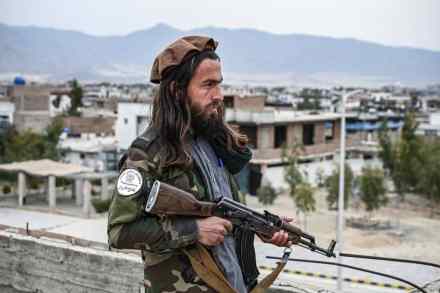
Taliban rule of Afghanistan becomes madder by the day. The only thing they reliably do is find new ways of making life impossible for women. They recently jailed the senior government advisor, Dr Farouq Azam, for more than a month after he made the subversive suggestion that women medical professionals should be sent to assist with earthquake relief. But while the Taliban attempt to portray a united front against the outside world, there is mounting evidence of division at the top of the movement. Taliban rule of Afghanistan becomes madder by the day.

The UN has become the Taliban’s lapdog

From our UK edition

Britain and other western nations have abandoned the women of Afghanistan in pursuit of a UN programme of engagement with the Taliban that has demonstrably failed. For the fourth time since the Taliban takeover in August 2021 representatives of the few countries that still have an Afghan policy met the Taliban again in Doha last week. The UN plan is to engage the Taliban to encourage them to ease lives for women, and move towards wider political representation. But instead the Taliban have doubled down since the last Doha meeting.

Can India and Pakistan de-escalate?

From our UK edition

Once again Pakistan’s strategy of asymmetric warfare against its larger South Asian neighbour has plunged the region to the brink of a wider war. Long-term Pakistani support of anti-India militant groups – in particular Lashkar-e-Taiba (LeT) and Jaish-e-Muhammad (JeM) – continually destabilises the region. The attack on tourists in the honeymoon location of Pahalgam meadow in Kashmir was deliberate, savage, targeted at Hindu men, and clearly targeted to provoke a response and create fertile ground for further action. Women who survived were told, ‘Tell this to Modi.

Ignoring the Taliban won’t end their reign of terror

From our UK edition

The Taliban have always had a strange misogynist world view, weirdly preoccupied by sex. The first time they were in power in Afghanistan in the late 1990s, the governor of the western province Herat banned women from walking or talking in the street outside his office, in case he was distracted by footsteps ‘or hearing the sound of their laughter'. The Taliban attempted to control every aspect of life. But it has taken until now, three years into their second period of power, for them to impose the full set of restrictions they imposed then.  The last three years have been bad enough, particularly for women and girls, banned from education and employment, and encircled by dozens of rules.

How Islamic State rose from the ashes to attack Moscow

From our UK edition

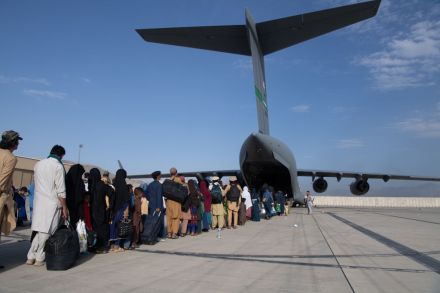
Since America’s disastrous scuttle from Kabul in August 2021, there had been rising concern that Afghanistan would once again become a crucible of international terrorism. The claim by the Islamic State group to have carried out the Crocus City Hall attack in Moscow appears to have justified that fear.  An Islamic prophecy says that when the Mahdi, the messiah, returns to herald the end of the world, he will come bearing black flags in the land of Khorasan The four gunmen – who are said to have walked casually as they fired into the crowds, leaving more than 130 people dead – were citizens of Tajikistan, which borders Afghanistan to the north.

The SAS fought a dirty war in Afghanistan

From our UK edition

The SAS blocked UK visas for Afghan special forces soldiers, perhaps fearing that they would be able to produce evidence incriminating the SAS in the shooting of unarmed civilians. That was the striking implication of a BBC Panorama investigation this week – with the Ministry of Defence confirming that it is undertaking a review of 2,000 cases where Afghan applications were blocked by the SAS. Under the ‘ARAP’ scheme, introduced after the fall of Afghanistan in August 2021, Afghans employed by the British government had a near-automatic right to resettle in the UK. This was because they were among the people most likely to face retribution from the Taliban after the fall of Kabul.

Tobias Ellwood is being the Taliban’s useful idiot 

From our UK edition

It has now been almost two years since the Taliban came to power in Afghanistan. In recent weeks, a number of international assessments have been published looking at the state of the country under their leadership.  One UN report looked at the potential for terrorism in a country where ‘terrorist groups enjoy greater freedom… than at any time in recent history.’ Links between the Taliban and al-Qaeda are said to be ‘strong and symbiotic’, with al-Qaeda ‘rebuilding operational capability’ from its base in Afghanistan.

Biden can’t ignore the Taliban’s terrorist links for ever

From our UK edition

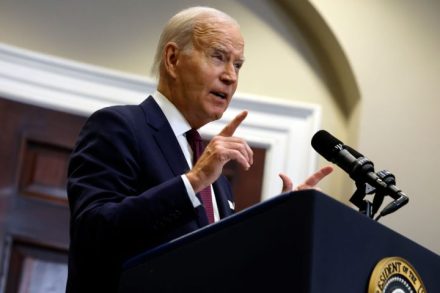
President Joe Biden is either not being briefed on what is going on in Afghanistan, or more likely choosing not to believe what he is being told. In an unscripted aside at the end of a press conference on Friday he said, ‘Remember what I said about Afghanistan? I said al-Qaeda would not be there. I said we’d get help from the Taliban. What’s happening now? What’s going on? Read your press. I was right.’ The president was not right. In fact, he was wrong. What he was referring to was a commitment by the Taliban to support operations against international terrorists operating in Afghanistan.

Why Iran and the Taliban are clashing over water

From our UK edition

Remarkable as it may sound, it looks as if a border skirmish this week between Iranian and Afghan border guards, which involved at least three deaths, was about water. This is not the first border clash as tensions grow over scarce water resources between Iran and the 20-month old Taliban regime, although it is the first that is known to have cost lives.   Earlier this month, Iranian President Ebrahim Raisi raised the issue of the 1973 water treaty, designed to share access to water from the Helmand river, which flows across the border. He claimed that the Taliban were violating terms of the agreement, under which Afghanistan is committed to allowing 850 million cubic metres of water a year to flow into Iran.

Is the West preparing to sell out the Afghan people again?

From our UK edition

While the Taliban continues to double down against women in Afghanistan, the UN appears to be wanting to normalise relations with them. Women in the country are already blocked from almost all jobs and all education. Yet a week after the extremist group barred females from working for the UN, the organisation’s deputy secretary general Amina Mohammed said it was now time to take ‘baby steps’ towards ‘recognition (of the Taliban)’.   As UN spokespeople tried to limit the damage, protests poured in from Afghan opposition groups. One statement from a wide group of Afghan artists and human rights activists slammed nearly two years of ‘futile regional and global diplomacy’ since the Taliban took Kabul in 2021.

Joe Biden’s shameful excuses for the Afghan withdrawal fiasco

From our UK edition

It is an iron law that if governments put out important documents just ahead of a long holiday weekend there is something fishy about them. So it was with President Biden’s decision to release a report on America’s 2021 withdrawal from Afghanistan on Thursday, before the Easter weekend. The White House press corps had about ten minutes to read it before a briefing where the first questioner, channelling Gilbert and Sullivan’s modern major-general, described it as the ‘very definition of a modern major holiday news dump.

Afghanistan’s guerrilla generation: an interview with Ahmad Massoud 

From our UK edition

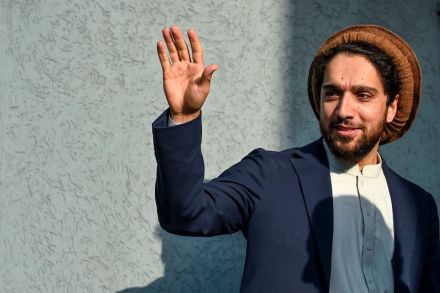
Fighting has continued against the Taliban in Afghanistan while the world has not been watching. The commander of the main opposition force, Ahmad Massoud, began with 643 fighters after the fall of Kabul in August 2021, and now claims to have a force of 5,000 across six provinces in a belt in the northeast of the country. In a rare meeting in Tajikistan, where he commands remotely from across the northern border of Afghanistan, the 34-year-old resistance leader told me that western countries are making a mistake by trying to engage with the Taliban. Massoud inherited the mantle of resistance leader from his father, the legendary guerrilla commander Ahmad Shah Massoud, who was killed in an al Qaeda terrorist attack two days before 9/11.

Afghanistan, one year on

From our UK edition

Afghan women’s meetings on Zoom with their supporters outside the country often now end in tears as the stories of Taliban rule are too hard to bear. One prominent regional woman’s leader was beaten by her own younger brother. He said she could not go out on her own without a male relative and needed to cover more of her face and head. ‘I brought him up as if I was his mother,’ she said in shock and humiliation. This is self-policing of a society in fear. It is a year since President Ashraf Ghani fled the country, telling no one and precipitating the swift collapse of his government.

Al-Zawahiri’s killing exposes the US’s shame in Afghanistan

From our UK edition

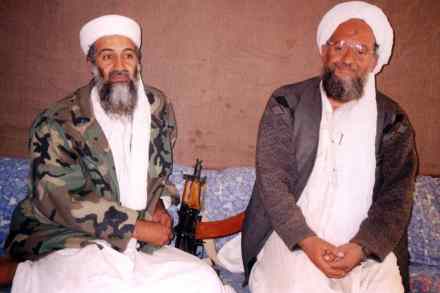
Sherpur District, to the north of central Kabul, where al-Qaeda leader Ayman al-Zawahiri was killed, lies at the western end of a huge former military base where British forces were besieged in the winter of 1879, during the second Anglo-Afghan war. The parade ground, still a wide open area until 2001, was quickly built over by warlords allied to the U.S. when the Taliban were pushed out of power after the attacks of 9/11. I went there with a military commander who was transformed overnight into a building contractor as the plots were parcelled out and garish concrete villas rose out of the dust. Built by one set of warlords after 9/11, those Sherpur villas were seized by other warlords last August when the Taliban took power again.

Could an uprising succeed against the Taliban?

From our UK edition

The social media accounts of the new so-called ‘National Resistance Front’ (NRF) in Afghanistan give the impression of a raging insurgency already taking place against the Taliban. The talk is of ‘intense clashes’, with the Taliban suffering ‘heavy casualties.’ There are exaggerated accounts of running battles and successful ambushes against the Taliban across the north and east of the country, in particular in the Panjshir Valley, a long narrow region surrounded by mountains on all sides, not far north of Kabul. It was here that the NRF first raised its flag last summer as the country collapsed in the face of a Taliban assault. That flag is one of the problems facing those trying to organise effective military opposition to the Taliban.

Afghanistan is starving to death and there is nothing the West can do

From our UK edition

The scale of the human tragedy unfolding in Afghanistan is hard to comprehend. The economy has collapsed, some 20 million people face death by starvation and international agencies like the World Food Programme have already doubled their estimate of what they will need just to keep people alive. They are appealing now for a staggering $2.4 billion (£1.8 billion) to get food stocks into position and keep a pipeline of supplies into the country through the winter. There have been reports of parents selling their babies and there are scenes of daily humiliation as people pile up household goods in the street to try to sell for scraps of food. The banks have hardly any cash to circulate and the Taliban have added to an acute liquidity crisis by banning the use of foreign currency.

How Muslim are the Taliban?

From our UK edition

I first met Haji Mir, a tribal elder from Helmand, in Herat in western Afghanistan in 2002, not long after the fall of the Taliban. He had come to Herat to ensure the safety of Helmand under the new American-backed administration. At the end of the trip he protected us when we were stoned by a mob after filming a large outdoor event marking Eid. Mir was a decent local leader in a system that valued his skills. But when I tried to track him down ten years later, at the height of British military involvement in Helmand, I was told he had been targeted and killed by the Taliban.

Punch-up at the palace: why the Taliban is tearing itself apart

From our UK edition

The office of the Afghan president, the Arg, sits in more than 80 acres of parkland, quadruple the size of the White House estate, and more than twice the size of Buckingham Palace grounds. Since it was built in the late eighteenth century, most of its occupants have died violently in one of the elegant buildings, built inside a large square compound of thick stone walls as a copy of an ancient fortress. But there has rarely been a scene like the one earlier this month, following the visit to Kabul of the head of Pakistan’s intelligence service, the ISI, Lieutenant General Faiz Hameed. He had come to Kabul to impose Pakistan’s will on the shape of the new Taliban government.

How stable is the Taliban government?

From our UK edition

Some western governments and media have been involved in a collective act of wishful thinking in recent months over the Taliban—believing them somehow to be ‘moderate’ and on the way to forming an inclusive government. The idea began with their elevation of status as a partner in negotiations with the US in Doha. They were legitimised, so some believed they had changed. The last remnants of that belief must have been burnt out by the appointment of the Taliban cabinet this week, which was not inclusive in any sense, but was the result of three weeks of bartering between different Taliban factions, only resolved by the intervention of the head of Pakistani intelligence, the ISI, General Faiz Hameed.