World

War on Iran was not ‘unprovoked’

I’ve been thinking a lot about the phrase ‘unprovoked war’. It’s been rolling off leftist tongues since the explosion of hostilities in Iran. This week, Jeremy Corbyn, Zarah Sultana and scores of hoary peaceniks wrote a letter to the Guardian insisting Britain should have nothing to do with America and Israel’s ‘unprovoked war’ in Iran. Trump’s noisy doubters and Israel’s legion haters are using language as a weapon Here’s my question: is the rape and murder of Jews not a provocation? Was the worst anti-Jewish atrocity since the Holocaust – 7 October – not a provocation? The tyrants of Tehran were the paymasters of the jihadist brutes who carried out

The right’s Israel fracture

As the joint American-Israeli military campaign in Iran continues, President Trump’s coalition is starting to exhibit some cracks. The war in Iran has emerged as a proxy battle over a broader, long-simmering conflict within the right about Israel. And the fight over Israel is, in some important ways, a proxy battle about Jews in general. Big picture, what we’re seeing now is that the traditional divisions on the right between paleoconservatives and neoconservatives, between hawks and doves, are being reshaped into a battle over Israel specifically. It’s a very difficult subject; this issue has become highly emotional and personal for those on both sides, and even in my world, it’s

The Iran war has exposed the world’s maritime chokepoint

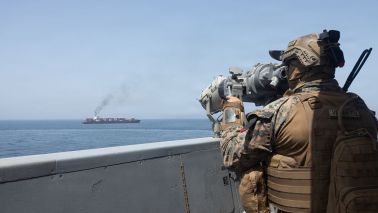
The war with Iran is exposing a vulnerability at the heart of the global gas market: the extraordinary concentration of liquefied natural gas supply in the Persian Gulf. Qatar alone accounts for roughly a fifth of global LNG exports, almost all of it passing through the narrow Strait of Hormuz. The conflict has illustrated how easily a single maritime chokepoint could interrupt a significant share of the world’s gas trade. Even if the war ends soon, the vulnerability it has exposed will not disappear US president Donald Trump has suggested the conflict may soon end, describing the campaign as largely achieved and possibly over “very soon.” The Gulf monarchies also appear eager for a

Ukraine

No, Zelensky: World War Three hasn’t started

Ukrainian president Volodymyr Zelensky says that World War Three has already started. Speaking to the BBC on the eve of the fourth anniversary of the Russian invasion, it’s understandable why he would want to take this line, but he’s wrong. What is striking about Putin is the lack of a messianic ideology On an emotional level, Zelensky has seen millions of his citizens flee within and out of his country, its cities and infrastructure shattered, and Vladimir Putin’s propagandists denounce him variously as a Nazi apologist, drug addict and western puppet. Of course he will frame this in the most apocalyptic of terms. More to the point, Ukraine is now
ukraine zelensky

Wartime love is not for the faint-hearted in Kyiv

People say love develops more quickly in war – because in a world where anything can happen, what is there to lose? Single and in Kyiv for a while, I decide to swallow my distaste for dating apps and start swiping. The first thing I notice is how many men are from Turkey and based a thousand miles away. How would this work? I decide to focus on the local ones and start chatting to a couple of guys. One seems reasonable if a little forward. He suggests meeting pretty quickly, then calls to chat. I don’t really know Ukrainian norms but frankly, hearing someone’s voice gives me faith that

ukraine love

Is the war in Ukraine any closer to ending?

Is the latest round of Russia-Ukraine peace talks, sponsored by the United States and currently under way in Geneva, likely to hasten the war’s end? Donald Trump seems to believe so. On Friday, the US President claimed that ‘Russia wants to make a deal, and Zelensky will have to hurry. Otherwise, he will miss a great opportunity. He needs to act.’ Europe, for its part, remains deeply sceptical and is urging Ukraine to fight on. As the EU’s Foreign Affairs chief Kaja Kallas told the Munich security conference last week, ‘the greatest threat Russia presents right now is that it gains more at the negotiation table than it has achieved

Israel

Why Iran marks the end of neoconservatism

45 min listen

Spectator World columnist – and Heritage Foundation fellow – Daniel McCarthy joins Freddy Gray to explain how Trump’s war with Iran could mark the end of an era, that of neoconservatism. For Daniel, there is no contradiction between Trump’s ‘America First’ policy and its overseas interventions: Trump is pursuing a version of hegemony that will reduce the need for future interventions. If all goes to plan, this could mark an ideological watershed that stretches back to the first Gulf War in the early 1990s – but it’s a big ‘if’. What if the conflict spirals out of control? To what extent was this driven by Trump, or by Netanyahu? And

Does Trump know what he is trying to do in Iran?

Donald Trump has urged Iranians to ‘take over’ their government after the United States and Israel struck targets across the country. A multitude of Iranian military and government targets were hit by missiles in what is turning out to be a joint operation far more comprehensive than the 12-day air campaign last June. Freddy Gray and Jacob Heilbrunn join to discuss why now, how this attack is fraught with risk for Trump’s presidency, and how Trump’s administration was hijacked by the neoconservatives.

The hypocrisy of the Maduro fan club

Finally, the left has found a ‘kidnap victim’ it cares about. Having spent more than two years making excuses for Hamas’s savage seizing of 251 Israelis, having violently torn down posters of those stolen Jews, now the activist class has suddenly decided that abduction is bad after all. Why? Because a dictator they admire, Nicolas Maduro, has been abducted by the United States. What do we even say about people who get more agitated by the seizing of a 63-year-old corrupt ruler than they do by the abduction of a nine-month-old Jew? That was Kfir Bibas, kidnapped along with his mother and his four-year-old brother during Hamas’s carnival of fascist

maduro

America

Europe

Merz is feeling the pressure of Germany’s state elections

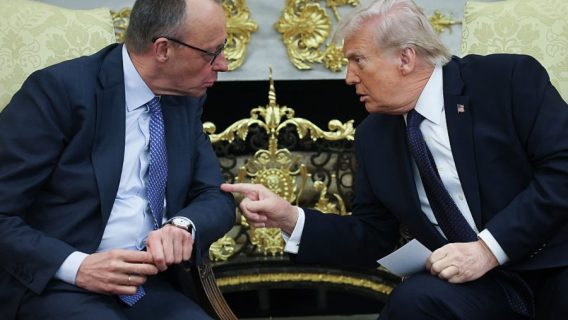
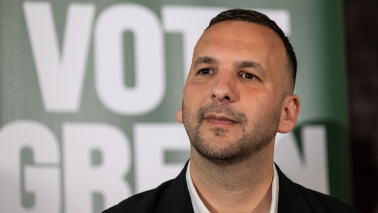
Amid growing uncertainty caused by the US-Israel offensive against Iran and surging gas prices, Germany had its first major election of the year yesterday, with the new state parliament of Baden-Württemberg elected. Forecasts indicate that the Greens, who have been governing the state for the past 15 years, will remain in control of the premier office in Stuttgart, while the Christian Democrats (the CDU) have come in as a close second. Over the past couple of months, it appeared as if the Christian Democrats, with their leading candidate Manuel Hagel, could win the election. But negative vibes from Berlin impacted Hagel’s campaign, as promised reforms continue to stall and Friedrich

state germany

The killing that has divided Washington and Paris

Washington’s warning last week about the spread of far-left violence in France did not go down well in Paris. In an interview on Sunday, France’s Foreign Minister Jean-Noël Barrot accused America of wading into a matter that “concerns only our national community”. This doesn’t surprise conservative commentators in France who have coined the phrase “Red Privilege” The diplomatic spat began at the end of last week when Sarah Rogers, the US State Department under-secretary for public diplomacy, posted on X. Referring to the murder of a young nationalist student, Quentin Deranque, allegedly kicked to death by members of a far-left organization called the Young Guard, Rogers said his death demonstrated why

I burnt a Quran. Now I may have to flee Britain

My name is Hamit Coskun and last year I was convicted in a British court of religiously aggravated public order offense. My “crime”? Burning a copy of the Quran outside the Turkish consulate in London. Moments later, I was attacked in full view of the street by a man. I was hospitalized. Then I was arrested and convicted in Westminster Magistrates Court. I managed to get that conviction overturned, with the help of the Free Speech Union and the National Secular Society, but now the Crown Prosecution Service is appealing my acquittal, with the case being heard tomorrow in the High Court. Now I am in discussions with the White House

How the Islamic Republic tried – and failed – to destroy Iranian culture

The Islamic Republic in Iran is not only at war with the United States and Israel. For years, the country’s government has been waging war on Iranian culture. Music, poetry, storytelling, dogs, dancing, singing, art, dice and card games, romance, tolerance and the honoring of women are central to Persian culture and its ancient history. Yet under the Islamic Republic, these cherished expressions are banned or stigmatized, especially when pursued by women. The departure of Iran’s enlightened and educated from the country they love is one of the most poignant brain drains in history In the dark, dystopian times immediately following the Islamic Revolution in 1979, couples holding hands or

‘We don’t know what’s going on or why we’re doing this’: how Trump’s Iran gamble backfired

“Donald Trump is a complicated person with simple ideas,” said Kellyanne Conway, the former White House senior counselor. “Way too many politicians are the exact opposite.” It’s a good way of understanding the 45th and 47th President and his extraordinary success. His turbulent personality causes mayhem, yet his political aims have remained constant, straightforward and popular. Decades ago, as a New York tycoon with a keen eye on international affairs, he identified three priorities for America: tackle the nation’s trade imbalances, force NATO allies to spend more on defense, and destroy terrorists. When it comes to realizing those simple ideas, however, his more complex attributes emerge. Trump believes in mixing

Revenge of the cheese-eating surrender monkeys

French President Emmanuel Macron’s approval rating rose by six points last week. It will likely continue to climb following his visit to the Charles de Gaulle aircraft carrier on Monday. The pride of the French navy recently arrived in the eastern Mediterranean to protect Cyprus, and Macron was in his element as he strode across the deck of the carrier. A photograph of the occasion appeared in the New York Times underneath the headline: “France Is Sending a Large Naval Force to the Middle East.” The last time there was a great conflagration in the Middle East, France was very much on the sidelines Macron was helicoptered onto the Charles

Why the Venezuela model would be a disaster for Iran

What next for Iran? Donald Trump appears to have a plan: the Venezuela model. The US president has hinted that, just as with the South American nation, he wants to try working with elements inside the existing regime, rather than backing exiled opposition figures. The biggest massacres in Iran’s recent history happened under so-called reformers “We have a formula, Venezuela, smart country,” he said this week. “We’ve taken out 100 million barrels of oil which is now in Houston…being taken care of and made so beautiful in refineries.” But if Trump really is planning on copying his playbook for Venezuela in Iran, he should be warned: it will be a

The Iran war is just what Putin’s depleted coffers need

Of all the parties watching the chaos in the Middle East unfold, one should be rubbing its hands together with particular satisfaction. Russia has not fired a shot in this conflict, lost no allies it cannot afford to lose and has so far gained rather a lot, with more to come. A cynic might call it the perfect war for Vladimir Putin. Moscow’s public reaction has been characteristically theatrical. The Foreign Ministry denounced American and Israeli actions as a “reckless step” and a “dangerous adventure.” Things have gone no further. There has been no announcement of political or military support for Iran from the Kremlin – nor is there likely

putin

Putin is enjoying the Iran war

After Iran unleashed a torrent of missiles against its neighbors – including those with whom it had enjoyed friendly relations such as Turkey and Azerbaijan – few regional leaders are in the mood to congratulate the new Supreme Leader Ayatollah Mojtaba Khamenei. Few, but not none. “At a time when Iran is confronting armed aggression, your work in this high office will undoubtedly require great courage and dedication,” wrote Vladimir Putin in an official message of congratulation to Khamenei Junior. “I am confident that you will honorably continue your father’s legacy and unite the Iranian people in the face of these severe trials.” Putin was also at pains to “reaffirm our

neocon

I spent 25 years fighting neocons. Then Trump became one

Like everyone, I’m glued to the news coming out of Iran. I’m experiencing some depression, as one might, upon realizing that much of what one has worked on for 25 years has suddenly gone up in smoke, destroyed when Donald Trump discovered he was pretty much a neocon after all. Like everyone else, I have no idea what will happen in Iran, whether Trump’s bombing and perhaps breaking apart a very unpopular regime will lead to something better, or just chaos, a failed state spitting out a cohort of embittered men. But one can’t help but acknowledge the American right really likes bombing foreign countries, despite what had seemed an

el mencho

El Mencho is dead. What’s next for Mexico?

For as long as there has been a Mexico, there have been cartels. Geography is not always destiny, but in Mexico’s case it has been stubbornly close. For centuries, states have tried to impose order on Mexico’s northern frontier. None have succeeded. Power in Mesoamerica always radiated outward from the Valley of Mexico. The Aztecs built their empire there. The Spanish consolidated their rule there. The modern Mexican state governs from there. To the north lies a harsher landscape – arid, mountainous, thinly populated and historically resistant to centralized control. Deserts and mountains provide space. Space creates autonomy. Autonomy, in weakly governed regions, creates opportunity for dissent, for rebellion, for

Will the war in Iran really weaken China?

Analogies in international politics are tricky and easily abused, yet they remain irresistible because they can illuminate patterns that are otherwise hard to see. Consider the present moment.  Just as Ukraine has become a growing burden for Washington and its Western allies, Iran is now a strategic burden for Moscow and Beijing. The US, particularly under the Trump administration, appears to be placing less emphasis on supporting Ukraine. Something similar may be happening in reverse with Iran.  Moscow continues to provide Tehran with assistance – most notably intelligence on US military targets – but the broader pattern suggests caution rather than deep commitment. Beijing, despite its close ties with Iran,

China Iran

The Iran war has exacerbated the failure of European energy policies

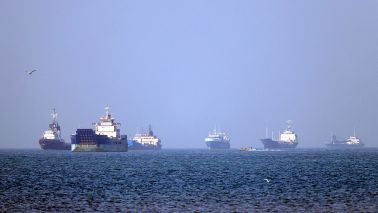
The history of the global trading system is a story of narrow and vulnerable waterways: the Suez and Panama Canals, the St. Lawrence Seaway, the Straits of Dover and the Skagerrak, which defends the entrance to the Baltic. But none has the power to seize up the global economy as much as the Strait of Hormuz. Barely 30 miles wide at the narrowest point and bounded on one side by the state of Iran, this passage is used for a quarter of the world’s oil supplies and a fifth of its liquified natural gas (LNG). As we have now discovered, the consequences of disruption are severe: on the day that

energy

Israel wants to destroy Hezbollah once and for all

At around 2:30 a.m. on March 2, Israel bombed Beirut’s mostly Shia southern suburbs in response to a Hezbollah rocket attack on northern Israel. The road heading into Beirut from South Lebanon and the city’s southern suburbs was jammed with cars filled with Lebanese fleeing further reprisals. Some 52 civilians were killed and 154 injured, a hefty butcher’s bill even in this part of the world. Most Lebanese are happy Hezbollah has been defanged, even if they wish it wasn’t thanks to Israel Hezbollah’s actions were a demonstration of their ongoing support for Iran, but goading Israel was a cataclysmic miscalculation. Not only did it guarantee that the Jewish state

Is it wise for Spain to goad Donald Trump?

Spain’s refusal to allow the United States to use its military bases at Morón de la Frontera (Seville) and Rota (Cádiz) for its war on Iran, arguing that the US-Israeli attacks are “unilateral military actions outside the United Nations charter” has brought the simmering conflict between Pedro Sanchez, Spain’s socialist Prime Minister and President Trump to a head.   Sanchez’s carefully calculated strategy has been to position himself as one of Trump’s leading opponents on the world stage On Wednesday Sanchez followed up by delivering a stunning rebuke to Trump. Speaking for ten minutes on national television, he said that his government’s position could be summed up in four words:

special relationship

Trump isn’t the greatest threat to the Special Relationship

Britain’s refusal to fully back the United States over strikes on Iran has triggered an unusually public transatlantic row. It has also revived an old question about the future of the so-called “Special Relationship.” When Donald Trump returned to the White House last year, many in Westminster doubted Keir Starmer could build a workable relationship with him. The two men could hardly be more different in temperament or politics, and predictions of an early rupture were widespread. For a time, however, Starmer appeared to defy those expectations. Britain weathered Trump’s latest tariff wars better than most countries, and the Prime Minister seemed to have found a cautious way of managing

Who’s winning the missile war?

In the early hours of February 28, 2026, Operation Epic Fury commenced with large-scale American and Israeli air strikes against Iranian military, command, missile and infrastructure targets. Since then, the United States and Israel have conducted extensive operations against Iran, while Iran has retaliated with missile strikes against US bases, Israel and its regional neighbors. This is an initial assessment of the missile war, which has defined the early stages of this conflict. Over the past two nights, Iranian ballistic missile usage appears to have decreased sharply The central military dynamic between Israel and the United States on the one hand, and Iran on the other, can be understood as

Why Iran is not Iraq

At the moment, a lot of people – notably including the British Prime Minister, Sir Keir Starmer – are comparing the current war with Iran with the Iraq invasion of 2003. Do they have a point? There are several common claims of comparison, some good, some bad. When Saddam fell, there was little appetite in Iraq for a western-aligned replacement The principal claim, in Starmer’s case, is that what happened in Iraq means the UK should steer well clear of any further involvement anywhere. It reminds me of the final scene in that magnificent film, Chinatown. A private detective moves to intervene to stop a horror unfolding but one of

What role will Turkey play in the Iran conflict?

34 min listen

Today NATO forces intercepted an Iranian missile headed for Turkey. While it remains unclear where that missile was intended to land, questions have emerged over whether President Erdoğan can continue his strategy of geopolitical pragmatism. So far the Turkish leader has managed to appeal to China, Russia, Europe and the US. But will he be forced to pick a side? Freddy discusses this with Spectator writer Owen Matthews and the recent reemergence of Kurdish forces being funded by Israel and the US to attack the Iranian regime.

Trump’s ultimate target in this war is China

The United States and Israel killed Ayatollah Khamenei, and Xi Jinping’s decade-long project to build an alternative to the American-led order died with him. For years, Beijing quietly assembled a network of dictatorships and client states designed to blunt American power. Iran supplied China with cheap oil and kept Washington bogged down in the Middle East. Russia waged war on Ukraine with Chinese materiel support, a gamble that was supposed to cement a powerful anti-western axis but has instead bled Moscow into dependence on Beijing. Regional proxies from Lebanon to Gaza added just enough chaos to stop Washington focusing on China. The Chinese Communist party (CCP) propped up Nicolas Maduro’s

Inside MAGA’s meltdown over Iran

When President George W. Bush invaded Mesopotamia in 2003, everybody laughed at Comical Ali, the bespectacled Iraqi information minister who kept insisting that the American “rats” were doomed as Saddam Hussein’s regime collapsed around him. The world moved on. Iran is not Iraq, as President Donald Trump’s supporters are so fond of saying, and Bush-era “forever wars” are no more. Plus, these days the comedy communications come directly from the Commander-in-Chief. At the weekend, as missiles rained across the Middle East, Trump’s cabinet officials mostly avoided attention-grabbing interviews. The boss, however, embarked on his own heroic PR campaign. Taking questions from just about any reporter who happened to call, he

Won’t someone please think of Dubai’s influencers?

The human spirit is incredibly resilient really. Even in the depth of our concern over the Israeli-American war against Iran, the worry about what might come next, we can still find time to feel a warm and comforting sense of schadenfreude over the large number of British women with stapled-on lips who are cowering in their Dubai apartments as the Iranian shells come raining down. The name under which these women collectively labor is “influencer,” a term which, like “content creator” is close to meaningless and both could be usefully replaced by “shitgibbon” or “unemployable.” We laugh at their sense of entitlement, their shock that the real world has intruded

dubai