World

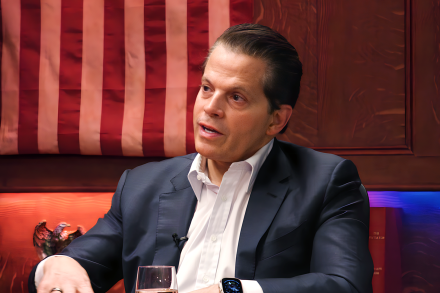
Is Trumpism unraveling? With Anthony Scaramucci

44 min listen

In this episode of Americano, Freddy speaks with former White House communications director Anthony Scaramucci about his new book All the Wrong Moves, breaking down the systemic failures driving American populism, the economic fallout of foreign conflicts and rising national debt and his sharp critique of Donald Trump's political strategy and economic policies. https://www.youtube.com/watch?

Putin’s miserable election rigging

After the counting of the ballots comes the number crunching to identify the level of fraud in this weekend’s Russian elections. The Kremlin has claimed a crashing victory for Vladimir Putin’s United Russia party, but preliminary analysis paints a picture of voter disillusion and frantic electoral manipulation. The more blatant the rigging, the less plausible the fiction Putin had framed these elections to the State Duma, the lower chamber of the Russian legislature, as a referendum on his rule and the war. In a TV address on Wednesday, he told his people that “your choice and your will shall once again demonstrate that millions of people stand behind our soldiers, that we are a united people bound together by shared values, historical memory, and love for our motherland.

election

Time is up for Friedrich Merz

Friedrich Merz is the most tragic chancellor in the young history of the reunified Germany. It is time for him to step down. This was made very clear, when he faced the cameras after yet another election that was lost by his party, the CDU. After losing Saxony-Anhalt and then Mecklenburg-Vorpommern to the far-right Alternative for Germany (AfD) – while Berlin fell to the socialist far-left Die Linke – everyone here in Germany expected a speech with consequences. Would he declare the “Brandmauer” – the firewall, that would prevent the CDU from ever even getting majorities on bills through in parliament with the AfD – to be over? Would he step down and make way for a new chancellor? Painstakingly, nothing of the two happened: Friedrich Merz stated simply that he will stay.

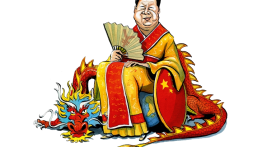
China is trying to corner the global economy

The way US prosecutors tell it, Huawei is a bunch of racketeers whose crimes range from stealing technology to evading sanctions against Iran. The company allegedly ran what it called a "competition management group," whose purpose was to award monthly bonuses to employees who stole the most valuable information from competitors. Staff were invited to submit entries via a special encrypted email box.  "The entire business operated through a pattern of theft, lies and cover-ups," according to Taylor Stout, a federal prosecutor in the Justice Department, as he laid out the government’s criminal case to jurors.

Xi Jinping china

The autistocracy: the men on the spectrum who rule our world

Ben Delo, the source of one half of Reform’s £72 million mega-donation, wrote in The Spectator last year about being diagnosed with Asperger syndrome as a child. The self-confessed geek, now 42, was socially awkward. He did not fit in and he did not care to. His condition would shape the course of his life, making him very good at math, very rich and hellbent on getting involved in politics. Christopher Harborne, the crypto billionaire who has matched Delo’s donation, we know much less about. Despite being a billionaire many times over, the 63-year-old has the air of a chemistry teacher and an aversion to interviews. Like Delo, who until recently lived in Hong Kong, he also forged his way in the Far East, living in Thailand.

autistocracy
Germany

Another AfD win could mean the end for Germany’s embattled chancellor

Just two weeks after the Alternative for Germany's (AfD) victory in the state of Saxony-Anhalt, two more state elections are taking place in Germany this Sunday. Friedrich Merz's government, already under pressure, is in for more bad news. Mecklenburg-Vorpommern and Berlin are both heading to the polls this weekend. The former could see yet another win for the AfD, though it remains a head-to-head race between the anti-immigration party and the Social Democrats (SPD). In Berlin, polls suggest that a total of four parties are in the running for the most votes on Sunday, with the socialist Left (Die Linke) leading the Christian Democrats (CDU), AfD and the Greens.

How I became a Canadian nationalist

This is how I became a Canadian nationalist. I did it on the rebound. I never wanted to, and it is a strange experience to find myself pounding the arm of my chair when Mark Carney, of all people, defies the Almighty Trump. But it is so. Once, like that poor man who speaks the first lines in The Godfather, I believed in America, arsenal of liberty, land of the free, inheritor of Magna Carta and so on. Then, after a couple of years in Moscow, I went to live in Washington, DC. And it was there that I was wooed and eventually seduced by the land of maple syrup. To begin with, it was the discovery that soppy British sentiment about the US was not in practice returned. It wasn’t so much that they didn’t like us as that they had barely heard of us. Legally, Britain didn’t seem to exist.

Labour must go further and faster in the North Sea

John Healey stood in front of two giant robotic arms this week and promised to “make Great Britain growth Britain again.” The Chancellor also promised, borrowing a catchphrase from his neighbor in No. 10, to deliver “good growth in every postcode.” In the North Sea, 150 miles east off the coast of Aberdeen, lies the first big test of this promise. The 6,000-ton Jackdaw extraction platform is ready to start pumping gas from a field three miles below the surface. Twenty years after the Jackdaw field was first successfully prospected, it will, at the stroke of a ministerial pen, finally be allowed to operate. Industry bosses were told to prepare for a possible government handshaking visit on September 15.

The Houthis are complicating Trump’s already failing war

To lose one Middle East sea lane vital for the global economy may be regarded as a misfortune; to lose both looks like carelessness. As every armchair strategist knows, Donald Trump has lost free passage through one strait: Hormuz. Last week he let another slip from his grasp, Bab al-Mandeb, taken by Tehran’s allies, the Houthis. More than a quarter of the global oil supply could now fall under Iranian control – and Trump's war is more doomed than ever.  For those confused about Middle Eastern waterways, a look at the map... The Strait of Hormuz, conduit for a fifth of the world’s oil, is east of Saudi Arabia and south of Iran. All the way over on the other side of Saudi Arabia, on its western coast, is the Red Sea leading down to the Bab al-Mandeb Strait.

houthis

Steve Bannon: Tech oligarchs hid the AI extinction threat

23 min listen

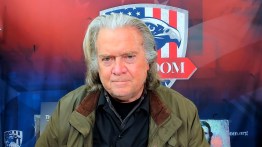
In this episode of Americano, Freddy speaks with Steve Bannon – former White House chief strategist for Donald Trump – about the ideological convergence between national populists and progressive leftists as they confront the existential risks of unbridled AI, the suppression of internal whistleblower warnings by Silicon Valley elites, and the urgent necessity of cutting off Chinese access to Western microchips and capital. https://www.youtube.com/watch?

In Iran, America is being sucked deeper into an unwinnable war

Tehran knows it does not need to defeat the United States in a conventional war. It can instead exploit the vulnerabilities of America and its Sunni Gulf allies by opening up new fronts. With shipping in the Strait of Hormuz disrupted, Saudi Arabia has been transporting oil via the Red Sea and keeping global energy markets just about under control. But that alternative Red Sea route is now being threatened and the economic consequences are becoming considerably more serious. Iran’s mullahs are widening their war with the US not only through direct attacks, but through their Shia allies and proxies across the Middle East. Earlier this month, the Iran-backed Houthis seized strategically important territory across Yemen’s Red Sea coast.

Why would Canada want to hitch itself to the EU?

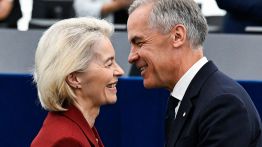
“Canada has what the world wants,” Mark Carney likes to tell people. But what does Canada want? The European Union, apparently. The bloc’s President, Ursula von der Leyen, has announced that Canada would become its first “associate member.” This is happening, she said, because “above all... Europe and Canada believe in democracy.” Really? The EU spent years trying to block Brexit. And in 2015, when Greece voted to reject the conditions on EU loans, Brussels replied with even more stringent conditions. “There can be no democratic choice against the European treaties,” von der Leyen’s predecessor said at the time.

Canada EU

Piddington and the idiocy of British middle-class progressivism

The Piddington result is in. Ninety-two percent of the voters in the tiny Oxfordshire village have voted to secede from the United Kingdom – 285 yes, 26 no. Why? Because the British government plans to dump hundreds and hundreds of small boat “asylum seekers” in a military base slap bang next to the Piddingtonians.  Of course, this is a symbolic gesture. There is no legal mechanism to actually achieve secession, which is perhaps just as well. As we know, it’s hard enough to get British politicians to acknowledge the results of an official national referendum, let alone a wildcat local one.

piddington

Did demographics decide the Swedish election?

After four years in office, Sweden’s right-wing government appears to have lost its parliamentary majority in Sunday’s election. The count is not yet complete, and the center-left opposition leads by just over 30,000 votes. As of writing, the red-green parties hold 176 seats versus 173 for the right-wing bloc. Late postal votes and ballots from Swedes living abroad are being counted this week. One seat may still change hands, although few expect the balance to change. The government made a mistake by allowing citizenship applications to continue under the old rules while the new and much stricter citizenship law was being prepared Even so, it is far from certain that the left-wing Social Democrats will be able to form a new government.

Zelensky’s strategy is national suicide

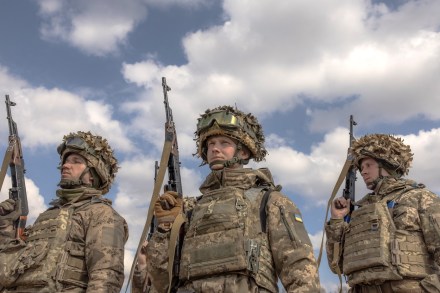
For Americans who follow the Russian-Ukrainian war, the past few months must look very strange. In the first half of summer, the story from Kyiv – and the many western media outlets that repeated it – was that Ukraine was winning. Then, not long after the NATO summit in July, Kyiv announced it lacked the interceptors to prevent a winter disaster. The country needed 300 missiles to survive, we were told. Even if these 300 missiles arrive, they are unlikely to protect a country as large as Ukraine from the sheer volume of Russian ballistic attacks and glide-bomb strikes. Now it’s September, and Ukraine says it’s facing a $27 billion shortfall in defense funding. There seems to be a vast difference between the public relations campaign and the reality in Ukraine.

When will the Ceuta disaster end?

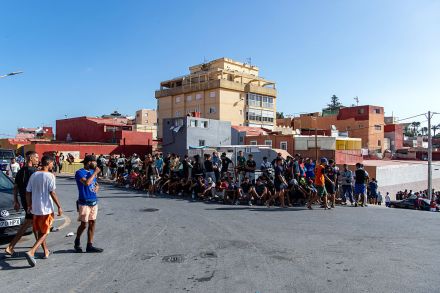
How many of the migrants who crossed from Morocco to Ceuta at the end of July remain in the city? Madrid has suggested that “only” about 5,000 remain in its North African exclave (population 83,000). But in that case why has Spain’s socialist government promised to create reception places for 6,000? The Ceuta government, meanwhile, puts the figure at about 13,000. Other local estimates run as high as 15,000. The argument over what Madrid knew about Ceuta beforehand is becoming increasingly embarrassing Hundreds of migrants unable to find places in official accommodation have been sleeping rough. One resident told El País: “Do you know what it is like to live with hundreds of blokes outside your front door shitting and pissing on the corners?

ceuta
al-qaeda

Al-Qaeda haven’t gone away, you know

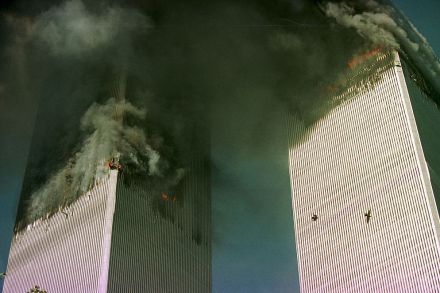
“They haven’t gone away, you know.” Gerry Adams’s chilling words, uttered during the peace process, to remind everyone that the IRA still existed, would do as well for al-Qaeda, the architects of the 9/11 outrage, the 25th anniversary of which fell on Friday. Osama bin Laden’s killing in May 2011 may have removed the titular head of al-Qaeda but, neither that well-deserved death, nor the subsequent splintering of al-Qaeda from ISIS (Islamic State of Iraq and Syria) in 2014, has diminished either the virulence or potential danger that al-Qaeda presents.

Dario Amodei and the AI apocalypse alchemists

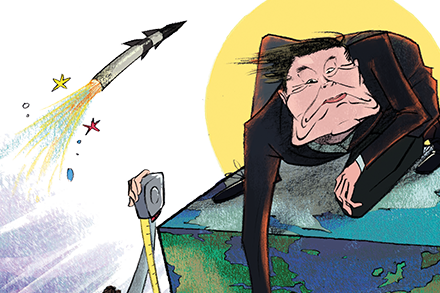
Such is the pace of change in AI that it has been, yet again, quite a weekend. On Saturday, Dario Amodei, boss of Anthropic, published an essay, "We Must Pace the Frontier," urging his industry to slow down. Within the hour Elon Musk replied: “Dario is right.” Sam Altman, the boss of OpenAI, followed. By Sunday, Amodei was on Face the Nation, again asking everyone to apply the brakes on the grand and momentous technology of our time. None of it proves imminent superintelligence. But it is the sound of something ominous The cynical explanation is obvious. OpenAI has just shelved this year's IPO; Altman suddenly believes it unwise.

Twenty-five years after 9/11, is America growing complacent?

The ghostly silence and calm that settled over Washington, DC is what many in the city remember most about the aftermath of the 9/11 plane hijackings and ensuing destruction of the Twin Towers and a portion of the Pentagon.  City streets were emptied of traffic. The airports closed and most public transit came to a halt. Not since British troops burned the Capitol and the White House during the War of 1812 had there been an attack of that magnitude on mainland America. The threat has not gone away. It has since morphed into smaller-scale events carried out by lone actors  Virtually all of the nation’s elected leaders and much of its bureaucratic workforce were evacuated.