Economy

  • AAPL

    213.43 (+0.29%)

  • BARC-LN

    1205.7 (-1.46%)

  • NKE

    94.05 (+0.39%)

  • CVX

    152.67 (-1.00%)

  • CRM

    230.27 (-2.34%)

  • INTC

    30.5 (-0.87%)

  • DIS

    100.16 (-0.67%)

  • DOW

    55.79 (-0.82%)

The IMF growth downgrade is more bad news for Rachel Reeves

Rachel Reeves lands in Washington tonight to be greeted with bad news. The International Monetary Fund (IMF) – whose spring meeting the Chancellor is attending – has just handed Britain the largest GDP downgrade of any G7 country.  In the freshly released update to their world economic outlook, the IMF forecast growth for the UK this year of just 0.8 per cent – down from the 1.3 per cent they’d previously projected. Things don’t get much better next year either, with just 1.3 per cent growth forecast, again downgraded from 1.5 per cent.  This downgrade singles out Britain and our European neighbours. While the IMF calls the overall effect of

Spotlight

Featured economics news and data.

Cutting Britain’s giant welfare bill would be an act of kindness

Does having money really matter that much? There are those, usually with quite a bit of it, who want us to care less about materialism. But, unequivocally, money really does matter – not because of any status it supposedly brings, but for the freedom it buys: freedom to choose how we live and how we look after others. Considering this, it seems that the deep disillusionment with mainstream politicians in recent years stems from a protracted and ongoing period of stagnant living standards over which they have presided. But the truth is that the average person has not got poorer since the global financial crisis. They have got a little

Mick Whelan gives the game away over striking railway workers

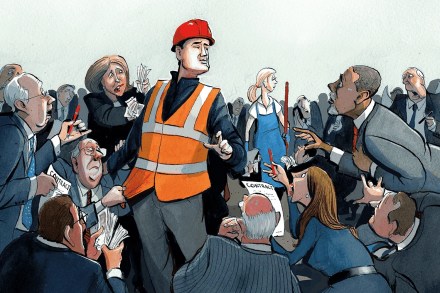
We’re all familiar with the usual trade union cliches: it’s not about us, it’s about passenger safety; staff morale is low; and strikers are being ‘victimised’. Or, in the words of Aslef general secretary Mick Whelan on ITV’s Good Morning Britain, train drivers are being ‘demonised’. More so than government ministers, who are forever portrayed by union leaders as callous evil-doers?     But it is what Whelan said next that really catches the ear. Asked whether he thought the public should be sympathetic towards train drivers on £60,000 a year turning down an offer which would take their pay to £65,000 a year, he said: ‘It isn’t about what we earn, it

The anti-Midas touch of Mad Money’s Jim Cramer

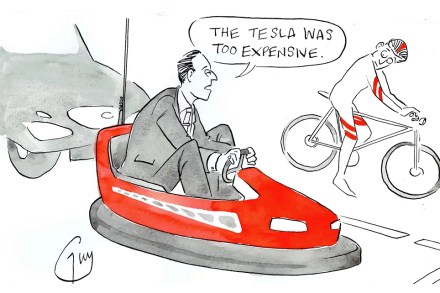
When Tesla, the electric-car company controlled by Elon Musk, went public in June 2010, pricing its IPO at $17 per share, Jim Cramer, the ubiquitous and highly confident American TV anchor, proclaimed on his show Mad Money that investors should avoid the stock at all costs. It was a ‘Sell! Sell! Sell!’ Cramer announced in his typical over-the-top, over-caffeinated style. But he wasn’t finished with his diatribe, not by a long shot. ‘You don’t want to own this stock,’ he continued. ‘You don’t want to lease it. Heck, you shouldn’t even rent the darn thing.’ The next day, another CNBC reporter found Musk on the streets of Manhattan and told him what

Have interest rates finally peaked?

Markets expected another interest rate rise today of 50 basis points. That’s exactly what they got. This afternoon the Bank of England has announced its tenth rate rise in a row, from 3.5 per cent to 4 per cent.  The Monetary Policy Committee (MPC) voted 7-2 to raise rates to 4 per cent; two members voted to hold the bank rate at 3.5 per cent, exposing the dovish leaning that has been a feature of the MPC during the pandemic years. This created a credibility issue for the Bank, as it failed to act on inflation for so long, putting itself in a position of having to play catch-up with

Don’t condemn Shell over its bumper profits

It is ‘obscene’ and ‘an insult to working families’, according to the TUC. If there was one thing more predictable than the doubling of profits of the energy giant Shell – given that the stuff it sells has soared in price over the last year – it was the storm of protest that it ran into following the announcement today. ‘No company should be making these kind of outrageous profits out of Putin’s illegal invasion of Ukraine,’ said the Lib Dem leader Ed Davey. Inevitably, there are now calls for higher windfall taxes, and even for state-ownership. But hold on? Shouldn’t we celebrate a major British company making lots of

Ukraine will not compromise

Among Ukrainians, there is little debate about how the war will end. The overwhelming consensus is that it cannot conclude until Russia has been fully repelled, and Ukraine’s borders are returned to the 1991 frontier when independence was declared after the Soviet Union collapsed. This means removing Russian troops from Crimea and the self-proclaimed republics of Luhansk and Donetsk in the Donbas region. Of course this is not an easy mission. But for Ukrainians, the alternative is unthinkable. The mass graves uncovered in Bucha have shown us what Russian occupation means. We have also seen, in the broken promises of the Minsk agreements, what any truce with Vladimir Putin is

The UK is right to keep faith in crypto

It will be a charter for fraudsters. It will usher in an open-season mindset for money launderers and criminals. And it will drag down the reputation of the City. There will be plenty of critics of today’s government decision to push forward with a regulated cryptocurrency market in London. In the wake of the FTX scandal, one of the largest in corporate history, many would rather see it banned completely. But crypto is more resilient than that – and the UK, if moves quickly, it can carve out a lucrative space as its leading hub.  No one could accuse Rishi Sunak or Jeremy Hunt of taking any risks with the

The dangerous myth of degrowth

Britain is beset by low productivity and stagnant growth, and things are not getting better. In the public sector, productivity stands at 7.4 per cent lower than it did before the pandemic. Until we can generate more growth in the economy, we cannot grow richer and real wages cannot grow. An uncontroversial statement, you might think – even if opinions vary on what to do about it. But no. There are people who genuinely don’t want economic growth, who think it an evil that must be ended. Take a comment piece published late last year in the normally sober pages of the scientific journal Nature. Under the title ‘Degrowth Can

Is corporate ‘purpose’ falling out of fashion?

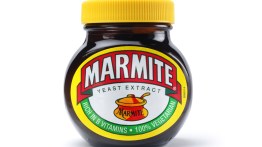
Does a change of chief executive at Unilever, the British-based shampoo-to-Marmite multinational, signal the demise of the fashion for corporate ‘purpose’? Alan Jope, who steps down in July, drew scorn when he declared that every brand in his portfolio should ‘stand for something more important than just making your hair shiny… or your food tastier’. His reputation was also dented by the failure of a £50 billion bid for the consumer arm of the pharma giant GSK – but it was his preaching about sustainability and purpose while Unilever’s performance continued to flag that ultimately cheesed off his shareholders. Jope’s departure after four years in post is not as dramatic

What does the IMF want from the UK economy?

Just what is a UK government supposed to do to keep the IMF happy? This morning it has issued a bulletin predicting that the UK will be the only major economy to shrink in 2023 – by 0.6 per cent – and blaming it on ‘tighter fiscal and monetary policies’. This represents an even-bleaker outlook than the IMF foresaw in October, when it pencilled in growth of just 0.3 per cent. Yet this is the same IMF which last September condemned Kwasi Kwarteng’s mini-Budget for slashing taxes, saying 'given elevated inflation pressure in many countries, including the UK, we do not recommend large and untargeted fiscal packages at this juncture, as

Can Jeremy Hunt’s gamble pay off?

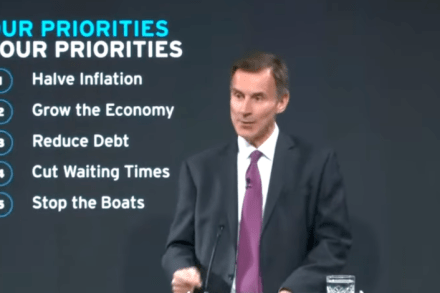
As the UK – and indeed the world – faces the prospect of an economic downturn this year, what exactly can the government do about it? This remains an ongoing debate within the Tory party, as Rishi Sunak continues to emphasise the importance of stability, while Liz Truss’s most loyal supporters keep pressuring the government to revive her focus on economic growth.  This morning a trio of cabinet members showed up in the City to suggest that it doesn’t have to be one or the other. Culture Secretary Michelle Donelan, Business Secretary Grant Shapps and the main act, Chancellor Jeremy Hunt, opened this morning’s conference at Bloomberg by insisting the

The dwindling case for living in London

The recent debate around ‘levelling up’ may be missing something. I would argue that there is another way to consider geographical inequality – and, by this alternative measure, a levelling has been under way for more than 20 years. I’ve spent three decades working in advertising, so it’s unsurprising that I tend to view economic life through the lens of consumption. By contrast, mainstream economists tend to view disparities through the medium of earnings or wealth. To me, measures of wealth should include not only the quantity of money you have but the breadth of worthwhile options available in choosing how to spend it. Let’s put it another way. If

It’s no surprise Britain’s manufacturers are struggling

Every month, we are bombarded with the Consumer Prices Index (CPI), the main inflation measure. It is currently running at 10.5 per cent, and although this is slightly down over the past two months, it is still far, far above the Bank of England’s target of two per cent. But what about inflation for people who are running businesses? The Office for National Statistics (ONS) also publishes a Producer Price Index (PPI) covering inflation for commercial organisations. If you think living costs for consumers are high, count yourself lucky you are not running a factory: the PPI of input prices (i.e. prices of raw materials and other goods) for December has come

Where Britishvolt went wrong

As a scattering of snow settles on the desolate site at Blyth in Northumberland that might have become the £3.8 billion Britishvolt battery factory, differences of opinion over the failure of this would-be flagship of the UK’s electric vehicle revolution become clearer. For Andrew Orlowski in the Daily Telegraph, it’s ‘a surprising success’, ministers having rightly declined to inject public funds into a venture with no market-ready technology, no customers and an executive team with a taste for private jets: at least ‘we know we won’t have another DeLorean to rue’. For the Observer, by contrast, it’s ‘a new low for ministers… to boast about cash they saved by not investing

Government borrowing hits £27.4 billion

Rishi Sunak ruffled his own party’s feathers last week when – in reference to last autumn’s market turmoil – he told an audience in Lancashire: ‘You’re not idiots, you know what’s happened.’ This was quickly interpreted as the Prime Minister branding the MPs and business leaders calling for immediate tax cuts as ‘idiots’, sparking not only backlash but also another round of debates on a topic that has been dividing the Tory party since last summer. Just how quickly and aggressively can the party start to cut the tax burden down from its 72-year high? Today’s public sector finance update for the month of December certainly doesn’t settle this debate,

The problem with Britain’s benefits debate

A report claiming a majority of us receive more in benefits than we stump up in tax made headlines yesterday. The analysis produced by the think tank Civitas contends that 36 million Britons, or 54 per cent, live in households that get more out than they put in. This finding may well appeal to those who reckon the country consists of lazy, feckless scroungers on the take from hard-working people like them.  At risk of spoiling the fun, the truth is a little more prosaic. For one, Civitas gets to its 54 per cent figure by counting not only pensions and welfare payments but ‘benefits in kind’, i.e. the ‘imputed value’ of the NHS

Have we become too dependent on the state?

I have to tip my hat to Civitas. The ‘Tufton Street’ think tank made quite a splash on Monday, including bagging the front page of the Daily Mail, with two striking claims. One was that more than half of UK households now receive more in benefits from the government than they pay in tax. The other is that the top 10 per cent of earners pay more than half of all income tax. Both headlines are correct, but a bit more analysis is needed to interpret these figures properly. For a start, this is not new information. The Civitas report acknowledges that it is simply repackaging data which was first published by the Office

Is the National Grid’s energy payment offer too good to be true?

Still resisting installing a smart meter in your home? If so, the National Grid might make you think again – by offering you free electricity. With low temperatures boosting demand for power, and output from wind and solar farms looking a little flaky, the grid needs to cut demand to avoid blackouts. This has prompted it to exercise, for the first time, something called the ‘demand flexibility service’, which offers incentives worth up to £10 or so to customers who are prepared to switch off their appliances for a couple of hours this evening. To take advantage of this offer, you need to have a smart meter and buy your electricity from

Why Britain will lose from America’s trade wars

Davos this year marked the start of a great economic divorce of the United States and Europe. Katherine Tai, the US trade chief, said that globalised capitalism is not working anymore. It leaves workers behind and gives fuel to populists, she said. Really, the Biden administration wants reassert US dominance in the world, and is using the country’s economic weight to do it. The Europeans, meanwhile, seem happy to become more protectionist too, with France’s Europe minister Laurence Boone calling the new US stance a ‘wake-up call’ and saying that Europe should respond in kind. Europe’s leaders are reacting to the reality that, with high energy prices, their manufacturing cannot remain competitive

Davos man is back in charge of the global economy

Davos was back with a bang this week for the first full-scale winter conference since the pandemic. And yet, the occasion marked something more significant than just a week of power breakfasts and champagne receptions. ‘Davos Man’ is back in charge of the global economy – and for better or worse everyone better get used to it. The Davos consensus is typically smug, self-satisfied and complacent as its many critics never tire of pointing out Sir Keir Starmer flew in to pitch his pro-business plans for the government everyone expects him to lead in a couple of years. The German Chancellor Olaf Scholz was there to explain how his country

Inflation is coming down – but when will we start to feel better off?

Despite this week’s inflation update, broad consensus remains that the headline rate is going to fall – significantly – this year. One of those people is the governor of the Bank of England. Andrew Bailey has told Media Wales that ‘a corner has been turned’ on those price hikes, as it appears the consumer prices index (CPI) has peaked and is now on a downwards trajectory. Bailey, ever the optimist, has a bad track record on these kinds of predictions. Having insisted for the better part of 2021 that inflation would simply be ‘transitory’, he and the Bank underestimated price hikes at almost turn, always playing catch-up with interest rate