Economy

  • AAPL

    213.43 (+0.29%)

  • BARC-LN

    1205.7 (-1.46%)

  • NKE

    94.05 (+0.39%)

  • CVX

    152.67 (-1.00%)

  • CRM

    230.27 (-2.34%)

  • INTC

    30.5 (-0.87%)

  • DIS

    100.16 (-0.67%)

  • DOW

    55.79 (-0.82%)

The IMF growth downgrade is more bad news for Rachel Reeves

Rachel Reeves lands in Washington tonight to be greeted with bad news. The International Monetary Fund (IMF) – whose spring meeting the Chancellor is attending – has just handed Britain the largest GDP downgrade of any G7 country.  In the freshly released update to their world economic outlook, the IMF forecast growth for the UK this year of just 0.8 per cent – down from the 1.3 per cent they’d previously projected. Things don’t get much better next year either, with just 1.3 per cent growth forecast, again downgraded from 1.5 per cent.  This downgrade singles out Britain and our European neighbours. While the IMF calls the overall effect of

Spotlight

Featured economics news and data.

Cutting Britain’s giant welfare bill would be an act of kindness

Does having money really matter that much? There are those, usually with quite a bit of it, who want us to care less about materialism. But, unequivocally, money really does matter – not because of any status it supposedly brings, but for the freedom it buys: freedom to choose how we live and how we look after others. Considering this, it seems that the deep disillusionment with mainstream politicians in recent years stems from a protracted and ongoing period of stagnant living standards over which they have presided. But the truth is that the average person has not got poorer since the global financial crisis. They have got a little

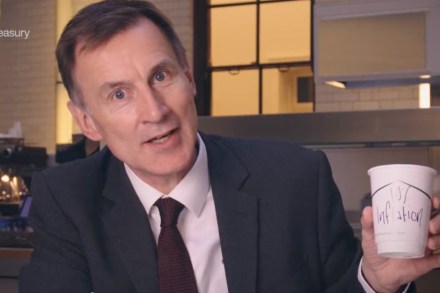
Why is Jeremy Hunt pretending he can control inflation?

When Rishi Sunak laid out his five pledges at the start of the year, his first and most prominent one was to halve inflation in 2023. A few weeks on: how’s that going?    This morning’s inflation figures would suggest not so well. Inflation fell in the 12 months leading up to December 2022 to 10.5 per cent, down from 10.7 per cent in November. So prices are moving in the right direction, but at a snail’s pace. Ross Clark has the details here, where he highlights how the rising cost of food and domestic services is cancelling out falling energy prices. Inflation is still projected to fall significantly by the time

What Boris Johnson should do next

If you were rich, foreign and globally mobile, would you choose to move to the UK? The trend, it turns out, is the other way: according to migration consultants Henley & Partners, we’ve seen a net outflow of 12,000 millionaires since 2017, with 1,500 departures last year. And it’s pretty obvious why. If tax is your top concern, a tightening of non-dom rules and the near-certain prospect of a Keir Starmer government abolishing non-dom status altogether would loom large. If you’re Asian, you may think Australia looks more welcoming. If you’re European and offended by Brexit, you might prefer Ireland or fashionable Portugal. But actually we’d be mad not to

Food price inflation hits 16.8 per cent

Oil prices are down, wholesale gas prices are down, so why isn’t inflation falling a lot faster than it is? The Consumer Prices Index (CPI) for December, announced this morning, stood at 10.5 per cent, down from 10.7 per cent in November and 11.1 per cent in October – a welcome boost but still way, way above the Bank of England’s target of 2 per cent. Petrol and also clothing were down in price, but they were nearly cancelled out by rising food prices. Food prices in the year to December rose by 16.8 per cent, which was up on December’s 16.4 per cent. The good news is that fuel,

Are we too downbeat about Britain’s economy?

Economic optimism is in short supply these days – but has pessimism about the UK’s economy been overegged by the likes of Sadiq Khan? The verdict of chief executives from around the world suggests as much: Britain has been ranked in the top three markets for investment, according to PricewaterhouseCoopers’s (PwC’s) annual Global CEO Survey. Today’s report follows the latest growth update that revealed that the economy did not contract in November as had been widely predicted, but grew slightly by 0.1 per cent. It marks a sharp contrast from the recent warnings of the London mayor, who said that ‘Brexit isn’t working’. The survey, timed to be published as the business

More Brits are looking to get back to work

Unemployment in Britain has risen again and is now at 3.7 per cent, up 0.2 per cent on the quarter. It’s a very small change in the grand scheme of things but, perhaps counterintuitively, a change in the right direction. This morning’s labour market update from the Office for National Statistics shows that while the headline unemployment figure has ticked up, the economic inactivity rate has slightly decreased by 0.1 per cent. This reflects a shift in the status of some working age people – approximately 55,000 between September and November 2022 – from being out of work and not seeking it to actively seeking work. With the redundancy rate

The markets have put the Truss mini-Budget behind them

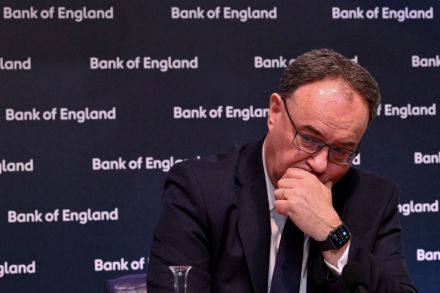
What is the lasting impact of Liz Truss and Kwasi Kwarteng’s mini-Budget? According to Andrew Bailey, the governor of the Bank of England, the big implications for monetary policy have come and gone. Speaking to the Treasury Select Committee this afternoon about the UK’s financial security, Bailey noted that the spike in both gilt yields and interest rate expectations last autumn have since fallen, with the former back to a ‘normal area of distribution’ and the latter having ‘seen correction’ as ‘new fixed mortgage rates’ have ‘come down.’ External member of the financial policy committee Jonathan Hall chimed in too, insisting that it ‘doesn’t look as though there was any

The real problem with Davos and the World Economic Forum

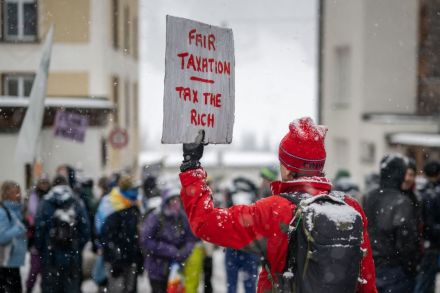
The political and financial elite are gathered in Davos in Switzerland for the World Economic Forum’s (WEF) annual meeting, which starts today. Yet before the conference has even kicked off, the narrative around it has already been crafted: the WEF will have to pivot away from the free-market and globalist outlook Davos usually promotes, and switch its focus to inequality instead. In a cost-of-living crisis, images of the glamorous Swiss resort and delegates quaffing champagne are not a good look.  This problem was pre-empted by many. Neither Rishi Sunak nor his chancellor Jeremy Hunt will be attending this year’s conference (trade secretary Kemi Badenoch and business secretary Grant Shapps will

Could Britain avoid recession altogether?

The idea that we face a certain recession has been drummed into our heads for months. The Bank of England recently produced a graph showing recession lasting into 2024. Just yesterday, the International Monetary Fund repeated its assertion that Britain faces an especially gloomy 2023, with recession inevitable – while simultaneously upsetting the House of Commons Treasury select committee by refusing to testify before it.  But could the unthinkable happen? Could Britain now avoid recession altogether? The Office of National Statistics’ (ONS) first estimate for economic growth for November shows that GDP grew by 0.1 per cent – unexciting, but still remarkable given that many economists were expecting negative growth

Early retirees: your country needs you

Bank of England chief economist Huw Pill had an unusually hard act to follow when he was appointed – after stints at Goldman Sachs, the European Central Bank and Harvard – to succeed the free-thinking Andy Haldane in 2021. Pill’s face is still not one most of us recognise, but he’s an interesting speechmaker and his latest, delivered in New York, is worth reading for its analysis of the UK’s labour market problem and its potential to prolong the current inflation. In essence, he observed, the US has a tight labour market because its economy has surpassed pre-pandemic levels and may even be ‘overheating’. But the UK has not reached

Six more years: how long can Biden go on?

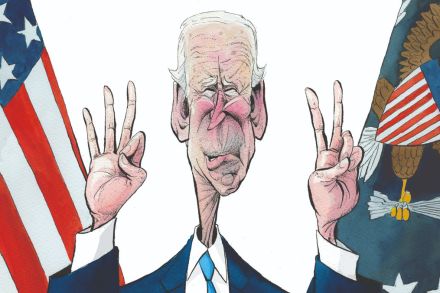
The presidency of the United States is hard work, everybody knows that. It’s also a pretty sweet gig for should-be retirees. The 80-year-old Joe Biden and First Lady Jill just spent six days holidaying on St Croix in the Caribbean. Biden’s critics have been quick to point out that he has so far spent some 260 of his 715 days in office on vacation. That’s more than even the famously self-indulgent septuagenarian Donald Trump spent chillaxing at his estate in Florida. Who knew that leading the free world could be a part-time job? And with so much downtime, plus such power and perks, why would any proud gerontocrat quit? Bidenologists

Return to Ukraine: will I recognise my own country?

‘You are safe here,’ says a sign at the railway station in Przemysl, less than ten miles from the Ukrainian border. The city was one of the first in Poland to open its doors to those fleeing the war – but I’m travelling through it in the opposite direction. Last year, I was one of 152,000 Ukrainian refugees to end up in Britain. Now, I’m going home to see my family again, flying to Poland, then taking the train to Lviv. At least, that was my plan. At the station, I learn that Russian missiles have delayed the train. Six hours later, I’m told it may not arrive at all.

My property market predictions for 2023

How bad can it be? Predictions for 2023 have been universally miserable. Even if inflation and interest rates stop rising, there’s no pundit out there who believes consumers, homebuyers, investors or business owners will be cracking open the Mayerling brut rosé recommended below in 12 months’ time and saying: ‘Phew, that was tough but I feel great about 2024, so pull my cracker and I’ll put my paper hat on.’ And I’m not here to buck the trend. We’re in for a long haul of budgets squeezed and projects deferred. Let me nevertheless rebut one doom strand with a plea for common sense, provoked by a Telegraph piece headed: ‘Why

How likely is a global recession this year?

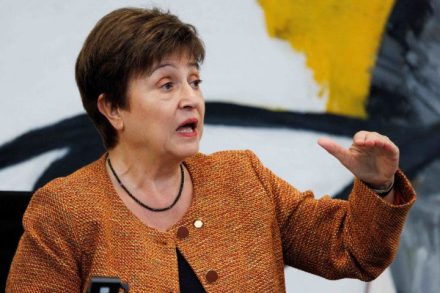
The best thing that can be said about global economic growth prospects for 2023 is that no-one is expecting very much. On that basis, hopefully, things can only get better. Over the weekend, International Monetary Fund (IMF) managing director Kristalina Georgieva said that she expects a third of the globe to be in recession, including half of the EU. That doesn’t sound too bad on the face of it. If the IMF’s predictions proved to be accurate – and the record of economic forecasting is pretty dire – it would still mean that the economy was still growing in two thirds of world. We might, yet, avert global recession. But

Putin has failed to bring Europe to its knees

Unforeseen events which provoke global crises – such as Covid — have come to be known as ‘black swans’. By the same token, the end of 2022 has just been visited by a great big fluffy white swan.     Over the past 24 hours the main benchmark for European gas futures – the Dutch Title Transfer Facility (TTF), for gas to be delivered in February – has crashed below 80 Euros per MWh, taking it below the level it was on 23 February, the day before Russia invaded Ukraine. This, in the dead of a winter which we have been warned many times could see Europe’s shivering masses rioting in response

How Britain’s economy might bounce back in 2023

Whatever happened to the economic boom that was supposed to follow the Covid pandemic? The 2020s, some argued, would be like the 1920s, with an economy roaring its way out of recession, to be remembered as a time of unprecedented wealth and opportunity. That is not how things have turned out so far.  While economic growth in the UK during 2022 is still likely to come out positive, the growth was concentrated in the first half of the year – in the third quarter GDP fell by 0.3 per cent. The economy, according to the Office of National Statistics, is now 0.8 per cent smaller than it was on the eve of

How to save the NHS from itself

Britain’s ageing health infrastructure comes close to breaking point every winter, but this year something is going to give way. On top of the usual litany of complaints about funding and increasing demand on the NHS from an older population, we can add covid backlogs, waiting times stretching into multiples of nominal targets – and now even the workforce downing tools and walking out. As usual, the government is going to try to keep things functioning with short-term sticking plasters. There will probably be more millions shovelled onto the ever-burning furnace of the NHS budget, with little to show in terms of patient outcomes. There will, at some point, be

In defence of Scrooge

There is no Christmas story like A Christmas Carol, and few seasonal characters as iconic as Ebenezer Scrooge; the ‘clutching, covetous old sinner’ who finds redemption in the abandonment of sound business sense and the joy of Christmas cheer. Scrooge’s name has become a byword for miserly conduct, with Jeremy Hunt the latest to claim the mantle as he raised taxes last month. But this depiction of Scrooge as Mr Bah Humbug is deeply unfair. He deserves better. For economists like me, there is much to admire about Scrooge the moneylender, who did rather more for human welfare than the late-in-the-day Scrooge filled with the spirit of Christmas. Even Dickens concedes

Most-read 2022: Crypto is dead

We’re finishing the year by republishing our ten most popular articles from 2022. Here’s number eight: Ross Clark’s piece from May on the crypto crash. When Britain voted for Brexit, Macron boasted that Paris would eat the City of London’s lunch. It didn’t quite work out that way, with most league tables continuing to put London as the number one or two financial centre, with not a single EU city in the top ten. Emmanuel Macron’s government has now announced that it has invited Binance, a crypto exchange site, to set up a European HQ in Paris. You have to ask: has Macron leapt on a bandwagon which has already started to lose

Britain’s worrying industrial decline

Economic growth is the third quarter was known to be depressed, but the Office for National Statistics (ONS) has this morning upped its estimate of the retreat in GDP for the third quarter, from a fall of 0.2 per cent to a drop of 0.3 per cent. That need not be too alarming in itself – September was always going to be a difficult month owing to the period of mourning for the Queen and the extra bank holiday for her funeral. The ONS has already reported its first estimate that growth in October rebounded by 0.5 per cent. But it is the detail which is more concerning. While the

The Bank of England’s interest hike shows the worst is to come

After a faltering start in its programme of rate rises, the Bank of England is catching up. Today’s half-point rise in its base rate to 3.5 per cent may be relatively modest compared with last month’s 0.75 per cent rise, but it is still twice as high as any rise the Monetary Policy Committee (MPC) was prepared to inflict on the economy during the first quarter-century of its existence. The MPC has turned itself into a prisoner of the markets – if it does anything unexpected, there is likely to be trouble In the space of three months rates have now been jacked up by 1.75 per cent. That is