Economy

  • AAPL

    213.43 (+0.29%)

  • BARC-LN

    1205.7 (-1.46%)

  • NKE

    94.05 (+0.39%)

  • CVX

    152.67 (-1.00%)

  • CRM

    230.27 (-2.34%)

  • INTC

    30.5 (-0.87%)

  • DIS

    100.16 (-0.67%)

  • DOW

    55.79 (-0.82%)

Is Britain losing its sense of fairness?

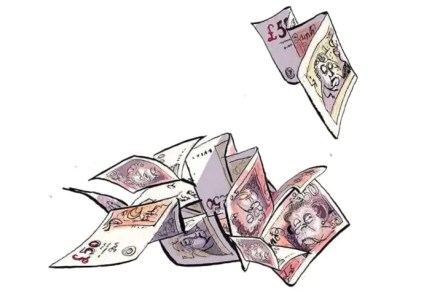
Has Britain become a freeloader’s paradise, asks the Spectator’s economics editor Michael Simmons in our cover piece this week. Michael analyses ‘the benefits of benefits’, at a time when Britain’s welfare bill is burgeoning and most households are struggling with cost of living. For example, while a family of four can expect to pay £111 to visit the Tower of London, that is just £4 total on Universal Credit (UC), and for London Zoo it is £108 compared to £26. Michael is not arguing against the idea of helping those in need, but pointing out that – as the benefits bill continues to increase – this is another case of

Spotlight

Featured economics news and data.

Cutting Britain’s giant welfare bill would be an act of kindness

Does having money really matter that much? There are those, usually with quite a bit of it, who want us to care less about materialism. But, unequivocally, money really does matter – not because of any status it supposedly brings, but for the freedom it buys: freedom to choose how we live and how we look after others. Considering this, it seems that the deep disillusionment with mainstream politicians in recent years stems from a protracted and ongoing period of stagnant living standards over which they have presided. But the truth is that the average person has not got poorer since the global financial crisis. They have got a little

What Tory MPs want from today’s Budget

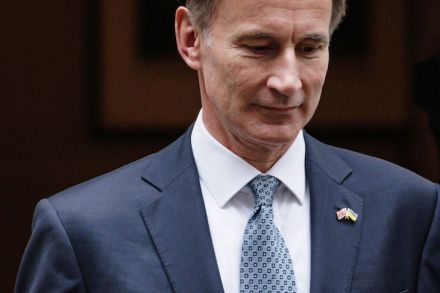
Jeremy Hunt’s most important Budget announcement today won’t be something that’ll take effect in the next few hours or weeks. What Tory MPs are looking for above everything else is a commitment to reducing the tax burden and to the Conservative party going into the next election as a low-tax party. They have largely accepted Hunt and Rishi Sunak’s arguments that big tax cuts can’t come yet, and instead are calling for a ‘do no harm’ Budget.  The trouble is that their definition of ‘do no harm’ includes not pressing ahead with the planned rise in corporation tax from 19 to 25 per cent. The Chancellor is expected to defend

Six key announcements in Jeremy Hunt’s Budget

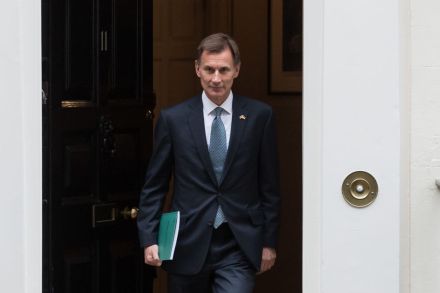
Jeremy Hunt got the job as Chancellor because he is very different from his predecessor. If Kwasi Kwarteng was rash and unpredictable, Hunt is calm and dependable, if a little dull. Those characteristics will be reflected in Hunt’s Budget, which he will unveil in the Commons this afternoon at 12.30pm. There are unlikely to be any rabbits coming out of his hat. Hunt’s headline measure is an increase in the pensions lifetime allowance from £1.07 million to £1.8 million. The Chancellor hopes that this benefit, which will affect up to two million people, will encourage older workers to delay retirement if it allows them to build up a bigger pension

Britain’s cooling labour market could spell trouble for Hunt

Is the UK’s labour market cooling down? While unemployment remains unchanged at 3.7 per cent, according to today’s update from the Office for National Statistics, the number of job vacancies ‘fell on the quarter for the eighth consecutive period’, down 51,000. The overall number of vacancies, however, still remains above a million. But the biggest indicator things are changing is wage growth: the rise in average total pay fell to 5.7 per cent between November last year and January this year, down from 5.9 per cent in the previous three months. Adjusting for inflation, this means real wages fall by 3.2 per cent – the biggest fall since the pandemic hit, not

Is the collapse of Silicon Valley Bank the tip of the iceberg?

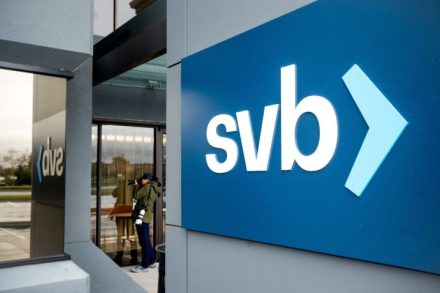
On the face of it, the takeover of the UK arm of Silicon Valley Bank by HSBC is a triumph for the government. Today, we could have been seeing the collapse of dozens of UK tech start-ups. We could have seen staff going unpaid and shares in tech companies plunging to greater depths than they have yet explored during the correction of the past year.  Instead, things are fairly calm in the tech sector. Well before markets opened this morning, the government had brokered a deal which will allow the Silicon Valley Bank’s facilities to continue without a hitch, thanks to a wholesale takeover by one of the largest banking institutions in

Could Silicon Valley Bank’s collapse lead to a financial crash?

Tech start-ups tend to involve taking big risks on ideas which are untested both in terms of technology and the market place. Yet it isn’t blind faith in new ideas that is threatening to bring down scores of British tech start-ups over the next few days: it is boring old bonds. Many start-ups have relied for financing on Silicon Valley Bank UK, an offshoot of its larger US parent. Over the last few years, the institution has in turn relied on taking bets on government bonds whose value had been inflated by near-zero interest rates. As interest rates have risen, those bets have gone sour. On Friday, the Bank of

Jeremy Hunt defends the Tories’ long-term economic record

A Chancellor’s Sunday media appearance before a Budget often serves as a ‘free pass’ – not because difficult questions aren’t asked, but because they can quite easily get out of answering by saying some polite version of: ‘you’ll have to wait and see.’ So instead of focusing on the upcoming Budget this Wednesday, the BBC’s Laura Kuenssberg decided to ask Jeremy Hunt this morning about his party’s long-term record. Those questions he had to answer. It wasn’t an easy task. Kuenssberg presented Hunt with two tricky metrics: housing prices and average wages. The former, Kuenssberg notes, has skyrocketed, while average wages are failing to keep up with inflation. Many people

In defence of the supermarket

Supermarkets are once again back in the firing line. Henry Dimbleby, the Leon co-founder turned government food tsar, has blamed the current food shortages on their ‘weird culture’. When food is scarce UK supermarkets won’t raise their prices, he claimed. It leads to growers selling less here and more in Europe, exacerbating shortages. He wasn’t alone in blaming supermarkets. Last month, in an attempt to absolve the government of blame, food and farming minister Mark Spencer demanded the heads of big chains join him for a discussion on ‘what they are doing to get shelves stocked again.’ In the end, only middle-management showed up.  The average supermarket stocks 20,000 items with around

GDP grows by 0.3% – but the UK economy remains stagnant

This morning’s release from the Office for National Statistics shows the UK economy grew by 0.3 per cent in January – an improvement on December 2022 figures, which saw the economy contract by 0.5 per cent. There are no revisions to the last update: the UK still avoids the technical definition of recession, and January’s growth was higher than expected (the consensus was that it would be 0.1 per cent). But overall, the economy remains stagnant: the three months to January produced precisely zero growth. What really sticks out in today’s release is just how dependent the UK economy is these days on one-off interruptions. January’s rebound is largely credited to the return of

Britain could come to regret moving away from China

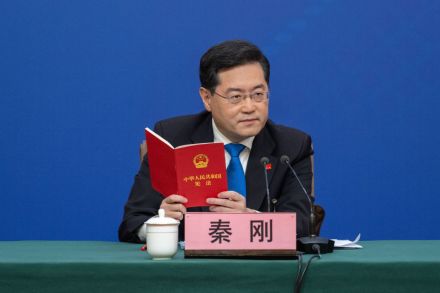
China’s relationship with America is getting worse and worse. The Chinese Foreign Minister, Qin Gang, warned yesterday that ‘containment and suppression will not make America great. It will not stop the rejuvenation of China’. The Biden administration, meanwhile, recently accused China of readying to send weapons to Russia, and Americans are still fuming about the Chinese balloon that entered their airspace. China thinks they’re being hysterical. Britain will soon be forced to decide whether it will decouple from China. The Americans no doubt want Britain to join them in cutting ties to Beijing, but it is not clear that British policymakers are ready to do this yet. In 2020, China accounted for

Why not block TikTok and show Beijing we mean business?

Talk of a ‘stampede’ for the exit from the London Stock Exchange (LSE) may be overdone, but there’s clearly a problem. It was highlighted this week by the decisions of the Cambridge-based chip designer Arm to list in New York rather than London and of the Irish-based building supplies group CRH to shift its existing listing likewise. Other multinationals with US interests and tech ventures with hot prospects are rumoured to be thinking the same way. In short – the argument goes – the LSE tends to generate lower valuations than New York’s exchanges because it is populated by too many old-economy stocks and risk-averse investors, including pension funds and

Two problems with Rachel Reeves’s bid to woo businesses

Shadow chancellor Rachel Reeves has promised to tackle what businesses tend to fear the most: instability. ‘In recent years, corporation tax has gone up and down like a yo-yo, while the government has papered over the cracks with short-term fixes like the super-deduction,’ Reeves told the manufacturing group Make UK’s annual conference this morning. Under a Labour government, she pledged, there will be a clear ‘roadmap for tax which lasts over a parliament’. Reeves said this would give business leaders a better sense of what to expect, hopefully creating an atmosphere for investment. Promising a review also puts pressure on Reeves to come up with answers to some of the

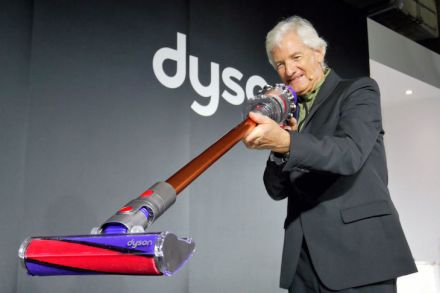
Dyson tells Hunt: your tax grab sucks

As tax rates rise in the UK, so do business jitters. The windfall tax on oil and gas companies – raising tax on profits to 75 per cent this year – has energy companies openly discussing plans to divert money elsewhere. The looming hike in corporation tax – from 19 per cent to 25 per cent for the largest companies – also has the businesses talking about future investment strategies.  So far, Chancellor Jeremy Hunt seems unconvinced that investment threats will amount to much. His Budget next week is expected to confirm the corporation tax rise in April. But the backlash is growing: from MPs in his own party who are worried

Will the last company to leave the City please turn out the lights?

It would have been bad enough if just one major British company had decided to list its shares in New York rather than London in the space of a single week. But two? First it was the chip-maker Arm, one of the UK’s very few major technology companies. Then came the building materials giant CRH. Shell also said they came very close to shifting their base to the US. The moment has surely arrived for the UK to radically deregulate its listing regime – or else watch the City slowly wither away. At this rate, within a few years there might only be a couple of retailers and a bus

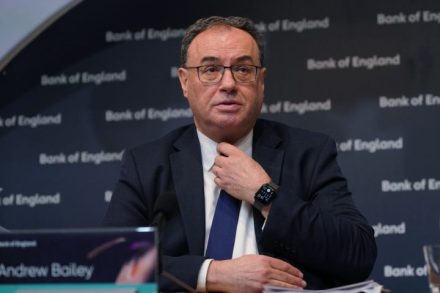
Is Andrew Bailey finally learning his lesson?

Last month the Bank of England announced its tenth rate rise in a row, taking interest rates to 4 per cent. At the time it was speculated that the BoE might end there: not only were rates now catching up with market expectations of where they would peak, but there seemed to be more agreement within the Monetary Policy Committee, based on the way its members were voting, that it was time to slow down. Their own report noted that, to keep hiking rates, the Bank would need to see ‘persistent pressures’ contributing to inflation. But the Bank’s governor reminds us once again that nothing is off the table. 'I

Will the Northern Ireland deal reboot inward investment?

The pound rose a cent or two against the dollar in response to the new trade deal for Northern Ireland. The FTSE 100 index rose on Monday but slid back on Tuesday, deterred by the prospect of a stronger pound, while the more domestic FTSE 250 showed a clearer uptrend. Overall, markets were cautiously positive about the Windsor Framework, not so much for its effect on movement of goods through Northern Irish ports as for its signal of calmer UK-EU trade relations ahead on a wider front. And what really matters is whether this change of tone catalyses a new wave of inward investment. The recent claim by economist Jonathan Haskel that

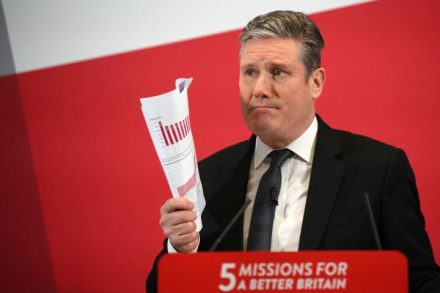
Why does Starmer think Britain should be richer than Poland? 

Our growth rate has been miserable. We have not invested enough. And over thirteen years the Conservatives have cut spending too much, damaged our trading relationships with our major neighbours, and made a mess of the tax system. These were Labour leader Sir Keir Starmer’s major criticism of Tory economics today in a speech in which he unveiled his latest plans for the economy.  He summed it all up with one damning statistic. We will, he argued, soon be poorer than Poland. Poland! But hold on. Why does Sir Keir imagine the British have some God-given right to be richer than the Poles? And why doesn’t he take a moment to reflect

Energy price cap drops for first time since 2020

When Liz Truss ushered in the Energy Price Guarantee (EPG) last September, her government insisted that a universal subsidy scheme was necessary to make sure no one fell through the cracks this winter. But there was an internal argument for the scheme too: put a big down payment on energy bills now, No. 10 thought, and that will give cover to implement her tax-cutting agenda. The latter, as we know, didn’t pan out. And now Truss’s biggest policy from her time as prime minister – one that ushered in price controls, as ministers determined what household would pay for the unit price of energy – might be at the start of its

What Miriam Cates gets right – and wrong – about declining fertility

Fulfil your civic duty. Get married. Have children. That was the message from Miriam Cates, the increasingly prominent Conservative backbencher, to guests at a drink reception earlier this week. In what even her fiercest critics would have to concede was an impressively bold speech, Cates suggested that many of her female constituents want to work less and spend more time with their children. She claimed that politicians belonged to a class that had been protected by marriage and family, insulated from family breakdown to such a degree that they fail to realise how important it is. Few politicians can ride out a Twitterstorm without some sort of retraction, and Cates is no

Sir Jim or the Sheikh for Man Utd? Either will be better than the Glazers

‘Greenwashing vs Sportswashing’, as Sky Sports put it, is a curious way to characterise the emerging £6 billion takeover tussle for Manchester United between industrialist Sir Jim Ratcliffe and Sheikh Jassim bin Hamad Al Thani from Qatar. The latter might feel that his emirate – contrary to expectations, shall we say – has been not just sportswashed but drycleaned, pressed and showcased on the red carpet as host of last year’s World Cup, which ended without significant disruption by human rights or anti-corruption activists. Following that with membership of the rogues’ gallery of Premier League owners – recently joined by the Public Investment Fund of Saudi Arabia as majority owner

The £5.4 billion government surplus masks a larger economic issue

There have been celebrations this morning about a government surplus of £5.4 billion last month, and people are even talking about a ‘windfall’ for Chancellor Jeremy Hunt in next month’s Budget. But all this shows is how conditioned we have become to appalling economic news – and that we will grab at anything which seems to indicate a shaft of light. Nevertheless, any talk of a government ‘surplus’ masks the very real problem the government still has While any surplus is to be welcomed – and last month’s borrowing figures are far better than the Office for Budget Responsibility predicted – we would be in serious trouble if the government had not