Philip Pilkington

Philip Pilkington is a macroeconomist and investment analyst. He is the author of The Reformation in Economics.

Germany’s recession is an omen of Europe’s economic decline

From our UK edition

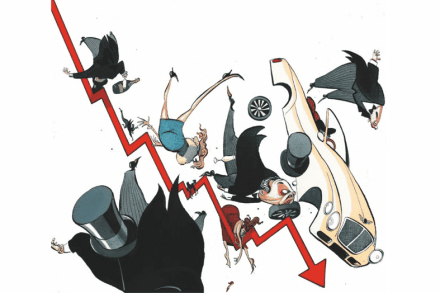
The German economy is set to tip back into a technical recession in the first quarter of 2024, according to the Bundesbank. This means it will continue to shrink in the first three months of this year – after contracting last year and registering as the worst-performing major economy in the world. A technical recession is ‘technical’ in the sense that it follows a pretty arbitrary rule of thumb used by economists to identify when an economy is in decline. It was once useful for indicating serious and shocking problems in an economy, but since western economies entered a period of deep stagnation at the turn of the decade it has simply become a hallmark of our new economic age. Looking at the components of the German economy, there is no good news whatsoever.

Britain could come to regret moving away from China

From our UK edition

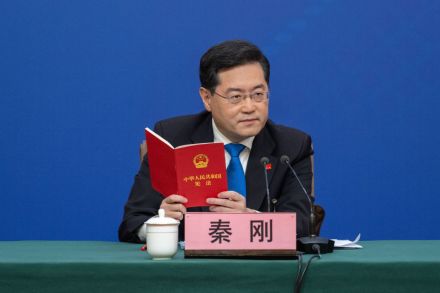
China’s relationship with America is getting worse and worse. The Chinese Foreign Minister, Qin Gang, warned yesterday that ‘containment and suppression will not make America great. It will not stop the rejuvenation of China’. The Biden administration, meanwhile, recently accused China of readying to send weapons to Russia, and Americans are still fuming about the Chinese balloon that entered their airspace. China thinks they’re being hysterical. Britain will soon be forced to decide whether it will decouple from China. The Americans no doubt want Britain to join them in cutting ties to Beijing, but it is not clear that British policymakers are ready to do this yet. In 2020, China accounted for around 7 per cent of British trade.

Why Britain will lose from America’s trade wars

From our UK edition

Davos this year marked the start of a great economic divorce of the United States and Europe. Katherine Tai, the US trade chief, said that globalised capitalism is not working anymore. It leaves workers behind and gives fuel to populists, she said. Really, the Biden administration wants reassert US dominance in the world, and is using the country’s economic weight to do it. The Europeans, meanwhile, seem happy to become more protectionist too, with France’s Europe minister Laurence Boone calling the new US stance a ‘wake-up call’ and saying that Europe should respond in kind. Europe’s leaders are reacting to the reality that, with high energy prices, their manufacturing cannot remain competitive without tariffs.

Politicians can’t fix our economic woes

From our UK edition

The knives are out for the Prime Minister. The world watches as Britain falls into a simultaneous political and economic crisis. Yet commentators in Britain appear to think that this is resolvable. They think that bad politics gave us a bad Budget which has led to economic destabilisation. Clean out the bad politicians, reverse the bad Budget and all will be well. None of that is true. The reality is that the Budget, however bad, is not the underlying cause of the economic crisis. The Budget merely triggered a crisis which has much deeper roots. It is comparable to a shock that sends a person with chronic heart disease into cardiac arrest. Sacking a few ministers, even a prime minister, will not restore the patient to health. What is the underlying problem with the British economy?

Europe’s descent into deindustrialisation

From our UK edition

The rapid economic collapse that Britain is facing is simply an accelerated version of what the whole of Europe is about to go through; unsustainable borrowing to fund the gap between high energy prices and what households can actually afford. With the sabotage of the Nord Stream pipeline, there is now no feasible way back. Europe can no longer physically import Russian gas – prices will remain high until Europe builds more energy capacity, which could take years. What is likely to come of this? High energy prices will render European manufacturing uncompetitive. European manufacturers will be forced to pass through the higher energy costs in the form of higher prices and consumers will find it cheaper to buy products from countries with normal energy prices.