Economy

  • AAPL

    213.43 (+0.29%)

  • BARC-LN

    1205.7 (-1.46%)

  • NKE

    94.05 (+0.39%)

  • CVX

    152.67 (-1.00%)

  • CRM

    230.27 (-2.34%)

  • INTC

    30.5 (-0.87%)

  • DIS

    100.16 (-0.67%)

  • DOW

    55.79 (-0.82%)

Is Britain losing its sense of fairness?

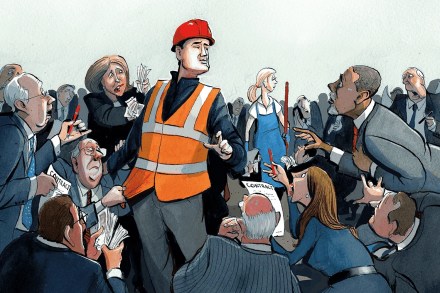
Has Britain become a freeloader’s paradise, asks the Spectator’s economics editor Michael Simmons in our cover piece this week. Michael analyses ‘the benefits of benefits’, at a time when Britain’s welfare bill is burgeoning and most households are struggling with cost of living. For example, while a family of four can expect to pay £111 to visit the Tower of London, that is just £4 total on Universal Credit (UC), and for London Zoo it is £108 compared to £26. Michael is not arguing against the idea of helping those in need, but pointing out that – as the benefits bill continues to increase – this is another case of

Spotlight

Featured economics news and data.

Cutting Britain’s giant welfare bill would be an act of kindness

Does having money really matter that much? There are those, usually with quite a bit of it, who want us to care less about materialism. But, unequivocally, money really does matter – not because of any status it supposedly brings, but for the freedom it buys: freedom to choose how we live and how we look after others. Considering this, it seems that the deep disillusionment with mainstream politicians in recent years stems from a protracted and ongoing period of stagnant living standards over which they have presided. But the truth is that the average person has not got poorer since the global financial crisis. They have got a little

Are we really seeing a ‘great resignation’?

Do over-fifties need to get back off the golf course and into work? That’s the narrative that ministers have been pushing recently, with Jeremy Hunt saying later life ‘doesn’t just have to be about going to the golf course’. Work and Pensions Secretary Mel Stride is conducting a review of the factors keeping people out of the workplace in time for next month’s Budget. But a report out today from pensions consultancy LCP suggests ministers might be barking up the wrong tree. LCP’s analysis points out that there are fewer people of working age who are retired now than at the start of the pandemic, and that the missing workers

How bitcoin bounced back after FTX

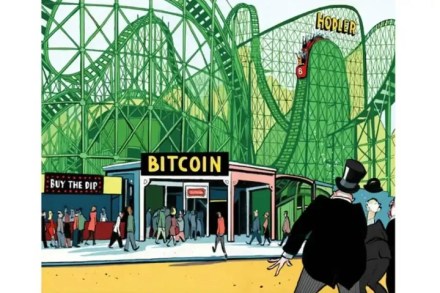
One of the major exchanges has gone spectacularly bust. Billions of investor’s money has been lost. There have been allegations of widespread fraud, and one of the biggest corporate trials in modern history is set to dominate the business pages over the rest of the year. The collapse of the FTX, and the arrest of its high-profile founder Sam Bankman-Fried, was meant to finish off bitcoin and the rest of the cryptocurrencies. And yet, this year digital money is staging a dramatic revival – and making fools of its critics all over again.  When FTX went down, there was no shortage of people telling us, with ill-disguised glee, that bitcoin

Would Liz Truss’s ‘economic Nato’ work against China?

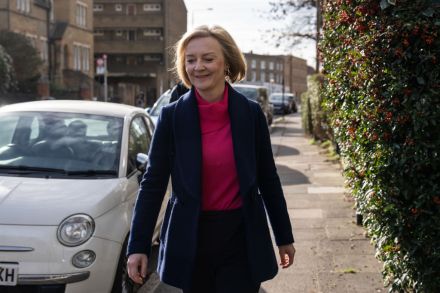
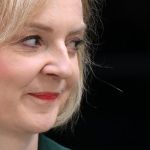
It was only a few weeks ago that Liz Truss started commenting on domestic policy again, speaking to The Spectator not just about what happened during her time in No. 10, but about what she sees as prescriptions for Britain’s stagnant economy. Today she weighs back in on foreign policy. In Tokyo this morning, the former prime minister made her first international speech since leaving office and it combined her favourite topics: economic freedom and taking a tough stance on China. Truss is calling for world leaders to band together and create an ‘economic Nato’ – which would include agreeing to a tough package of economic sanctions on China, were

Why AstraZeneca’s new factory has gone to Dublin

‘Great news, Prime Minister, Astra-Zeneca has decided to site a new £320 million factory on Mersey-side. Your vision of the UK as a science superpower is becoming a reality.’ What a moment that would be for a Downing Street intern in search of the positive for an otherwise grim morning briefing; almost up there with ‘Great news, Prime Minister, Boris Johnson has joined a Trappist monastery’. But no, AstraZeneca decided some time ago to put its next factory in Dublin. This is the pharma multinational that was a corporate hero of the Covid vaccine rollout and is a descendant of ICI, Britain’s greatest 20th-century science company; the very model of

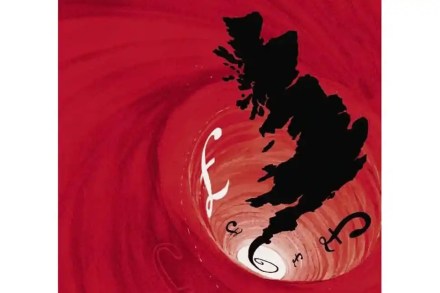
Why is it so hard for Britain to control inflation?

We are not leading the world in deregulation, or in creating new ‘green industries’. We certainly don’t lead in tax-cutting, or innovation, or technology. Still, there is one respect in which the British economy can claim to be ahead of everyone else. Rising prices. When the world is caught up in an inflationary spiral, the UK always seems to suffer more than anyone else – and that is turning out to be just as true in the 2020s as it was in the 1970s and 1980s.  When the inflation date was released today, it did at least record a modest fall. The rate at which prices are rising dropped to 10.1

Inflation falls to 10.1% – but is still at a 40-year high

Inflation remains at near a 40-year high – but finally, we’re starting to see some signs of good news. This morning’s update from the Office for National Statistics shows CPI falling to 10.1 per cent in the 12 months to January 2023, down from 10.5 per cent in December 2022.  It’s a better update compared to January, which revealed a much smaller dip in CPI between November and December last year. Core inflation – which excludes energy and food – fell too, from 6.3 per cent on the year in December down to 5.8 per cent in January. Crucially, this easing beat the consensus, both for CPI (the expectation was

Britain’s absent workers are slowly being lured back into employment

The latest labour market update – published by the Office for National Statistics this morning – looks a lot like last month’s update: that’s to say, a mixed bag of news. Unemployment rose again, up 0.1 per cent between October to December, to 3.7 per cent. But this quarterly rise was once again off-set by a fall in economic inactivity: down 0.3 percentage points, largely thanks to young workers entering (or re-entering) the workforce.  Overall, it’s a trade-off worth making: the official unemployment figure has failed for some time to reflect the true number of people out of work, as over two million people of working age are thought to be

Is Brexit really costing households £1,000 each?

They never give up, those Remainers. Like the Japanese soldier found on a Pacific island still fighting the second world war – in 1974, every other day there is another loose shot from the undergrowth. After last week’s Ditchley Park gathering involving Lord Mandelson, David Lammy and others, comes an interview in the Overshoot with Monetary Policy Committee (MPC) member Jonathan Haskel. In it, Haskel makes the claim that Brexit is costing each British household £1,000 a year through lost trade and investment. The beauty of modelling is that you can get it to tell you pretty much anything you want it to Let’s start with the assertion that this is a

Is our economy OK?

11 min listen

New GDP figures show that the UK economy narrowly avoided recession at the end of 2022. Between the final quarter and the third quarter of last year, there was no change in the economy’s output. Is this really good news? And do GDP figures matter if people still feel poorer?  Max Jeffery speaks to Kate Andrews and James Heale. 

Britain avoids recession – for now

Britain has avoided recession – for now. This morning’s update from the Office for National Statistics (ONS) reveals that there was no overall GDP growth between October and December last year. The UK has swerved the technical definition of recession – two consecutive quarters of negative growth – in the least glamorous way possible. It is not a story of growth, but a story of stagnation, that has kept the dreaded label of ‘recession’ at bay. The government will be relieved by the figures this morning: the fiscal tightening that Rishi Sunak and Jeremy Hunt felt they had to do last year to calm market jitters and get the public

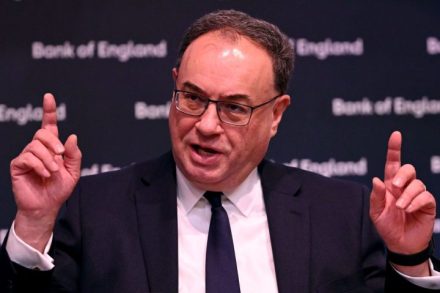
Andrew Bailey’s subtle wage spiral warning

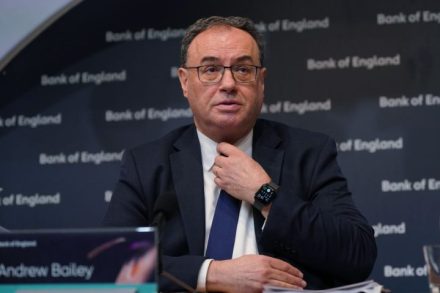
Treasury select committee meetings are not usually the stuff of great television. But this morning, it was. The Bank of England’s governor Andrew Bailey was up as a witness to give evidence on recent Monetary Policy reports. And the committee’s new chair, Harriett Baldwin, came ready to highlight where (many) mistakes had been made. Starting with where we are today – inflation still over 10 per cent, five times the Bank’s target – Bailey was forced to sit and listen to his own record over the past eighteen months. Beginning in May 2021 and moving into that autumn, Baldwin quoted his own warnings about ‘very hot areas of prices’ back

Can the CBI make its mind up on tax hikes?

Does the CBI want higher taxes or lower taxes? This morning its director general, Tony Danker, complained that the rise in corporation tax from 19 per cent to 25 per cent is in danger of killing off economic growth. He also demanded at the very minimum that a ‘super-deduction’ – where businesses can cut their tax bill by 25 pence for every pound invested – be maintained. ‘We know the economy can – and must – break out of its low growth trap, but we need action of business investment to achieve it,’ he said. ‘Firms are seeing the end to super-deduction with nothing to replace it but a big

Revealed: Liz Truss’s unpublished growth agenda

In this week’s issue of The Spectator, Katy Balls reveals what Liz Truss would have done in her quest for growth had her mini-Budget not blown up. She would have gone on to launch an eight-point ‘autumn of action’. There were to be eight ‘follow-up moments’ revealing Truss and her Chancellor’s plans for supply-side reforms on: financial services, business deregulation, housing & planning, immigration, mobile & broadband, food & farming, childcare and energy. Kwarteng and Truss were out of office before they had time to announce them. Now, The Spectator has obtained the plans and can exclusively publish the draft document in full: OFFICIAL SENSITIVE GROWTH PLAN: FINANCIAL SERVICES ANNOUNCEMENT

Only a proper shock can jolt Britain out of comfortable decline

Fifty years ago I was hitchhiking down the Eastern Seaboard towards Miami overnight. It was midwinter, icy and way, way below zero. Through miscalculation, I had ended up being dropped near the Cross-Bronx Expressway. I walked up a ramp to the elevated carriageway and began trying to thumb another lift. Utterly stupid: no car was likely to stop. But I was tired, and getting desperate. We’re in slow, apparently relentless but quite comfortable decline; and no chasm yawns ahead, or not yet After about an hour the intense cold was biting deep into the bone. Though I had gloves, I lost feeling in my hands. Still I persisted, exhausted but

Time for cautious optimism, not FTSE jubilation

What comfort can we draw from the FTSE 100 Index’s all-time high of 7905 last Friday? Yes, in a limited sense, it’s a reason to be cheerful: first, because it’s a boost to the value of pension and tracker funds; second, because it fits the current narrative of gloom receding, in which inflation has probably peaked, interest rates look set to follow soon and the Bank of England says the coming recession will be shallower than first thought. But the new top is less than a thousand points above the ‘dotcom bubble’ record of 6930 at the turn of the millennium, so no spectacular reward for long-term equity holders. And

Trussonomics is slowly winning the argument

It was self-indulgent, whinging. Dull in places while completely batty in others. All the usual insults will be hurled at former prime minister Liz Truss for her essay defending her short time in Downing Street, published today. Perhaps it would be better for her to retire gracefully from public life and let some ambitious young revisionist historian in the 2060s make the case that she was treated unfairly. Except she still has one key card to play. Events are gradually showing that she was right along: Trussonomics, or whatever it will be called next, is gradually winning the intellectual argument. Her argument has something else going for it: a ring

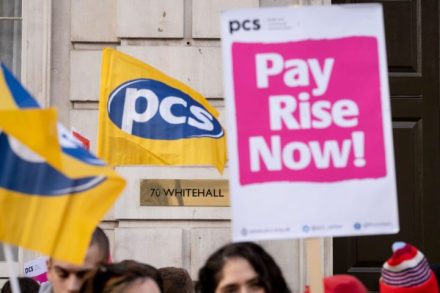
What striking workers don’t tell you about public sector pay

You’ve got to hand it to the trade unions: they’ve done a fine job rallying the public behind industrial action that has caused widespread disruption and inconvenience. Despite train cancellations, school closures and medical appointment delays, nearly two-thirds of the British back the nurses’ walkout and close to half back the teachers’ strike. Even sizeable minorities support the ongoing train strikes, according to recent polling.  The argument from the unions – that their hardworking members deserve a hefty pay rise (in order to ‘improve service’) – has captured the public imagination. But how many of those who complete YouGov or Opinium surveys stop to consider the huge discrepancy between public and private

Mick Whelan gives the game away over striking railway workers

We’re all familiar with the usual trade union cliches: it’s not about us, it’s about passenger safety; staff morale is low; and strikers are being ‘victimised’. Or, in the words of Aslef general secretary Mick Whelan on ITV’s Good Morning Britain, train drivers are being ‘demonised’. More so than government ministers, who are forever portrayed by union leaders as callous evil-doers?     But it is what Whelan said next that really catches the ear. Asked whether he thought the public should be sympathetic towards train drivers on £60,000 a year turning down an offer which would take their pay to £65,000 a year, he said: ‘It isn’t about what we earn, it

The anti-Midas touch of Mad Money’s Jim Cramer

When Tesla, the electric-car company controlled by Elon Musk, went public in June 2010, pricing its IPO at $17 per share, Jim Cramer, the ubiquitous and highly confident American TV anchor, proclaimed on his show Mad Money that investors should avoid the stock at all costs. It was a ‘Sell! Sell! Sell!’ Cramer announced in his typical over-the-top, over-caffeinated style. But he wasn’t finished with his diatribe, not by a long shot. ‘You don’t want to own this stock,’ he continued. ‘You don’t want to lease it. Heck, you shouldn’t even rent the darn thing.’ The next day, another CNBC reporter found Musk on the streets of Manhattan and told him what

Have interest rates finally peaked?

Markets expected another interest rate rise today of 50 basis points. That’s exactly what they got. This afternoon the Bank of England has announced its tenth rate rise in a row, from 3.5 per cent to 4 per cent.  The Monetary Policy Committee (MPC) voted 7-2 to raise rates to 4 per cent; two members voted to hold the bank rate at 3.5 per cent, exposing the dovish leaning that has been a feature of the MPC during the pandemic years. This created a credibility issue for the Bank, as it failed to act on inflation for so long, putting itself in a position of having to play catch-up with