Economy

  • AAPL

    213.43 (+0.29%)

  • BARC-LN

    1205.7 (-1.46%)

  • NKE

    94.05 (+0.39%)

  • CVX

    152.67 (-1.00%)

  • CRM

    230.27 (-2.34%)

  • INTC

    30.5 (-0.87%)

  • DIS

    100.16 (-0.67%)

  • DOW

    55.79 (-0.82%)

The IMF growth downgrade is more bad news for Rachel Reeves

Rachel Reeves lands in Washington tonight to be greeted with bad news. The International Monetary Fund (IMF) – whose spring meeting the Chancellor is attending – has just handed Britain the largest GDP downgrade of any G7 country.  In the freshly released update to their world economic outlook, the IMF forecast growth for the UK this year of just 0.8 per cent – down from the 1.3 per cent they’d previously projected. Things don’t get much better next year either, with just 1.3 per cent growth forecast, again downgraded from 1.5 per cent.  This downgrade singles out Britain and our European neighbours. While the IMF calls the overall effect of

Spotlight

Featured economics news and data.

Cutting Britain’s giant welfare bill would be an act of kindness

Does having money really matter that much? There are those, usually with quite a bit of it, who want us to care less about materialism. But, unequivocally, money really does matter – not because of any status it supposedly brings, but for the freedom it buys: freedom to choose how we live and how we look after others. Considering this, it seems that the deep disillusionment with mainstream politicians in recent years stems from a protracted and ongoing period of stagnant living standards over which they have presided. But the truth is that the average person has not got poorer since the global financial crisis. They have got a little

Inflation slows to 10.7% – and may have passed its peak

Has inflation peaked? The Consumer Prices Index fell to 10.7 per cent last month, down from 11.1 per cent in October. This follows predictions that October would be the month in which inflation peaked – so this morning’s figures from the Office for National Statistics will raise hopes that the worst may be behind us. This doesn’t appear to be a blip. The market expects this to continue for the next two years before bottoming out in 2025. There will be optimism, too, that we can look forward to a sharp fall in the CPI over the next few months as the surge in energy prices begins to drop out of

Why the rising unemployment rate might not be such bad news

Is unemployment beginning to bite? Or are the workless trying to rejoin the economy? That’s the key question after the unemployment rate rose to 3.7 per cent today.  Figures released by the Office for National Statistics this morning reveal that even though unemployment is up, ‘economic inactivity’ is starting to fall, having previously grown by some 565,000 people since the pandemic and lockdowns. A city of workers the size of Manchester had stopped working and weren’t looking for jobs either, meaning they weren’t counted in the official unemployment figures. But this trend away from work might be beginning to reverse.  The number of people who are economically inactive has now

The joy of fulfilling my youthful ambition

Half a century ago this week, I left school in Scotland and travelled to Worcester College, Oxford for an interview to read politics, philosophy and economics. I can still picture the trio of scary dons who quizzed me: the grumpy political historian ‘Copper’ LeMay; the deeply obscure philosopher Michael Hinton; and Dick Smethurst, a jovial left-leaning economist, in and out of Downing Street in Harold Wilson’s years, later a popular provost of the college. It was Smethurst who kicked off with ‘What makes you mad?’, to which I gave the 1972 equivalent of a full-woke answer about human injustice – though the truth, then and now, is that I’m rarely

GDP grows – but the UK isn’t out of the woods on recession

Have the prospects of a recession been overstated? That would be the most optimistic reading of this morning’s update from the Office for National Statistics, which released the latest set of monthly GDP data showing 0.5 per cent growth in October. This is the biggest monthly rise since January, when the economy was bouncing back from a voluntary slowdown in activity when the Omicron variant of Covid hit last Christmas. Unfortunately, a breakdown of the data waters down that optimism. October’s 0.5 per cent growth followed a 0.6 per cent contraction in September, half of which the ONS thinks was directly linked to the bank holiday added to the calendar

Will Hunt’s ‘Brexit freedoms’ kickstart Britain’s economy?

Rishi Sunak’s government is trying to strike a difficult balance when it comes to discussing economic growth. On the one hand, there is broad consensus that the Liz Truss days (literally… just days) had to be dismantled to regain trust with the markets and retain the UK’s ability to keep borrowing at a stable price. On the other hand, there is recognition among ministers that the only way out of this high-tax spiral is to spur on some economic growth. In other words: achieve Truss’s goal while avoiding the many mistakes she made in her attempts to get there. It’s in this context that we should look at today’s major

The weakness of the Russian oil price cap

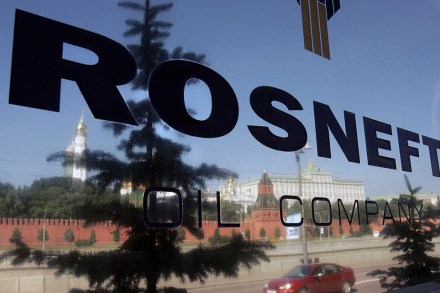
Will a price cap on Russian oil sales be a winning move in the Ukraine war? Since the invasion began, Russia has continued exporting crude and refined oil products at barely less than pre-war volumes and at rising prices that have replenished Putin’s coffers. From this week, however, the EU and G7 have imposed a ban on seaborne Russian crude imports and a $60-per-barrel price cap to be enforced by banning western shipping and insurance firms from handling Russian shipments sold above the price cap. But as I write, $60 is actually the market price of Urals crude – which has lately been trading at 25 per cent below Brent

Might next year’s economic pain be less than forecast?

This morning’s economic update from the Confederation of British Industry doesn’t make for cheery reading – but it could be worse. The organisation forecasts that the combination of high prices and low business investment will see the UK in recession throughout next year. Having previously predicted a 1 per cent rise in GDP next year, the CBI now expects a 0.4 per cent contraction. Meanwhile, the organisation’s economists expect average inflation over the course of the year to be more than three times the Bank of England’s target of 2 per cent. It’s by no means good news – but compared with other recent forecasts for the UK economy, it’s

The EU and America are sliding into protectionism

Emmanuel Macron’s state visit to Washington this week and the upcoming meeting of the US-EU Trade and Technology Council on Monday are important tests of whether the western world can avoid a return of destructive beggar-thy-neighbour policies which already once destroyed the global trading system in the 1930s.  The most recent point of contention centres on the American Inflation Reduction Act’s provisions aimed at supporting US manufacturers of electric vehicles, to the exclusion of European ones. While at a joint press conference with his French counterpart, the US President Biden vowed to fix the ‘glitch’ in his signature piece of legislation. But doing so remains a tall order, particularly with

Sunak and Hunt’s energy windfall tax is put to the test

And so it begins. French energy company TotalEnergies SE has become the first out of the gate to announce a change of plans for investment directly linked to the energy profits levy brought in by Rishi Sunak this spring, and expanded by Jeremy Hunt. The company says it will cut back its investment plan by 25 per cent next year, which will see roughly £100 million directed elsewhere. While this is one of the first companies to officially announce investment changes in the North Sea due to the windfall tax, it may not be the last. Shell is making similar noises; the company, so far, has used a loophole which

Why is the US economy doing better than ours?

The US entered recession earlier than the UK and Europe, and suffered its inflation surge earlier too, so it was always likely that its economy would recover earlier. But is the US emerging from recession while Europe and the UK are still plunging into theirs? That’s what today’s data from the Bureau of Economic Analysis suggests. Real US GDP grew in the third quarter of the year by 0.3 per cent, making for an annualised rate of 2.9 per cent. The figure was negative for the first two quarters of 2022, shrinking by an annualised rate of 0.6 per cent in the second quarter. By contrast, the UK economy shrank

We should never have tried cosying up to Chinese investors

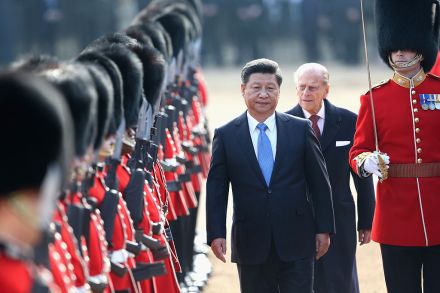
I can’t read ‘China rocked by protests’ and ‘Zero Covid could be the end of Xi Jinping’s rule’ without recalling 4 May 1989, when I watched chanting students march into Tiananmen Square and overheard the British ambassador Sir Alan Donald declare: ‘There, you see how liberal China is becoming.’ I was a banker back then and had just visited the People’s Bank of China to discuss its appetite for investing in UK government debt – having flown up from Hong Kong, where business was booming under the reassurance that the British-run outpost’s way of life would remain unchanged for 50 years after the forthcoming handover to Beijing. The consensus among

Andrew Bailey’s fighting talk

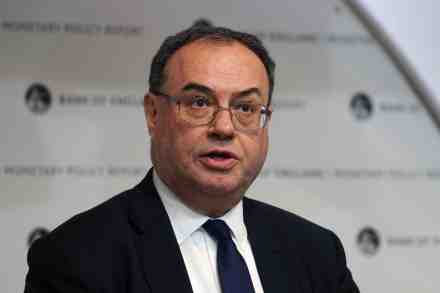
Andrew Bailey this afternoon showed that those who start fights don’t necessarily finish them. Speaking as the only witness at the House of Lords Economic Affairs Committee today, the Governor of the Bank of England landed some rather extraordinary accusations against Liz Truss and Kwasi Kwarteng, suggesting that he was not informed of the details in September’s mini-Budget and that he ‘does not think it was settled’ even the day before it was announced. According to Bailey, both the Monetary Policy Committee and the Treasury officials who were briefing the Bank were forced to speculate about what was coming: ‘There was speculation that this was going to be quite a

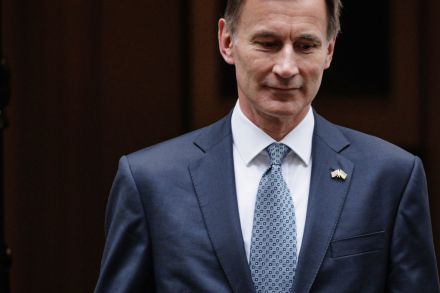
The black hole in Jeremy Hunt’s energy windfall tax

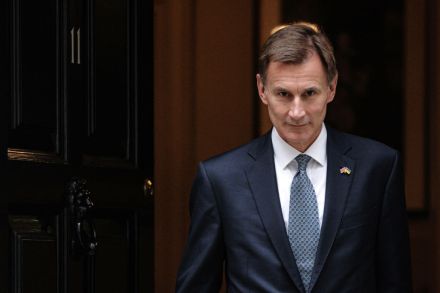
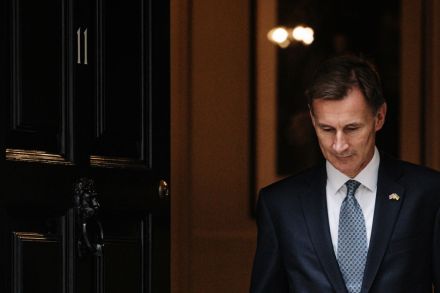
Jeremy Hunt has supposedly just closed a black hole in the government’s finances. But is another black hole opening up before his eyes?   One of the more popular announcements in the autumn statement on 17 November was a rise in the windfall tax applied to oil and gas companies from 25 per cent to 35 per cent. It was popular because it didn’t affect ordinary people directly and because it feeds into the narrative of greedy oil companies making fat profits while households struggle with their energy bill.      By 2028, how much, if any, profits are being made by oil companies is anyone’s guess The 35 per

The welcome death of the ‘my truth’ investment boom

A colourful selection of news items this week seem to have a central thread. Elizabeth Holmes, founder of the Theranos fake blood-test venture once valued at $9 billion, was sentenced to 11 years in prison for fraud. Sam Bankman-Fried, founder of FTX, the collapsed crypto exchange once valued at $32 billion, was holed up in the Bahamas awaiting extradition to face US justice. Despite continuing crypto mayhem, Binance – the Cayman-based rival exchange that declined to rescue FTX – announced the auction of ‘seven animated NFT statues’ celebrating the triumphs of footballer Cristiano Ronaldo. Also still making headlines, Elon Musk appears set on destroying his $44 billion Twitter purchase –

Will the UK’s economy shrink next year?

The OECD has marked Britain down as the only G7 country (and the only major country bar Russia) expected to suffer a shrinking economy next year. But how accurate are its predictions? A year ago, it predicted that inflation in the UK would peak at 4.9 per cent in the first half of this year before falling back to 2 per cent by the end of next year. The economy was going to grow by 4.7 per cent this year followed by a further 2.1 per cent in 2023. The government would bite off any hand that offered that now. It can be excused for failing to predict the Russian invasion

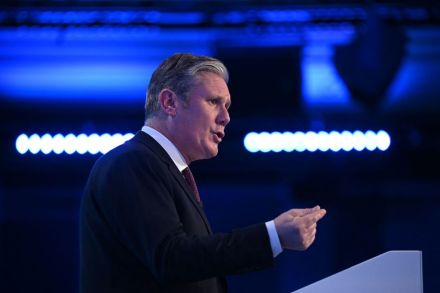
What is Keir Starmer’s plan for growth?

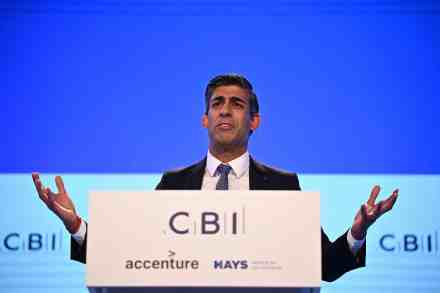
A few vague promises about upgrading skills. And something or other about promoting innovation and raising productivity. Sir Keir Starmer did not exactly set the world alight in his speech to the CBI today. Given that he is twenty points ahead in the opinion polls, and sometimes more depending on the latest Tory implosion, perhaps he felt he didn’t need to. Instead the Labour leader seemed content to confirm a point that was already obvious to anyone: the Prime Minister doesn’t have a plan for growth. And the prime-minister-in-waiting doesn’t have one either.  Rishi Sunak’s talk to the CBI yesterday was not exactly a hard act to follow. Over 40

Why does Rishi Sunak sound so desperate?

A year ago Boris Johnson lost his place in his speech to the CBI annual conference. He started blathering on about Peppa Pig World, after having treated young Wilfred to a day out there the day before. It was excruciating, but at least it was fun. It is hard to say the same about Rishi Sunak’s address to the CBI this morning.  The CBI ought to be a natural habitat for Sunak, yet he didn’t seem entirely comfortable. His voice seemed a tone higher than normal, so his usual enthusiasm sounded something more like a desperate appeal. He wanted us to know that innovation is a good thing which improves

Could regulation have prevented the FTX crypto crash?

What exactly happened at FTX and its sister company Alameda Research is unclear, and will be for some time. What we do know is that what’s currently unfolding is a sort of economic Jurassic Park; we are being given a brief glimpse of financial life in the 18th century, before centuries of bitter experience coalesced into the financial regulations we love to hate. It’s a common joke that cryptocurrency is gradually learning why all the boring rules and regulations of the traditional financial world exist. It’s also entirely true. The earliest explanation for the sudden crash of FTX was very simple: the exchange had become something like a bank, taking

How Labour can reap the benefits of economic growth

The week’s Autumn Statement was quite pessimistic about the growth outlook of Britain. The accompanying OBR analysis forecast growth will be below 1.5 per cent on average over the next five years, and even by the end of the period the growth in potential output is only up to 1.75 per cent. And on this the OBR is much more optimistic than some other forecasters, most notably the Bank of England. I think that’s wrong and growth is likely to pick up. That presents an opportunity for an incoming Labour government. Labour has spotted the potential here, announcing its own plan for growth. But it could be a lot better.

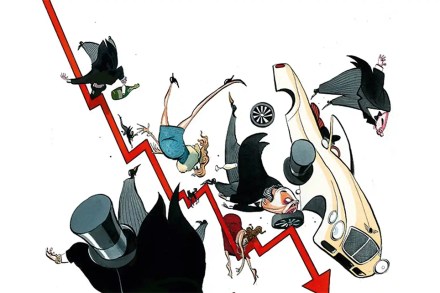
The UK is getting caught in an austerity trap

The teenagers are once again in charge of UK fiscal policy. The teenagers are not the Chancellor and his team, but those who set the tone of the fiscal debate in the media and the financial markets. The reasons the Conservatives are now embracing austerity is the fear that higher interest rates will kill house prices. This is mad The teenage scribbler is usually a young, pro-austerity banker, with no formal education in economics or economic history. The scribbler pretends that whatever happens is happening for the first time. The scribbler was still on the playground when the previous generation of scribblers talked their governments into austerity. That was not