Economy

  • AAPL

    213.43 (+0.29%)

  • BARC-LN

    1205.7 (-1.46%)

  • NKE

    94.05 (+0.39%)

  • CVX

    152.67 (-1.00%)

  • CRM

    230.27 (-2.34%)

  • INTC

    30.5 (-0.87%)

  • DIS

    100.16 (-0.67%)

  • DOW

    55.79 (-0.82%)

Making Tax Difficult: another Whitehall farce

Welcome to the new tax year, with its overflowing hamper of half-baked, growth-eating, enterprise-crushing Labour measures. And if you happen to be one of the 4.4 million self-employed who scrape an independent living despite rising costs and red tape, welcome to what must surely be one of Whitehall’s longest-running but least funny sitcoms, Making Tax Digital (MTD). If your income from self-employment (or rents as a landlord) exceeds £50,000 a year, you must henceforth submit quarterly digital updates to HMRC; next year the threshold will drop to £20,000. You’ll have less time to pursue your trade but your costs will rise, because you’ll need new software and more professional advice.

Spotlight

Featured economics news and data.

Cutting Britain’s giant welfare bill would be an act of kindness

Does having money really matter that much? There are those, usually with quite a bit of it, who want us to care less about materialism. But, unequivocally, money really does matter – not because of any status it supposedly brings, but for the freedom it buys: freedom to choose how we live and how we look after others. Considering this, it seems that the deep disillusionment with mainstream politicians in recent years stems from a protracted and ongoing period of stagnant living standards over which they have presided. But the truth is that the average person has not got poorer since the global financial crisis. They have got a little

The need for greed

I suspect I’ve had a lot more fun writing about the annual Sunday Times Rich List over the years than many of its denizens have had clambering into it and staying there behind their high-tech security gates and their phalanx of tax advisers. The 2024 roll call includes some great British wealth-creation stories – led by the industrialist Sir Jim Ratcliffe, the inventor Sir James Dyson and the Far Eastern trading Swire dynasty. But if the completed jigsaw of 300 names makes any sort of picture, it is of a vast treasure hoard from elsewhere, and in some cases from nowhere, that has found a relatively safe vault in the

The general election has ruined prospects of an early rate cut

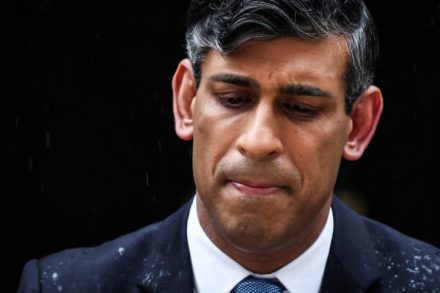
Would waiting another few months to call a general election have improved the Conservatives’ prospects? Rishi Sunak didn’t touch upon this in his speech today, announcing a general election for 4 July, but it seems likely that their broad assessment was no.  One of the big reasons for waiting until the autumn was the possibility of another fiscal statement. Jeremy Hunt’s March Budget left plenty to be desired by many Tory MPs, who wanted income tax cuts and changes to inheritance tax. The hope was that the public finances would improve in the spring and summer, offering up another chance to craft a tax-cutting narrative – and to give more

Inflation falls close to target, but could interest rate cuts be delayed?

The UK inflation rate has slowed to 2.3 per cent on the year to April, down from 3.2 per cent in March. This marks the lowest headline inflation rate in almost three years, before the unwinding of lockdowns and release of pent-up demand sent prices spiralling. The Spectator‘s Data Hub outlines the inflation saga below: April’s slowdown is largely thanks to Ofgem’s reduction to the energy price cap, as higher energy costs fell out of the data. The lower cap saw bills reduce by around 12 per cent: a reduction of £238 from the average household’s yearly bill. According to the Office for National Statistics, the ‘prices of electricity, gas

Is there finally good news for the government?

11 min listen

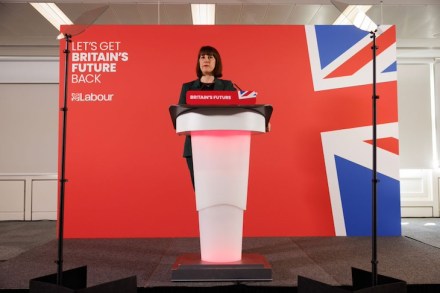
The IMF has upgraded the 2024 economic forecast for the UK. What does this mean for the Government and could more good news follow this week? And, with speeches on tax, benefit crackdowns and tackling anti-semitism, what should we make of all this political activity? Will we see the return of ‘the hot lectern guy’? Kate Andrews and James Heale join Katy Balls to discuss. Produced by Patrick Gibbons

UK growth is creeping up – but tough decisions still lie ahead

Today the International Monetary Fund has upgraded its growth forecasts for the UK: from 0.5 per cent this year to 0.7 per cent, followed by a 1.5 per cent rise in 2025 (unchanged from its previous update). These forecasts still sit slightly below the Office for Budget Responsibility’s most recent predictions – but only just. The IMF’s latest forecasts come less than two weeks after the UK economy defied predictions and grew by 0.6 per cent in the first quarter of the year, exceeding practically all expectations and confirming that recession ended back in 2023. As I noted earlier in the month, when the provisional GDP figures were announced, the

The trouble with Labour’s new towns plan

Since last October, when Keir Starmer declared that he was a ‘Yimby’ – a ‘yes in my back yard’ – Labour has tried to position itself as the pro-housing party. We are now finally getting a glimpse of what this might look like in practice.   Deputy leader Angela Rayner has promised a revitalisation of the postwar ‘New Towns’ programme, which, in the quarter-century from 1946 to 1970, delivered hundreds of thousands of new homes.   New Towns are not a panacea This certainly signals the right ambitions, and if done in the right way, New Towns could indeed make a major contribution to solving Britain’s housing crisis. But they are not

Could Rightmove make the wrong move?

Banks have been cutting fixed mortgage rates, leading to hopes among some people that the housing market – which has been pretty flat so far this year – will soon respond positively. While prices and sale volumes haven’t been going anywhere, last month the Royal Institution of Chartered Surveyors reported that enquiries from buyers have risen to their highest level in two years. The company will have to watch its back for app developers out to steal its business But do short sellers tell a different story? Property website Rightmove, according to a list maintained by the Financial Conduct Authority, is currently the fifth most-shorted stock on the FTSE all-share

Can Hunt answer the Reagan question?

11 min listen

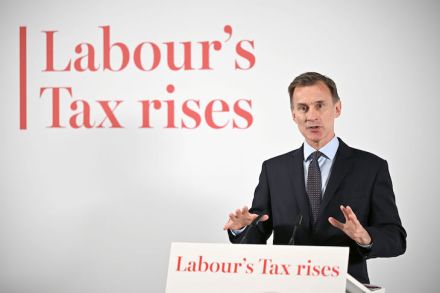
Ronald Reagan famously asked voters: ‘are you better off than you were four years ago?’ At the next election, the Tories face a public thinking over the last fourteen years. Chancellor Jeremy Hunt gave a speech today defending the UK’s record tax levels and attacking Labour’s economic plans. But who should we trust more on tax? Fraser Nelson and James Heale join Katy Balls to discuss. Produced by Megan McElroy and Patrick Gibbons.

Hunt’s tax attack on Labour is sure to backfire

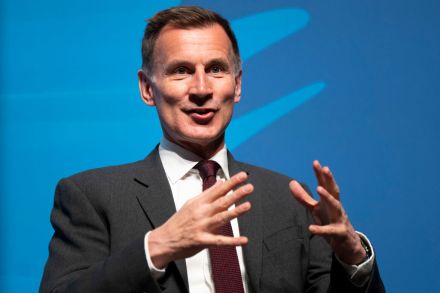
It should come as no surprise that Jeremy Hunt has signalled in a speech this morning that  he will try to make taxation a central theme of the coming election campaign. The tactic has certainly worked in the past. In 1992, fears that Neil Kinnock and his shadow chancellor John Smith would jack up taxes played a big role in a campaign from which John Major’s Conservatives – unexpectedly in many people’s eyes – emerged triumphantly. Five years later, Blair and Brown did not make the mistake of being cast as the high-tax alternative: they promised not to raise any income tax rate, or VAT. The Conservatives have a very

Can Starmer and Reeves add some fizz to the economy?

If the 0.6 per cent first-quarter GDP uplift reported by the Office for National Statistics is sustained for the rest of this year, Rishi Sunak will be able to claim – as he waves goodbye – that he and Jeremy Hunt have succeeded against their naysayers in dragging the UK economy from pandemic depths back to the level of ‘trend growth’, around 2.5 per cent per annum, that used to be thought of as normal. That’s spookily in line (as is the path of inflation) with Ken Clarke’s achievement as Tory chancellor in 1996 ahead of the election that swept Blair and Brown to power the following May. How lucky

Brits won’t stop getting pay rises

Are interest rates still heading ‘downwards’ as the Bank of England Governor Andrew Bailey said last week? Homeowners across the country will be hoping so as average two-year mortgages are again approaching 6 per cent. But the latest figures on the UK job market may dampen hopes of a cut coming soon. Britons have continued to receive above inflation pay rises. Figures just released by the Office for National Statistics show that – against expectations – pay growth in cash terms is at 5.7 per cent. Even when you factor in inflation, pay is still going up and has now hit 1.7 per cent – the highest in two years.

The FTSE 100 hits a new high – but don’t celebrate yet

Another day, another all time high. As the week closed, the FTSE 100 index hit 8,433 — the highest level it has ever reached — and this is turning into a regular occurrence. The FTSE has now hit 11 all-time-highs over the last month, and it is close to equalling the record set way back in 1984 of 12 all-time-highs within a single four-week period. Add in a mega-bid and better than expected growth figures and it may look as if the UK is booming again. Well, perhaps. In reality, however, all that is happening is that the FTSE 100 is finally recovering from two decades of miserable under-performance —

The UK leaves recession – but is it too late for the Tories?

The Office for National Statistics (ONS) confirmed this morning that the UK confined its technical recession to 2023. The economy grew by 0.6 per cent in the first three months of the year, thanks in large part to stronger-than-expected growth in March, which reached 0.4 per cent. Both numbers were larger than expected (the consensus was for 0.4 per cent and 0.1 per cent respectively), as growth figures for February were also revised upwards, from 0.1 per cent to 0.2 per cent. Services output was the ‘largest contributor’ to the economic bounceback, growing at 0.7 per cent in the first three months of the year. Transportation and storage were the ‘largest positive

Andrew Bailey paves the way for a summer interest rate cut

The Bank of England’s Monetary Policy Committee has voted to hold interest rates for the sixth time in a row. Members of the MPC voted 7 – 2 to maintain the base rate at 5.25 per cent – with two members voting to cut rates by 0.25 percentage points. This decision will come as no surprise to the markets, which had already factored in a rate hold. The Bank made clear in March that key indicators – including the state of the UK labour market and the risk of inflation rising again – would influence its decision, none of which dramatically changed in the last seven weeks. The Committee repeats from previous

Why the Bank of England must cut interest rates

As the Bank of England’s Monetary Policy Committee (MPC) announces its interest rate decision today it has the chance to reverse the damage caused by its interest rate hikes. Rates have been fixed at 5.25 per cent since last August and the Bank has stubbornly refused to cut them. We’re all paying the price. Those final rate rises were clearly an error The truth is that inflation is lower and has fallen much faster than the Bank used as its justification for raising rates. In August, the Bank’s model indicated that, even with interest rates raised to 5.25 per cent, inflation would be 5 per cent last year. It was

How to bottle Britishness

The US crackdown on trade finance for Russia from international banks – designed to impede imports needed for the continuing assault on Ukraine – is biting hard, reports the FT, quoting an investor who thinks ‘the logical endpoint of this is turning Russia into Iran’. Quite right too: sanctions like these are a vital non-military way to hobble Vladimir Putin’s campaign. But war and finance intersect in many different ways. Consider also the fate of 400 western-owned commercial aircraft that were leased to Russian airlines before the invasion in February 2022. Now stuck in Russia or its satellites, unmaintained to western standards and unfit to fly back into our airspace,

Can Labour or the Tories fix the economy?

It’s all but certain that the UK’s exit from recession will be confirmed at the end of this week. Preliminary Q1 data, released on Friday, is expected to how slow and steady growth in the first three months of the year. It is also very likely that inflation will return to the government target of 2 per cent this month, due to Ofgem’s changes to the energy price cap last month and higher energy costs falling out of the data. The return to target may not last – which is one of the reasons hopes for a spring rate cut have been dashed. But all this will help cushion what

Jeremy Hunt snaps at Rachel Reeves over National Insurance

Rachel Reeves may have been getting attention for her accusation that the government is ‘gaslighting’ the public over the state of the economy, but this afternoon she ended up being accused of spreading fake news. The ‘gaslighting’ line came from a speech in the City of London this morning, after which Reeves then popped up at Treasury questions in the House of Commons. She asked a question that both she and Labour leader Keir Starmer have been repeating for weeks now, about the Conservatives’ ambition to abolish national insurance. Labour has badged this as a £46 billion unfunded plan, though, as ever, it is worth pointing out that this is

Will John Swinney end the SNP’s war on business?

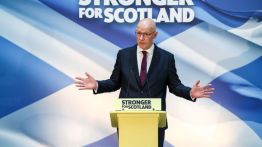
Accepting the leadership of the SNP on Monday, John Swinney said his political priority as Scotland’s seventh First Minister would be the eradication of child poverty. If he is sincere in his desire to achieve this ambition, then Scotland’s economic growth – just 0.2 per cent last year – needs be a great deal better. As soon as Swinney gets his feet under the First Ministerial desk, he must throw open his doors to Scotland’s business leaders and show them the love his party has been withholding for the last decade. Shortly after the SNP won its first Scottish parliamentary election in 2007, new First Minister Alex Salmond fired off

What Rishi Sunak can learn from Gordon Brown’s golden mistake

Gordon Brown is a historian by education, so he might just appreciate the fickleness of posterity. Over a decade at the Treasury from 1997 to 2007, he did many things that he might believe should be widely remembered. Yet few, if any, of his decisions live as clearly in memory as ‘Gordon Brown sold the gold’. Brown sold the gold. He raided pensions. He put 75p on pensions Exactly 25 years ago, Brown’s Treasury stunned the gold markets by starting to sell of much of the UK’s gold reserves. In total, 395 tonnes of gold were sold over three years, yielding $3.5 billion (£2.8 billion) in revenues. That’s a big number, but