Economy

  • AAPL

    213.43 (+0.29%)

  • BARC-LN

    1205.7 (-1.46%)

  • NKE

    94.05 (+0.39%)

  • CVX

    152.67 (-1.00%)

  • CRM

    230.27 (-2.34%)

  • INTC

    30.5 (-0.87%)

  • DIS

    100.16 (-0.67%)

  • DOW

    55.79 (-0.82%)

The surprising truth about AI and jobs

Lord Stockwood, the minister for investment, recently floated the idea of universal basic income to cushion AI-driven job losses. Last month, the European Central Bank published a study of 5,000 eurozone firms showing that companies which adopt AI are 4 per cent more likely to hire. Something doesn’t add up. So what’s going wrong? In 2013, a widely cited Oxford study told us that 47 per cent of American jobs were at high risk of automation. Since then, every serious forecast has done the same thing: decompose a job into tasks, score which tasks machines can do, announce a crisis. The renowned VC investor Marc Andreessen refined the point this

Spotlight

Featured economics news and data.

Cutting Britain’s giant welfare bill would be an act of kindness

Does having money really matter that much? There are those, usually with quite a bit of it, who want us to care less about materialism. But, unequivocally, money really does matter – not because of any status it supposedly brings, but for the freedom it buys: freedom to choose how we live and how we look after others. Considering this, it seems that the deep disillusionment with mainstream politicians in recent years stems from a protracted and ongoing period of stagnant living standards over which they have presided. But the truth is that the average person has not got poorer since the global financial crisis. They have got a little

The Green party is terrifying

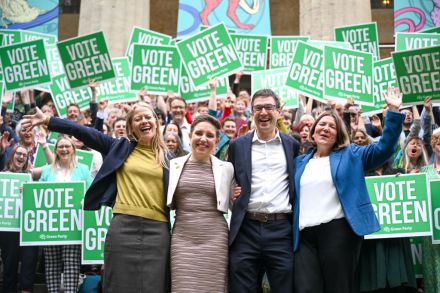
Is the Green party the most controversial force in British politics? It’s certainly giving Reform a run for its money. In the past few months, the Greens have suspended a former London Assembly member and two-time London mayoral candidate after he lamented that colleagues had denounced the Cass Review. After the local elections, one councillor sparked outrage by shouting ‘Allahu Akbar’ to celebrate his victory. At the weekend, it was reported that three candidates for the party were no longer standing amid suggestions they made racist comments. What do traditional Green voters – those primarily driven by environmental concerns – make of these developments?   Now there’s the backlash to their scandalous maternity policy. In

The trouble with the Tories’ ‘Family Home Tax Guarantee’

There is a very big problem with Jeremy Hunt’s Family Home Tax Guarantee, though which he promises a Conservative government would not increase the number of council tax bands, carry out a council tax revaluation, cut council tax discounts, impose capital gains tax on sales of main homes or increase the level of stamp duty. It reminds voters of all the times that the Conservatives have jacked up property taxes in the past 14 years. No-one paid more than 4 per cent on any sale. George Osborne soon changed that When David Cameron become Prime Minister in 2010, stamp duty was levied at 1 per cent on homes sold for between

A thriving City will test Labour’s tolerance

The City is having a busier year than pessimistic observers – including me – might have expected. The biggest deal on the block, the £39 billion bid by Australian giant BHP Billiton for its London-listed South African mining rival Anglo American, has fallen away. But plenty of bankers’ and advisers’ fees have already been clocked up on both sides and BHP may now pursue global domination of the copper market by stalking other London-listed miners such as Antofagasta of Chile. Meanwhile, the £3.5 billion takeover of International Distribution Services, the parent of Royal Mail, by Czech billionaire Daniel Kretinsky’s private EP Group, is cruising ahead with scant opposition – but

On Sunak’s maths, Tories will lift taxes by £3,000 per household

My colleague Ross Clark has shown how the Tories cooked up that £2,000 figure. They worked out the total cost of what they think Labour will do, using standard HM Treasury costings. Then, they divided that by the number of in-work households (18.4 million). This is a subset of the 21.4 million total UK households, so no pensioners or workless households. By choosing a smaller denominator, you concentrate the increase and conjure up a scarier figure. Then they quadruple-counted. So they took each year’s estimate for tax rise and then added them together over four years and – presto! – you end up with £2,000. But let’s apply a similar method to

The truth about Labour’s fiscal black hole

It is small wonder that Treasury officials are unhappy about Conservative claims about Labour tax rises being attributed to them. The civil service is supposed to be neutral, and be seen to be neutral. James Bowler, permanent secretary at the Treasury, who wrote to the Labour party expressing concern that certain figures are being attributed to his officials, will almost certainly find himself having to work with a Labour government in a few weeks’ time.  There is one figure at the heart of the Conservative analysis of Labour’s tax and spending plans which really should be causing concern What the Conservatives have done in making the claim that Labour will

Is Labour really plotting a £2,000 tax grab?

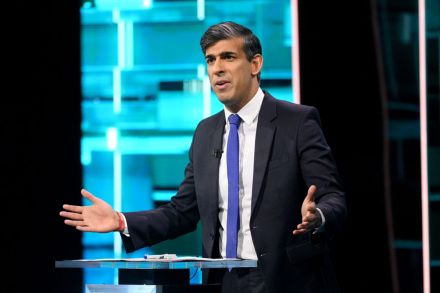
Is the Labour party planning a £2,000 tax grab on households? That was Rishi Sunak’s main message last night during the first election debate on ITV – one which he was found by YouGov’s snap poll to have won (just). The Tories will ‘keep cutting taxes’, he said, while Labour will raise them. It took some time for Keir Starmer to hit back at the accusation, and the specific number, which he eventually called ‘absolute garbage’. Starmer said the £2,000 figure was based on ‘dodgy assumptions’ and had ‘glaring mistakes’ Where did the figure come from? And how accurate is it? The document, titled ‘Labour’s tax rises’ was put together

Labour’s energy plan doesn’t add up

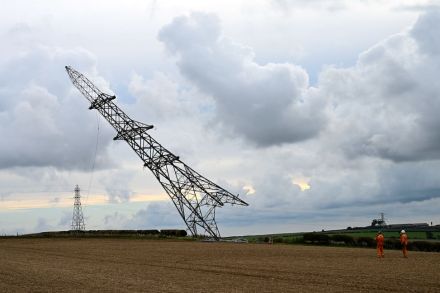
So, we have a little more flesh on the bones of Labour’s energy policy, with the party giving more details of Great British Energy, the state-owned company it wants to set up to invest in wind and solar energy. But there are still gaping holes in Labour’s promise to decarbonise the electricity grid by 2030 – and save consumers money in the process. First to note is that Labour seems drastically to have toned down the claims as to how much its energy policies will supposedly save consumers. Until today it was claiming that it would save us ‘up to £1,400’ a year. Given that under Ofgem’s price cap the

Can Sunak really take credit for future interest rate cuts?

When the Bank of England finally delivers an interest rate cut, can the Tory party take credit for it? Rishi Sunak thinks so. ‘We are the party who has committed to bringing down inflation, which is a necessary condition for bringing down interest rates,’ he told the Times in an interview published today. ‘And I think people can see we have delivered that.’ Of course no politician is in a position to promise or deliver a rate cut. That decision sits firmly with the BoE’s Monetary Policy Committee, who this month voted to hold the base rate 5.25 per cent for the six time in a row. But to be fair to

A stand-off between Labour and the BMA is coming

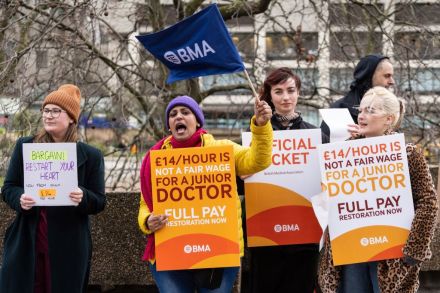
Junior doctors will be staging yet another walkout in the week running up to the election: five days in total, from 27 June to 1 July. It is the 11th walkout since March last year, as the union insists they will not settle for less than a 35 per cent pay raise. The dates are no coincidence: there is no moment more politically fueled than the run-up to polling day. This gives more weight to the government’s argument that these strikes have always been political in nature, and certainly resulting in political consequence: the NHS waiting list rose by roughly 500,000 after Rishi Sunak pledged to get the waitlist falling,

Did Rachel Reeves just rule out more tax hikes?

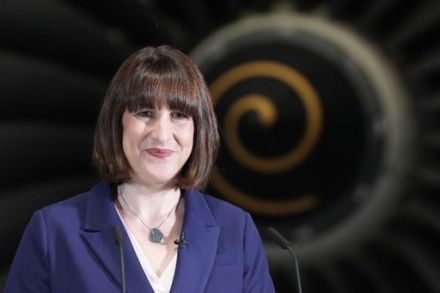
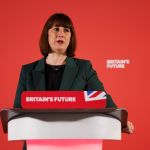
Speaking to business leaders in the East Midlands this morning, Rachel Reeves delivered a fairly uncontroversial speech. In her first major address since the election was called last week, the shadow chancellor insisted that Labour is the ‘natural party of British business’ (a point bolstered by today’s letter signed by over 100 business chiefs endorsing Labour). She said she wanted ‘to lead the most pro-growth, pro-business Treasury our country has ever seen’ – who could argue with that? She then went on to restate her commitment to fiscal discipline and a promise to make the numbers add up. While the dig at free markets won’t have been everyone’s cup of tea, it was

The truth about pensioners and tax

The Tories’ ‘Triple Lock Plus’ is a pretty blatant attempt to secure the votes of a demographic group which is more inclined to vote Conservative than any other. That much is clear. The party’s proposal would give pensioners a high personal tax allowance to spare them from having to pay income tax as the state pension rises faster than either inflation or average earnings. If the government wants to spare pensioners from having to pay income tax it could, of course, raise the income tax threshold for everyone. But instead, while pensioners are spared tax, the personal tax allowance for working-age people is due to be frozen for another four

The Tory ‘tax-cutting’ agenda is fooling no one

Something has to go badly wrong for anyone to become nostalgic for 2020. But the Tory’s latest election announcement – to create the ‘Triple Lock Plus’ – is just the thing to do it. The first autumn after the pandemic hit, then-chancellor Rishi Sunak was looking at the public finances in dismay, wondering how he might even try to account for the heavy spending that he, his party and Labour had rushed through parliament earlier in the year. But the strange circumstances of the pandemic – including the mandate for young and low-risk people to ‘stay home’ – also created an opportunity to address some outstanding and unfair public policy: the triple

Sunak introduces the ‘Triple Lock Plus’

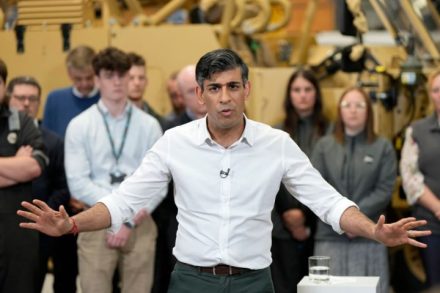
Another day, another big policy pledge from the Tories – and this time it’s a pitch for the grey vote. Rishi Sunak is pledging to cut tax for pensioners. A Conservative government would increase the personal allowance for pensioners in line with the Triple Lock by introducing a new age-related allowance. It is being billed as the ‘Triple Lock Plus’ whereby both the state pension and their tax-free allowance rise in line with the highest of earnings, wages or 2.5 per cent. As things stand, tax thresholds are being frozen for three years – which would not only drag five million more into higher tax bands but mean the basic

Private schools can’t complain about Labour’s VAT raid

Of course Labour’s policy of charging VAT on private school fees is all about throwing a bit of red meat to those in the party who are motivated by class envy. Why otherwise expend so much political effort on a policy which in the opinion of the Institute of Fiscal Studies will only raise £1.6 billion a year? And that, of course, is mere guesswork. No-one really knows how the parents of private school pupils will really behave when whacked with a 20 per cent uplift in fees. Even if parents don’t withdraw pupils immediately, many might be tempted to do so at the end of prep school – and

Why is Rachel Reeves so proud of working at the Bank of England? 

We don’t know much about what taxes she will impose. Nor do we have many clues as to how she will boost growth, or find the money to improve public services. Still, not to worry. It turns out that we can, at least according to her feed on X, trust the shadow chancellor Rachel Reeves to ‘run the economy’ for a very simple reason. She used to work at the Bank of England, and apparently they know about that kind of stuff over there. There is just one problem. In reality the Bank is not as brilliant as Reeves seems to think it is – and it is questionable, to

Will Labour raise taxes?

What is Labour’s tax-and-spend agenda? This is an outstanding question the party needs to answer before polling day – and Labour seems to know it. That is presumably why shadow chancellor Rachel Reeves sat in the BBC One hot seat on the first Sunday of the election campaign. ‘I totally agree I have to show the sums add up’ Reeves told Laura Kuenssberg this morning.  But what will be done to make that possible: higher taxes, more borrowing, or a reduction in spending? Unsurprisingly, Reeves did not want to make firm commitments in most of these areas. The shadow chancellor did commit though once again to not raising certain taxes.

How net zero will divide Labour and the Tories

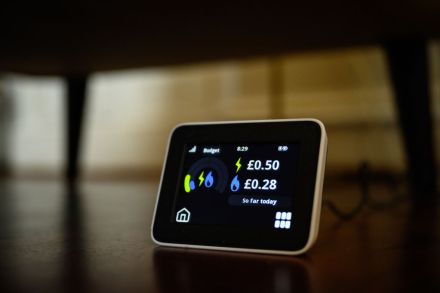
This morning, Ofgem announced another reduction in the energy price cap from July. The new cap on the unit price of energy should see costs fall by another 7 per cent, taking £122 off the average household bill. And it didn’t take long for both the Tories and Labour to try to swing the news in their electoral favour. Only two days into an election campaign, the government will want to claim credit for today’s news: an opportunity to remind voters what successive Conservative prime ministers did to protect people from higher energy costs (of course, the Energy Price Guarantee was a large part of the reason markets rebelled against

Why is UK retail doing badly?

This morning’s retail sales figures are not what Rishi Sunak will have hoped for as he pitches his case for re-election on economic recovery. They are yet more indication that Britain has fallen out of love with shopping. Sales volumes were 2.3 per cent down in April compared with the previous month, while the March figure was revised downwards from zero to minus 0.2 percent. Some of this might be connected with the timing of Easter: the holiday weekend straddled March and April, so people will have done their food shopping, Easter egg purchases, filled their car with petrol, and everything else, in March rather than April, but the bigger

The next Bitcoin bubble will be the largest yet

The power of Bitcoin to make and lose fortunes in a very short time is unmatched in history. But could the biggest boom and bust be yet to come? Since January the value of Bitcoin has staged a remarkable recovery, and is now back trading at or even above the highs it reached in 2022. That is all the more remarkable given that its recovery coincided with the trial, and eventual conviction and imprisonment of Sam Bankman-Fried who, following the collapse of his cryptocurrency exchange FTX, is now reported to be on a new venture: trading grains of rice with his fellow inmates at the Brooklyn Metropolitan Detention Center. For his customers,

Will Nvidia stock keep going up?

It more than doubled its sales. It unveiled a new line of microchips. It promised to keep rolling out new products for the next few years. In the end, Nvidia, the chip manufacturer, delivered the kind of blockbuster results that traders and investors had been waiting for. Yesterday’s ‘Nvidia Day’ (as the company’s quarterly results days are now known on Wall Street) turned out to be better than even the most bullish investor could have hoped for. There is just one snag. The company is now powering the bull market. If anything goes wrong with its turbo-charged expansion, it will bring equities down with it. It’s great for the moment