Economy

  • AAPL

    213.43 (+0.29%)

  • BARC-LN

    1205.7 (-1.46%)

  • NKE

    94.05 (+0.39%)

  • CVX

    152.67 (-1.00%)

  • CRM

    230.27 (-2.34%)

  • INTC

    30.5 (-0.87%)

  • DIS

    100.16 (-0.67%)

  • DOW

    55.79 (-0.82%)

The surprising truth about AI and jobs

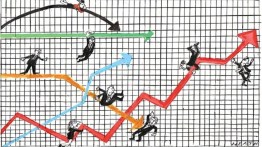
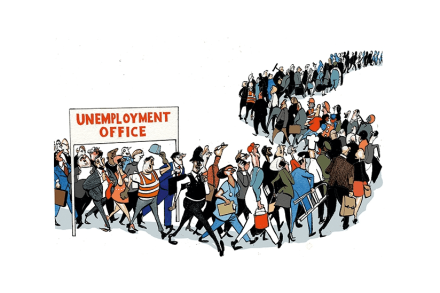
Lord Stockwood, the minister for investment, recently floated the idea of universal basic income to cushion AI-driven job losses. Last month, the European Central Bank published a study of 5,000 eurozone firms showing that companies which adopt AI are 4 per cent more likely to hire. Something doesn’t add up. So what’s going wrong? In 2013, a widely cited Oxford study told us that 47 per cent of American jobs were at high risk of automation. Since then, every serious forecast has done the same thing: decompose a job into tasks, score which tasks machines can do, announce a crisis. The renowned VC investor Marc Andreessen refined the point this

Spotlight

Featured economics news and data.

Cutting Britain’s giant welfare bill would be an act of kindness

Does having money really matter that much? There are those, usually with quite a bit of it, who want us to care less about materialism. But, unequivocally, money really does matter – not because of any status it supposedly brings, but for the freedom it buys: freedom to choose how we live and how we look after others. Considering this, it seems that the deep disillusionment with mainstream politicians in recent years stems from a protracted and ongoing period of stagnant living standards over which they have presided. But the truth is that the average person has not got poorer since the global financial crisis. They have got a little

Why Britain is building the world’s most expensive nuclear plant

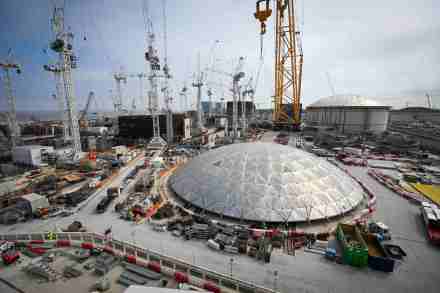
For over 20 years, Britain effectively gave up on building new nuclear power stations. But that’s changed now Hinkley Point C in Somerset is under construction. When completed it will provide around 7 per cent of the UK’s electricity. Hinkley Point C is set to be the most expensive nuclear power station ever built. In fact, it is more than four times more expensive on a pound-for-megawatt basis than the average nuclear power plant built in South Korea. Even Flamanville 3, a French plant that uses the same reactor (EPR-1750) and built by the same company (EDF), is set to cost at least 25 per cent less. Why has Hinkley Point C

Will Britain ever escape the low growth trap?

The Organisation for Economic Cooperation and Development’s (OECD) latest report, published this morning, downgrades Britain’s growth prospects this year: from 0.7 per cent (forecast in November last year) to 0.4 per cent. Based on the OECD’s Economic Outlook, Britain and Germany risk experiencing the least growth amongst advanced economies, with Germany coming last this year (with 0.2 per cent growth) and the UK coming last next year (with 1 per cent growth). In response to this morning’s downgrade, Chancellor Jeremy Hunt has said that the ‘forecast is not particularly surprising given our priority for the last year has been to tackle inflation with higher interest rates’. This is a point

Joseph Stiglitz: ‘We know where fascism led last time’

When Joseph Stiglitz talks, the left listens. The Nobel laureate has advised multiple Democratic presidents and the World Bank, where he worked as chief economist and senior vice president. He’s long been a leading critic of the liberal leanings that have dominated the West’s economic policy for four decades. So when we meet in The Spectator’s office, I ask him if the Labour party has sought his advice. It wouldn’t be unthinkable. ‘I just met with, in a TV show, one of the Labour shadow ministers. We had a good discussion,’ he says, smiling. But the New Keynesian economist is in the UK for four days, and his new book,

Live the high life… in a mid rise

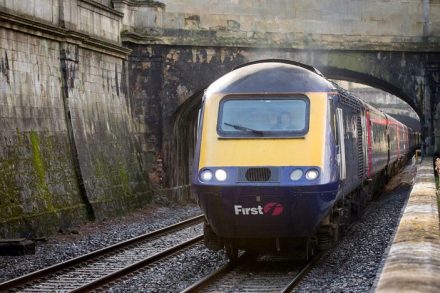
How radically left-wing is Labour’s proposed ‘renationalisation’ of the railways? Though militant Mick Lynch of the RMT union ‘strongly welcomed these bold steps’, the real answer is: hardly at all. The revolutionary socialist group Counterfire agonised thus: ‘While it would be extremely obtuse to say that Labour’s policy is bad, it would be naive to say it was adequate, let alone particularly socialist.’ I’m struggling to disagree with that summary. The central idea of taking train operating franchises into public hands as they expire comes as no shock: LNER, Northern, Southeastern and the dreadful TransPennine Express have already met that fate, along with Scottish and Welsh trains, and those that

Brexit has not made food unaffordable

Imagine that for the past 30 years all food entering Britain from EU countries had been subject to stringent sanitary checks and that today, for the first time, the government had decided to abolish those checks. It isn’t hard to guess how the Labour party would react. The government, it would be claiming, was throwing our farming and horticultural industries to the wall in the name of an ideological commitment to deregulation. Britain was being opened up to infection from devastating diseases like swine fever and foot and mouth disease – all so that the government’s friends in the food import industry could trim a few percent off their costs

Is Javier Milei’s medicine working?

Javier Milei was taking too many risks. Argentina’s president didn’t have enough political support. And his radical version of free market economics didn’t offer any solutions anyway, especially in a world where the state is more crucial than ever. When Milei won the presidency last year there were plenty of predictions that he would fare as well as Britain’s Liz Truss. And yet, there are signs the medicine is starting to work – and that will be globally significant.   Over the past couple of weeks, the data coming out of Argentina has been far better than anyone expected. This month, inflation is forecast to dip below 10 per cent

The truth about Ireland’s £600 million Brexit ‘bonanza’

Ireland is reaping the benefits of a Brexit bonus to the tune of €700 million (£600 million). It is not hard to understand why hardcore Remainers are gleefully reporting the news that the government in Dublin is collecting huge extra revenues, much of which comes from imposing tariffs on British goods. What is being reported as a ‘Brexit bonanza’ for the Irish isn’t quite what it seems ‘The level of customs duties has effectively doubled in recent years compared to the previous decade, reflecting the transformation of Great Britain into a third country in 2021,’ says the Irish Revenue Commissioners. British companies suffer, and a foreign government makes lots of

Labour’s plan to renationalise the railways doesn’t add up

Labour’s plan to renationalise the railways is not much of a plan at all. Rather, it is a list of goals: to eliminate ‘fragmentation, waste, bureaucracy’, to ‘bring down costs for taxpayers’ and to ‘drive-up standards for passengers’. All lofty ambitions, all lacking a strategy. What little detail we do have points to significantly more bureaucracy. The party plans to set up two more quangos – Great British Railways and the Passenger Standards Authority – which are unlikely to do much to create the more ‘efficient’ system Labour is promising passengers. Still, the announcement has been popular. And it is likely to stay popular until commuters are forced to reckon

How Pret ate itself

How bad would it be if Royal Mail’s parent company, International Distributions Services (IDS), were to be taken over by the Czech billionaire Daniel Kretinsky? Our historic postal service is heavily lossmaking, struggling to maintain its universal delivery obligation and at war with its unions: a foreign owner would surely take an axe to it. Kretinsky, who owns almost 28 per cent of stockmarket-listed IDS, has gone back on an assurance that he would not try to take the company private and has tabled a £3.1 billion offer – above the group’s current market value but well below what other shareholders think it is worth. He won’t win with this

Who will pay the price for the boost in defence spending?

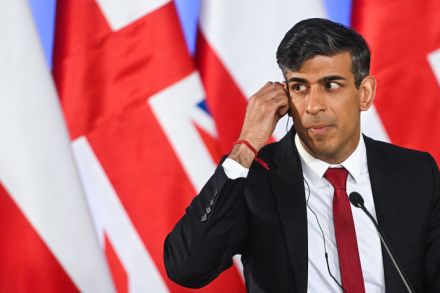
Rishi Sunak’s announcement that the government will increase defence spending to 2.5 per cent of GDP has been warmly welcomed, but how much is it really going to transform the UK’s military? Former armed services minister James Heappey was quick to scotch expectations this morning when he said it wouldn’t necessarily be enough to reverse falls in the size of the Army, Navy or Royal Air Force – the money could quite easily disappear simply in upgrading equipment. Nor is there anything particularly novel about the Prime Minister’s announcement: Boris Johnson made the same promise – to raise defence spending to 2.5 per cent of GDP by by 2030 – at the

Why did it take Rishi Sunak so long to up defence spending?

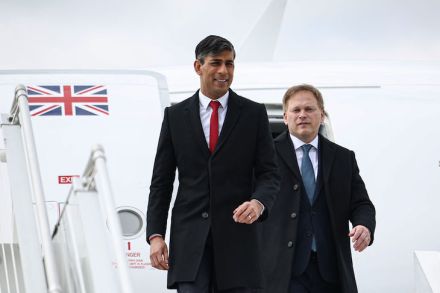
Britain is putting its defence industry on a ‘war-footing’, the Prime Minister has said, as he vowed to boost spending to 2.5 per cent of GDP by 2030. It was only a matter of time that Rishi Sunak made such an announcement. After all, Russia’s invasion of Ukraine illustrated a simple truth: that the world is more dangerous now than for a generation, and nations will need to increase their defence spending if they want to protect themselves and their interests. Grant Shapps, Penny Mordaunt and Tom Tugendhat had all expounded this view from within government, and now it seems the PM has given his seal of approval. The money

What happened to the Tory promise to balance the budget?

There is one big reason why a summer general election is unlikely, however tempted the Prime Minister might be to try to take advantage of the first migrant flight to Rwanda. Read between the lines and it is clear that Rishi Sunak and Jeremy Hunt want to hold another ‘fiscal event’ before going to the polls. Nibbling away at a few more taxes, they appear to believe, will give them the best chance of clinging to power, or at least limiting the electoral damage to the Conservatives. They must be hoping that few people will notice the public borrowing figures. This morning it was revealed that last month the government

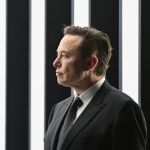
Elon Musk (Photo: Getty)

Elon Musk doesn’t know how to turn Tesla around

The share price is in freefall. Sales are sliding at an accelerating rate as customers lose interest. The Chinese are moving in, and the brand is tarnished. When Elon Musk unveils the quarterly results for Tesla later today, he will need to convince his shareholders he has a plan to turn the company around. The only trouble is, right now there is not much sign Musk has a clue what to do. Musk is a brilliant entrepreneur. There is no question of that. But he has also spread himself too thinly Tesla’s results this week are expected to be its worst in years. Sales have already fallen by 8 per

Will Sunak’s sick note crackdown get Brits back to work?

Alongside the Prime Minister’s speech on welfare today, the Department for Work and Pensions quietly released updated forecasts. The numbers are stark: DWP expects there to be 3.96 million working-age claimants by 2028-29, a rise from 2.8 million in 2023-24. Meanwhile the number of working-age people receiving disability benefits is forecast to rise to 1.16 million – that’s 160,000 more claimants than was expected just six months ago. These are the numbers Rishi Sunak must grapple with as he sets out his welfare reform agenda.  Back in 2020, then chancellor Rishi Sunak had days to design the furlough scheme. Once lockdown became mandatory in spring 2020, it was a race

Labour should think twice before taxing pensioners

Labour, according to Rachel Reeves, is now the party of low taxes. She has said she won’t raise income tax, National Insurance, capital gains tax and corporation tax, as well as ruling out a wealth tax. But that still leaves a few options for jacking up taxes, as one of Reeves’ advisers, Sir Edward Troup has hinted. Last week, Troup, a former head of HMRC, was appointed by Reeves to look at efforts to reduce tax avoidance. This is a slightly ill-timed initiative given that Labour is simultaneously trying to play down the case of a particular taxpayer who stands accused of failing to pay capital gains tax on a

Sack Andrew Bailey? Let’s look at the case against him

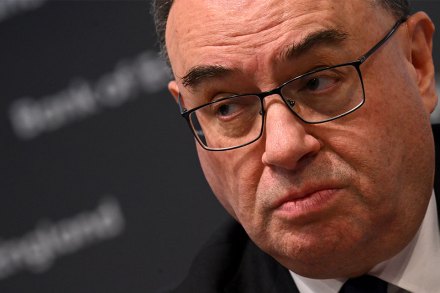
The Governor of the Bank of England, Andrew Bailey, is a loyal and well-intentioned public servant in a role that, by its nature, attracts constant blame and hindsight judgment. Liz Truss is a spectacularly failed 44-day prime minister with a book to sell. So when Truss says Bailey should have been sacked for his part in her downfall –when the Bank intervened to prevent a pension fund crisis after her chancellor Kwasi Kwarteng’s radical mini-Budget of September 2022 – and that he should be sacked anyway for being part of a Keynesian economic Establishment, with the Treasury and the Office for Budget Responsibility, that has delivered nothing but stagnation, my

Inflation is down again – but don’t expect interest rates to follow suit

Interest rate cuts are beginning to look like a mirage: the closer we seem to get to them the more they seem to recede into the distance. Bank of England governor Andrew Bailey may have hinted this week that UK rates could soon be cut regardless of what happens in the United States, where strong jobs data is putting off the Federal Reserve from cutting rates, but this morning’s inflation data will not encourage an early cut. While the Consumer Prices Index (CPI) did fall in March, from 3.4 per cent to 3.2 per cent, this was less than the fall which was expected. The rise in road fuel prices

Worklessness hits eight-year high

Britain already has the worst post-pandemic workforce recovery in Europe. New figures out today show the problem is getting even worse. The number of those ‘economically inactive’ (not in work or looking for it) rose by a remarkable 150,000 in the last three months to 9.4 million – equivalent to the adult population of Portsmouth and some 850,000 since the first lockdown. Taken as a share of the working-age population, it’s now at an eight-year high – and significantly worse than it was during Covid or its aftermath. What’s driving the worklessness? The biggest single factor is long-term sickness, also at an all-time high. Is this just economic long-Covid, the

Did the UK leave its recession behind in 2023?

The economy grew by 0.1 per cent in February: not much to celebrate on its own but the small uptick in GDP all but confirms that the UK is leaving its recession in 2023. February wasn’t a booming month: services output only grew by 0.1 per cent, with transportation and storage services contributing the most to the sector’s growth (the former seeing its biggest boost since June 2020). The construction sector decreased by 1.9 per cent in volume terms, as the ‘fourth wettest February on record in England’ delayed projects. But a bounceback in production – the ‘largest contributor to the growth in GDP’ that month – provided some balance:

The arrogance of Apple

Can flexible working get the best out of what a ministerial press release calls ‘hardworking Brits’ – or is it a couch potato’s charter? As of 6 April, employees have had the right to ask for flexibility – including remote working and hours to suit – from their first day in a job; employers can reject unworkable requests, but are obliged to consider and consult. If you’re an optimist, you’ll think workers whose family lives are accommodated by enlightened employers will be happier, more loyal and more productive: ‘5 a.m. will be the new 9 a.m.,’ declares the HR Director, for parents who choose to ‘tackle work before attending to