Economy

  • AAPL

    213.43 (+0.29%)

  • BARC-LN

    1205.7 (-1.46%)

  • NKE

    94.05 (+0.39%)

  • CVX

    152.67 (-1.00%)

  • CRM

    230.27 (-2.34%)

  • INTC

    30.5 (-0.87%)

  • DIS

    100.16 (-0.67%)

  • DOW

    55.79 (-0.82%)

Making Tax Difficult: another Whitehall farce

Welcome to the new tax year, with its overflowing hamper of half-baked, growth-eating, enterprise-crushing Labour measures. And if you happen to be one of the 4.4 million self-employed who scrape an independent living despite rising costs and red tape, welcome to what must surely be one of Whitehall’s longest-running but least funny sitcoms, Making Tax Digital (MTD). If your income from self-employment (or rents as a landlord) exceeds £50,000 a year, you must henceforth submit quarterly digital updates to HMRC; next year the threshold will drop to £20,000. You’ll have less time to pursue your trade but your costs will rise, because you’ll need new software and more professional advice.

Spotlight

Featured economics news and data.

Cutting Britain’s giant welfare bill would be an act of kindness

Does having money really matter that much? There are those, usually with quite a bit of it, who want us to care less about materialism. But, unequivocally, money really does matter – not because of any status it supposedly brings, but for the freedom it buys: freedom to choose how we live and how we look after others. Considering this, it seems that the deep disillusionment with mainstream politicians in recent years stems from a protracted and ongoing period of stagnant living standards over which they have presided. But the truth is that the average person has not got poorer since the global financial crisis. They have got a little

Labour will struggle with its plan to get Britain back to work

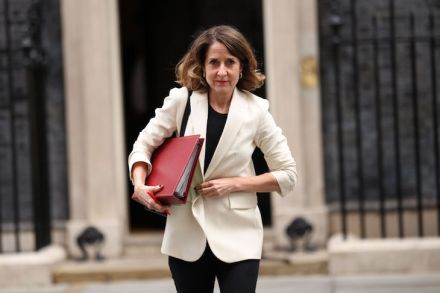
Liz Kendall wants Britain to get back to work. The Work and Pensions Secretary has unveiled a target for the country to reach an 80 per cent employment rate. But hold on: that ‘ambition’, as the government is calling it, is completely unrealistic. Labour’s plan to reverse the dire labour market and drive up Britain’s employment rate seems certain to fall short of its ambitious target. Spending on sickness and disability benefits is set to increase by £30 billion over the next five years Britain is the only country in the G7 whose employment rate has still not returned to pre-pandemic levels: 2.8 million people are out of work because of

Miliband will need natural gas to hit net zero

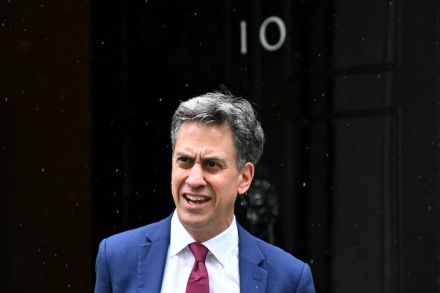
Three weeks into the new Labour government and it is already becoming clear where some of its weaknesses lie – none more so than Ed Miliband’s promise to decarbonise the electricity grid, save consumers money and boost the economy with many thousands of ‘well-paid green jobs’. Today the Royal Academy of Engineering weighs in with its own assessment of Miliband’s chances. Its verdict? That even if the government wants to decarbonise the grid, Britain is going to have to invest in new gas plants – and ‘unabated’ ones (i.e. not fitted with carbon capture and storage CCS technology) at that. Even in an optimistic scenario, the Academy thinks that in

Why Labour should avoid Gordon Brown’s stealth taxes

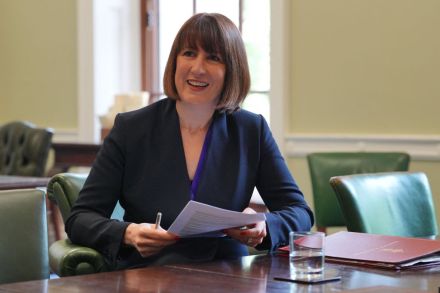
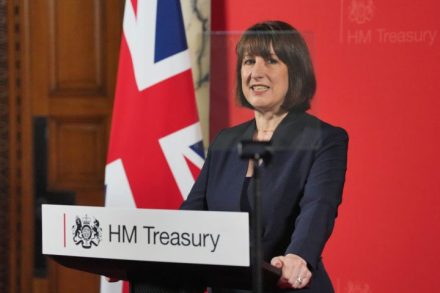
During the election campaign, Chancellor Rachel Reeves made bold promises – no increases to Income Tax, National Insurance, or VAT. She also sought to echo the ‘prudence’ mantra of her predecessor as chancellor Gordon Brown, though his tenure was marked by significant spending increases rather than prudent restraint. True to form, over the weekend Reeves indicated the government could accept recommendations for above-inflation pay increases, of about 5.5 per cent, for NHS workers and teachers. The Institute for Fiscal Studies (IFS) estimates that a similar pay hike across public sector professions would cost about £10 billion, requiring more taxation or borrowing. This comes amid other ambitious plans for restructuring and

Keir Starmer has made his first misstep as Prime Minister

In dodging calls from his party to remove the two-child cap, Sir Keir Starmer is making one of his first noteworthy mistakes as Prime Minister. Both John McDonnell, the far-left former shadow chancellor, and Anas Sarwar, the soft-left Scottish Labour leader, have called for the Coalition-era policy to go. The cap limits the payment of Universal Credit to a family’s first two children, with subsequent offspring meriting no additional payment. According to the Institute for Fiscal Studies, keeping the cap will mean an extra 670,000 children worse off by the end of this Parliament while scrapping it would reduce relative child poverty by half a million. The annual cost of

Will Reeves boost public sector pay?

As the dust around the election settles, a question Tory MPs and supporters still grapple with is why Rishi Sunak called the election when he did – not least because economic indicators point to improvements over the summer and autumn, as inflation returns to target and growth starts to pick up. But Rachel Reeves, the new Chancellor, is having none of this narrative. ‘I really don’t buy this idea that somehow we’ve been handed a golden inheritance,’ she told Laura Kuenssberg on the BBC this morning, in her first sit-down interview since she entered No. 11. ‘If the former prime minister and chancellor had thought things were so good, they

Why is British retail so sluggish?

Is the retail sector ever going to recover from Covid-19? The rest of the economy seems to be purring quite nicely at the moment, with GDP up 0.7 per cent in the first quarter (not adjusting for population growth). But the good times have yet to reach the retail sector, where sales volumes fell by 1.2 per cent in June. This followed a surprise 2.9 per cent rise in May, but over the second quarter as a whole sales were down 0.1 per cent. Compared with the second quarter of 2023, sales were down 0.2 per cent. Overall, sales were 1.3 per cent lower last month than they were in

Keir Starmer is deluding himself about the EU

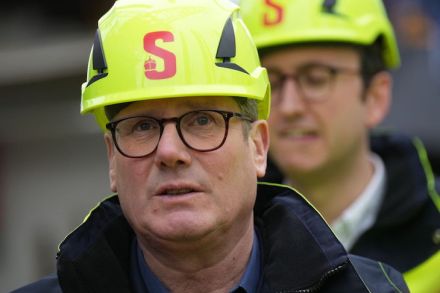
‘We cannot let the challenges of the recent past define our relationships of the future,’ declared the Prime Minister ahead of today’s meeting of the European Political Union at Blenheim Palace. The meeting, he added, ‘will fire the starting gun on this government’s new approach to Europe’. The subtext to this is: the grown-ups are back in charge, and from now on we are going to have a far more constructive relationship with the EU. Keir Starmer has even promised a renegotiation of Britain’s trading relationship with the EU, which is supposedly going to make life easier for our exporters. Keir Starmer has even promised a renegotiation of Britain’s trading relationship

Is the great worker shortage finally coming to an end?

British workers have just experienced their highest pay rises for two years. With inflation remaining at the Bank of England’s target, the average worker has now seen their real term pay increase between March and May this year by just over 2 per cent – a level not seen since 2022. However, in cash terms there are clear signs that the heat has firmly left the labour market with pay growth beginning to slow. This is good news for the new government and rate setters at the Bank of England who will need to decide next month whether it’s time for the first interest rate cuts. Doubts about a cut

How the markets reacted to Trump’s assassination attempt

Market reactions to the assassination attempt in Pennsylvania represent, according to taste, rational bets on the significantly increased likelihood of a second Trump presidency or stark confirmation of the madness that has overtaken America and threatens the civilised world. Shares in Trump Media & Technology – the parent of his social media platform Truth Social – rose by 30 per cent on Monday, adding more than $1 billion to Trump’s notional fortune despite the company’s revenues being, as one observer pointed out, ‘comparable to that of two Starbucks stores’. Also up were shares in gunmakers such as Smith & Wesson and in private prison operators – and US Treasury bond

The Tories must share the blame for Labour’s illiberal smoking ban

When Rishi Sunak called a summer election, the Tobacco and Vapes Bill didn’t make the pile of ‘wash up’ legislation to be rushed through Parliament. His plans for a generational smoking ban, and a crackdown on vapes, were paused. But this was never going to be more than a brief delay. Labour has used the King’s Speech today to confirm that it will see Sunak’s smoking ban through. Or rather, the party might argue that it’s reclaiming the idea. It was Labour, after all, that floated the policy before the Tories adopted it at their party conference last year.  One day, a 63-year-old will be able to purchase a tobacco

Everything you need to know about the King’s Speech

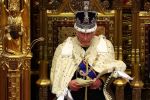
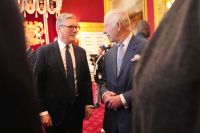
The big theme of today’s King’s Speech is ‘mission-led’ government, with economic growth, house building, workers’ rights and devolution the key elements. King Charles told the House of Lords that ‘taken together these policies will enhance Britain’s position as a leading industrial nation and enable the country to take advantage of new opportunities that can promote growth and wealth creation’. There are six bills designed to deliver these plans. One of the things about a King’s Speech is that what follows in the parliamentary session often bears little resemblance to what the monarch has said The Budget Responsibility Bill will force every fiscal event to be subject to an independent

Labour’s war on nimbys won’t work

Deputy prime minister Angela Rayner has promised the ‘most ambitious programme of devolution this country has ever seen’, with new powers for local councils and more directly-elected mayors. But this will not apply, it seems, when it comes to planning. On the contrary, the centrepiece of the King’s speech today will be planning reforms aimed at reducing the powers of local communities to block housing and infrastructure developments. Powers will be centralised, with central government taking it upon itself to rule on more housing and infrastructure projects deemed to be in the national interest – just as Energy Secretary Ed Miliband did last week when he approved three large solar farms

Don’t blame Taylor Swift for stubborn inflation

The UK’s inflation rate is comfortably back to target: inflation held at 2 per cent in the 12 months leading up to June, the Office for National Statistics confirmed this morning. This rate is unchanged from last month. Yet this morning’s news is stirring up doubts that the Bank of England will go for its first rate cut in August. This is because, while the headline rate is back to the Bank’s target, the services annual rate remains sticky, unchanged from 5.7 per cent. Big reductions in clothing and footwear – which slowed to 1.6 per cent in the year to June, down from 3 per cent in the year

Is Starmer’s King’s Speech really a recipe for growth?

Labour’s first King’s Speech in almost 15 years is expected to be quite meaty. According to reports, His Majesty’s new government will propose 35 parliamentary bills for the coming year.  Labour is proposing dozens of red tape measures that will put the breaks on businesses To be entirely realistic, many of these will fall by the wayside. Parliamentary time is limited, and there are always unexpected events that derail existing legislative plans and call for new ones. Nevertheless, the King’s Speech will be quite revealing about the new government. What they choose to include – and not – sends a signal about early priorities and dispositions. Prime Minister Keir Starmer

Britain’s economy is growing faster, but not fast enough

Another day, another small piece of good economic news. Today the International Monetary Fund has produced its World Outlook report for July, which revises UK growth for 2024 upwards, from 0.5 per cent to 0.7 per cent. This news follows on from last week’s monthly GDP update, which showed growth in May at 0.4 per cent – notably above economists’ predictions.  These are still not numbers to boast about. The IMF’s revision is still slightly below the 0.8 per cent the Office for Budget Responsibility predicted at the last Budget. But it shows the IMF’s downgrade for 2024 growth in April was too negative (it held its 2025 forecast for

Labour’s Yimby plan could lock the Tories out of power for good

As opposition leader, Sir Keir Starmer long struggled to define what ‘Starmerism’ is, other than ‘not Corbynism’ and ‘not Toryism’. Last Autumn, he belatedly stumbled across a policy theme which he has since tried to make his own: ‘Yimbyism’, a positive ‘Yes In My Back Yard’ attitude to development: the antidote to Nimbyism.  Labour’s rhetoric on housing has been confrontational In her first major speech on economic policy, Chancellor Rachel Reeves picked up this ‘Yimby’ theme in order to bolster her pro-growth credentials. Policy announcements include bringing back mandatory housebuilding targets, removing green belt protection from bits that are clearly not green (the ‘grey belt’), and overturning the ban on onshore wind. 

The trouble with Ed Miliband’s North Sea oil plan

Just Stop Oil continued its campaign by spreading orange paint over road junctions in Westminster this week, but why bother when the organisation seems now to be in power? Energy and Climate Change Secretary Ed Miliband is said to be weighing up blocking new licenses for oil drilling in the North Sea. Labour has previously said that it wouldn’t allow exploration of entirely new fields but wouldn’t stand in the way of the continued exploitation of existing fields. Yet even this limited exploration now looks in doubt. How is the government going to generate that income if oil and gas companies are not going to be allowed to drill? The Department for

The growing economy is good news for Labour

The economy is picking up pace. After a dreary April, which saw no growth, the UK economy grew by 0.4 per cent in May. It’s the strongest three-month growth rate since January 2022, with the UK economy expanding by 0.9 per cent leading up to May, compared to the three months leading up to February.  A GDP boost in May was expected, as April’s wet weather put a damper on growth. Still, today’s update from the Office for National Statistics was better than expected, as economists had forecast a 0.2 per cent uptick. While the 1.9 per cent increase in construction can be accounted for as making up for lost

The trouble with Rachel Reeves’s ‘National Wealth Fund’

What country ever went wrong with a sovereign wealth fund? It is easy to envy Singapore and Norway – the latter of which now has £1.3 trillion squirrelled away, equivalent to £240,000 for every citizen. Britain would be in a much better situation now had it, like Norway, invested its windfall from the North Sea, rather than chucking it into the pot of general day-to-day expenditure. Paying state and public sector pensions liabilities out of tax revenue rather than from a long-term investment fund is going to become an ever more serious burden on the state. We shouldn’t, then, sniff at Rachel Reeves’ idea for a ‘national wealth fund’. It is just that what