Economy

  • AAPL

    213.43 (+0.29%)

  • BARC-LN

    1205.7 (-1.46%)

  • NKE

    94.05 (+0.39%)

  • CVX

    152.67 (-1.00%)

  • CRM

    230.27 (-2.34%)

  • INTC

    30.5 (-0.87%)

  • DIS

    100.16 (-0.67%)

  • DOW

    55.79 (-0.82%)

Making Tax Difficult: another Whitehall farce

Welcome to the new tax year, with its overflowing hamper of half-baked, growth-eating, enterprise-crushing Labour measures. And if you happen to be one of the 4.4 million self-employed who scrape an independent living despite rising costs and red tape, welcome to what must surely be one of Whitehall’s longest-running but least funny sitcoms, Making Tax Digital (MTD). If your income from self-employment (or rents as a landlord) exceeds £50,000 a year, you must henceforth submit quarterly digital updates to HMRC; next year the threshold will drop to £20,000. You’ll have less time to pursue your trade but your costs will rise, because you’ll need new software and more professional advice.

Spotlight

Featured economics news and data.

Cutting Britain’s giant welfare bill would be an act of kindness

Does having money really matter that much? There are those, usually with quite a bit of it, who want us to care less about materialism. But, unequivocally, money really does matter – not because of any status it supposedly brings, but for the freedom it buys: freedom to choose how we live and how we look after others. Considering this, it seems that the deep disillusionment with mainstream politicians in recent years stems from a protracted and ongoing period of stagnant living standards over which they have presided. But the truth is that the average person has not got poorer since the global financial crisis. They have got a little

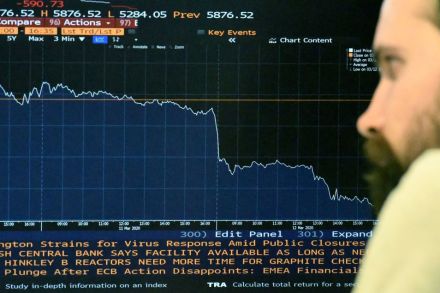
Why are stocks suffering?

Today’s stock market plunge is interesting for two main reasons. First, for those of us who have never traded on the Japanese stock exchange, comes the revelation that the colours used to denote changes in stock prices are the inverse of those used on western markets: red means a share has gone up, green means it has gone down. The same, apparently, is true in China. Fortunately, for the sake of foreign drivers neither country inverts the colour of its traffic lights, although ‘go’ in Japan is denoted by something closer to blue than green… Second, UK markets seem to have been dragged down in sympathy with others even though

How independent is the Bank of England?

As Kate Andrews argues here, the Bank of England were never going to cut interest rates during an election campaign for fear of being accused of favouring one side or the other. That ruled out a rate cut in June, while in July there was no meeting of the Monetary Policy Committee. But are those five members who voted for a quarter-point cut today really confident that they have not opened themselves to charges of bias, by cutting rates at the earliest opportunity after the election of a Labour government? For months, the MPC was telling us that it was too early for a rate cut – in spite of rapidly falling inflation

The Bank of England finally cuts interest rates

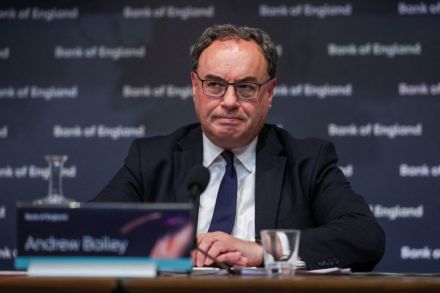
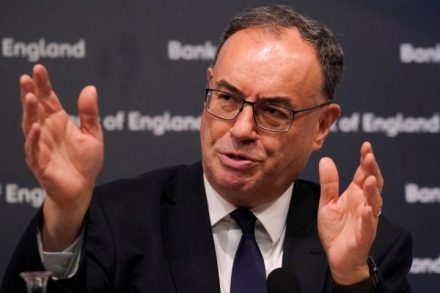
The Bank of England has just announced a rate cut of 0.25 percentage points, reducing the base rate from 5.25 per cent to 5 per cent. The tight decision – voted 5-4 by the Monetary Policy Committee – is the first reduction in rates since March 2020. It starts what is likely to be a slow and steady process of reducing the base rate, and marks the end of the inflation crisis, which saw Threadneedle Street hike rates from the floor to a 16-year high over the course of twenty months. Financial markets were cautiously expecting a rate cut, but the decision was thought to be on a knife-edge. It

The inconvenient truth about ‘rewilding’

Angela Rayner has announced that the government will aim to build 370,000 new homes, up from the 300,000 a year implied in the party’s manifesto. But if the deputy prime minister really thinks that all she needs to do to achieve that target is to take on Nimbys – as Rayner and chancellor Rachel Reeves have suggested in recent weeks – she needs to take a trip to a slice of the ‘grey belt’ in Essex. There, a 206 acre farm at Harold’s Farm near Epping is to be turned over to rewilding. Why is the cost of encouraging rewilding being lumped on new housing? Some locals have announced themselves

It’s no surprise McDonald’s is struggling

The news that McDonald’s sales have fallen by 1 per cent around the world between April and June might not seem, on the face of it, to be vastly significant. After all, surely there will always be a market for cheap and cheerful hamburgers, chicken nuggets and chips that even Michelin-starred chefs rave about? Apparently not. Ever since the pandemic, when there was a considerable rise in prices, the lustre has gone off the golden arches, and profits have declined by 12 per cent. There have been calls for ‘value added’ innovations, such as the current ‘buy three items for £3’ deal, but, as one McDonald’s executive helpfully put it,

Rachel Reeves’ biggest controversy is yet to come

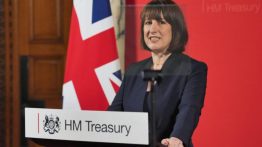
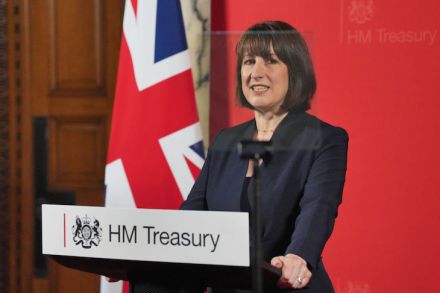
Rachel Reeves wakes to mixed headlines today after she announced a range of spending cuts to part fill a £22 billion ‘shortfall’ in public spending for this year alone. The Chancellor accused the Tories of spending money they did not have in government and going more than six billion pounds over budget on asylum. These claims have been rubbished by the former chancellor Jeremy Hunt who in turn suggests that Reeves is indulging in political theatre having been reluctant to openly talk about tax rises and difficult spending choices in the election. Monday’s political theatre paved the way for tax rises in the autumn budget The most controversial move by

Is Rachel Reeves really worried about a fiscal black hole?

There is one over-arching question hanging over Rachel Reeves’s speech today, in which she claimed that a £21.9 billion hole has opened up in the current political spending for this financial year: why, if there is such a large ‘black hole’ in the public finances, is there suddenly money available for £9.4 billion worth of above-inflation pay rises for public sector workers? Preposterously, those pay rises – which Reeves has chosen to make and which were not committed to by the previous government – are included as one of the unfunded spending items (indeed the single biggest spending item) which has contributed to the ‘black hole’. Reeves justifies this leap of

Rachel Reeves paves the way for spending cuts and tax hikes

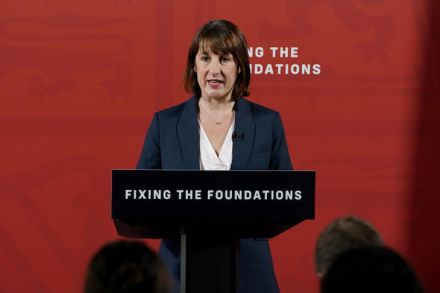
Rachel Reeves has just announced a series of spending cuts in the House of Commons. These were ‘incredibly tough choices’, she said, to account for the £20 billion surprise ‘black hole’ left behind by the Tory government.  Her announcement means £5.5 billion of immediate, in-year cuts. These include some projects that were tipped to be axed, including the Rwanda scheme, and a review of rail projects (which will include discarding the ‘Restoring Our Railways’ programme). But the big surprise was the decision to withdraw the winter fuel allowance for pensioners who are ‘not in receipt of pension credit or certain other means tested benefits’ from this winter onwards. It’s an

Rachel Reeves is right to cut the ‘winter fuel’ bung

A millionaire I know has a tradition every year: he buys a bottle of vintage wine with his Winter Fuel Payment and invites friends to drink it. His point is that it’s ludicrous that people like him are given handouts by the government – and today, finally, Rachel Reeves is doing something about it by cutting it for those not on benefits, saving the taxpayer some £1.5 billion a year. Gordon Brown brought in this payment when it was taken for granted that pensioners were significantly poorer than people of working age. Pensions were linked to inflation – there was no triple lock.  Over the past 25 years pensioners have

Will Rachel Reeves get away with a ‘doctors’ mandate’ to hike taxes?

It’s ‘blame the Tories’ day in Westminster as Rachel Reeves prepares to take centre stage. The new Chancellor will this afternoon publish a ‘spending audit’ of the financial challenges Labour has ‘discovered’ on entering government. Reeves will address the Commons chamber detailing these spending pressures before giving a press conference at the Treasury early this evening. It comes after Cabinet Office Minister Pat McFadden wrote to colleagues ordering them to ‘bring out the dead’ and identify looming crises in their departments. Expect high doses of political theatre throughout the day from Labour as they attempt to hammer their point home. What tax rises is Reeves planning and will Labour face

Is Rachel Reeves about to make the same mistake as Liz Truss?

How much can Rachel Reeves be trusted? A Chancellor’s credibility counts for a lot with the markets, who are asked to lend HM Government tens of billions a year. Reeves claims to be serious, straight and candid in a way her Tory predecessors were not. But now she seems to be channeling Liz Truss and coming up with her own assessment of the public finances while dispensing with the service of the Office for Budget Responsibility (OBR). She intends to declare a £20 billion hole, we’re told, and say she is shocked – shocked! – at what a mess the finances are in. Cue an excuse for tax rises, more

Sunday shows round-up: Labour accuse Tories of finance ‘cover up’

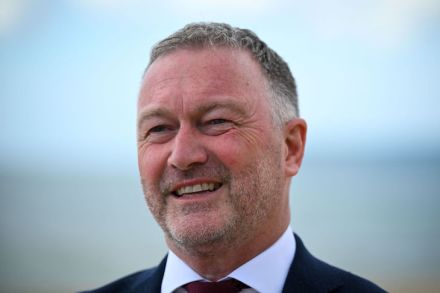
Chancellor Rachel Reeves is this week expected to announce a £20 billion black hole in the country’s finances. Many believe Labour are setting the ground for inevitable tax hikes and spending cuts in the autumn, blaming unexpected levels of Tory mismanagement for their decisions. On Sky News this morning, Environment Secretary Steve Reed said Labour would be ‘open and transparent’ about what they’ve learned since coming into government. Trevor Phillips suggested it wasn’t credible that Labour had only just realised the extent of the UK’s economic woes, and showed a statement from Reeves made last month in which she said on the subject: ‘You don’t need to win an election

Labour’s ‘£20 billion black hole’ strategy

17 min listen

The Chancellor Rachel Reeves is expected to give a statement to Parliament on Monday outlining the state of public finances, including a ‘£20 billion black hole’. James Heale talks to Katy Balls and Kate Andrews about the strategy behind this: will this speech lay the ground work for the Autumn budget? How new are these economic issues? And, with the Conservatives embarking on a long leadership election, will Labour have a free rein for their plans?  Produced by Patrick Gibbons.

How Labour plans to justify its tax hike

Oh, the suspense. It seems that we will have to wait until next week to discover the details of the £20 billion ‘black hole’ which chancellor Rachel Reeves has supposedly discovered in the public finances. Don’t get too excited, though. The revelation will be no greater a surprise than the ending of James Cameron’s blockbuster film Titanic (spoiler alert: a large ship hits an iceberg and sinks). As Paul Johnson of the Institute for Fiscal Studies pointed out before the election and has done so again: the state of the UK government’s finances are not exactly a secret – they are already open to anyone who cares to examine them. You

There is nothing new about the £20bn ‘black hole’

Labour’s pro-growth reforms were fun while they lasted. Now here come the tax rises. That’s not quite how Rachel Reeves will convey the findings of the Treasury audit she plans to announce on Monday – but hikes are probably going to be the next step in filling in what the Chancellor will claim is a £20 billion hole in the public finances.  This multi-billion pound ‘discovery’ is the latest addition to Labour’s narrative, which has been building since before the election. The party wants to claim that when it discovers what’s really been going on inside government, its fiscal decisions will become even more difficult – and this could include some

We will miss 1p and 2p coins when they’re gone

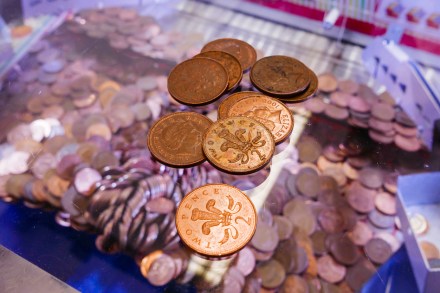
It doesn’t buy anything anymore. It is not enough to put into a charity box, and it just takes up space in your pocket or a purse. On one level, it will save us all a lot of trouble when one penny and two penny coins finally become extinct. The Treasury has told the Royal Mint not to make any new ones this year; and although there are plenty behind a sofa somewhere, this means they could eventually vanish completely. We will miss them when they are gone.  Rachel Reeves, the new chancellor, is keener on increasing government budgets than reducing them. One cut that may well be made, however,

How many summers do you have left?

If the new government’s ‘pensions review’ takes forward last year’s ‘Mansion House reforms’ – credited to chancellor Jeremy Hunt but largely the work of the then Lord Mayor of London, Nick Lyons, and designed to push the UK’s largest private-sector pension providers to commit funds to unlisted equities and vital infrastructure – all to the good. If it succeeds in ‘unleashing the full investment might’ of the £360 billion Local Government Pension Scheme (LGPS), as the new Chancellor Rachel Reeves says she intends, even better. We’d have a public investment fund to rival those of the Netherlands and Singapore, though still way behind the likes of Norway and South Korea.

Why is theft so high?

Figures out today show a country with levels of surveyed crime still at historic lows (just a quarter of the 1995 peak) but with two big exceptions. Personal theft rose by 40 per cent compared with the year before, and shoplifting is at its highest level since records began in 2003. What’s going on? ‘These figures show the disgraceful dereliction of the last Tory government on law and order,’ said Yvette Cooper, the Home Secretary. Is this fair? Today’s figures show total crime at roughly half the level the Conservatives inherited from Labour in 2010. Incidents of theft from the person peaked at 708,000 in 2009 – and hit a

Letting the worst universities collapse would be an act of kindness

Nobody said much about it before the election, but the new government inherits a ghastly financial problem with the higher education system. Rising costs, stagnant tuition fees, and a big drop in foreign student enrolments have left several universities tottering like ivory Jenga towers. We probably have too many universities This week we got an inkling of what education secretary Bridget Phillipson and higher education minister Jacqui Smith are thinking of doing about this mess. Not surprisingly, big money bail-outs are out (chancellor Rachel Reeves won’t allow them), as are increases in student fees (which backbenchers wouldn’t stand for). Instead, apart from telling the institutions in trouble to tighten their belts, the

Liz Kendall promises a game-changer on welfare

Seven Labour MPs had the whip suspended after voting against the two-child benefit cap, but this is a small taste of what awaits Labour. In her first major, Liz Kendall has set herself a target of hitting an 80 per cent employment rate – bolder than anything the Tories ever shot for. It is higher not only than today’s 72 per cent but (far) higher than the all-time, pre-lockdown record of 74 per cent. It is precisely the right target, for economic and social reasons. But it is one that can only be achieved via serious, game-changing welfare reform. The new Work and Pensions Secretary has inherited a full-blown welfare