Economy

  • AAPL

    213.43 (+0.29%)

  • BARC-LN

    1205.7 (-1.46%)

  • NKE

    94.05 (+0.39%)

  • CVX

    152.67 (-1.00%)

  • CRM

    230.27 (-2.34%)

  • INTC

    30.5 (-0.87%)

  • DIS

    100.16 (-0.67%)

  • DOW

    55.79 (-0.82%)

Making Tax Difficult: another Whitehall farce

Welcome to the new tax year, with its overflowing hamper of half-baked, growth-eating, enterprise-crushing Labour measures. And if you happen to be one of the 4.4 million self-employed who scrape an independent living despite rising costs and red tape, welcome to what must surely be one of Whitehall’s longest-running but least funny sitcoms, Making Tax Digital (MTD). If your income from self-employment (or rents as a landlord) exceeds £50,000 a year, you must henceforth submit quarterly digital updates to HMRC; next year the threshold will drop to £20,000. You’ll have less time to pursue your trade but your costs will rise, because you’ll need new software and more professional advice.


Spotlight

Featured economics news and data.

Cutting Britain’s giant welfare bill would be an act of kindness

Does having money really matter that much? There are those, usually with quite a bit of it, who want us to care less about materialism. But, unequivocally, money really does matter – not because of any status it supposedly brings, but for the freedom it buys: freedom to choose how we live and how we look after others. Considering this, it seems that the deep disillusionment with mainstream politicians in recent years stems from a protracted and ongoing period of stagnant living standards over which they have presided. But the truth is that the average person has not got poorer since the global financial crisis. They have got a little

Dyson won’t be the last business to cut jobs

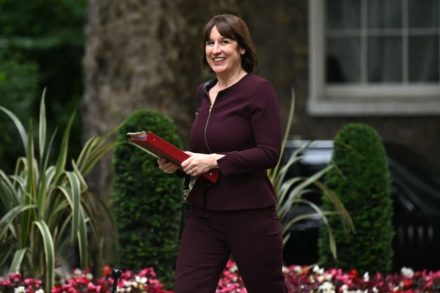
A major new factory from one of the American tech giants perhaps? Or a new lab from one of the pharmaceutical giants? Or, best of all, a huge new green energy fund. The newly appointed Chancellor Rachel Reeves was probably hoping for some positive investment news for her first week in office, especially as she has decided, in an unprecedented move, to make ‘growth’ a ‘national mission’. Instead, one of the UK’s best businesses has cut almost a third of its UK workforce – and that will just be the start of the corporate exodus from Labour’s Britain. Dyson will argue that its decision to axe 1,000 jobs in the

Was this council’s four-day week experiment really a success?

What a surprise. South Cambridgeshire District Council has declared its controversial experiment with a four day week – which put council staff on a 32 hour rather than 40-hour week with no loss of pay – a tremendous success. The council, whose chief executive Liz Watts was revealed last year to be doing a doctorate on the subject of the four day week as well as her day job, has published the results of a study by the Universities of Salford and Cambridge which claims that the council’s performance improved on 11 measures during the trial period compared with prior performance and decreased on just two measures. You can read

Rachel Reeves goes for growth on house-building

No one can accuse the new government of moving slowly. Over the weekend Labour gave strong indication that both NHS reform and prison reform are going to be at the top of their agenda. But the staple offer of the new government remains what was promised throughout the election campaign: a sustained campaign to bring meaningful economic growth back to the UK. This morning, Chancellor Rachel Reeves starts to lay out those plans. Speaking to business leaders at the Treasury this morning, Reeves will reiterate that boosting GDP is a ‘national mission’ and the ‘only route’ that will improve ‘the prosperity of our country and the living standards of working

Sunday shows round-up: the Tory election defeat inquest begins

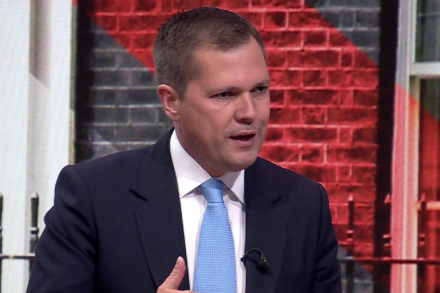
Jonathan Reynolds on Reform: ‘Now…they will get the scrutiny they deserve’ On Sky News this morning, Trevor Phillips pointed out that Labour had the smallest vote share of any election-winning party – and asked the business and trade secretary Jonathan Reynolds if it was sustainable that votes for smaller parties like Reform and the Greens did not translate into seats. Reynolds argued that Labour’s successful campaign under this electoral system gave them a legitimate mandate to govern, and claimed that smaller parties were given ‘far less scrutiny’ because they’re not seen as ‘parties of government’. Reynolds also implied that many people who voted for Reform don’t really know their policies.

Can Wes Streeting and Alan Milburn fix the ‘broken’ NHS?

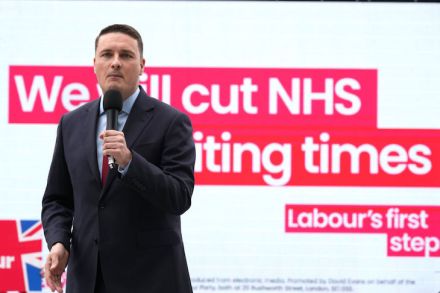
For years, Wes Streeting has spoken about the need for NHS reform but it was never clear if he had an agenda, or this was just verbal positioning. The NHS has more staff (1.4 million) than many countries have people. Plans to reform it need to be laid out carefully, taking years to design and to implement. Getting results by Year Five of a Starmer government would mean serious action at the very start. So far, with Streeting, that is precisely what we have got. We are barely 48 hours into a Labour government, but on health the omens are as better than they have been for quite some time

Would Rishi Sunak really be welcome in Silicon Valley?

Rishi Sunak’s bags are probably packed. The plane tickets are booked. And no doubt he has found somewhere for the family to stay while they look for a permanent home. It is widely assumed that, having lost the election, Sunak will soon disappear to Silicon Valley as quickly as possible to restart his career. But hold on. Sure, it is easy to understand why Sunak would want to get as far away as possible from the car crash he has presided over. Yet after running one of the most spectacularly inept election campaigns in history, will the tech giants still want him?  Sunak has just fought what will surely go

Labour passes its first test with the markets

Markets don’t like surprises. And the election results, while explosive, are not a surprise – or at least the winner isn’t. Labour has secured a substantial majority, as markets had been expecting the party to do from the start of the election. No surprise this morning means no immediate jitters, as the result was already priced in. Sterling is slightly up, by 0.1 per cent, hovering around $1.28. The FTSE 100 is up 0.4 per cent since markets opened this morning. Most notably, housebuilding stocks are on the up. The strong speculation that Labour will use its first days in power to announce a planning overhaul has given the market

Why German carmakers don’t want EU tariffs on Chinese electric vehicles

I recant. On a number of occasions I have asserted that the European Union is run by lobbyists acting on behalf of French farmers and the German car industry. It seems I was wrong – or perhaps that I have become wrong as the politics of global trade has shifted. A more accurate way of putting it would be to say that the EU is run by people who think they are acting in the interests of French farmers and the German car industry, but who are not quite plugged in to what those industries really want. It is a typical case of EU protectionism. However, this time, there is a twist At

What Labour gets wrong about inheritance tax

What is the primary purpose of a tax: to raise revenue to fund public services or as a tool to help engineer society in a way which the government favours? It should disturb us that Darren Jones, the shadow chief secretary to the Treasury who is likely to be holding the real job by Friday, seems to believe the latter. Addressing a public meeting in Bristol in March he hinted that Labour will seek to increase inheritance tax, telling his audience ‘you need to think of the inheritance tax as a way to redistribute money’. He added that a Starmer government will seek to use the tax to tackle ‘inter-generational

The (selfish) case for immigration

The 2024 general election ‘should be the immigration election’, Nigel Farage has said. The Reform leader’s wish has been granted: the topic of immigration is a major focus of debate. It’s also a big issue in the United States’ presidential election. Much of the debate in both countries depicts immigrants as a burden that receiving countries should accept (if at all) only out of altruism or a sense of obligation. But this is misleading, and ignores the many benefits of migration to Britain and other receiving countries. Open migration is not just charity for migrants Accepting migrants is the right thing to do, in part because it saves many thousands of

Paul Johnson: Tory and Labour attacks are ‘broadly fictional’

We’re five weeks into the election campaign – and just days away from polling day – and voters have plenty of parties, and numbers, to consider. Labour will raise everyone’s tax bill by £2,000, claim the Conservatives. Mortgages will rise by £4,800 under another Tory government, insist Labour. Is any of it true? ‘I would suggest that voters entirely ignore all of those sorts of numbers and calculations’, says Paul Johnson, director of the Institute for Fiscal Studies, in The Spectator’s office. ‘I think they’re broadly fictional.’ They are impossible claims to make, partly because ‘we don’t know what would happen under these different governments, because they really haven’t told

Markets are readying for a Trump victory

If you didn’t have time to watch the presidential debate between Donald Trump and Joe Biden last night you could have just watched the share price of a little-known Chinese company called Wisesoft instead. Its Chinese name ‘Chuan Da Zhi Sheng’ sounds very like ‘Trump Wins Big’ in Mandarin, and local speculators piled in as it became clear just how catastrophically the incumbent had performed. In reality, that verdict is going to be repeated when Wall Street opens later today. Investors, though, have already made up their minds. Trump is going to win, and nothing can change that now.  The markets are already buying up all the assets that will

Can things only get better under Starmer?

‘We are the masters now,’ I chirrup to my Holborn and St Pancras neighbours – misquoting Labour attorney-general Hartley Shawcross from 1946. I don’t mean I’ve decided to throw in my vote with the predicted Labour landslide: frankly, I’d rather give it to the candidate calling himself Nick the Incredible Flying Brick. What I mean is that as constituents of the incoming prime minister, we’re the heirs to Blair’s Trimdon Labour Club crowd in 1997. The world’s media will be all over us: we’ll be the first archetypes of the age of Starmer. But how will we feel in five years’ time? Will our shopkeepers, small traders and restaurateurs have

Labour already know what public finance horrors await them

Over the weekend, a leaked document revealed by the Guardian outlined different tax hikes the Labour party could impose, including changes to capital gains tax and inheritance tax. It’s evidence of what has long been suspected: that what’s been left out of the party’s manifesto (almost every tax) remains on the table. How might Labour justify not being more upfront about this ahead of the election? As I have noted on Coffee House before, Labour has gone to great lengths to insist all its plans are costed by tax increases that have already been announced. The lack of specificity in the manifesto, we’ve been told, is evidence that the party isn’t planning to

Marine Le Pen’s plan for France is a recipe for stagnation

Big business will be brought onside. The bond markets will be mollified. And there will be plenty of reassuring words about dealing with the budget deficit. With the first round of voting in France’s parliamentary elections set for this week, Marine Le Pen’s Rassemblement National is preparing for government. This week it has set out a programme designed to keep investors, if not exactly happy, at least under control. There is just one catch. It is also a programme for stagnation – and that means France’s out-of-control debts are going to grow and grow.  Nothing that Bardella is proposing will do anything to lift France out of its rut With

The Supreme Court’s oil ruling spells trouble for the SNP

Judges on the Supreme Court appear to have joined Just Stop Oil. In a landmark ruling, with profound implications for the UK energy industry, they’ve said that Surrey County Council cannot give permission to drill new wells on an existing extraction site, Horse Hill, which already has a couple of them. This is because the oil might be burnt – which admittedly tends to happen with hydrocarbon fuels. Net Zero campaigners who brought the original action against the ‘Gatwick Gusher’ as they called it back in 2019 are ‘over the moon’. The Scottish government, however, is not quite so sanguine. The Supreme Court’s ruling is illogical Could the ruling mean the end

Britain can’t keep pushing its borrowing limits

Rishi Sunak tends to avoid taking aim at his predecessor. But in last night’s BBC Question Time election special, as he was quizzed by the audience about the Conservative party’s record, he delivered a surprisingly punchy answer. When asked about the Tory party’s record, he talked about how he stood up to Liz Truss’s borrow-and-spend plans during the leadership election in 2022. ‘I was right’, he replied simply, before adding: ‘What Keir Starmer is promising you is the same fantasy that Liz Truss did.’ It gained him his only applause of the evening. Last night’s audience was acutely aware of the fiscal pressure the UK is under. It wasn’t just Sunak, but

Economic recovery has come too late for Sunak

Today’s retail sales figures, showing that volumes increased by 2.9 per cent in May after a fall of 1.8 per cent in April, provide yet another sign of economic recovery. But there must be a horrible and growing realisation in Downing Street that it is all coming too late – and that it will be an incoming Labour government which benefits from economic recovery. Rishi Sunak is doomed to end up looking a hopeless PM As for the sales figures themselves, they are not as dramatic as they might at first appear. Rather, the plunge in sales in April, followed by the sharp rise in May, shows how volatile these

Why the Bank of England isn’t lowering rates yet

The Bank of England has, unsurprisingly, held interest rates at 5.25 per cent for the seventh time in a row. Markets downgraded their expectations for a June rate cut some time ago. Once Rishi Sunak called a general election in late May, the prospect of an early summer rate cut became even more unrealistic. The Monetary Policy Committee notes in its minutes that ‘the timing of the general election on 4 July was not relevant to its decision at this meeting’. Instead, its decision was based solely on ‘what was judged necessary to achieve the 2 per cent inflation target sustainably in the medium term’. Central banks never want to

A Danish lesson for Labour in how to revive Britain’s economy

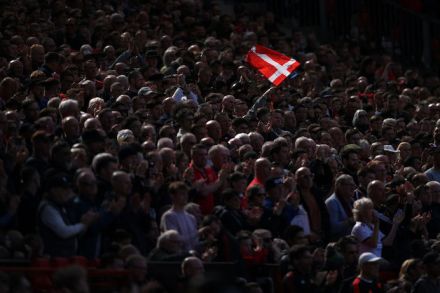
The coincidence of the 2024 general election and the Euro 2024 football tournament is a great lesson in the myopia of Westminster and its creatures. Somewhere, deep in our hearts, we do know that the vast majority of people in Britain (OK, England and Scotland) are far more interested in the football than in the ups and downs of the campaign. But does that stop us fixating on the minutiae of that campaign? Not at all: for political nerds, this is our championship, after all, one of those (quite) rare moments when all the stars, all the heroes and villains, are on the pitch together, generally kicking lumps out of each