Economy

  • AAPL

    213.43 (+0.29%)

  • BARC-LN

    1205.7 (-1.46%)

  • NKE

    94.05 (+0.39%)

  • CVX

    152.67 (-1.00%)

  • CRM

    230.27 (-2.34%)

  • INTC

    30.5 (-0.87%)

  • DIS

    100.16 (-0.67%)

  • DOW

    55.79 (-0.82%)

The IMF growth downgrade is more bad news for Rachel Reeves

Rachel Reeves lands in Washington tonight to be greeted with bad news. The International Monetary Fund (IMF) – whose spring meeting the Chancellor is attending – has just handed Britain the largest GDP downgrade of any G7 country.  In the freshly released update to their world economic outlook, the IMF forecast growth for the UK this year of just 0.8 per cent – down from the 1.3 per cent they’d previously projected. Things don’t get much better next year either, with just 1.3 per cent growth forecast, again downgraded from 1.5 per cent.  This downgrade singles out Britain and our European neighbours. While the IMF calls the overall effect of

Spotlight

Featured economics news and data.

Cutting Britain’s giant welfare bill would be an act of kindness

Does having money really matter that much? There are those, usually with quite a bit of it, who want us to care less about materialism. But, unequivocally, money really does matter – not because of any status it supposedly brings, but for the freedom it buys: freedom to choose how we live and how we look after others. Considering this, it seems that the deep disillusionment with mainstream politicians in recent years stems from a protracted and ongoing period of stagnant living standards over which they have presided. But the truth is that the average person has not got poorer since the global financial crisis. They have got a little

Has JP Morgan changed its tune on Brexit Britain?

Supermarket shelves are bare. There may not be enough turkeys for Christmas. Wages and prices are rising. And the government is sinking into a pit of sleaze. As if that were not enough, the EU is about to launch a full-scale trade war against the country.  Following the day-to-day news, you could well be forgiven for thinking the British economy was sinking into permanent chaos, doomed to replay the dark days of the 1970s. But hold on. Amidst all this gloom, the world’s biggest and most powerful investment bank, JP Morgan, says now is the time to be buying British.  JP Morgan has not always been a fan of the

Central planning won’t solve the problem of GP shortages

Under plans being considered by ministers, GPs in affluent parts of England could be barred from taking jobs in wealthy areas to force them to work in deprived areas, in a bid to address health inequalities. The solution to doctor shortages, apparently, is to make the job less attractive. This would be the healthcare equivalent of the government taking charge of the hospitality industry and informing the owners of the Ivy that all new restaurants should be located in towns north of the Watford Gap, to ensure the pleasures of fine dining are evenly enjoyed across the country. And yet the Social Market Foundation (SMF) who put forward this proposal

Are we heading for a net zero crash?

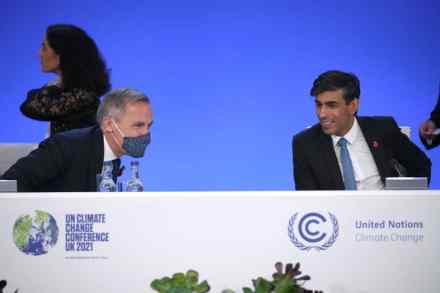
So far, the big message from the Glasgow climate conference is the role of finance in decarbonising the global economy. It’s a dangerous development. In his speech to COP26 last week, the Chancellor, Rishi Sunak, pledged action to ‘rewire the entire financial system for Net Zero.’ Finance has taken centre stage in large part because of inadequate government policies. According to the United Nations Environment Programme, around two-thirds of global emissions are linked to private household activity. Reducing them requires major changes in people’s lifestyles, UNEP says. Rather than imposing carbon taxes that really hurt – the Intergovernmental Panel on Climate Change estimates a minimum of $135 a ton, rising

It’s time to reform the Big Four accounting firms

It has been exactly 20 years since the Enron scandal upended the reputation of global accountancy firms, leading to the downfall of both the company – one of the largest in US history up to that point – and Arthur Andersen, one of the ‘Big Eight’ accounting firms. Enron’s collapse provoked an avalanche of regulation, ostensibly to reduce the chances of similar accounting fraud repeating itself. In the United States this effort was spearheaded by the 2002 Sarbanes–Oxley Act, while the European Union’s 2006 Auditing Directive followed scandals like the 2003 collapse of Italian dairy giant Parmalat. In reality, these supposedly stringent regulations were crafted under considerable influence from the

What is the Bank of England playing at?

Last week, the Bank of England sent a number of confused messages. One was almost shocking: Andrew Bailey said that it isn’t his job to steer markets on interest rates ‘day by day and week by week’. But as economic commentator Matthew C. Klein dryly noted this is literally his job. It is debatable whether the Bank of England needs to manage the entire yield curve (ie, buying and selling bonds in an attempt to set interest rates years into the future) but the central bank should be in charge of the short end. Those opposing an interest rate rise say that central banks should never shock markets. The Bank

A net zero referendum? Bring it on

The left-green axis has been in uproar in recent weeks because several right-wing commentators have suggested holding a referendum on the government’s net zero measures. If the Telegraph, Sun, and Reform party support it, say critics of a referendum, then it’s got to be a bad idea. As an environmental campaigner since the 1970s, I say bring it on. Even if the initial impetus for a referendum came from right-wing groups, net zero will affect our livelihoods and basic freedoms for decades. The way to counter accusations that it is the invention of a woke elite is to widen the debate. What will be the terrain of that debate? And

The Bank of England’s inflation rate stunt

He isn’t Canadian. He doesn’t dominate the Davos circuit with platitudes about climate change. And he isn’t constantly warning that the British economy will turn into a cross between Ethiopia and Argentina now that we have left the European Union. In many ways, the current Governor of the Bank of England Andrew Bailey is an upgrade on his high-profile predecessor Mark Carney. And yet, in the most important respect, he is turning out to be very similar. He is constantly threatening to raise interest rates, and then backing off at the last moment.  An increase in interest rate from the ‘emergency’ level of just 0.1 per cent was not quite

Are banking apps luring young people into debt?

Last month, my bicycle got a flat tyre. ‘Both of those tyres are gonna need replacing and you’ve knackered your sprockets,’ huffed the bike man. The bill came to £230. It’s the kind of irritating expense that means I run out of beer money a week before payday. I’ve always assumed I’m a reasonably normal spender. Work pays me, the money gradually disappears over the month, with hopefully a bit left over for my Isa. I’m vaguely aware that something exists called a ‘credit card’, but my parents always made clear to me that if you don’t have the money for something, don’t buy it. Where I differ from older

Don’t let China’s climate sins cloak its crushing of Hong Kong

China’s failure to bring anything new to COP26 surprised no one. The world’s worst carbon emitter offered no advance on President Xi Jinping’s earlier promise to reduce coal use after 2025 and bring overall emissions to a peak in 2030 — thereby negating for at least a decade much of the rest of the world’s efforts to clean up the planet. But spotlighting China as a climate sinner should not be allowed to cloak its other villainhood, as an abuser of human rights: so let’s not forget Hong Kong. The fate of the once-British enclave and its future as an international business centre have been much on my mind lately.

Where is the climate plan B?

The COP26 summit is unlikely to be an outright flop. There has been no shortage of drama, with speakers seeming to compete with each other to see who could use the most histrionic language. Justin Welby, the Archbishop of Canterbury, went so far as to compare the attending leaders to Nazi appeasers. He later apologised.  Some progress, albeit small, is being made. A hundred countries have been persuaded, some on the promise of sweeteners worth £14 billion, to sign a pledge to end deforestation by 2030. Brazil, the most important of all, is among them. India has agreed, for the first time, to set itself a date for achieving net-zero

The economic case for scrapping daylight saving

Twice a year, every year, the changing of the clocks debate begins. So is it time to finally drop daylight saving and stick to British Summer Time all year round? Boris Johnson thinks so: the future Prime Minister weighed in on the subject back in 2011, claiming BST would ‘expand the economy and cheer everyone up’. Boris is right on both points, not least on the economic case for ditching the old habit of changing the clocks. Dark winter evenings, made longer by daylight saving, make around half of Brits feel more depressed, according to one poll. Other surveys suggesting we’d exercise more were it lighter longer. Perhaps this point should be taken with a

Nicola Sturgeon is flailing in response to the Budget

The big tax and spend budget. More Gordon Brown than George Osborne. Sunak’s spending spree. However you wish to describe it, one thing is clear: Rishi Sunak’s budget marks a radical departure from previous Conservative chancellors. And while it might have ruffled the feathers of some Tories, it’s also causing problems for the SNP. In some ways the break from Tory convention is no surprise. Calls by the International Monetary Fund (IMF) in 2020 for rich countries to spend their way out of the pandemic – and then further calls this year to shell out to boost recovery – signalled a new economic orthodoxy that Sunak has tapped into. Austerity is

Rishi Sunak has blown his premiership

The amount the state takes out of the economy will rise to the highest level in 70 years. An unreformed public sector will be showered with cash, with the health service allowed to spend whatever it likes. A tax system that was already creaking under the weight of its own complexity has just been made slightly more complicated, and it has been made a lot less competitive. The Chancellor Rishi Sunak with his usual panache sailed through his Budget yesterday. The problem, however, is this. While he might get away with pushing up taxes and spending for now, sooner or later it is going to catch up with him. And

Why paying more dividends could save the planet

Climate emergency demands action, not rhetoric. So, on the eve of COP26, which UK news item promises to deliver the most positive impact for the future of the planet? Not, I suggest, Sadiq Khan’s extension of the Ultra Low Emissions Zone to the North and South Circulars, imposing stinging costs on owners of older diesels who can’t afford newer ones; nor Rishi Sunak’s £7 billion pledge for sustainable transport in cities outside London — only £1.5 billion of which turns out to be new money. No, the headline that matters more is the one that says dividend payments by UK companies are returning to normal. During the darkest days of

Would the real Rishi Sunak please stand up?

It was a tale of two chancellors at today’s high-spending Budget. Rishi Sunak began by embracing the big-state profligacy pursued by Cameron and May, and maintained by their successors, Boris and Carrie.  The Chancellor reeled off stacks of figures indicating that the economy is roaring back to life. ‘Growth up! Wages up! Employment up!’ he shouted. And he announced that government spending sprees will also surge by £150 billion. He plans to restore the 0.7 per cent spending target for foreign aid by the end of this parliament. And he has ordered civil servants across Whitehall to find more stuff to buy.  ‘A real-terms rise in spending for every single

Sunak backs the Union with cash, not love-bombs

Devolution has done so much to fracture the UK that, in Scotland, Rishi Sunak’s Budget is an event of the second order. Scottish interest in Budget day is typically limited to whisky duty, support for North Sea industries and the Barnett formula: the additional spending Scotland gets when the Chancellor splurges on England. Today’s Budget was for all of Britain. Not just Scotland, but Wales and Northern Ireland were weaved throughout Rishi Sunak’s speech. Quite apart from the fiscal or economic merits of the policies announced, the Chancellor’s speech was good politics. Not long after Sunak was promoted to the Treasury, I was told Scotland was a weak spot for him

Six things we learnt from the Budget

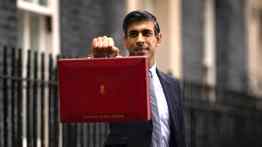
Another big fiscal event for Rishi Sunak today, as he delivered his Budget and the details of a three-year spending review. For the first time, Covid-19 wasn’t in the spotlight. Instead it was framed as a big-spending event, confirming plans briefed before the Budget — £7 billion in capital spending for the NHS, end of the public sector pay freeze — and announcing a series of new plans, including the return of increased foreign aid spending at 0.7 per cent of GDP by 2024-25. But break down the numbers and there are even more surprises in store. Here are the six things we learnt from today’s Budget: The tax take

Who should pay for nuclear?

How much longer is the government going to suppress the cost to households of achieving net zero carbon emissions, or try to imply, as business secretary Kwasi Kwarteng recently seemed to imply on the Today programme, that it won’t cost us at all?  Even as he spoke Kwarteng was working on a new model for the funding of nuclear power stations that was unveiled yesterday in the form of the Nuclear Energy Finance Bill. The proposed legislation will impose levies on energy bills in order to subsidise the construction of new nuclear power stations. The new model of funding — called Regulated Asset Base — will replace the model by which Hinkley

Responsible Rishi’s Budget balancing act

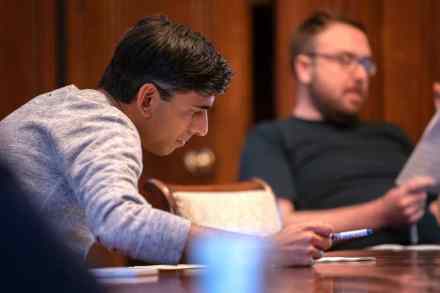
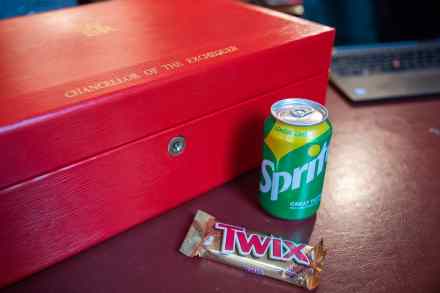
Rishi Sunak has released photos of his Budget prep, as he prepares to stand up in the House of Commons tomorrow to deliver not just the government’s latest fiscal decisions, but the results of its three-year spending review. (Photos include a shot of his pre-Budget Twix and Sprite snack, which Sunak revealed to Katy Balls on Times Radio over the weekend). As I say in the Telegraph today, this Budget is a difficult balancing act for the Chancellor. On the one hand, he has some big-spenders to please, not least the Prime Minister, who is adamant that the Conservative party’s days of austerity have come to an end. On the

Why Sunak’s wrong on teachers

Pupils lost around a third of their face-to-face teaching during the Covid lockdowns. Downing Street has promised an extra £3 billion of catch-up funding, on top of around £100 billion spent on education in a normal year. Fixing a lack of teaching should involve doing a bit more of it — but when asked if he would extend the school day, Rishi Sunak said longer hours wouldn’t provide ‘value for money’. It’s one of few areas where, in tomorrow’s Budget, the spending taps will be turned off. But why, as the Children’s Commissioner recently noted, are British state schools routinely closing their gates at 2.30 p.m.? The length of the