Economy

  • AAPL

    213.43 (+0.29%)

  • BARC-LN

    1205.7 (-1.46%)

  • NKE

    94.05 (+0.39%)

  • CVX

    152.67 (-1.00%)

  • CRM

    230.27 (-2.34%)

  • INTC

    30.5 (-0.87%)

  • DIS

    100.16 (-0.67%)

  • DOW

    55.79 (-0.82%)

How the leasehold mafia screwed a generation of homeowners

Buying a flat in Britain has increasingly become a fool’s errand, driven in part by the leasehold system trapping homeowners into flats. When Labour wrote their manifesto they promised reform to the leasehold system, but it remains a sticking point in Westminster due to heavy lobbying. Michael Simmons is joined by Harry Scoffin, founder from Free Leaseholders who makes the case for the common law system. audio_URL:https://assets.pippa.io/shows/6824c00215d5c17e057690c7/1776351497231-7a41a750-cd91-4ca1-b0ab-0b89832e538d.mp3

Spotlight

Featured economics news and data.

Cutting Britain’s giant welfare bill would be an act of kindness

Does having money really matter that much? There are those, usually with quite a bit of it, who want us to care less about materialism. But, unequivocally, money really does matter – not because of any status it supposedly brings, but for the freedom it buys: freedom to choose how we live and how we look after others. Considering this, it seems that the deep disillusionment with mainstream politicians in recent years stems from a protracted and ongoing period of stagnant living standards over which they have presided. But the truth is that the average person has not got poorer since the global financial crisis. They have got a little

Is the economic recovery still on track?

Compared with July, August’s GDP boost looks much healthier — but that’s not saying much. Originally thought to have stagnated at 0.1 per cent, the economy in July actually shrank by 0.1 per cent, according to the latest update from the Office for National Statistics. If inflationary pressures continue to surge, the Bank may have no choice but to act Still, August’s GDP increase of 0.4 per cent puts the economy back on the upwards trajectory, now estimated to sit 0.8 per cent below pre-pandemic levels. Despite so-called ‘freedom day’ arriving halfway through July, people continued to socially distance in order to avoid being mandated back into their homes. A

Why is British Airways banning ‘ladies and gentlemen’?

British Airways is dropping ‘ladies and gentlemen’ from its announcements. In the name of diversity and inclusion, the airline has instructed staff to use a more ‘gender neutral’ salutation. You might think that after 18 months of turbulence, BA has more important things to worry about. In spring and summer last year the company was forced to cut 10,000 jobs, representing a third of its workforce, after Covid grounded most of its aircraft. The airline was the biggest user of the furlough scheme, claiming over £10 million in June this year alone. You might think that after 18 months of turbulence, BA has more important things to worry about Nonetheless,

The good and bad news about Britain’s labour market

Now that the Chancellor’s furlough scheme has come to an end, are employers rushing to lay off those workers whose wages have been paid, at least in part, by the government?  The good news for Rishi Sunak – and the taxpayer, who footed the bill for this multi-billion pound scheme – is that the early evidence suggests they are not: in the three months leading up to August, the headline unemployment rate dipped again. It is now down to 4.5 per cent, having peaked just over five per cent last winter. The picture in the labour market isn’t necessarily all rosy Figures from the Office for National Statistics will still take several months

Will the National Insurance hike weaken the Union?

Given the enormous power that Conservative leaders wield within the party, it is not surprising that the party should come to take on the character of its leaders. In the case of Boris Johnson, it is his protean quality that seems to have rubbed off. Where a previous leader might have had a policy agenda or ideology, today’s Tories have cheery slogans which can mean almost anything. Thus in the course of half a dozen recent Tory conference events one will have heard at least that many different definitions of ‘levelling up’, while the big corporate lobbies and third sector groups insist that whatever they normally talk about is absolutely essential

A global corporation tax is a terrible mistake

International cooperation is alive and well – at least when it comes to raising taxes. One hundred and thirty six countries have now signed up to a global minimum corporation tax of 15 per cent, proposed by G7 countries in June and pushed heavily by the UK Treasury. This is another step forward for what is thought to be the biggest overhaul to the international tax system in a century. The installation of a corporate tax floor is part of a comprehensive effort to reform how multinational companies are taxed: that is, to more precisely target where profits are being made (instead of where products are being created). ​​Firms with

Is Britain’s economy being starved of talent?

How is the Prime Minister’s bid to turn Britain into a high-wage economy progressing? It couldn’t be going better just at the moment, to judge by a survey by IHS Markit for KPMG and the Recruitment and Employment Confederation. In September – data was collected between the 13 and 24 September – there was a sharp rise in hiring, while starting salaries were rising at their fastest pace in the 24 years in which the survey has been undertaken. The number of permanent as well as temporary appointments was high, although the latter fell back from a record high in August. The survey suggests that the jobs market turned in

Has an unemployment crisis been avoided?

Rishi Sunak always said furlough wouldn’t save every job, especially as the pandemic changed the way we live and spend. Now that the scheme – which paid the salaries of millions of workers across the UK – has come to an end, was Sunak right? Early evidence suggests businesses are bringing their employees back to work, either into their old jobs or repurposing them into new roles. According to the BBC, the 31 companies that took at least £1 million of furlough money last month (including airlines, which are still only running around half as many flights as in 2019) aren’t yet planning on making mass redundancies – even though the scheme has

Does Sunak care about net zero?

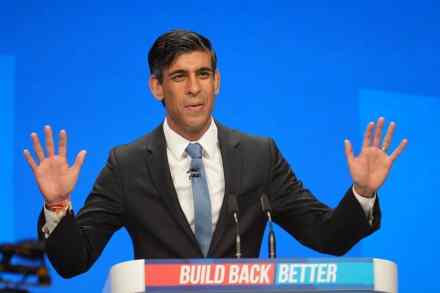
The biggest story of the Tory conference wasn’t about a gaffe or a controversial statement. It was about something that wasn’t said, and the person who didn’t say it. Rishi Sunak’s silence on net zero is a big deal, as the next few weeks will prove. The Chancellor didn’t mention net zero in his conference speech. So what, you might ask? After all, it’s an environmental thing and he’s Chancellor, right? No. net zero is an economic story, and a big one. It’s about growth, investment, public spending, tax and jobs. According to Sunak’s Treasury: This will be a collective effort, requiring changes from households, businesses and government. It will

Why stamp duty doesn’t add up

‘Blame it all on business’ was the Tory strategists’ answer to petrol queues and the risk of a no-turkey Christmas that threatened to distract the party-conference faithful from adulation of the Prime Minister. As spin, it might have been shocking if it wasn’t so familiar. But as an explanation of the supply crisis, the idea that business has been deaf to years of warnings that it could no longer rely on immigrant labour is hogwash, rivalled only by the proposition that spiralling wages will lead us to a fairer society — rather than contributing to a bout of uncontrolled inflation in which higher pay actually buys fewer goods because all

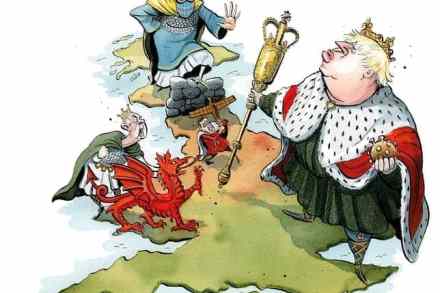
Levelling up is Johnsonian cakeism

Until this morning, few people in Britain will have heard of the works of Wilfredo Pareto (1848-1923). Now, thanks to prime ministerial recommendation, his name is suddenly on everyone’s lips. Maybe he was even the inspiration for the name of Boris Johnson’s one-year-old son. Pareto, apparently, is the inspiration behind the whole idea of ‘levelling up’ But was it good idea to raise the memory of the Italian economist and political philosopher? Pareto, apparently, is the inspiration behind the whole idea of ‘levelling up’. The slogan, implied the PM, is derived from the concept of ‘Pareto Improvements’ — improvements, he said, which can raise the quality of one person’s existence

How will Boris build his ‘high-wage, high-skill’ Britain?

There are a few problems with Boris Johnson’s big idea, namely that the sharp fall in the supply of unskilled and semi-skilled workers in the UK – triggered by Brexit, reinforced by Covid – will automatically lead businesses to invest, such that the UK’s long history of low productivity and low incomes will end on his watch. His vision, the philosophical heart of his speech to Tory conference this morning, is of a gleaming new ‘high wage, high skill, high productivity economy’ and that ‘we are not going back to the same old broken model with low wages, low growth, low skills and low productivity, all of it enabled and

It is hard to take Sunak’s jobs plan seriously

At some point, Rishi Sunak is going to need to pick a lane. There is only so long that the Chancellor can claim to believe that excessive borrowing is immoral while borrowing to such excess. His trick yesterday was to make all the right noises about restraint while unrolling a £500 million ‘plan for jobs’. Take away his earnest delivery and it’s still not clear whether he’s the boozer at the bar telling the world about the dangers of alcoholism, or the sensible friend ordering the taxi home. Let’s be fair. Sunak has had to deal with exceptional circumstances in the last 18 months, and is taking steps to cease

Sunak faces the free-marketeers

Rishi Sunak didn’t give too much away tonight when he spoke in the ‘ThinkTent’ at Conservative Party Conference. The Chancellor is known for being cautious with his words, and has been increasingly tight-lipped in the weeks leading up to his October Budget. But his presence at the fringe event was telling in itself. Sunak was only billed for one public fringe event this year, co-hosted by the Institute of Economic Affairs and Taxpayers’ Alliance. Their ‘ThinkTent’ boasts some of the most free-market, libertarian events you’ll find at conference: both organisations are strong advocates for a low-tax, smaller state. So, not necessarily an obvious place to find the Chancellor who has overseen record peacetime

Rishi takes inspiration from Thatcher – with one key difference

There are two Tory conferences simultaneously taking place in Manchester, within the same conference hall and inside the same fringe events. One is attended by elated activists, who are revelling in the December 2019 victory they never got to celebrate at party conference last year. The other is attended by increasingly agitated grass root faithfuls, who are up in arms about their party hiking taxes: especially the National Insurance rise on workers and employers, set to kick in next year. Unsurprisingly, most ministers are tapping into the mood of the first group. They hail the success of the party on fringe panels and at drinks receptions. Yesterday evening, Michael Gove

Was furlough the worst £70 billion ever spent?

Concorde obviously. The Iraq War perhaps? Or Scottish devolution? It is not hard to come up with a list of really terrible ideas that the British government has wasted money on over the last 50 years. Even so, and despite some tough competition, we now have a fresh contender. It looks as if the furlough scheme will top them all. The scheme ends today, with roughly a million people still collecting a slice of their wages from the Treasury. The total bill is set to come in at around £70 billion. To put that in context, for the same money we could have tripled spending on policing and just about

Why scrapping business rates is a bright idea

A worthwhile policy proposal amid the Labour conference dogfight? Now there’s a surprise. But shadow chancellor Rachel Reeves’s scheme to freeze and eventually scrap business rates, in the meantime boosting high-street survival by raising the threshold for small business rate relief and incentivising re-use of empty premises, was the brightest moment of the Brighton event. No matter that Reeves is likely to hold her post only as long as Sir Keir Starmer holds his and that anything promised today will resemble a Dead Sea scroll by the time Labour ever returns to power. No matter also that her idea of balancing relief for bricks-and-mortar businesses with higher taxes on digital

Did house-buyers really gain from the stamp duty holiday?

So, the stamp duty holiday has finally come to an end, as the tapered reduction in discounts expires. Now it’s just a case of catching the flight home, getting the dog back from the kennels and watching as the tan fades. And, as with a fortnight in concrete hotel in Benidorm, it is time to start asking: was it really all worth it?  If the aim was to stimulate the housing market it was a runaway success – in the year to the 2nd quarter of 2021 there were 1.258 million residential transactions, compared with 996,050 in the same period in 2018/19. Proving the Laffer Curve in action, the latter

Why didn’t we listen to the free marketeers?

Economic liberals may feel vindicated by events of the past fortnight. It turns out energy price caps, limits on immigration, over reliance on wind power and IR35 – the taxman’s crackdown on contractors – are all bad ideas, just as they had forewarned. Those same free marketeers may experience a strong temptation to enjoy the schadenfreude. In 2017, some insisted that the only good argument for energy price caps was the Leninist principle of ‘the worse, the better,’ as the move would bring forward the day when the entire policy collapsed. But governments bought into the baseless narrative propagated at the time that energy companies were greedy, price gouging profiteers, and

The flaw in Labour’s economic attacks

Labour avidly disagrees with the Tories’ plan to fill budget gaps by hiking National Insurance. So what would they do differently? This was one of the many tasks Rachel Reeves had today as the shadow chancellor delivered her speech at Labour party conference. Reeves not only had to set out an alternative tax-and-spend policy but also take aim at the financial decisions made by Boris Johnson’s government. Did Reeves succeed? No doubt her job was made much easier over the weekend as an energy crisis, which the government should have seen coming, continued to splash across the front pages, exacerbated by fuel shortages at the pumps brought on by a lack of

What do Michael Gove and Andy Haldane really mean by ‘Levelling Up’?

Levelling up is central to the Government’s policy agenda. But it has become an umbrella term for everything and anything – which while part of its success electorally, raises challenges in terms of tangible policy. To address this, last week the Government announced that Michael Gove is to be appointed as Secretary of State for Levelling Up and that former Bank of England Chief Economist Andy Haldane will head up a task force for the next six months to look at this area. The good news is that much analysis has already been carried out. In a presentation at Policy Exchange in June, for example, Haldane outlined how to make levelling