Economy

  • AAPL

    213.43 (+0.29%)

  • BARC-LN

    1205.7 (-1.46%)

  • NKE

    94.05 (+0.39%)

  • CVX

    152.67 (-1.00%)

  • CRM

    230.27 (-2.34%)

  • INTC

    30.5 (-0.87%)

  • DIS

    100.16 (-0.67%)

  • DOW

    55.79 (-0.82%)

The IMF growth downgrade is more bad news for Rachel Reeves

Rachel Reeves lands in Washington tonight to be greeted with bad news. The International Monetary Fund (IMF) – whose spring meeting the Chancellor is attending – has just handed Britain the largest GDP downgrade of any G7 country.  In the freshly released update to their world economic outlook, the IMF forecast growth for the UK this year of just 0.8 per cent – down from the 1.3 per cent they’d previously projected. Things don’t get much better next year either, with just 1.3 per cent growth forecast, again downgraded from 1.5 per cent.  This downgrade singles out Britain and our European neighbours. While the IMF calls the overall effect of


Spotlight

Featured economics news and data.

Cutting Britain’s giant welfare bill would be an act of kindness

Does having money really matter that much? There are those, usually with quite a bit of it, who want us to care less about materialism. But, unequivocally, money really does matter – not because of any status it supposedly brings, but for the freedom it buys: freedom to choose how we live and how we look after others. Considering this, it seems that the deep disillusionment with mainstream politicians in recent years stems from a protracted and ongoing period of stagnant living standards over which they have presided. But the truth is that the average person has not got poorer since the global financial crisis. They have got a little

Do we want the nanny state tracking our every step?

The best thing that can be said about the government’s latest anti-obesity scheme is that it’s cheap. For now. The new HeadsUp app, which will track people’s diet and exercise regimes and reward them with cinema tickets, clothes vouchers and the like, has a price tag of £3 million. This is peanuts in public health terms. The NHS burns through £3 million every eight minutes. It amounts to 4p for every man, woman and child in the UK. The bad news is that it is only a pilot scheme. If bribing people with their own money is seen to ‘improve rates of physical activity and inspire healthier eating’, as the Office

Is Rishi ready to splurge?

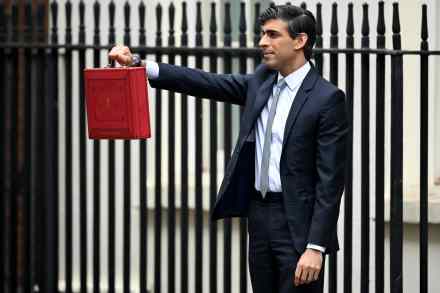
Is Rishi Sunak losing his battle within the Cabinet to promote fiscal responsibility? We’ll find out this week, when he unveils his Budget and three-year Spending Review on Wednesday, but there were hints this morning that more spending is coming down the track. Speaking to Andrew Marr on BBC One, Sunak laid out the principles that guided his Budget process this time round: ‘Strong investment in public services, driving economic growth by investing in infrastructure, innovation and skills, giving businesses confidence and then supporting working families. Those are the ingredients of what makes a stronger Budget and that’s what we will deliver next week.’ This is not the language of

The car industry’s China crisis

New cars could soon start disappearing from Britain’s forecourts, with the latest supply chain crunch threatening to cripple the global motor industry. It’s a crisis that once again delivers a stark warning about the dangers of over-dependence on China and the costs of succumbing to Beijing’s predatory trade practices. The automotive industry is currently facing a critical shortage of magnesium, which is an essential raw material for the production of aluminium alloys, including gearboxes, steering columns, fuel tank covers and seat frames. Stockpiles are running low, there is no substitute for magnesium in the production of aluminium sheets, and China has a near monopoly on the market. In Germany, Europe’s

Boris Johnson should trust the market to solve climate change

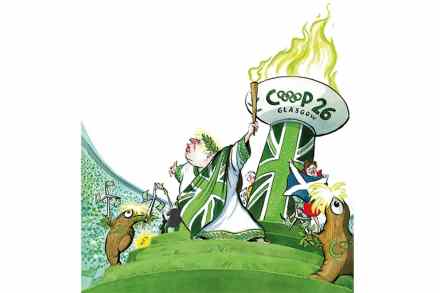
In a 368-page document published this week, the government announced its strategy to cut emissions to net zero by 2050 and confirmed its target for all electricity to come from low carbon sources by 2035.  It’s difficult to imagine worse timing for the release. An energy crisis is exposing the failures of decades of massive state meddling in the market. Insulate Britain have been picnicking on the M4 and M25. And on Wednesday a leak of documents showed Saudi Arabia, Japan and Australia are asking the UN to play down the need to move rapidly away from fossil fuels. None of this has weakened the Prime Minister’s resolve, though that’s

Rishi’s Budget wriggle room

Whisper it, but Rishi Sunak looks to be heading into the Budget next week with the public finances in a far better state than once predicted. The Office for National Statistics update on public sector net borrowing showed September’s total — £21.8 billion — coming in several billion pounds below the Office for Budget Responsibility’s official forecast and economists’ consensus. It fits a trend: total borrowing for 2021/22 is over £40 billion lower than expected, giving Sunak far more leeway than he thought he’d have at the start of the year. On the whole, tax receipts have been higher than forecast, as growth (while somewhat lacklustre over the past few

The void at the centre of Britain’s net zero strategy

Boris Johnson wants to turn your house green. This week, he published the plan for doing it. In fact, the strategy for delivering net zero carbon emissions is, in essence, to convert the whole economy — including your home — to electric power and then to deliver most of that power using offshore windfarms. We are rapidly approaching a time when wishful thinking collides with reality The fundamental problem with this approach, however, is what we will do when the wind isn’t blowing, or, just as importantly, when it unexpectedly stops blowing. The failure to address this issue upfront means that net zero is likely to fail, expensively. The stubborn refusal

Prince Harry is surfing an investment wave

Does the economist David Blanchflower — who I described as the Bank of England’s ‘resident wacko’ during his 2006-09 tenure on the Monetary Policy Committee and who later served as an adviser to Jeremy Corbyn — have a former pupil on the editorial team of the Today programme? I can’t think why else he should have been afforded a soft six-minute interview with Mishal Husain (addressing him by his nickname ‘Danny’) in Monday’s prime slot between Thought for the Day and the eight o’clock news. British-born, US-based Blanchflower is best remembered for declaring in 2009 that if the then shadow chancellor Osborne’s proposed spending cuts were ever enacted, ‘five million

Is inflation slowing?

Whatever happened to the inflation surge? Last month, when the Consumer Prices Index (CPI) surged to 3.2 per cent, the country started fretting about a return to the 1970s. This month’s CPI figure, though, has fallen to a not-very-1970s like 3.1 per cent. Forty five years ago inflation, on a slightly different measure, peaked at over 20 per cent. So are we really heading for an inflationary surge? It turns out that the biggest contribution to this month’s slight fall in CPI is in restaurant prices. This might come as a surprise to people running restaurants — yesterday the Food and Drink Federation complained of a ‘terrifying’ rise in the

The return of inflation

Most economists and central bankers would have us believe that long-term inflation is a technocratic problem that has long been solved. Indeed, today’s millennials and Gen Z have experienced more grade inflation than price inflation, and don’t really understand what all the fuss is about. Markets, which are never terribly good predictors of major turning points in the economy, don’t seem at all worried, either, as measured by the levels of expected inflation implicit in inflation-indexed Treasury bonds. What might everyone be missing? The problem is that controlling long-run inflation is fundamentally a political-economy challenge, not a technocratic one. There is rarely a moment where governments find it convenient to

Rishi’s online sales tax won’t save the high street

Imagine you run an independent store on the high street. Your business has already been ravaged by repeated lockdowns, which boosted the likes of Amazon at your expense. You are already at a huge disadvantage to online retailers because of your fixed costs. At great risk, you have invested in setting up your own online operation – which obviously costs you a lot more per unit of sales than it costs the online giants. In your shift online you have effectively become shunted up a side street, while Amazon, eBay and the like occupy the prime spots on the high street. How, then, are you going to react to the

Will inflation cause a house price crash?

Just what would finally bring the seemingly endless boom in house prices to a halt? A global banking crisis which resulted in the collapse of several large institutions plus others having to be bailed out by the government? A pandemic which cost the lives of over 100,000 people in Britain, led to the enforced closure of most shops and contracted the UK economy by nearly 20 per cent in a year? Had you raised either scenario when the market was racing ahead in the mid-2000s there would have been a general assumption that yes, either would have been fatal, leading to a house price crash. Sure enough, the first of these

Why our MPs deserve a pay rise

Are MPs underpaid? Yes, according to Sir Peter Bottomley, who declared that life on an MP’s salary of £82,000 can be ‘really grim’. In saying so, Bottomley succeeded in uniting his fellow MPs – who would rather not have to deal with a further round of anger at their pay and conditions – and the general public – who resent having to pay for their elected lords and masters in the first place. But the furious backlash doesn’t mean Bottomley isn’t right. In Parliament, as anywhere else, you get what you pay for. If we want a better class of MP, it’s time to splash the cash. Not everyone sees it this way, of

Sajid Javid is right to make the NHS more accountable

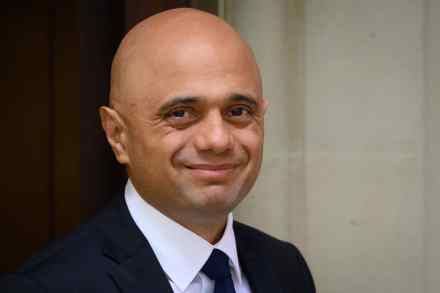
The health secretary has announced more money for the National Health Service. It’s a story we’ve heard time and time again – but this time the details are different. Sajid Javid has committed an additional £250 million for GP health practices to assist them in expanding their hours and upping the number of face-to-face appointments they offer. In-person appointments plummeted during lockdown and have never recovered: they are now hovering around 60 per cent, compared to 80 per cent pre-pandemic. So what’s new? In short, the money comes with more accountability. A league table is being created to rank surgeries on how many in-person appointments they offer. Patients will also

The legacy of Covid: a much bigger state

Covid transformed the role of the state. During the pandemic, the government did things it would never normally even contemplate. At the same time as it restricted civil liberties, it intervened in the economy to an extent never before seen in peacetime. Through the furlough scheme, close to £70 billion was spent on paying people’s wages. Other government economic interventions seem minor in comparison. What is a few hundred million here and there when the state has been spending billions so regularly? History suggests that when the state expands in a crisis, it doesn’t revert to its pre-crisis level once the emergency is over. The second world war led to

Why we should all start hoarding cash and loo rolls

If there’s anyone in Britain who knows how to keep grocery shelves stacked, it’s former Tesco chief executive Sir Dave Lewis, who has been named as Downing Street’s ‘supply chain tsar’. Application of Tesco’s mastery of logistics and fierce discipline on suppliers should keep delivery trucks moving, so long as they have drivers. But even Lewis won’t be able to avert the pre-Christmas surge of panic-buying which I’m told Cabinet Office planners fear — especially if it’s combined with a major outage in the banking system. Last week’s Facebook crash was a warning that blank screens are only a couple of burned-out circuits or a cyberhacker’s half-hour away. And if

Brexit has ended Thatcherism. And about time, too

A Conservative government is raising taxes to fund the NHS and telling business to pay its workers more. The world is upside down, and classical liberals are furious. Steve Baker, one of those MPs, tweeted a picture of a pile of books including Hayek, Popper and Von Mises and said ‘This is what we believe’, reminding us of a time when Conservatives sought to shrink the government, not grow it. Until recently, most of us thought Margaret Thatcher and Conservatism were synonymous. We were wrong. While Hayek, Popper and Von Mises are definitely part of the conservative canon, and classical liberals part of the family, they dominated the right at

Is the economic recovery still on track?

Compared with July, August’s GDP boost looks much healthier — but that’s not saying much. Originally thought to have stagnated at 0.1 per cent, the economy in July actually shrank by 0.1 per cent, according to the latest update from the Office for National Statistics. If inflationary pressures continue to surge, the Bank may have no choice but to act Still, August’s GDP increase of 0.4 per cent puts the economy back on the upwards trajectory, now estimated to sit 0.8 per cent below pre-pandemic levels. Despite so-called ‘freedom day’ arriving halfway through July, people continued to socially distance in order to avoid being mandated back into their homes. A

Why is British Airways banning ‘ladies and gentlemen’?

British Airways is dropping ‘ladies and gentlemen’ from its announcements. In the name of diversity and inclusion, the airline has instructed staff to use a more ‘gender neutral’ salutation. You might think that after 18 months of turbulence, BA has more important things to worry about. In spring and summer last year the company was forced to cut 10,000 jobs, representing a third of its workforce, after Covid grounded most of its aircraft. The airline was the biggest user of the furlough scheme, claiming over £10 million in June this year alone. You might think that after 18 months of turbulence, BA has more important things to worry about Nonetheless,

The good and bad news about Britain’s labour market

Now that the Chancellor’s furlough scheme has come to an end, are employers rushing to lay off those workers whose wages have been paid, at least in part, by the government?  The good news for Rishi Sunak – and the taxpayer, who footed the bill for this multi-billion pound scheme – is that the early evidence suggests they are not: in the three months leading up to August, the headline unemployment rate dipped again. It is now down to 4.5 per cent, having peaked just over five per cent last winter. The picture in the labour market isn’t necessarily all rosy Figures from the Office for National Statistics will still take several months

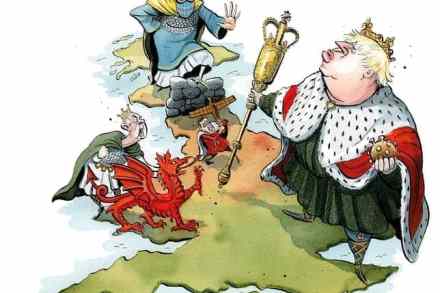
Will the National Insurance hike weaken the Union?

Given the enormous power that Conservative leaders wield within the party, it is not surprising that the party should come to take on the character of its leaders. In the case of Boris Johnson, it is his protean quality that seems to have rubbed off. Where a previous leader might have had a policy agenda or ideology, today’s Tories have cheery slogans which can mean almost anything. Thus in the course of half a dozen recent Tory conference events one will have heard at least that many different definitions of ‘levelling up’, while the big corporate lobbies and third sector groups insist that whatever they normally talk about is absolutely essential