Economy

  • AAPL

    213.43 (+0.29%)

  • BARC-LN

    1205.7 (-1.46%)

  • NKE

    94.05 (+0.39%)

  • CVX

    152.67 (-1.00%)

  • CRM

    230.27 (-2.34%)

  • INTC

    30.5 (-0.87%)

  • DIS

    100.16 (-0.67%)

  • DOW

    55.79 (-0.82%)

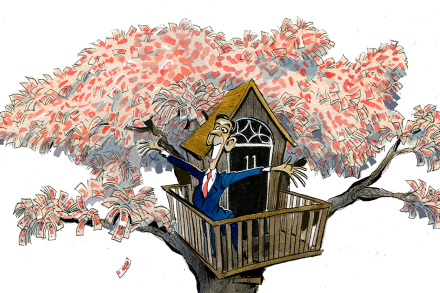
The IMF growth downgrade is more bad news for Rachel Reeves

Rachel Reeves lands in Washington tonight to be greeted with bad news. The International Monetary Fund (IMF) – whose spring meeting the Chancellor is attending – has just handed Britain the largest GDP downgrade of any G7 country.  In the freshly released update to their world economic outlook, the IMF forecast growth for the UK this year of just 0.8 per cent – down from the 1.3 per cent they’d previously projected. Things don’t get much better next year either, with just 1.3 per cent growth forecast, again downgraded from 1.5 per cent.  This downgrade singles out Britain and our European neighbours. While the IMF calls the overall effect of

Spotlight

Featured economics news and data.

Cutting Britain’s giant welfare bill would be an act of kindness

Does having money really matter that much? There are those, usually with quite a bit of it, who want us to care less about materialism. But, unequivocally, money really does matter – not because of any status it supposedly brings, but for the freedom it buys: freedom to choose how we live and how we look after others. Considering this, it seems that the deep disillusionment with mainstream politicians in recent years stems from a protracted and ongoing period of stagnant living standards over which they have presided. But the truth is that the average person has not got poorer since the global financial crisis. They have got a little

For industry, the pandemic isn’t over yet

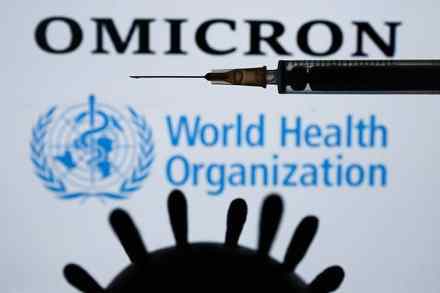
‘So you think it’s all over? Ho ho ho!’ That’s the message from Satan’s dark laboratory (twinned with Wuhan’s) where the Omicron variant turns out to have been bubbling in its test tube while we dared to resume our normal lives during the autumn. But whether that ugly little globule ruins Christmas or proves to be largely a scare story, the pandemic’s disruption of business ain’t over yet either: supply chain hold-ups, labour shortages, cost spikes and debt pressures continue apace. Here, for example, is news that the UK car industry produced fewer than 65,000 cars in October, down 41 per cent on the same month last year and its

When will the Tories do something about house prices?

Anyone who doubts that the fiscal response to the pandemic has stoked inflation needs to look at the latest figures from the Nationwide on the housing market. Yet again they confirm that the deepest recession in modern history has been accompanied by a boom in house prices. Moreover, the inflation does not seem to have been reined-in by the ending of the stamp duty holiday. The price of the average home, according to the building society, rose by a further 0.9 per cent in November to reach £252,687. This is ten per cent up on last November and 15 per cent up on March 2020, at the beginning of the pandemic. How can

The economic impact of the latest Covid restrictions

We don’t yet know whether the Omicron variant will drastically accelerate the spread of coronavirus, or whether it will circumvent parts of the immune system. Nor can we be sure that the ‘light’ coronavirus restrictions announced at the weekend will be enough to combat the new strain. We can be certain, however, that these measures will come with an economic cost that politicians are, at least publicly, understating. Face masks are once again compulsory in shops and on public transport in England, and UK arrivals will need to take PCR tests within two days of landing, isolating until they get their result. But the major economic threat stems from the

Boris could pay a heavy price for his tax hikes

Given the enthusiasm for tax cuts usually shown by Conservative MPs it is remarkable how few of them have, in public, raised objections to the government’s loose fiscal policy. True, the Prime Minister’s announcement of a hike in National Insurance ostensibly to pay for social care, elicited squeals from the back benches, yet last month’s Budget drew only muted objections. This was in spite of claims by the Resolution Foundation that the Budget will cost an average household £3000 a year – if you take into account the effect of higher prices as businesses seek to pass on their higher tax bills to consumers. Today, however, Mel Stride, former Treasury

Why you should be wary of buy now pay later

Are you logged on to Klarna, Clearpay, Laybuy or Zilch for your Black Friday shopping binge — or are you an old-timer like me who still uses traditional credit cards and even sometimes tries to pay for purchases in cash? If those four brand names meant nothing to you, you are yet to join the millions of UK shoppers who have discovered ‘buy now pay later’ (BNPL) apps that offer, with a couple of simple checkout clicks, payment for fashion and beauty purchases, and even groceries, in a series of interest-free instalments. ‘Shopping just levelled up’ is Klarna’s witty slogan for its three-instalment offer; at Laybuy, it’s six; at Zilch,

Fact check: are the Tories cutting taxes?

Ping! No, not the dreaded Covid app but rather another beseeching email from CCHQ, begging money for Tory funds. Reading through the party-politicking, Mr S was curious to see that among the party’s list of achievements was the claim that ‘we’re delivering what the British people voted for’ by ‘cutting taxes for hardworking people.’  An intriguing boast, given that Rishi Sunak is hiking National Insurance, which applies to all employees including those on minimum wage, by an effective 2.5 per cent – despite the Conservative Party’s pledge in 2019 that ‘we will not raise the rate of income tax, VAT or National Insurance.’ Corporation tax has been raised to 25 per cent from

The confusion at the heart of social care

Boris Johnson’s majority plunged to just 26 last night, following a rebellion over controversial changes to social care plans. Means-tested, state-funded payments will no longer count towards the £86,000 limit on the amount people will have to pay for their care. Those with initial assets worth less than £186,000, and who have received such help, could be worse off as a consequence. Critics have pointed out that this is likely to disproportionately affect residents in the North or the Midlands because of differential house prices. Johnson’s government isn’t the first to tie itself in knots over the issue of social care funding. Successive administrations have failed to bring about reform

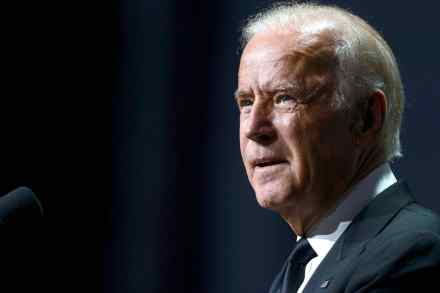
Is Joe Biden ready for the looming war with the Fed?

He isn’t especially bothered by global warming. He doesn’t think monetary policy has very much, if anything, to contribute to combating racism, promoting gender equality, or making the world a fairer place. And he doesn’t want to go to war with Wall Street, or bring any billionaires to heel. By re-appointing Jay Powell, a Republican first chosen by Donald Trump, as chairman of the Federal Reserve, Joe Biden has finally stood up to the Democratic party’s left wing. And yet, perhaps without realising it, Biden is also setting up what will sooner or later turn into an epic fight with the central bank over economic policy. This is a battle that

The gap between Boris and business widens

Boris Johnson kickstarted the Confederation of British Industry’s annual conference this week with a surprising performance. The plan was to emphasise his government’s commitment to regenerating the economy, post-pandemic, with a green agenda. In practice, it was a confused and muddled speech which even the speech-giver (let alone the audience) found difficult to follow. The highlights were dominated by awkward moments: Johnson asking the room early on who had received their booster shots, only to quickly follow up that everyone looked ‘young and thrusting’ – presumably to cover for an insufficient number of hands in the air. A chunk of the speech was dedicated to the PM reminiscing about what he said

Could high public borrowing be a sign of trouble ahead?

On the surface, the UK’s economic recovery appears to be on track. The Office for National Statistics revealed this morning that retail sales were up 0.8 per cent last month, beating expectations of a 0.5 per cent rise. Consumer confidence and the number of people heading back to the shops continues to rise, with the proportion of online retail sales falling to 27.3 per cent. This is substantially higher, however, than the pre-Covid level of just under 20 per cent. Non-food stores saw the biggest sales increase – 4.2 per cent – boosted, in part, by early Christmas sales. Toys, clothes and sports equipment all saw increases. Again, this is

Shell’s Dutch departure is a boost for the city of London

The scrapping of most of the eastern leg of HS2, originally planned from Birmingham to Leeds, is a news item that’s been waiting like a crowded train stuck at a vandalised signal while ministers squabbled over which cheaper substitutes might appease competing pockets of ‘red wall’ voters. Likewise the ‘Northern Power-house’ high-speed line from Manchester to Leeds, which is set to be replaced by a few more trains running a bit quicker on the existing scenic route. None of this merits the title ‘Integrated Rail Plan’ which it will carry when formally announced by Transport Secretary Grant Shapps, rather than leaked in snippets. But ‘Cynical Rail Compromise’ wouldn’t have quite

Why Gen Z should care about inflation

The inflation tiger is roaring. Older people can hear it. How about younger ones? Inflation could, after all, be the biggest blow to their finances in their lifetime. They don’t seem hugely concerned. According to polling by GfK, Generation Z is totally ‘chill’ about inflation. Older generations, meanwhile, are scarred by the last inflation spiral of the 1970s — a brown-tinged decade of power cuts, unemployment and grim donkey jackets. To younger people, that’s ancient history. Growing up in an era where inflation has averaged 2 per cent, they’d be forgiven for zoning out when they hear ‘back in the day…’ or when news reports reveal that inflation has spiked

Andrew Bailey has been a bitter disappointment

Earlier this year I drew a comparison between the Bank of England governor Andrew Bailey and the Metropolitan police commissioner Dame Cressida Dick. When appointed, both were hailed as head-and-shoulders the best qualified internal candidate for the job. Yet both have subsequently attracted volleys of flak for everything that has gone wrong on their watch. That’s a peril of the media age for any high-profile public servant. But Dame Cressida, hugely respected by fellow officers, seems to rise above it. Bailey, by contrast, is beginning to look beleaguered, a recent fiasco over interest rates having followed the rattling of several skeletons in his record as a former regulator. Many in

Inflation rises again. The BoE has questions to answer

Inflation is back, and while some people continue to cling to the idea that its resurgence is a temporary phenomenon, today’s figures further stamp out that optimism. Consumer inflation was up to 4.2 per cent in the year to October, a surge from just over 3 per cent the month before. This takes inflation to its highest level since 2011, with prices only set to rise further heading into 2022. Why has the Bank been so insistent about the temporary nature of this round of inflation? Much of the rise is due to increasing energy costs, which were always expected to worsen this winter: global shortages continue to bite as the

Why wasn’t the furlough scheme wound up sooner?

October’s employment figures, according to the Chancellor Rishi Sunak are ‘testament to the success of the furlough scheme’. The other way of looking at the figures, released this morning, is that they show why the furlough scheme should have been wound up months ago, rather than at the end of September. The number of people on payroll in October rose by 160,000 to 29.3 million in spite of furlough ending. The unemployment rate fell by 0.5 per cent. The employment rate, at 75.4 per cent, is now just 1.1 percentage points lower than it was in the three months leading up to the pandemic. It is astonishing because at the

The truth about ‘Equal pay day’

Could flexible working hurt women’s careers? That’s the view of the Bank of England’s Catherine Mann, who fears it could open ‘two tracks’ and widen the ‘gender gap’. If that wasn’t bad enough, Scottish Widows tells us that because of lower pay and longer life expectancies young women ‘must save an extra £185,000 to reach the same retirement income as men’. This week, we will inevitably hear the baseless assertion that women are working ‘for free’ until the end of December. This Thursday, we’ll also hear the Fawcett Society make its annual fuss over ‘Equal Pay Day‘. This, of course, is the day when women are, allegedly, no longer earning

Shell’s Dutch departure is a vote of confidence in Brexit Britain

The City was meant to be hollowed out. Shortages would cripple the economy. And major multinationals would move their headquarters, listings, and all the wealth those create, to somewhere safely inside the EU’s Single Market. Some hardcore supporters of the UK remaining inside the EU made lots of predictions about the consequences of the decision to leave. And yet, one by one, they have failed to materialise. Now, oil giant Shell has said it will move its tax residency to London, a decision that could mean it ditches the ‘Royal Dutch’ from its name. In the end, it turns out that whether a country is inside the EU or not

Eighteen months of inflation is not ‘transitory’

The big central banks have been insisting for months now that the rise in inflation is temporary, and will fade once the great awakening of the world economy starts to settle down. The Federal Reserve, Bank of England and the European Central Bank have looked on as inflation has overshot their forecasts. But when the opportunity to tame it with an interest rate hike approaches, the banks pass it up, reiterating instead that it is ‘transitory’ — the monetary equivalent of ‘it’ll be fine’. With inflation now at a 30-year high in the United States — 6.2 per cent — it’s starting to look like a pretty big bump. But should

Bankers, not Greta, will save the planet

I have observed before how useful really big numbers can be in response to crises: when US treasury secretary Hank Paulson unveiled his $700 billion Wall Street bailout package in 2008, an aide famously let slip that the number had been pulled out of the air because it sounded reassuringly huge. Now we’re told that more than 450 banks and investment firms representing $130 trillion of assets (that’s 40 per cent of global savings, give or take a few soaring bitcoins) have joined the Glasgow Financial Alliance for Net Zero led by Mark Carney and Michael Bloomberg, who tell us that ramping up clean energy fast enough to avoid the

Does Joe Biden understand inflation?

I have a horrible feeling that the Biden presidency may come to be defined by a single quote which will echo down the ages, featuring not just in economics textbooks but becoming a byword for hubris of all kinds. Speaking of his $1.75 trillion ‘Build Back Better’ plan, the President declared last week: ‘Seventeen Nobel prizewinners in economics have said that my plan will ease inflationary pressures’. Not so fast, Mr Biden. Today, the Bureau of Labor Statistics announced that the Consumer Prices Index (CPI) for October rose to 6.2 percent, higher than expected and the highest rate since 1990, the very beginning of the low inflationary era. For all