
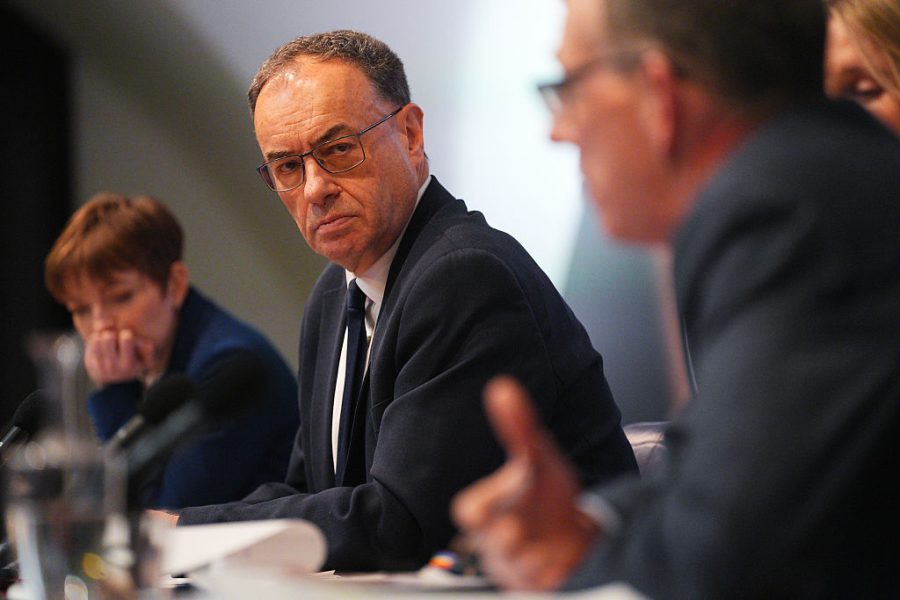
In a relief for mortgage holders, anyone with a job and the government, the Bank of England’s Monetary Policy Committee (MPC) has voted 8–1 to hold interest rates at 3.75 per cent. That is despite rising inflation thanks to the Iran war, which is likely to hit Britain worse than almost anywhere else.
Had it not been for the war and the disruption to energy supplies through the Strait of Hormuz, April was to be the month when the Bank of England finally met its 2 per cent inflation target. Instead, prices are shooting in the wrong direction as energy costs feed through to the wider economy – most notably in fuel.
You would think, then, that interest rate hikes would be needed to take some of the heat out of these price rises, but it is the view of the majority of the MPC that monetary policy alone will not affect energy pricing and so the potential harms to employment and growth outweigh inflation fears. That take is uncontroversial.
Most economists will welcome the decision to hold rates
Alongside the rates decision, the MPC also released its latest monetary policy report, which included three scenarios for the energy shock. Even if prices fall, those scenarios still show rate rises. If oil prices remain high and the price of gas rises, then the Bank says rates could be increased to 5.25 per cent before the end of the year. Oil prices soared past $126 (£93) per barrel this morning.
It is entirely normal, and indeed healthy, for there to be dissenting voices and split votes on the MPC, but what is unusual about this 8–1 result is who the lone voice calling for a hike to 4 per cent was. Huw Pill, the Bank’s Chief Economist, is worried about so-called ‘second-round effects’, where household and business expectations of inflation perpetuate a cycle of price rises and wage-setting that cannot be ignored.

Given Pill is the person responsible, more than any other MPC member, for the Bank’s view of the economy, it will ring alarm bells that he fears these second-round effects more than his fellow committee members. And let’s not forget we have been here before, when the Bank thought inflation was going to be ‘transitory’. Pill does not want the same mistakes to be made again.
There is some evidence to support the Chief Economist’s fears: household inflation expectations jumped in March and google searches for inflation spiked to near all-time highs. The concern is that, regardless of what global events actually mean for prices, fears for the future will lead workers to demand higher pay increases, which employers pay for by bumping up prices of otherwise unaffected items.
Nevertheless, most economists will welcome the decision to hold rates, as increased borrowing costs are just about the last thing our stagnant economy and loosening labour market need. But that does not mean Huw Pill is wrong – we can only hope his caution turns out to be misplaced.



Comments