Leon Mangasarian

Leon Mangasarian worked as a news agency reporter and editor in Germany from 1989 with Bloomberg News, Deutsche-Presse Agentur and United Press International. He is now a freelance writer and tree farmer in Brandenburg, eastern Germany

Net zero and the myth of German efficiency

From our UK edition

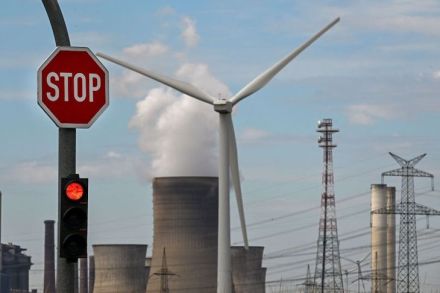
Losing one energy source may be misfortune. Losing two is carelessness. And losing three is alarming if you’re the world’s third biggest industrial nation. But to endanger your fourth energy source, the one that’s supposed to replace the first three, seems akin to a death wish. Amazingly, this is where Germany is now heading with its bungled energy transformation, or Energiewende, which some Germans still bizarrely insist is a model for the world. In the mad rush for net-zero by 2045, nobody gave much thought to back-up conventional power plants The first energy source to be axed was Germany’s nuclear fleet, which used to supply over 30 per cent of the nation’s electricity.

Can Germany be saved from itself?

From our UK edition

Nine months into the chancellorship of Friedrich Merz, the outlook for Germany looks grim. The country's economy, the world’s third biggest, has been in recession or stagnation for the past three years as its leaders confront the worst economic crisis since the 1950s. Damningly, portions of the German press have accused Merz of presiding over an 'economically lost year'. Last year’s data makes for tough reading: industrial production was down 1.3 per cent and large corporate bankruptcies up 25 per cent. In the first six months of the year, 109,000 manufacturing jobs were lost. 48,000 of these were in the battered car industry which has a 24 per cent share of total industry revenue.

Shoot an elephant to save Africa

From our UK edition

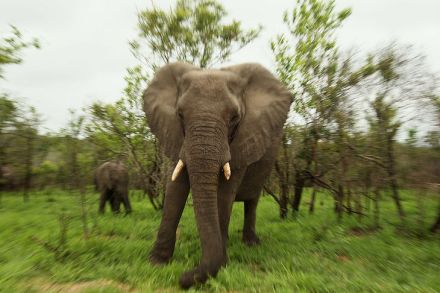
Africa's elephants are out of control, and the continent's people, and plants, are paying the price. Far too many elephants, with far too little territory – surrounded by ever more people and with culling hampered by Western animal rights groups and green activists – risk contributing to a wildlife-induced forest ecocide. Millions of mopane, baobab and other trees, are being pushed over, devoured or shredded into bushes. Great national parks are in danger of being transformed into desert-like scrubland. Elephant numbers have exploded in Kruger over the past century During a week hiking in what should be forest but now is a degraded bushland near the Olifants River on the edge of South Africa’s Kruger National Park, I saw elephants everywhere.

The AfD is surging in the polls

From our UK edition

Friedrich Merz, the victor of German elections in February is struggling even before he takes office. Outgoing Chancellor Olaf Scholz’s Social Democrats (SPD) – the election losers – used coalition talks to ram through their policies in a 144-page pact to serve as junior partner to Merz’s Christian Democrats. The accord shies away from any big reforms of the economy, of the creaking social welfare state and even from the no-brainer of reinstating military conscription to help deter Russia. The agreement is so bad and so dilutes the Economics Ministry’s powers that Merz’s own Christian Democratic (CDU) secretary general, Carsten Linnemann, abruptly declared he no longer wants to take over the portfolio.

Germany’s crumbling far-right firewall could turbocharge the AfD

From our UK edition

Friedrich Merz, chancellor candidate of Germany’s Christian Democrats, stumbled in his bid to end Social Democrat-Greens domination of migration policy. After winning a Bundestag motion to reinstate border controls with votes of the far-right Alternative for Germany (AfD), the chamber rejected a law on to clamp down on migration. Merz’s use of the AfD drew the ire of ex-Chancellor Angela Merkel, his predecessor as CDU leader. Her stunning public stand against Merz may have convinced 12 members of his own bloc to vote against the law. The bill was defeated on Friday with 350 members voting ‘no’ and 338 in favour.

Germany is running out of time to reform

From our UK edition

Germany’s government after the election on 23 February will likely be led by pro-business Christian Democrat Friedrich Merz. His coalition partner, probably the Social Democrats of failed Chancellor Olaf Scholz, or else the Greens of economy minister Robert Habeck, will torpedo any serious economic reforms. Equally worrying: Merz’s own reform blueprint is far too timid. A new wild card in the vote – up to now dominated by the economy – is spiralling migrant violence and failures of German authorities to lock up people known to pose acute threats. A horrifying knife attack on a nursery school group in a park in Aschaffenburg, in Bavaria, on Wednesday, allegedly by an Afghan man, killed a two-year old boy and a 41-year-old man who tried to protect the children.

How Angela Merkel broke Germany

From our UK edition

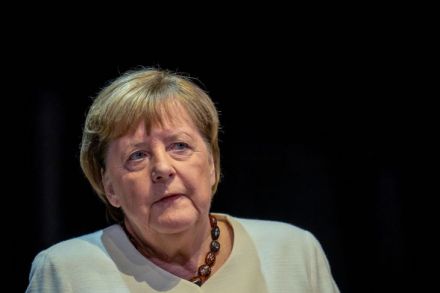
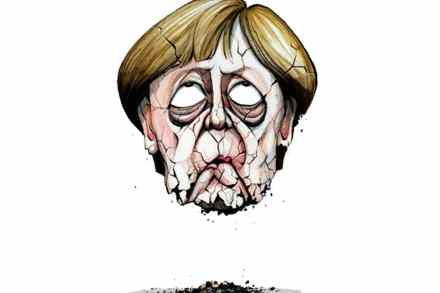
Angela Merkel, who last month published her memoirs on her 16 years as German chancellor, was a great tactician. But she was dead wrong on many of the strategic questions hurled at Germany during her time in charge. Merkel is the architect of a Germany that’s again the sick man of Europe, now in a second year with a shrinking economy and surging parties on the far-right and far-left. Merkel doesn’t do mea culpas and this has annoyed some reviewers of her book. Those who hoped for admission of failures misunderstand Merkel. She’s a physicist, who disassembles problems before making, what she sees, as fact-based decisions. Her manner of deflecting mistakes is always the same: based on the information at the time my decision was correct.

Germany has a bleak future thanks to Olaf Scholz

From our UK edition

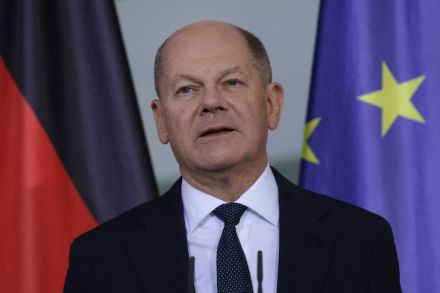
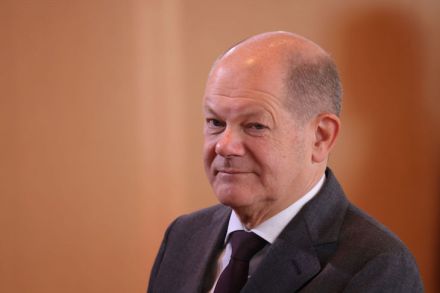
The demise of chancellor Olaf Scholz’s lacklustre coalition of Social Democrats, Greens, and the liberal Free Democrats is unsurprising. The ideological blend fits Germany, as Stalin might have said, ‘like a saddle fits a cow.’ The election that may truly define Germany’s future will be held in 2029 Scholz seems almost to have modelled himself on Liz Truss; though it took him longer to damage the world’s third-largest economy, he has done a thorough job. Germany’s economy, Europe’s largest, is expected to contract for a second consecutive year in 2024. Ludwig Erhard, the architect of the West German economic miracle, must be spinning in his grave.

How Germany became the sick man of Europe

From our UK edition

Vertrauen ist gut, Kontrolle ist besser – trust is good, control is better – is a popular German saying. It’s also the state’s motto for overseeing Europe’s biggest economy, which is now being run into the ground. Germany’s economy is officially expected to shrink in 2024 for the second year in a row. Berlin’s Social Democratic Chancellor Olaf Scholz and his Greens Vice-Chancellor Robert Habeck, who are fighting for their political lives as their coalition crumbles around them, are to blame. Only one German sector is growing: the state. Government consumption grew by 2.8 per cent from mid-2023 to mid-2024. Dealing with bureaucracy costs German business €67 billion (£55 billion) per year, says Berlin’s Federal Justice Ministry.

Germany’s tragedy is that it isn’t ready for the future

From our UK edition

How do we defend Europe without the Americans? With Donald Trump inciting Russia to 'do whatever the hell they want' to Nato members not paying enough, it’s clear a Trump 2.0 could shatter the alliance. This isn’t news. Leaders of Germany, Europe’s biggest economy, have known this since Trump took office in 2017. They know what’s strategically necessary to fill the gap. The trouble is, this would be politically impossible for Berlin. A Trump-led unravelling of Nato would confront Germany with a daunting to-do list Compensating for the United States, which provides 70 per cent of alliance defence spending, would be staggeringly costly for Germany.

An ex-German diplomat’s withering verdict on Berlin’s ‘flawed’ Russia policy

From our UK edition

Arndt Freiherr Freytag von Loringhoven couldn’t have had a worse start as Germany's ambassador to Poland. Germany’s fraught historical legacy with the country – six million Poles killed in the Second World War and Prussia’s role in wiping Poland off the map from 1795 to 1918 – inspired Freytag von Loringhoven in his final posting to push hard to improve ties with Warsaw. But the Polish government saw things differently. His approval as ambassador – a role he finally took up in 2020 – was delayed by members of Poland’s then ruling PiS party, who campaigned against him using Nazi slurs. They targeted him because his father, Bernd, was a junior officer in Hitler’s bunker during the final months of the Second World War.

Germany’s rustbelt is reviving – but voters are still flocking to the AfD

From our UK edition

West Germany’s first chancellor, Konrad Adenauer, hated eastern Germany and said – possibly apocryphally – that Asia begins at the east bank of the Elbe River. When people visit my forest in what’s long been Brandenburg’s rustbelt, I caution that Asiatic Germany isn’t Adenauer’s bucolic Rhineland, let alone Munich or Hamburg. Yet the 'rustbelt' moniker no longer suits a region that, while down and out for decades, is rebounding, powered by new industry and proximity to booming Berlin, the capital’s new airport and a Tesla factory. Even low-tech forestry is making money after having been on life-support five years ago. But there are also levels of anger I have never seen in the 22 years I’ve lived here. What riles people up?

The trouble with Olaf Scholz

From our UK edition

German chancellor Olaf Scholz still doesn’t get it. ‘Der Fisch stinkt vom Kopf’ (the fish stinks from its head) is a popular German saying. It’s proven right by Scholz’s abysmal failure to lead since the Russian invasion of Ukraine. He’s failing again with Israel, declaring the Jewish state is Germany’s ‘Staatsräson’, or raison d-etat, but never spelling out what this means. Scholz has flopped with his tepid attempts to explain what’s at stake for Germany and Europe in Ukraine and Israel and why Berlin should be the leadership power of the EU. This problem is partly due to Scholz’s nature. If you think you’re the smartest guy in the room you don’t bother with pesky stuff like explaining things.

Nimbys and Greens are teaming up to block German wind farms

From our UK edition

Germany’s Robert Habeck might well be an excellent children’s book author but he is proving to be a dismal economy and climate minister. Habeck, who also serves as the Greens vice-chancellor in the country's coalition government, rode to power in 2021 promising to speed up the transition to renewables. At the heart of his pledge: more windmills, bigger windmills and, above all, built much, much faster. But these promises are proving to be little more than hot air, as my own fruitless struggle to build windmills attests. Wind energy is crucial if Germany is to meet its goal of renewables producing 80 per cent of electricity by 2030, up from 46 per cent last year. Chancellor Olaf Scholz says that 'four or five windmills' must enter service daily between now and 2030.

Wolves and the Greens: why Germans are flocking to the AfD

From our UK edition

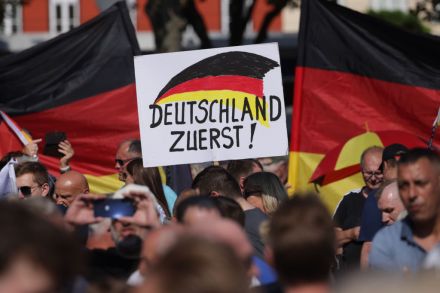
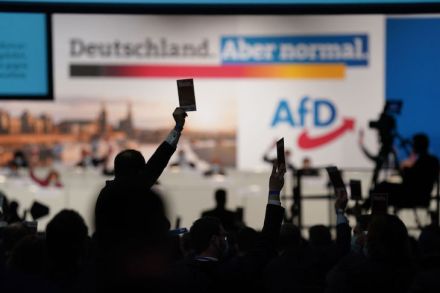
'Ku Klux Klan Brandenburg' was emblazoned across the black T-shirt on a guy in line behind me at the Total petrol station in Peitz, 90 minutes south of Berlin. I considered asking why he liked the KKK but thought better of it after noting his girth and the grimace he gave me. Popularity of the far-right Alternative for Germany (AfD) party and neo-Nazi groups is surging in eastern Germany. The AfD is now the second strongest party in nationwide opinion polls after the opposition Christian Democrats and ahead of Chancellor Olaf Scholz’s Social Democrats. It is anti-immigrant, pro-Russian, anti-American and demands Germany quit the euro.

Why trophy hunting could be key to saving Africa’s wildlife

From our UK edition

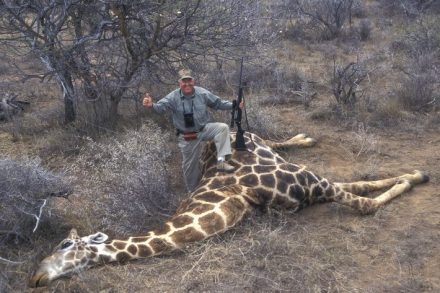
The lion or elephant in the photo should be stone-cold dead. The hunter posing with it should be ugly, fat and preferably American. Cue to social media outrage from celebrities, journalists and online nobodies. Few things generate more furious likes and retweets than old, white men killing African mega-fauna. Yet, as Barack Obama once said: ‘This idea of purity and you’re never compromised … you should get over that quickly. The world is messy. There are ambiguities. People who do really good stuff have flaws.’ In order to survive outside the parks, wildlife needs to have a value for rural Africans As counter-intuitive as it sounds, African trophy hunting is a powerful conservation tool.