Economy

  • AAPL

    213.43 (+0.29%)

  • BARC-LN

    1205.7 (-1.46%)

  • NKE

    94.05 (+0.39%)

  • CVX

    152.67 (-1.00%)

  • CRM

    230.27 (-2.34%)

  • INTC

    30.5 (-0.87%)

  • DIS

    100.16 (-0.67%)

  • DOW

    55.79 (-0.82%)

Inside the murky world of Tether

In July 2014, three aspiring entrepreneurs – Reeve Collins, Craig Sellars and Brock Pierce – launched a startup from a Santa Monica bungalow. Its product, Realcoin, was a dollar-pegged cryptocurrency: a digital token that, unlike volatile Bitcoin, could be used for everyday transactions. When the trio pitched it to Silicon Valley’s big investors, they were laughed out of the room. This could have made for a classic startup origin story, were it not for the cast behind it. Their résumés betray the whole venture as a pipe dream.

Spotlight

Featured economics news and data.

Cutting Britain’s giant welfare bill would be an act of kindness

Does having money really matter that much? There are those, usually with quite a bit of it, who want us to care less about materialism. But, unequivocally, money really does matter – not because of any status it supposedly brings, but for the freedom it buys: freedom to choose how we live and how we look after others. Considering this, it seems that the deep disillusionment with mainstream politicians in recent years stems from a protracted and ongoing period of stagnant living standards over which they have presided. But the truth is that the average person has not got poorer since the global financial crisis. They have got a little bit richer. Employment levels are still exceptionally high. And, both historically and internationally, we are a very rich country.

Donald Trump’s affordability blues

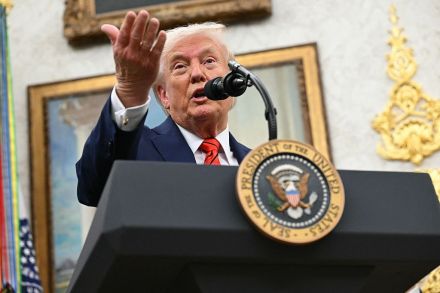
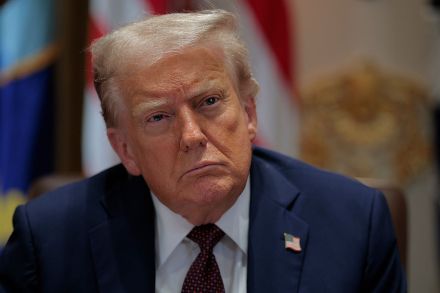
So President Donald Trump may have dozed off during his cabinet meeting on Tuesday. Who could blame him? Listening to Secretary of State Marco Rubio drone on about Russia would prompt souls less hardy than Trump to catch some shuteye.  What should be keeping Trump awake, or at least uneasy, is the shaky state of the American economy. The federal government may not be releasing much data about the economy, but the payroll processing company ADP is reporting that private employers cut 32,000 jobs last month. The losses were heavily concentrated among small employers who have been slammed by Trump’s capricious tariff policy.

donald trump affordability

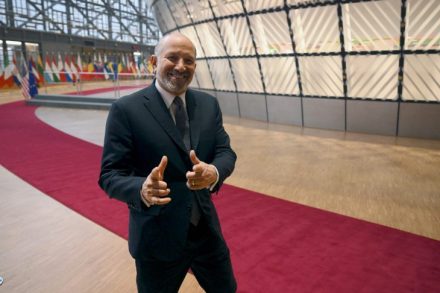
Howard’s beginning: the luck of Lutnick

With Elon Musk no longer sleeping in a cot in Washington, only one member of the White House inner circle comes close to matching Donald Trump’s net worth: Commerce Secretary Howard Lutnick. Commerce is usually a mid-tier cabinet post; even fervent political observers would be hard-pressed to name previous officeholders. But Lutnick has been one of Trump’s most impactful advisors in this second term. His ideas about tariffs have greatly affected the world’s economy, and have influenced Trump’s mercurial tariff pronouncements. Plus, he’s worth about $3 billion himself. Even Treasury Secretary Scott Bessent, himself a billionaire, is only worth about half as much. Lutnick made his name as CEO of Cantor Fitzgerald, a major New York financial services company.

Howard Lutnick
Affordability

The ‘affordability’ delusion

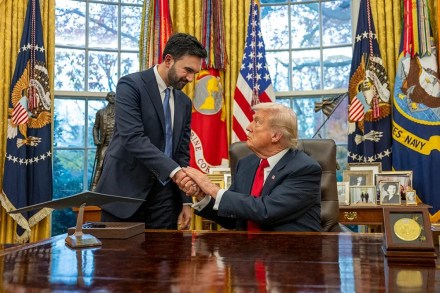
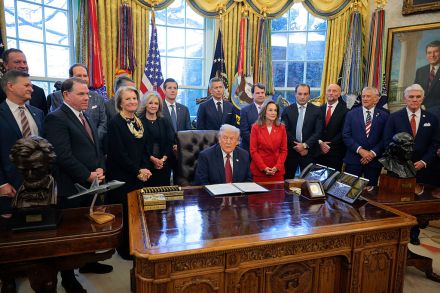
During last week’s excruciating Oval Office make-nice between an insultingly buddy-buddy American President and a fraudulently obsequious New York City mayor-elect, the contest was over which pol was the more patronizing. At one point Trump graciously granted his petitioner permission to call him a "fascist" while clearly implying the guy’s OTT campaign rhetoric had been embarrassing. Donald Trump sat regally on his throne, patting Zohran Mamdani’s arm while commending "Attaboy!" as if petting a golden retriever that had fetched a ball. For his part, Mamdani stood mutely by the Resolute desk with cartoonish humility, hands over crotch. This cowed performance of beta-male submission was meant to disguise who’d got a leg over whom.

Don’t count Bitcoin out

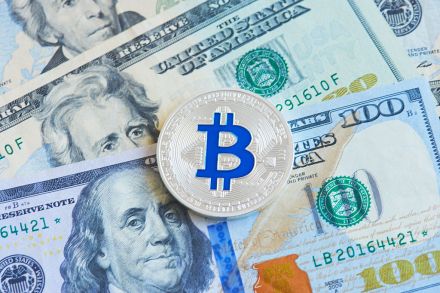
Bitcoin is crashing all over again, and it is taking the smaller crypto currencies down with it. It has fallen by a quarter from its highs, and there is little sign that the relentless selling is going to stop anytime soon. Plenty of people will be reheating arguments about how the digital currency is completely worthless and that the bubble was always going to pop one day. But Bitcoin has been through plenty of bear markets and it has always bounced back – and there is little reason to believe this crash will be any different. It is certainly a substantial fall. From a high of $114,000 a coin at the end of last month it has fallen all the way back to $83,000. It has been just as bad for the other crypto currencies, such as Ethereum and Dogecoin.

Bitcoin

Are AI stocks about to crash?

Bitcoin has lost almost a quarter of its value. The tech-heavy NASDAQ index on Wall Street has started to fall. And even leaders of the industry, such as the Google CEO Sundar Pichai, have started to warn about valuations getting out of control. We already knew that AI was driving a boom in investment. But this week there are worrying signs the market is about to crack. The only real question is whether that turns into a full scale crash. Bitcoin, as so often, is leading the market rout. More than $1 trillion has been wiped off the value of the crypto market over the last six weeks, with Bitcoin itself down by 28 percent since its peak.

AI
trump economy

It’s the cost of living, stupid

Earlier this month, the Republicans lost their first set of elections after Donald Trump’s victory last year, proving once again that without Trump, the GOP is cooked. Because yes – it really is all about him. Are you a narcissist if the world actually does revolve around you? Or are you just right? The problem for the GOP is that they need Trump to win, but Trump loves watching them lose without him. OK, maybe he is a narcissist. What’s clear is that the 2024 election was not the final boss. It didn’t destroy wokeism. You have to picture the spider in The Lord of the Rings, Shelob, crawling back into her cave after being stabbed by Samwise. Is she injured? Yes. Dead? No. She will probably be back to kill you.

We begged Hollywood for Sydney Sweeney

Sydney Sweeney is back in the news again, because the news keeps making the news about Sydney Sweeney. This week, it’s an interview with Sweeney by GQ, titled “Sydney Sweeney on Life at the Center of the Conversation.” It’s sparked a “wokelash” among people who hate Sydney Sweeney, meaning no one you actually want to know. Even though GQ is short for Gentlemen’s Quarterly, and the audience is ostensibly gentlemen who like to look at Sydney Sweeney, Katherine Stoeffel, GQ’s features director, conducted the interview. Women have always and will continue to work for GQ, but Stoeffel seems to not understand what gentlemen want and like. Inside American women right now, there are two wolves. Sweeney is one of them. Stoeffel is the other.

Sydney Sweeney American Eagle ad

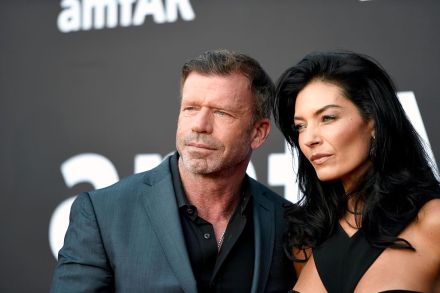
Why Taylor Sheridan quit Paramount

There are many showrunners in contemporary Hollywood who are, essentially, all-powerful – Vince Gilligan and Aaron Sorkin have been able to do what they like for a considerable time now, for instance, and I doubt anyone’s giving the White Lotus’s Mike White too many notes, unless they’re blank checks – but there are two men who are primus inter pares when it comes to their relationship with their studios. Ryan Murphy more or less is Mr. Netflix, as can be seen by the streaming service merrily bankrolling everything he writes and/or creates – even something as unpleasant and morally corrupt as the recent Ed Gein show – and Taylor Sheridan and Paramount have been hand in glove for years now. Until, that is, they’re not.

Taylor Sheridan

Why gold is at an all-time high

Gold is in the middle of what looks like an unstoppable bull run. It has already punched through $4,000 an ounce. At the rate the price is rising, it may well go to $5,000 within a few weeks, and perhaps even $6,000 as the next year unfolds. There have been lots of different explanations for this, from the looming collapse of the dollar, to secret Chinese buying, to the conspiracy theories circulating on the wilder fringes of the internet, such a secret plot to re-establish the gold standard, or attempts to replace all the metal that is meant to be stored at Fort Knox, America’s official gold reserve, which apparently went missing decades ago. But the real explanation is very simple: it is the only way to hedge against soaring government debt.

gold

Can stablecoins make America the crypto capital of the world?

“I will make sure the US is the crypto capital of the world,” Donald Trump vowed earlier this year. In July, he signed the Guiding and Establishing National Innovation for US Stablecoins (Genius) Act. The Act creates federal guardrails for dollar-pegged stablecoins and regulates who can issue and redeem them. Concerns from law enforcement are also addressed, by making sure anti-money laundering and consumer regulation applies. But what are stablecoins? They are digital tokens built to stay at a stable price, usually one dollar. They sit on the blockchain – the computer protocol that makes crypto work – but what’s underpinning their value are real-world assets, usually cash or government bonds.

crypto

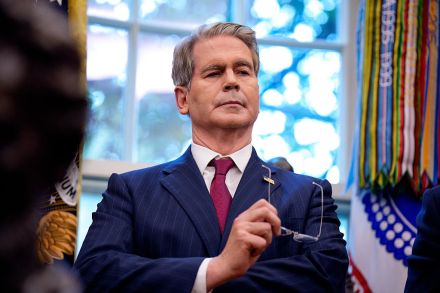
Bessent’s private message reveals a Milei gamble

The first lesson for Treasury Secretary Scott Bessent is that digital photography has totally changed politics, as wiser practitioners have long since realized. You might have got away with reading private communications in public 30 years ago, but you can no longer do so. The second lesson is that if you build an administration on the promise that you will always serve the American interest, certain foreign policy decisions become difficult. Bessent has been caught reading a message on his phone from Agriculture Secretary Brooke Rollins expressing her anger at the Trump administration’s deal to establish a $20 billion loan facility with Argentina, or "the Argentine" as Rollins prefers still to call it.

Bessent

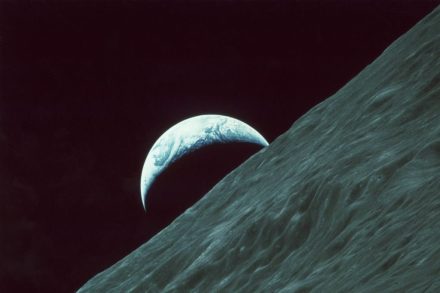
The mission to mine the Moon

There will come a time when the richest people who ever lived will be those who control outer space, in particular the Moon and the asteroids. There are vast resources out there, bound in giant rocks hurtling through space, and in the lunar dust. But the first steps will be taken by the brave, and perhaps the reckless in pursuit of a space dream. If you dream of space, nothing can stop you. Not the disagreement of others or the judgement of experts, neither short-sighted investors nor government regulations. One such dream will happen on the Moon’s surface in just a few months.The space company Astrobotic will attempt to land at the Moon’s south pole – a region of extensive shadows where ice may have accumulated and the site of the next US human landing.

The moon

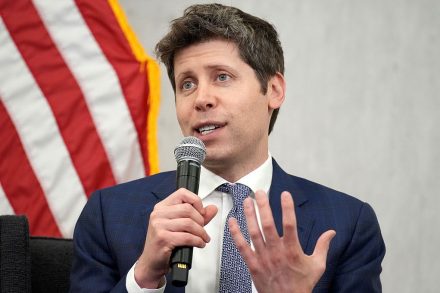
My son was murdered after whistleblowing on OpenAI

When Tucker Carlson sat down with OpenAI founder Sam Altman in an interview aired last week, the conversation took a dark and frosty turn when Carlson raised the death of a former OpenAI researcher. Suchir Balaji, who exposed the company’s systematic theft of copyrighted work, was found dead in his San Francisco apartment last November. Altman called it “suicide.” Clearly unconvinced, Carlson asserted that Balaji was "definitely murdered.” Altman was offended by his insinuation and described the death as a "great tragedy," saying he was "really shaken" by it. But Balaji’s grieving mother, Poornima Rao, is very much in agreement with Carlson.

Sam Altman openai

Don’t let Serena bully you into taking the fat shot

Serena Williams is one of the world’s greatest living athletes, but in her retirement, she seems to have forgotten the basics of diet and exercise. You’ve likely seen Williams’ ad campaign for Ro, a telehealth provider that specializes in GLP-1 weight loss medications like Ozempic, Wegovy and Zepbound. In the now ubiquitous commercials, Williams tells how she personally used the drug to burn stubborn postpartum fat, a respectable 31 pounds over 8 months.“It’s not a short cut, it’s science,” reads the company’s tagline. Williams looks great – of course, of course. But just because scientists have discovered a cure for fatness doesn’t mean she still hasn’t taken the easy way out.

Serena Williams

The $1,000 LEGO set and the infantilization of America

What can you buy for $1,000 these days? The latest smartphone? A discounted laptop? A nice trip to Mexico? Or what about a 9,000 piece LEGO set of the Death Star? The toy firm’s most expensive model yet. That’s right, a toy for $1,000 – the same as 35 Labubus (if you can find them), 150 packs of Pokémon cards or 80 Hot Wheels cars. It’s more pocket money than most boys and girls can afford. And as the fully built model is only a cross section of the spherical spacecraft from Star Wars, they won’t actually be able to play with it, even if they do rustle up enough cash to buy it. Really, the gigantic diorama is designed to sit on an adult’s shelf – a 31-inch wide symbol of LEGO’s shift toward an older demographic.

Lego

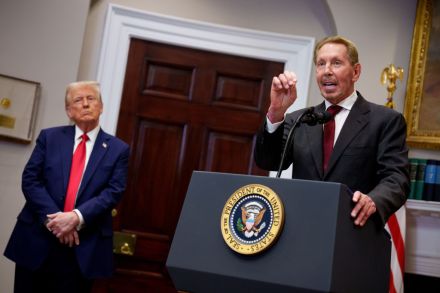
Larry Ellison briefly eclipses Elon Musk

Something happened in the news yesterday that was so monumental, it may change the course of American history forever. I’m talking, of course, about the fact that, very briefly, Oracle’s Larry Ellison overtook Elon Musk to become the World’s Richest Man. Larry Ellison life goal, unlocked.After Oracle’s earnings report yesterday, the stock shot through the roof, and Ellison owns 40 percent of the company. That must have been some earnings report! On the earnings call, Ellison said that his Oracle AI chatbots, run from his Oracle computing centers, are on the verge of being able to run the stock market, design drugs, fully operate factories and provide basic legal and sales services at companies. Foolish humans, you are an inconvenience.

Larry Ellison

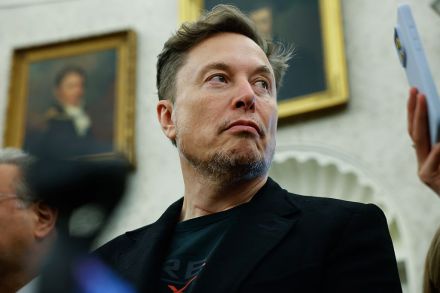
Elon Musk is in exile

Elon Musk is in exile. He’s forgotten by friends, embattled by enemies. He now quietly (for him) goes about his business, fighting non-government battles after those strange few months he spent standing behind the President’s desk with his toddler son X, who punched Musk in the face while he was seemingly running the country. Musk’s fate is a case study in what happens when Donald Trump rolls up the red carpet. Trump operated his first term as President more like a season of The Apprentice and less like an administration. It was a revolving door of exile. Reality-show worthy characters like Omarosa Manigault Newman and Anthony Scaramucci came and went with drama that fell just short of an episode-ending boardroom ceremony.

Musk
oil

The West can’t afford to shun Russian oil

Donald Trump is a radical foreign-policy innovator. Over the past few decades, the US has tried a range of non-military means to nudge, squeeze and occasionally strangle its adversaries. These range from travel bans and banking restrictions, to export controls and trade limitations. But never has the US – or indeed anyone – tried to use import tariffs as a species of economic sanction. Trump has threatened Vladimir Putin with introducing “secondary sanctions” against countries that import Russian oil – a threat intended to strike at the heart of Russia’s war economy. And on August 4, Trump appeared, for the first time, to make good on that threat.

nationalization

Nationalizing America will cost us dearly

“I have the right to do anything I want to do,” Donald Trump told reporters in the White House cabinet room last month. “I’m the President of the United States.” Other branches of the federal government might disagree, but their representatives are strangely mute. “What Trump wants, Trump gets” is the motto that has defined the first eight months of the President’s second term. The overhaul of global trade? Sorted with an executive order and a pen. Poor job numbers? Fire the messenger, hire your own. Feeling the acute absence of a ballroom? Take “a little walk” on top of your White House, look out at your vast kingdom, and decide where the marble floor and golden beams will go. But domination of the federal government is simply not enough.

Will Trump’s stake sink Intel?

In a move supported by Vermont’s socialist champion, Senator Bernie Sanders, President Donald Trump has arranged for the federal government to become the single largest shareholder of Intel Corporation. All for national interest, according to the White House.Secretary of Commerce Howard Lutnick announced that the deal gives the government “a piece of the action.” Is it in fact a piece of the action, or a disaster to come for the American business community? Created in 1968, Intel is an American multinational technology company that designs, manufactures and sells semiconductor chips and related products. Following its early successes, it has been in decline as a result of bad management decisions for the last 20 years or so.

Donald Trump intel