Book Reviews

Our reviews of the latest in literature

Inside the mind of Cheryl Hines

This book shouldn’t work. A memoir written by a 60-year-old actress – who, frankly, has never threatened to become a major movie star – hardly sounds promising. Then there’s the author’s personal baggage. Since 2014, Cheryl Hines has been married to Robert F. Kennedy Jr., the raspy-voiced Health and Human Services Secretary who served as one of Donald Trump’s chief surrogates during his last presidential campaign. Rarely has a book so straddled the worlds of Hollywood and conservative politics, let alone those embodied by the current administration. Yet, against all the odds, Unscripted is an enthralling read. To address the burning topic first: no, not all of Hines’s friends were

How the West can win

It is no overreaction to look at the current state of western culture, through academia and the arts alike, and to feel that Rome has fallen all over again. Whether it’s a crowd chanting in support of terrorists at Coachella, or a horrific political assassination on a university campus, cheered by some, we are witnessing something far more sinister than a mere surge in political violence. We are watching the collapse of the fundamental preconditions that make civil society possible, as a civilization tears itself apart. Many are of the opinion that it is already too late: that the unique and unprecedented advances in western culture over the past three

Jon Fosse’s Scandi-lit revival

Jon Fosse, the Norwegian novelist who won the 2023 Nobel Prize in Literature, has sat center stage in the recent revival of interest in Scandinavian literature. Fosse’s one-time creative-writing student Karl Ove Knausgård became the very definition of a publishing sensation when the first volume of his six-part memoir Min Kamp (“My Struggle”) – in which he dragged all his family skeletons out of the closet for all to see – was published in 2009. Danish novelist Solvej Balle’s seven-part On The Calculation of Volume, of which only the first three parts have been published in translation, has caused a similar stir in the past two years. The series recounts

The great, underestimated Richard Yates

When the novelist Richard Yates, who was born in February 1926, was interviewed by the magazine Ploughshares in 1972, the conversation turned to the neglected writers of his generation. Yates, a man of remarkable acuity and taste, was typically incisive about the likes of Evan S. Connell, Brian Moore and Edward Lewis Wallant – and, just to show that he was no misogynist, he saluted Gina Berriault, saying that she was “an absolutely first-class talent who has somehow been left almost entirely out of the mainstream. She hasn’t quit writing yet, either, and I hope she never will.” If these words struck something of a cautionary note, then Yates’s conclusion

The Seven Rules of Trust sees Wikipedia as a blueprint

Everybody criticizes Wikipedia, but everybody uses it. Having spent my childhood cross-legged on my carpet reading dictionaries and encyclopedias, I found it a revelation and refuge from the get-go. Google could never emotionally compete. While some AI products have become useful knowledge tools, there is still nothing like Wikipedia’s hyperlink paradise, which allows nights to slip away as you click through slices of world history or science. Now its co-founder Jimmy Wales has written a book (with the help of author Dan Gardner) about what enabled this impossible project to become one of the world’s favorite utilities. When reading The Seven Rules of Trust, two things jump out at you.

wikipedia

Louis C.K. fails to follow in Faulkner’s footsteps

The Great American Novel is a holy obsession – the Everest every writer dreams of summiting. For most, that dream begins and ends with William Faulkner, whose winding sentences and sunburned Southern landscapes birthed prose that seemed to breathe. His words marched; crookedly, yes, but always with purpose. Louis C.K., a would-be Faulkner disciple, trudges into the same swamp in Ingram, minus the map, the bearings and any sense of control. What was presumably intended to echo the Mississippian’s hypnotic disarray becomes instead a masterclass in incoherence. The story, told in long and sweaty first-person narration, follows a boy wandering through a Texan landscape of mud, hunger and half-formed memories.

louis ck

Mitfordmania in Carla Kaplan’s Troublemaker

I won’t attempt to explain Mitfordmania; we’d be here all night. Suffice it to say that fascination with the British sisters – Nancy, Pamela, Diana, Unity, Jessica and Deborah, born to the 2nd Baron Redesdale between 1904 and 1920 – shows no sign of waning. This year alone, the six have inspired Outrageous, a lavish (and fatuous) multi-episode television drama available on BritBox; The Party Girls, a play by Amy Rosenthal; and Do Admit: The Mitford Sisters and Me, a graphic novel by cartoonist and fangirl Mimi Pond. Now comes biographer Carla Kaplan’s Troublemaker: The Fierce, Unruly Life of Jessica Mitford. I did wonder if there was anything left to

mitfordmania troublemaker

Why are Lawrence Osborne’s novels suddenly popular in Hollywood?

The film Ballad of a Small Player opens with a blast of classical music, a shot of the Macau skyline and Lord Doyle (Colin Farrell) waking up in a hotel suite littered with Champagne bottles, cigarette butts and designer loafers that are starting to show their wear. While he dresses and shaves, a voice-over informs us he has three days to live. A sharp observer might notice he seems to have considerably less than that. Either way, for the next 100 minutes, director Edward Berger (All Quiet on the Western Front and Conclave) treats us to a sumptuous vision of one English con man’s final spree before oblivion. It will

The scramble for the Middle East: Britain and America fall out

One of the many pleasures offered by Lords of the Desert, which narrates the rivalry between Britain and the United States in the Middle East from the end of the second world war through to 1967, is the quotations that are liberally strewn across its pages. They have been culled from memoirs or official documents unearthed in British or US archives and testify to the research that has gone into this dense but consistently fascinating account. Some reveal the deep complacency of influential individuals. Ralph Brewster, an American senator who undertook a round- the-world tour in August 1943 to investigate the progress of the war and report to President Franklin

lords of the desert

How a faulty map led to the discovery of America

Reflecting on the genesis of Treasure Island, the adventure yarn that grew from a map of an exotic isle he had drawn to amuse a bored schoolboy on a rainy day, Robert Louis Stevenson observed: ‘I am told there are people who do not care for maps, and I find that hard to believe.’ It’s fair to say that Thomas Reinertsen Berg cares very deeply about them, and his book, sumptuously produced with lots of full-colour images, is a kind of potted treasury of cartographical history that gleams with pieces-of-eight-like snippets of information. With a title that tips its hat to Theatrum Orbis Terrarum, the first modern atlas produced by

Theatre of the World

The personality test that conned the world

The other day in the Guardian’s Blind Date column, two participants, or victims, finished off an account of their frightful encounter by dismissing any chance of a future relationship: ‘I’m sure two ENFPs might wear each other out.’ The acronym is perhaps not familiar to everyone, but that, coming from a couple of young people steeped in human resources gibberish, would have been the point. The woman involved was showing off her Myers-Briggs personality type. Myers-Briggs is an American analysis of personality first used in the 1940s, which gained huge success in the 1950s. It was a decade in which, as Merve Emre poetically says, ‘the stench of political paranoia

myers-briggs

Hoping to find happiness

It is a truth universally acknowledged that a serious novel must be in want of a theme. Paris Echo soon makes it clear that it has several. It’s about the shifting nature of history and the mysterious footprints of the past in the present. It’s also concerned with the myriad and biased interpretations that we place on past events. Another preoccupation is the ambiguities of spoken and written French. Modern Paris, the novel’s main setting, allows Sebastian Faulks to explore his themes through two main viewpoints. There’s Tariq, a precociously self-aware 18-year-old Moroccan from a middle-class family in Tangier, who comes to Paris in search of himself, his mother’s French

paris echo sebastian faulks

A date with Venus in Tahiti

There is something about the Transit of Venus that touches the imagination in ways that are not all to do with astronomy. The last Transit occurred in 2012, and if nobody who watched it will ever see another, the sight of that small black dot, making its almost imperceptible progress across the disc of the sun, offered, across the span of 243 years, an oddly moving connection with the scientists and sailors who quartered the globe and, sometimes, risked their lives in 1769 to attempt the first comprehensive observations of the event. There is no shortage any more of ‘global events’ — a good, old fashioned footballing brawl between England

endeavour
ernest hemingway adriana ivancich

The old man and his muse: Hemingway’s toe-curling infatuation with Adriana Ivancich

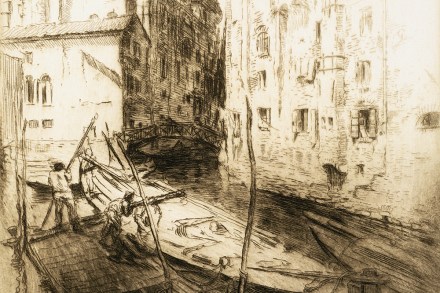
One rainy evening in December 1948, a blue Buick emerged from the darkness of the Venetian lagoon near the village of Latisana and picked up an Italian girl — 18, jet black wet hair, slender legs — who had been waiting for hours at the crossroads. In the car, on his way to a duck shoot, was Ernest Hemingway — round puffy face, protruding stomach and, at 49, without having published a novel in a decade, somewhat past his sell-by. He apologised for being late, and offered the rain-sodden girl a shot of whisky which, being teetotal, she refused. So did Papa, that ‘beat-up, old-looking bastard’, encounter the siren he

The translator and spy: two sides of the same coin

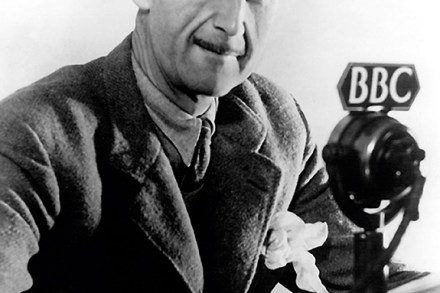
Translators are like bumblebees. In 1934, the French entomologist August Magnan pronounced the flight of the bumblebee to be aerodynamically impossible, and though long since scientifically disproved, this factoid is still routinely trotted out. Similar pronouncements about the impossibility of translation have dogged practitioners since Leonardo Bruni’s De interpretatione recta, published in 1424. Meanwhile, bees, unaware of these deliberations, have continued to flit from flower to flower, and translators continue to translate. As a distinguished translator whose labours have brought English-language readers to works by Marguerite Duras, Gustave Flaubert and the Nobel winner Patrick Modiano, Mark Polizzotti gives short shrift to the idea that translation is impossible, quoting the great

smoking
jimmy page capricorn

Jimmy Page is a Capricorn – that says it all

In 1957, aged 13, Jimmy Page appeared with his skiffle group on a children’s TV programme dedicated to ‘unusual hobbies’ — skiffle apparently qualifying as one. During the show, he was interviewed by Huw Wheldon who, following an old-fashioned BBC lunch, arrived in the studio with a hearty cry of ‘Where are these fucking kids then?’ Asked what he planned to do when he grew up, Page gave a perhaps unexpected reply: find a cure for cancer. As we now know, this plan failed — but already, it seems, the young Jimmy wasn’t lacking in the swaggering self-confidence that true rock stars are required to possess (or at least to

american short stories

Too much American angst: the latest short stories

In ‘A Prize for Every Player’ — one of 12 stories in Days of Awe, a new collection by A.M. Homes (Granta, £14.99) — Tom Sanford, shopping with his family in Mammoth Mart, soliliquises (loudly and nostalgically) about the America he remembers, and finds himself with an audience of shoppers who nominate him as the People’s Candidate for President. Absurd? Not quite so absurd perhaps as in pre-Trump days. Days of Awe (the title comes from Rosh Hashanah, the ten days of repentance in the Jewish calendar) is Homes’s third collection and her first book since winning the Women’s Prize for Fiction in 2013. The stories balance on a narrative tightrope

whales

Will all whales soon be extinct?

Nick Pyenson, curator of fossil marine mammals at the Smithsonian Institute in Washington, is quick to tell us he’s not a ‘whale hugger’. ‘I didn’t fall asleep snuggling stuffed whales or decorate my room with posters of humpbacks suspended in prismatic light.’ Pyenson sees whales through their ancestral bones, and their contemporary entrails, digging up their past or scrying their future. Spying on Whales begins its surveillance in the fossil-rich site of Cerro Ballena (‘Whale Hill’) in the Atacama desert. Here, in the Miocene layers, he uncovers an entire pod of ancient, stranded whales, stilled in the moment of their deep-time death. It’s an Indiana Jones moment. He may disavow