When the novelist Richard Yates, who was born in February 1926, was interviewed by the magazine Ploughshares in 1972, the conversation turned to the neglected writers of his generation. Yates, a man of remarkable acuity and taste, was typically incisive about the likes of Evan S. Connell, Brian Moore and Edward Lewis Wallant – and, just to show that he was no misogynist, he saluted Gina Berriault, saying that she was “an absolutely first-class talent who has somehow been left almost entirely out of the mainstream. She hasn’t quit writing yet, either, and I hope she never will.”
If these words struck something of a cautionary note, then Yates’s conclusion was even more concerning. After citing many other authors all but forgotten by the US mainstream, including Herbert Wilner, Helen Hudson and George Cuomo, he stated: “My God, if I’d produced as much good work as most of those people, with as little reward, I’d really feel qualified to rant and rail against the literary establishment.”
Despite the usual ravages of alcohol, nicotine and ego, he managed to remain a writer of unusual gifts
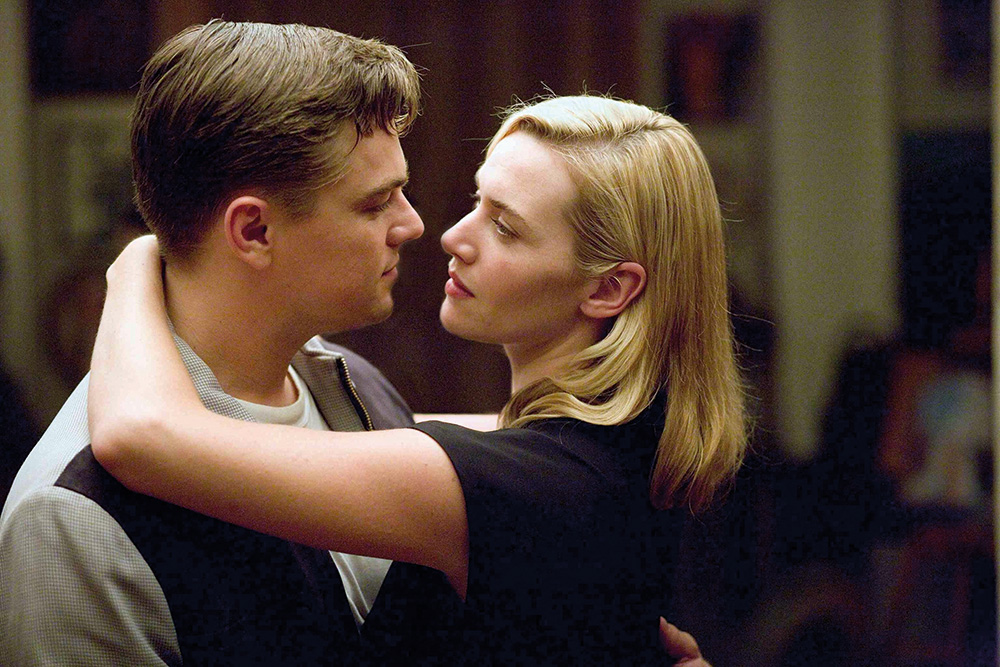
Three-and-a-half decades after Yates’s premature death in November 1992, aged 66, he has joined the ranks of the serially underrated but deeply respected American novelists he so admired. Unlike John Williams, whose 1965 novel Stoner was almost completely ignored on release but had a 21st-century renaissance thanks to the patronage of everyone from Bret Easton Ellis to Ian McEwan, Yates has failed to become truly mainstream – despite, or perhaps because of, Sam Mendes’s 2008 film of his first and best-known novel, Revolutionary Road.
It is a cutting satire on the American dream, expressed through the deeply flawed marriage of Frank and April Wheeler, and a book rich in compassion, dark humor and irony – all of them qualities hard to capture in a two-hour major motion picture. Moreover, the fact that Mendes was married to his leading lady, Kate Winslet, and that she appeared opposite her Titanic co-star Leonardo DiCaprio a decade after it made them both household names, rendered the film more of interest to the prurient than to Yates aficionados. When Winslet and Mendes separated not long afterward, it seemed as if the author’s razor-sharp dissection of the compromises and struggles that go into marriage had cut a little too close to home for those involved in the project.
Revolutionary Road, first published in 1961, is now a serious collectors’ item. Signed first editions in good condition will set readers back as much as $8,000. To be fair, they often are signed: the author was no Pynchonian limelight-ducker. What he was instead was one of the most literate and humane observers of 20th-century American life in the world of letters. Prone to the usual ravages of alcohol, nicotine and ego, and with the first two, at least, taken to unusual and self-destructive extremes, he nevertheless managed to remain a writer of unusual gifts, right up until his final publication, 1986’s Cold Spring Harbor.
Yates was not a young man when he published his debut novel. He had served in France and Germany during World War Two and, after he was discharged, returned to New York to work as a journalist, a Mad Men-esque advertising copywriter and, briefly, a speechwriter for Bobby Kennedy.
What this varied experience gave him was a respect for the innate power of words, used concisely and with brutal efficiency. And his own life was raw material to be mined for his work, too. He was married to Sheila Bryant, daughter of a British silent-film actor, but their union was not to last. Following their divorce in 1959, the frustration and pain that Yates felt was channeled into Revolutionary Road, which should, by rights, have made him a literary star.
In fact it did a bit – but not enough: he was more a fleeting comet than the blazing sun his talent deserved. His debut was nominated for the National Book Award alongside Joseph Heller’s Catch-22, J.D. Salinger’s Franny and Zooey and Walker Percy’s The Moviegoer (Percy won) – and had he been victorious, it’s likely it would have catapulted him into publishing’s A-list. As it was, his sophomore publication was an acutely judged collection of short stories, 1962’s Eleven Kinds of Loneliness, which met with strong reviews but not the sales that a Hemingway or Faulkner – or, for that matter, a Roth or an Updike – would expect.
He published a further four novels between 1969 and 1978. All are, in their way, classics. A Special Providence is a semi-autobiographical account of a young, incompetent infantryman and his deluded sculptor mother. (Yates’s own parents divorced when he was three and he traveled from place to place in the company of his flighty mother and sister, giving him a peripatetic existence that gradually developed the splinter of ice in the heart that any effective writer needs.) Its follow-up, 1975’s Disturbing the Peace, was about the decline of an alcoholic salesman that might have owed a substantial debt to Charles R. Jackson’s terrifying novel The Lost Weekend, but had a wit and vigor all its own.
In 1976, Yates published The Easter Parade, the story of the intertwined, miserable lives of the sisters Emily and Sarah over several decades, which may well be his finest novel. Its opening line is almost Tolstoyan in both wit and bleakness – “Neither of the Grimes sisters would have a happy life, and looking back it always seemed that the trouble began with their parents’ divorce” – and its unsparing but always compassionate depiction of alcohol and family-induced chaos led Joan Didion to call it her favorite Yates book. It was nominated for a National Book Critics Circle Award, which it should have won. When it didn’t, Yates went into a spiral of heavy drinking and self-loathing.
Perhaps the centenary of his birth this year will bring about a renaissance, but somehow I doubt it
That, two years later, he could produce something as elegant as A Good School, a brief bildungsroman exploring social and sexual machinations at a Connecticut prep school in the 1940s (and, as usual, with heavy autobiographical overtones), was an impressive testament to how, like many other hard-drinking writers, he could compartmentalize work and play. There was then another collection of short stories, Liars in Love (1981), which demonstrated that his skill at the form had remained undimmed in the two decades since Eleven Kinds of Loneliness; and two more novels, 1984’s Young Hearts Crying and Cold Spring Harbor, which were as accomplished and distinctive as anything else he’d written. But the literary world, which had always regarded Yates with a slight sense of detachment, had long since moved on.
The 1980s was the decade of American Psycho, The Bonfire of the Vanities, “Greed is good!” and flashy, solipsistic fireworks. It was not the era for unflashy, beautifully observed novels and stories, and so Yates, who spent his time teaching at various universities in between writing, suffered the ignominy of finding himself unfashionable in his own time. Even an approving namecheck for The Easter Parade in Woody Allen’s Hannah and Her Sisters wasn’t enough to pull him into the mainstream. Yates died of emphysema not quite in obscurity, but certainly in straitened circumstances. None of his books were close to being significant bestsellers and by the time he was working on his last, unfinished novel, Uncertain Times, based on his job as Kennedy’s speechwriter, several of his other books were out of print.
A laudatory but fair-minded biography by Blake Bailey, A Tragic Honesty, was published in 2003 – although Bailey’s subsequent cancellation has unfairly tarnished his literary scholarship – and the film of Revolutionary Road at least brought Yates back into the conversation, with various newspapers and literary magazines polishing up their retrospective features. Perhaps the centenary of his birth this year will bring about a Yates renaissance, but somehow I doubt it.
It is of a piece with the life of this talented, quietly unhappy man – who, amusingly, inspired the character of a crotchety author played by Lawrence Tierney in Seinfeld (Larry David had dated Yates’s daughter Monica) – that any attempts at posthumous reassessment and re-evaluation have died upon the vine, as if Yates’s spirit has somehow refused to play ball. You cannot help but feel that that’s the way that he would have wanted it. Those few thousand paid-up Yates aficionados will always have his work to savor and discuss – unless some freak of chance turns him into a TikTok sensation or similar. This great, neglected writer would surely turn in his grave at the prospect.
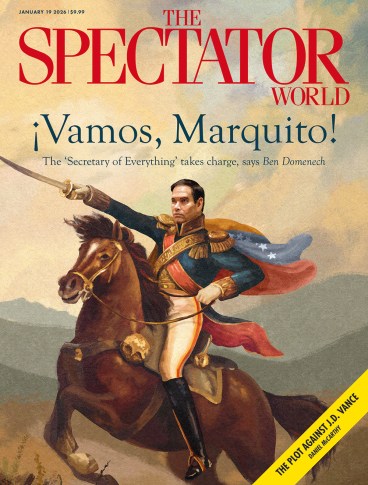
This article was originally published in The Spectator’s January 19, 2026 World edition.




Comments