
Airplane hijacking, like the mode of transport itself, became common in the 1960s. A practice largely confined to the United States, it was invariably a means for ordinary criminals to extort ransom money or flee to Cuba. In 1968, the hijacking of an El Al flight by the left-wing Popular Front for the Liberation of Palestine revealed the political utility of the act: in exchange for the safe return of its plane and passengers, Israel released 16 Arabs from its prisons.
Encouraged by this outcome, the PFLP launched a spate of similar operations. One such mission, the hijacking of a TWA flight in 1969, revealed that prisoner exchanges and ransoms weren’t the only upside of this new tactic. In the form of Leila Khaled, a young, university-educated Palestinian woman turned militant, the PFLP found a PR vehicle to divert global media attention to their cause.
While some displayed chilling comfort with killing, many were prone to vomiting at the first sight of violence
This performative brand of terrorism was distinct from the bloodier and more brutal form it would soon take. After diverting her Tel Aviv-bound aircraft to Syria and landing safely (explosives were rigged and detonated only after all passengers had disembarked), Khaled attempted to pass out cigarettes and sweets to her victims. And on her return to Jordan, a media circuit organized by her PFLP handlers was so successful that Khaled was compelled to alter her face with plastic surgery before attempting her next mission.
In The Revolutionists, Jason Burke, a correspondent for the Guardian, surveys the many extremist groups and radical networks that ravaged Europe and the Middle East throughout the 1970s. This was the decade of bombings, hijackings and targeted assassinations. Covering the period from 1967 to 1983, Burke’s narrative begins with the convergence of two forces: the radical New Left upheavals of 1968 and the Israeli triumph in the Six Day War of 1967.

The latter permanently altered the political geography of the Middle East, driving the Palestinian militant groups to seek new ways to strike their enemy while discouraging the Arab states from abandoning them. The former, fueled by the American misadventure in Vietnam, among other causes, sought to overthrow the postwar West. That these two forces aligned in opposition to Israel was a sudden development. The Jewish state had never previously been a target of the left, which typically viewed it as progressive and egalitarian. From the 1967 war onward, “Israel was no longer seen as a beleaguered outpost of moderate socialism and progressive values.”
The most extreme examples of New Left militancy emerged from the defeated Axis powers of Japan and West Germany. On a tactical level, they had much in common with groups such as the Irish Republican Army but lacked anything resembling its well-defined nationalist and territorial ambitions. Their marriage of convenience with the Palestinian factions offered them weapons training and revolutionary credentials in exchange for their support for Palestinian attacks on Israeli targets abroad.
This arrangement led to several confounding episodes, including one attack in which the ardent Marxists of the Japanese Red Army machine-gunned dozens of civilians, mainly Puerto Rican tourists, in the baggage claim area of Lod Airport in 1972. As one German leftist put it, “We saw death as a victory of sorts, because if we died we would never be absorbed by the system we hated.”
While some individuals from this set displayed chilling comfort with killing, just as many were prone to vomiting at the first sight of violence. They were also limited in number. While Fatah’s Yasser Arafat complained he had more volunteers than he knew what to do with, the grandiose revolutionaries of Europe faced a different reality: “most of these various cells and networks involved fewer people than the average amateur sports team.” And the foreign extremists who made the journey to the Palestinian training camps did not always seem to get on with their hosts. During the Baader-Meinhof gang’s visit to a Fatah camp in Amman, several rows erupted, including one dispute over the women’s topless sunbathing.
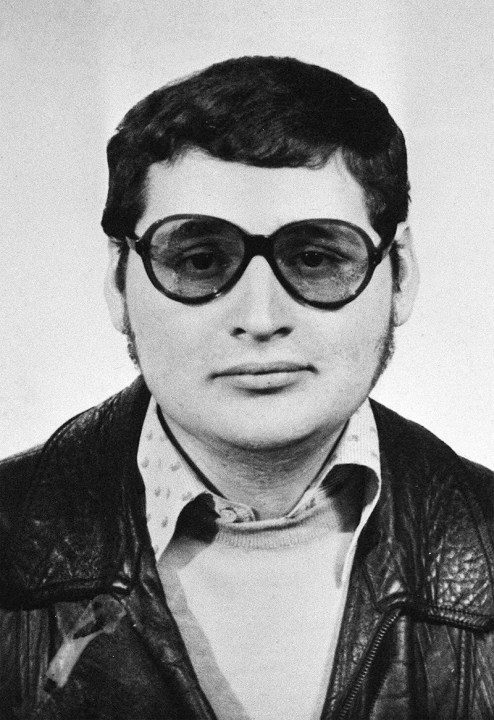
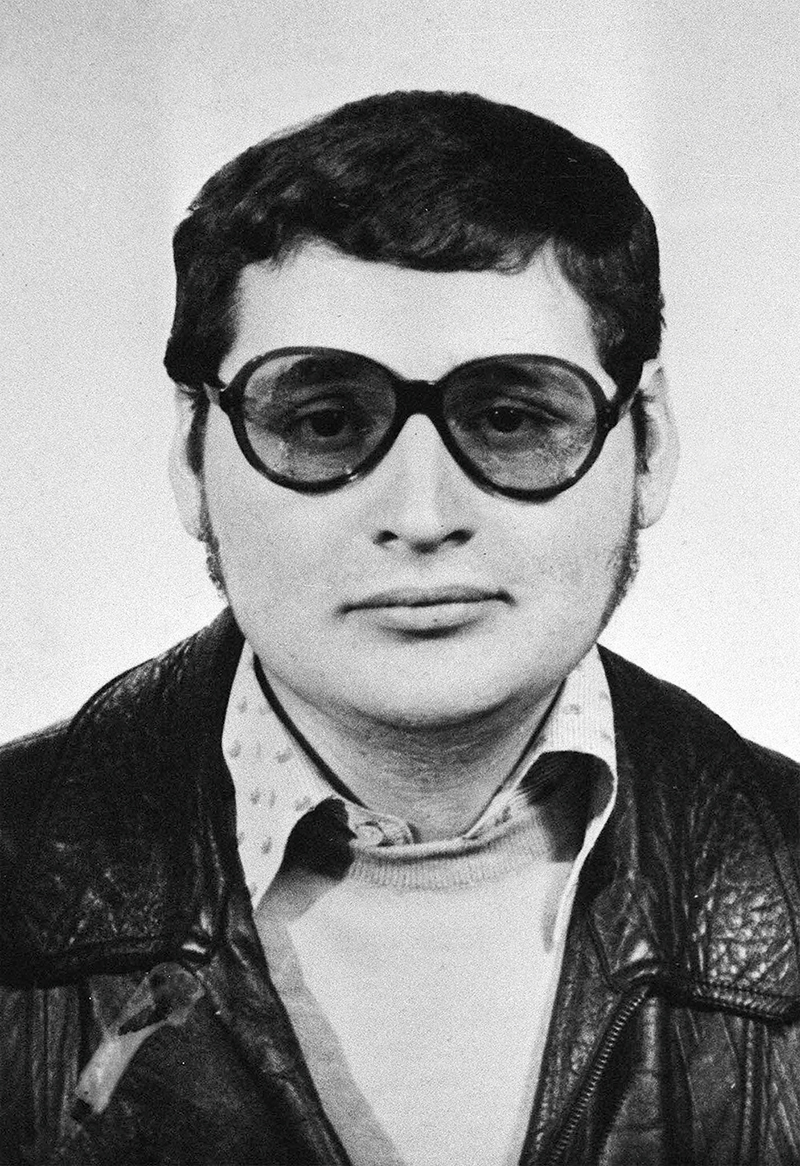
Burke finds an apt protagonist in the form of Ilich Ramirez Sanchez – known as Carlos the Jackal. A bourgeois Venezuelan with “obsessive personal hygiene routines,” he was educated at a London private school and Moscow’s Patrice Lumumba University, which he traded for a PFLP training camp soon after his expulsion in 1970. Carlos, a hard-drinking lothario with a penchant for expensive restaurants and violence, entered the revolutionary milieu with “no particular interest in the Middle East, still less the Palestinians.”
It is a well-written and deeply researched account of how international terrorism came into being
Bereft of a real political cause, Carlos leveraged his access to Palestinian and leftist networks, marketing himself to the vindictive regimes of Iraq, Libya, Romania and Syria as a sometimes-competent mercenary. Carlos gives the game away: for all the revolutionary bravado of the post-1968 movements, they were little more than a few nihilistic souls spiraling toward self-destruction. Even the Soviets kept their distance.
The Revolutionists is a well-written and deeply researched account of how international terrorism came into being. Burke manages to cover significant ground in his exploration of the Arab-Israeli conflict, the Iranian Revolution, the German Autumn and a series of pivotal terror and counterterror operations, from the Munich massacre to the raid on Entebbe to the Marine Corps barracks bombing in Beirut.
Burke contends that the impotence of revolutionary left-wing movements, which failed to mobilize the working classes either in Europe or the Middle East, created an opening for Islamism by the early 1980s. A saga that begins with a Palestinian woman hijacking an Israeli plane thus concludes with an image of Osama bin Laden ducking for cover in an Afghan trench.
In its vivid portrayal of the networks and ideas that begot international terror, The Revolutionists shows how these unlikely forces, which sought to upend the postwar West at its moment of spiritual exhaustion, would eventually come to dominate its strategic thinking.
This article was originally published in The Spectator’s February 2, 2026 World edition.





Comments