Arts Reviews

The good, bad and ugly in arts and exhbitions

Turkish time travel

Harry Mount looks across the Dardanelles and sees yesterday’s weather today In Canakkale — the biggest town on the Dardanelles, where more than 130,000 British, Australians, New Zealanders and Turks were slaughtered in the 1915 campaign — Mark Wallinger, the 2007 Turner Prize winner, has dreamt up a clever little work about memory. On the Asian quayside, looking across to the Gallipoli killing fields on the European side of the straits, is an old shipping container, tricked out like a 1950s picture house; think Cinema Paradiso, and you get the idea. Using a 1950s-style sign, Wallinger has named it ‘Sinema Amnesia’ (Sinema is Turkish for cinema).
Lords of laughter

What do the following comedians have in common? Morecambe and Wise, Ronnie Barker, Frankie Howerd, Bob Monkhouse, Peter Sellers. They’re all dead, yes. But something else. None of them was knighted. Instead they were all made OBE, an honour Michael Winner once charmingly described as ‘what you get if you clean the toilets well at King’s Cross station’. Still, they did better than Les Dawson, Tony Hancock, Tommy Cooper and Peter Cook. Those four got nothing. I find this curious. In most cases, at least. Hancock died a bit too young (suicide at 44), and accepting anything from the honours system would have turned Cook from satirist to court jester, in two ways a fool. But the rest?

Prime cut

The recent restoration of Fritz Lang’s Metropolis is now available for home viewing in three plush editions, in Eureka’s Masters of Cinema DVD series. The recent restoration of Fritz Lang’s Metropolis is now available for home viewing in three plush editions, in Eureka’s Masters of Cinema DVD series. Metropolis is the foundation of all subsequent science-fiction films. It is a movie of incalculable influence that deserves to be seen by all — and the chief attractions of this version are 25 minutes of footage unseen for 80 years, and long believed lost, as well as a recording of the original score. Premiered the year The Jazz Singer’s sound changed cinema, Metropolis was a peak of both silent film and German Expressionism.

Right royal triumph

The King’s Speech is a joy, and I adore it. The King’s Speech is a joy, and I adore it. In fact, I love it so much that, if I could, I would take it home and put it down for a good school and wrap it up warm in the cold and, should it catch a chill, I would nurse it and offer hot lemon and maybe even oxtail soup, which is actually quite disgusting, but always appealing when you are sickly, for some reason. Yes, it’s a full-blown heritage crowd-pleaser and, yes, the banter between the king and his speech therapist is too snappily arch to be even remotely naturalistic and, yes, it probably is too enamoured of its royal characters, but you know what? I don’t care.

Classy act

Michael Grandage, boss of the Donmar, is a most unusual director. He has no ideas. His rivals go in for party-theme, concept-album, pop-video Shakespeare (provincial folksiness in metropolitan disguise), but Grandage just goes in for Shakespeare. He arrives with no prejudices or pieties, only solutions. He’s the bard’s delivery boy. His current production of King Lear sweeps the stage clean of the usual Ozzy Osbourne clutter and reduces the inventory to just three items, a map, a chair and a pillory for Kent. Nothing else. This daring austerity opens things up and allows the mysterious, grotesque, lurching and inscrutable play to do its best and worst, to charm, horrify, move and appal us. There is nothing Grandage won’t consider omitting.

Magical adventures

English National Ballet has a long history of Nutcrackers, each memorable in its own way. This one, created by ENB’s artistic director Wayne Eagling for the company’s 60th anniversary, is no exception. Contrary to today’s trends, Eagling has opted for a fairly traditional staging, steering away from the lure of modern readings, satirical reinterpretations and impenetrable psychological takes. For the seasoned viewer and newcomer alike, this Nutcracker has the same retro flavour that some illustrated books from 50 to 60 years ago possess, thanks also to Peter Farmer’s luscious sets and costumes. One of its greatest novelties is that the action takes place in this country and not in some fairy-tale German region, as is customary.

Weekly shockers

Did you hear the one about Jordan’s disabled son? Unlikely, since you probably don’t watch Tramadol Nights (Channel 4), nor read the Mirror (‘Katie Price furious after Frankie Boyle joke about her disabled son’), nor the Guardian (‘Frankie Boyle’s Katie Price joke sparks Ofcom investigation’). Did you hear the one about Jordan’s disabled son? Unlikely, since you probably don’t watch Tramadol Nights (Channel 4), nor read the Mirror (‘Katie Price furious after Frankie Boyle joke about her disabled son’), nor the Guardian (‘Frankie Boyle’s Katie Price joke sparks Ofcom investigation’). Don’t worry, I’m not going to repeat it here. What kind of sicko do you think I am: Rod Liddle?

Everyday surprises

It’s so unnerving, knowing there are going to be two big surprises tomorrow night (2 January) on The Archers, but having no idea what’s in store. It’s so unnerving, knowing there are going to be two big surprises tomorrow night (2 January) on The Archers, but having no idea what’s in store. Experience warns me that it’s not going to be pleasant. But who’s for the chop? The press release says one half of the double-whammy will play out an existing storyline. That’s easy. I bet we’ll find out that Ian is the secret father of Helen’s baby. For the uninitiated, he’s gay but ages ago wanted to be a sperm donor. Meanwhile, Helen opted for IVF having given up on men — except for her pal Ian.

Arts administration: Questions of privilege

The rights and wrongs of internships for those who are seeking a first job have been hotly debated in the press recently, and nowhere more so than with reference to young people who hope to make a career in arts and music administration. But the principles remain the same whatever the discipline: is it legal for an organisation to employ people who are usually given a stipulated job when they become an intern, and not to pay them; and is it acceptable that these opportunities tend to go to young people who are already rich enough (through parental support or earnings from a gap year many cannot afford to take in the first place) to underwrite the costs of living while earning nothing?

Wedgwood Museum: At risk

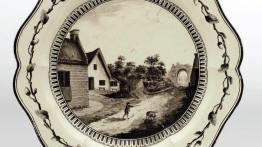
We are fairly certain that the late Robert Maxwell never met the even later Josiah Wedgwood, but Cap’n Bob’s nefarious legacy is now being keenly felt by Wedgwood’s descendants. For it was in the aftermath of Maxwell’s plundering of the Mirror Group that the Pension Protection Fund was established to compensate pensioners in the wake of insolvency. And now this legislation is being used to asset-strip one of the great museums of England. On the southern edge of Stoke-on-Trent stands the Wedgwood Museum, dedicated to ‘The People Who Have Made Objects of Great Beauty from the Soils of Staffordshire’.

A look ahead | 18 December 2010

The trend of fewer temporary exhibitions in our museums is becoming established, as the cost of mounting blockbusters escalates beyond even the generous reach of sponsorship. This is in sharp contrast to the commercial galleries, which still put on as many as 10 or 15 different shows a year in the hope of tempting clients to part with their cash. Taking a keen look at forthcoming exhibitions is always a mixed pleasure: the expected counterpointed with the novel, the obvious with the obscure. Thankfully, there are still enough exciting prospects in the public sector to raise the spirits and move us to make a note in the diary.

Intimations of infinity

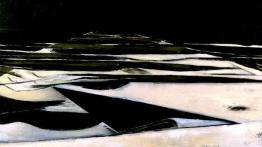
Andrew Lambirth finds a striking metaphor for the physical limitations of earthbound existence versus the infinite freedom of the spirit in Paul Nash’s painting ‘Winter Sea’ Paul Nash is one of the best-loved English painters of the last century, a great imaginative artist, always trying to discover the appropriate form for what he wanted to say. Nash was a philosopher-poet who expressed himself best (though he was a good writer) in visual terms and chose landscape painting as his primary vehicle. Although he died prematurely, in 1946 at the age of 57, his work stands easily above that of most of his contemporaries, and its originality and inventiveness have continued to inspire painters and beguile the public.

Interview: Goodies’ triple triumph

Here in HMV on London’s Oxford Street, three comedians are signing autographs. Here in HMV on London’s Oxford Street, three comedians are signing autographs. The queue of fans stretches through the foyer, almost out on to the street. Nothing unusual about that — this record shop regularly stages personal appearances by Britain’s biggest stars. What’s so surprising is that these comics are in their late-sixties, and the show that they’re promoting hasn’t been on TV for nearly 30 years. As The Goodies autograph their new DVD (a compilation of vintage shows, rereleased to mark their 40th anniversary) their greatest hits are replayed on a giant screen above their heads. Yet this isn’t just nostalgia. These old clips still feel fresh and funny.

All over the place

Deceptively attractive. Romeo and Juliet tempts directors and leads them on while keeping all its false doors and secret pitfalls out of view. Rupert Goold’s RSC production is two fifths good and three fifths indifferent. A respectable score. This lovely, tricky and rather silly play isn’t the work of a genius but of a jobbing apprentice with a careless, or perhaps ambitious, sense of what could be managed on stage. Goold adds a spot of extra bother here and there, overusing the balcony, bunging Arabic music into the masque ball, and botching the costumes. Spectacular irrelevance seems to be his guiding principle. The street brawls are enlivened by whooshes of flame surging up from beneath the boards like an oil-rig blow-out.

The long march

Peter Weir’s The Way Back tells the story of a group of escapees from a 1940 Siberian gulag who walked across Siberia, Mongolia, Tibet and the Himalayas to freedom in British India, a journey of 12 months and 4,000 miles, and a journey that will bring into sharp focus the domitability of your own crappy spirit, particularly if you always take the bus two stops up the hill, as I do. Peter Weir’s The Way Back tells the story of a group of escapees from a 1940 Siberian gulag who walked across Siberia, Mongolia, Tibet and the Himalayas to freedom in British India, a journey of 12 months and 4,000 miles, and a journey that will bring into sharp focus the domitability of your own crappy spirit, particularly if you always take the bus two stops up the hill, as I do.

Unsung poets

We might actually be glad of the time difference over in Australia this Christmas, so that we can switch on to Aggers and co. and listen in peace long after Aunt Maud has been safely tucked up with her mug of Horlicks and hot-water bottle. The Fourth Test in Melbourne promises to be the best present of the season, cheering up the nation and turning us all into Yes We Can people after decades of No Can Do. Who can remember a time when cricket has been so incredibly exciting, with England’s batters whacking the ball into triple figures, and wickets falling ball-on-ball not to the terrifying speed of the West Indians or the crafty spinning of those turncoat Aussies but to our own Broad, Swann and Anderson? It’s enough to turn me into an ardent member of the Barmy Army.

Top of the pops

The most watched programme on British television this year was the special live edition of EastEnders, broadcast in February to mark the soap’s 25th anniversary. The most watched programme on British television this year was the special live edition of EastEnders, broadcast in February to mark the soap’s 25th anniversary. This was the one — I assume you’re keeping up — in which Bradley Branning plunged to his death and Stacey confessed that she had killed Archie. At the end, some 16.6 million people were watching, which is roughly 28 per cent of the population, still a fraction of the 50 per cent who watched the old Morecambe and Wise show on Christmas Day back in the 1970s. But television is no longer the glue that binds us.

Gardens: Beguiled by olive trees

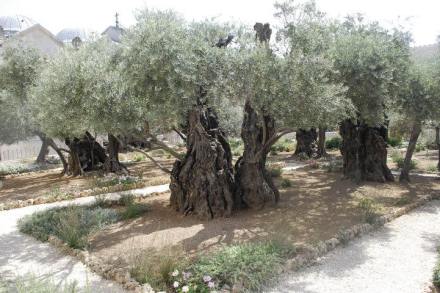
Fashion may be Folly’s child, but that never stopped gardeners, when the urge was on them, from planting something à la mode. Fashion may be Folly’s child, but that never stopped gardeners, when the urge was on them, from planting something à la mode. That must be why olive trees (Olea europea), natives of the rocky dry soils of the eastern Mediterranean, are now so widely planted in British gardens. Prince Charles has them at Highgrove and they can be seen each year at Chelsea Flower Show so, hey, we all have to grow them, don’t we?