Arts Reviews

The good, bad and ugly in arts and exhbitions

Street life

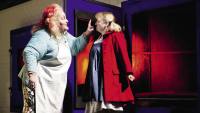
It is the 50th anniversary of Coronation Street and there seems to be as much celebration and feasting as there was for the Queen’s own golden jubilee, in 2002. It is the 50th anniversary of Coronation Street and there seems to be as much celebration and feasting as there was for the Queen’s own golden jubilee, in 2002. I have to declare a personal interest here. The inventor of Corrie is Tony Warren, who told my father that his book, The Uses of Literacy, had been one of his inspirations. It had shown working-class life to be as rich and complex as the lives lived by the middle and upper

Rewarding rubbish

If you went on holiday to Italy this year, you may have come back with a plate, a mug or a jug — an item or two of the painted pottery still handmade (at least sometimes) by craftsmen and women, mostly in Umbria, but also in the Marche, and which you can see in the shops in Siena and Florence and in other places in Tuscany. If you went on holiday to Italy this year, you may have come back with a plate, a mug or a jug — an item or two of the painted pottery still handmade (at least sometimes) by craftsmen and women, mostly in Umbria, but

Chinese burn

A kind of madness has taken grip of the art market. It seems that the world’s super-rich have decided that money has no value — or at least that it has a value different from that understood by the rest of us. Just this month, one of Alma Tadema’s fanciful biblical epics was sold for an incredible $36 million (previous auction record $2.8 million), a Modigliani changed hands at $69 million (previous record $31 million), while a now famous porcelain vase made for the Emperor Qianlong, which turned up in a bungalow in Pinner, realised more than £53 million — a world auction record for any Chinese work of art.

At the heart of Europe

The historic centre of Bruges has 16 museums, enough to cater for every touristic taste. There’s a Diamond Museum, a Lace Centre, a Choco-Story (the narrative element distinguishes it from the 50 chocolate shops) and a Friet Museum — or ‘Belgian Fries Museum’, for English-speakers under the misapprehension that fries are French. But the main focus of the city’s five-yearly festival, now in full swing, is on a local product the French cannot lay claim to: the Flemish painting tradition founded by Jan van Eyck, who died in Bruges in 1441. The historic centre of Bruges has 16 museums, enough to cater for every touristic taste. There’s a Diamond Museum,

Smoke and mirrors

The Prince, according to Machiavelli, ‘should appear, to see him, to hear him, all compassion, all good faith, all integrity, all piety’ — which might be translated into Basic Blairish as ‘should appear a pretty straight kind of guy’ — but, as the Florentine Father of Spin emphasised, it was a great deal more important to seem to have, rather than actually to have, these qualities. The Prince, according to Machiavelli, ‘should appear, to see him, to hear him, all compassion, all good faith, all integrity, all piety’ — which might be translated into Basic Blairish as ‘should appear a pretty straight kind of guy’ — but, as the Florentine

A thinker of arresting and compelling grandeur

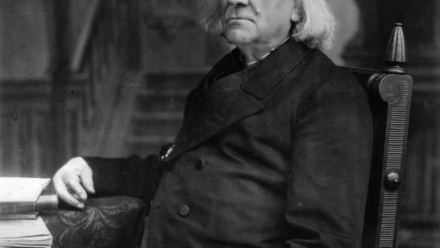
John Ruskin is the greatest writer whom, today, an educated person can admit not having read without embarrassment. One professes ignorance of Shakespeare or Dickens with apology or defiance, but most of us still seem unaware that Ruskin is as essential as Chaucer or Milton to understanding ourselves within a world (for all its ills), of beauty and happiness. Hopefully The Worlds of John Ruskin will bring new readers to one of modernity’s most remarkable thinkers. Ruskin first made his name with Modern Painters, a five volume work published between 1843 and 1860 which established Ruskin as the dominant art critic of the mid-19th century and is remembered chiefly for

Treasure trove | 27 November 2010

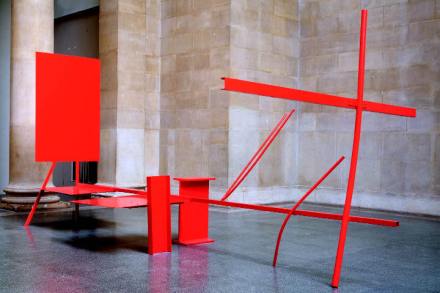
One afternoon in the winter of 1992 I was on a bus traversing London’s Millbank when an extraordinary sight caught my eye. A bright red Triumph Spitfire had been driven up the imposing front steps of the Tate Gallery and abandoned there. Not for the first time in my life I wished I had a camera with me. Only later did I learn that some disaffected artist or taxpayer had committed this spectacular act as a protest against the Turner Prize. One afternoon in the winter of 1992 I was on a bus traversing London’s Millbank when an extraordinary sight caught my eye. A bright red Triumph Spitfire had been

Vertically challenged

St Paul’s Cathedral is quite rightly something of a national obsession. No other building has protected ‘view corridors’ as a result of legislation in 1935, when new building regulations allowed the surrounding buildings — notoriously a telephone exchange to the south — to overtop the cathedral’s cornice line. These corridors, extending like an unseen net as far afield as Richmond Hill, make architects unaccountably cross, as if they were an unfair curb on the alliance of art and Mammon. Thank God they are there, and that the tallest buildings, springing up once again like genetically modified beanstalks, are at least corralled east of Bank. St Paul’s Cathedral is quite rightly

Visual pleasure

According to the programme note, the message in Thierry Smits’s To the Ones I Love ‘does not direct itself to the mind but to the senses’. According to the programme note, the message in Thierry Smits’s To the Ones I Love ‘does not direct itself to the mind but to the senses’. Well, his work is certainly a pleasant sensory experience. Neat patterns of colour, possibly recalling the chakras or energy centres that, in Eastern philosophy, govern our senses and feelings, mark the sections of this one-hour dance. The undeniable prowess of the nine handsome black male dancers with their superbly co-ordinated movements, derived from a mix of idioms, adds

Conflicting passions

Francesco Cilea’s Adriana Lecouvreur, his biggest success, dating from 1902, leads a fringe existence, but it persists thanks primarily to the name role, dramatically meaty and not imposing too great a strain on the performer. Francesco Cilea’s Adriana Lecouvreur, his biggest success, dating from 1902, leads a fringe existence, but it persists thanks primarily to the name role, dramatically meaty and not imposing too great a strain on the performer. It has been mainly associated with singers at a fairly late stage — or thinking they were — of their career, Magda Olivero and Renata Tebaldi being the most notable. What is undeniable is that it is a vehicle, primarily

No laughing matter

The Nobel prize is nothing. The real badge of literary greatness is the addition of the ‘esque’ suffix to one’s name and, if you’re truly outstanding, the word ‘nightmare’, too. Franz Kafka manages this distinguished double, although some readers find the connotations of horror arise not so much from his totalitarian dystopias as from his prose. But it’s best to approach Kafka with an open mind. The Nobel prize is nothing. The real badge of literary greatness is the addition of the ‘esque’ suffix to one’s name and, if you’re truly outstanding, the word ‘nightmare’, too. Franz Kafka manages this distinguished double, although some readers find the connotations of horror

Anthony Whitworth-Jones: Garsington on the move

When is a country-house opera not a country-house opera? When it no longer has a country house attached. This is what is about to happen to Garsington Opera, which is moving, lock, stock, barrel and picnic basket, from the exquisitely planned and intimate gardens of the Bloomsbury-redolent Garsington Manor near Oxford to the wide-open rolling hills of the Wormsley Estate in nearby Buckinghamshire. The move is a change and a challenge that the company’s general director, Anthony Whitworth-Jones, seems thoroughly to relish. ‘It’s enormously exciting,’ he says. ‘Once we knew we were going to have to move from Garsington the hunt was on for a suitable place, and we had

Tendentious drivel

It told the story of two best mates, Frankie and Peter, serving in an unidentified northern regiment in Afghanistan where Peter quickly discovers he can’t cope under fire — and as a punishment is made the unit’s ‘camp bitch’ by the sadistic Lance Corporal Buckley (Mackenzie Crook). ‘Our interest’s on the dangerous edge of things. The honest thief, the tender murderer, the superstitious atheist.’ So I suppose you could argue that  Jimmy McGovern was merely following the fine tradition of Robert Browning when he wrote his drama about cowardice, bullying and murder among British soldiers on the frontline in Afghanistan. But I wouldn’t. I think Accused (BBC1, Monday) was despicable:

Plain speaking

Thank heavens for radio, and its ability to survive the depredations of new technology (even the botched introduction of DAB). Channel Four’s much-hyped adaptation of William Boyd’s novel, Any Human Heart, is just so lazy, letting the images do all the work, without bothering to create a coherent or dramatic script. A radio dramatisation of the book would have had to work much harder to ensure that the characters were brought to life. No fancy costumes or fabulously elegant settings to tell us where we are, and in what decade. No tricksy graphics at the beginning, either. Just plain words, carefully crafted to lead the listener through the narrative. Thank

Small blessings

As I pointed out last week, one of the chief attractions of the Treasures from Budapest show at the Royal Academy is the inclusion of two rooms of Old Master drawings. For those of us who find large exhibitions overwhelming, there is a refreshingly modest display of French drawings (admission free) at the Wallace Collection, which makes a good companion to the RA’s blockbuster. The earliest work is a fanciful, somehow ethereal, black-chalk and brown-wash 16th-century drawing of a water festival at Fontainebleau, by Antoine Caron. Much tougher is a neighbouring red-chalk study by Jacques Callot, ‘Ecce Homo’. Despite a certain vulgarity of pose and gesture, it has a brash

A good life

As she prepares for the role of Mrs Malaprop, Penelope Keith talks to Lloyd Evans, who finds her decisive, cheerful, pragmatic and modest, with a tendency to break into fits of unexpected giggles A winter off. That’s what Penelope Keith had planned for this year. But when an opportunity arrived to play Mrs Malaprop in Sheridan’s The Rivals she couldn’t turn it down. ‘It’s one of the great women’s parts so I thought I must have a bash at that.’ We meet in a compact, slightly unloved dressing-room in the Theatre Royal, Brighton, where she sits in light-brown slacks and a soft-pink cardigan with her back to a bright mirror

World Music

Sitting at my computer, headphones in hand and wearing top-half concert dress, bottom-half pyjamas, this is shaping up to be the most bizarre performance I have ever given. I’m about to join Eric Whitacre’s Virtual Choir, made up of singers from all over the world recording themselves singing his composition Sleep. Sitting at my computer, headphones in hand and wearing top-half concert dress, bottom-half pyjamas, this is shaping up to be the most bizarre performance I have ever given. I’m about to join Eric Whitacre’s Virtual Choir, made up of singers from all over the world recording themselves singing his composition Sleep. As I come to the end of the

Deathly dull

By the time a film franchise arrives at its seventh and penultimate instalment, you probably know if it is something you enjoy or not, or at least I would hope so. Generally, Harry Potter is not something I’ve enjoyed over the years so, by the same logic, I shouldn’t have bothered with this but, having skipped the last one, I was curious. Have the characters grown up, and has the franchise grown up with it? To save you having to skim to the end for an answer, I will give it to you now: no. This film is the same as all the other films, which is fine if you