Arts Reviews

The good, bad and ugly in arts and exhbitions

Verdi without the trappings

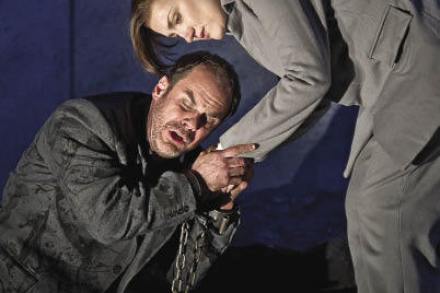
Scene: the Royal Opera House, last Friday, 10.35 p.m. In the last act of Aida, Amneris, in the formidable person of Olga Borodina, has just concluded her magnificent denunciation of priests: ‘Cruel monsters! You will always be thirsty for blood!’ and the final ten minutes remain, the exquisite scene in which the hero and heroine suffocate while singing their farewell to life. Scene: the Royal Opera House, last Friday, 10.35 p.m. In the last act of Aida, Amneris, in the formidable person of Olga Borodina, has just concluded her magnificent denunciation of priests: ‘Cruel monsters! You will always be thirsty for blood!’ and the final ten minutes remain, the exquisite

The power of now

Whatever lay behind Radio 3’s decision four years ago to reduce the number of live concert broadcasts to a mere handful, it cannot have been the recent phenomenal success of ‘live’ relays from the Met in New York to local cinemas. Whatever lay behind Radio 3’s decision four years ago to reduce the number of live concert broadcasts to a mere handful, it cannot have been the recent phenomenal success of ‘live’ relays from the Met in New York to local cinemas. Even the service of Nine Lessons and Carols from King’s has been a hit in this format. The director of the Met says that 6 million people are

Apocalypse now?

The BBC’s Horizon is, amazingly, almost 50 years old and this week, in its The End of the World? Guide to Armageddon (BBC4, Thursday), it looked back at some of its scariest predictions. The BBC’s Horizon is, amazingly, almost 50 years old and this week, in its The End of the World? Guide to Armageddon (BBC4, Thursday), it looked back at some of its scariest predictions. The media have always loved frightening us to death, and there are plenty of scientists ready to help. The most recent, of course, is the greenhouse effect, and man-made global warming. I find myself an agnostic, lacking the absolute certainty possessed by many Spectator

Trading places

‘We are humbled,’ said Keiichi Hayashi, ‘we are humbled by the power of nature.’ The Japanese ambassador to the UK was talking on Monday morning’s Today programme on Radio 4. ‘We are humbled,’ said Keiichi Hayashi, ‘we are humbled by the power of nature.’ The Japanese ambassador to the UK was talking on Monday morning’s Today programme on Radio 4. It was a stark and moving moment. He spoke slowly, gently, thoughtfully, choosing his words carefully, the shock of what has happened in Japan echoing through his voice. In contrast, Jim Naughtie fumbled clumsily on air, unsure what to say, or how. He was in Japan, not Mr Hayashi. ‘You’ll

Much ado about Midsomer

An interesting case, the issue of Midsomer Murders and the producer (and creator) of the show, Brian True-May, who has been suspended for saying he deliberately kept ethnic minorities out of it to preserve its sense of “Englishness”. I wonder if the real reason he kept them out is that the point of the programme is to make the audience guess who has been committing all the murders and they might not have to guess very hard if there were blacks in it. (Because of the inherent racism of the viewer, of course, not because black people are more likely to commit crime.) The news reporters have been scurrying around

Oliver Goldsmith Refashioned for the 21st Century

A stunt on Spanish TV goes horribly wrong and ends in tragedy as the innocent party here bites off more than it can chew and perishes in short order. The snake makes the mistake of feasting upon one of Israeli model Orit Fox’s improbable breasts only to discover that where once lurked flesh there’s now a super-sized bag of silicone. Silicone is not good for snakes.Not good at all. End of snake. It is, as Kieran Healy says, yet another example of Everything New Being Very Old. Recall, as you will, Oliver Goldsmith’s* Elegy on the Death of a Mad Dog: Good people all, of every sort, Give ear unto

Erotic review

First, a note about naming. The artist here presented as Jan Gossaert (c.1478–1532) was formerly known as Jan Mabuse, so designated after the Walloon town he came from — Maubeuge in Hainaut. First, a note about naming. The artist here presented as Jan Gossaert (c.1478–1532) was formerly known as Jan Mabuse, so designated after the Walloon town he came from — Maubeuge in Hainaut. The Americans, meanwhile, miss out the e and spell his name Gossart, which makes the poor fellow sound even more like an underwear firm, though the word is itself more attractive-looking than its variant. So if you were wondering where this newly minted artist had sprung

A passion for music

Henrietta Bredin talks to the Earl of Harewood about a life in opera In his memoir, The Tongs and the Bones, the Earl of Harewood ruefully quotes his uncle, the Duke of Windsor, remarking, ‘It’s very odd about George and music. You know, his parents were quite normal — liked horses and dogs and the country.’ As it happens, George Harewood also likes horses and dogs and the country — and football and cricket and fishing — but in addition he has had, from an early age, an abiding passion for music. At the start of the second world war, while he was still at school, he notched up as

Read on

I was nervous as I approached the man in Paddington station on Saturday night. We Brits tend to assume that being addressed by a total stranger means one of two things: either they want our money, or they’re mad (and the 48 copies of Ben Macintyre’s Agent Zigzag in my bag might have suggested the latter). I was nervous as I approached the man in Paddington station on Saturday night. We Brits tend to assume that being addressed by a total stranger means one of two things: either they want our money, or they’re mad (and the 48 copies of Ben Macintyre’s Agent Zigzag in my bag might have suggested

Defining women

His & Hers is a film (obviously) which, by rights, should be as dull as dishwater, if dishwater is truly dull, which it sometimes is and sometimes isn’t. His & Hers is a film (obviously) which, by rights, should be as dull as dishwater, if dishwater is truly dull, which it sometimes is and sometimes isn’t. (I saw the face of Jesus in dishwater once; that was quite cool.) It’s a documentary featuring a group of Irish women — 70, in total — talking individually about the men in their lives: their grandfathers, fathers, boyfriends, fiancés, husbands, sons and grandsons, and that is it. Nothing else happens at all. Actually,

Under the rainbow

The pantomime, we’re often told, exists in no culture but Britain’s. Maybe we should look a bit harder. The Wizard of Oz is a children’s fantasy, epic in form, comic in idiom, populated by folksy stereotypes, which uses the metaphor of a journey to present a mythical clash between good and evil. It ends with order restored and virtue triumphant, and with the characters discovering that self-knowledge and wisdom are more valuable than the illusory contentments of wealth or power. All that’s missing is some bad acting and a few painfully ribald puns. The pantomime, we’re often told, exists in no culture but Britain’s. Maybe we should look a bit

To cut a long story short

Christopher Wheeldon’s Alice’s Adventures in Wonderland is to ballet what Pixar and DreamWorks movies are to cinema. Christopher Wheeldon’s Alice’s Adventures in Wonderland is to ballet what Pixar and DreamWorks movies are to cinema. It takes a well-known children’s story and peppers it with references for an adult audience. And, like the Shrek saga or the recent Tangled, it combines storybook conventions with the latest performing trends, such as stunning visual effects and that episodic structure most musicals thrive on. Indeed, there were many moments when I expected characters to warble. Alas, they did not, even though singing would have been an ideal complement to the razzle-dazzle of the performance.

Triumph of the West

If at the beginning of the 15th century you’d had to predict who was going to dominate the world for the next 500 years, the answer would surely have been China. If at the beginning of the 15th century you’d had to predict who was going to dominate the world for the next 500 years, the answer would surely have been China. From the sophistication of its sanitation system to the size of its fleet, China — under the Emperor Zhu Di and his eunuch naval commander Cheng Ho — was a country going places. Its mighty, 400-foot-long ships sailed as far as Malindi on the East African coast and

Aesthetic responses

Over the past month I’ve strolled through Berlin’s Alte Nationalgalerie to examine Edouard Manet’s ‘In the Conservatory’ in close detail. Over the past month I’ve strolled through Berlin’s Alte Nationalgalerie to examine Edouard Manet’s ‘In the Conservatory’ in close detail. I’ve taken a look at what’s on offer on the stands of international art dealers including Gagosian and White Cube at the VIP art fair. I have also considered buying shares in a 1988 gouache by Sol LeWitt. And I’ve done all these things from my front room thanks to an internet revolution in the art world. In December, the first stock exchange for art opened up with shares in

Fruit of the vine

According to Athenaeus of Naucratis, the 2nd-century AD author of The Sophists’ Banquet, the ancient Sybarites kept the capital of their city-state in southern Italy supplied with wine through a network of ‘vinoducts’ that reached far out into the surrounding countryside. According to Athenaeus of Naucratis, the 2nd-century AD author of The Sophists’ Banquet, the ancient Sybarites kept the capital of their city-state in southern Italy supplied with wine through a network of ‘vinoducts’ that reached far out into the surrounding countryside. Amusing though this high-table story was, it reflects the extent to which ancient Mediterranean civilisations were fuelled by the fermented grape, a sacred fluid central to the imagery

Visual dialogue

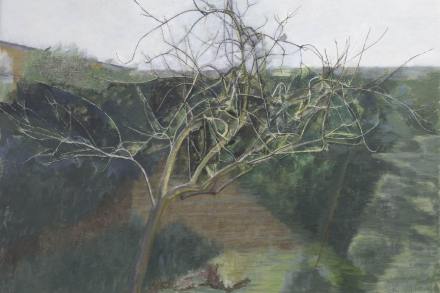
An encounter with the paintings by the established Berlin-based Swede Peter Frie comes as a breath of fresh and insightful air to the British contemporary art scene. The dozen or so works (large-scale oil landscapes and a few still-lives) are displayed in stunning contemporary settings: a glass gallery and an adjacent artists’ house at Roche Court (a period house with grounds, better known for its sculpture programme). Landscape painting has not fared well within the dictates of modernist and post-modernist art definitions. It is as if an urban-centric, text-driven and often anti-aesthetic dogma has stifled both alternative discourse and individual human expression. Yet our experience of landscape, and by association

On the edge

There’s nothing safe or cosy — and, indeed, there shouldn’t be anything safe or cosy —about being an artist. There’s nothing safe or cosy — and, indeed, there shouldn’t be anything safe or cosy —about being an artist. Being an artist means living on the edge, going outside your comfort zone, being challenged. Artists put that challenge into practice in all sorts of different ways; and for me it’s meant seeking out challenge — and adventure — in a very focused way. I call what I do ‘extreme art’: I’ve deliberately set myself a series of tasks that have taken me into challenging and even dangerous situations, so I can

Painter’s progress

Andrew Lambirth talks to Alan Reynolds, who abandoned a lucrative career as a landscape painter to follow his instincts towards abstraction At the age of 85, Alan Reynolds is enjoying a sudden and well-deserved flurry of interest in his work. A superb monograph has just been published on his art, written by Michael Harrison, director of Kettle’s Yard in Cambridge, and to launch the book there’s an exhibition at Annely Juda Fine Art (23 Dering Street, W1, until 26 March). This is Reynolds’s seventh solo show at the gallery, which has successfully represented him since 1978, and which has been responsible for promoting his work in Europe. The new work