Arts Reviews

The good, bad and ugly in arts and exhbitions

Lost children

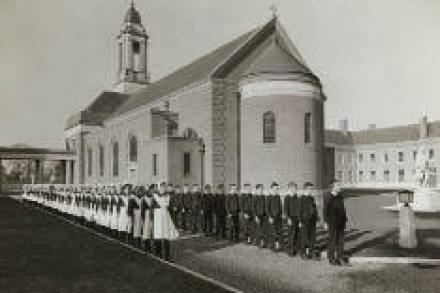
I didn’t much like Oranges and Sunshine and I’ll tell you for why: it takes one of the most obscene scandals in 20th-century British politics — the mass forced deportation of British children to Australia, which began in the 1920s and continued right up until 1970 — and all but kills it off with its self-righteous stance, plodding script, mournful violins and clunky construction. I didn’t much like Oranges and Sunshine and I’ll tell you for why: it takes one of the most obscene scandals in 20th-century British politics — the mass forced deportation of British children to Australia, which began in the 1920s and continued right up until 1970

Turning point

One of the intriguing components of The Most Incredible Thing, Javier De Frutos’s latest creation, is its structure. One of the intriguing components of The Most Incredible Thing, Javier De Frutos’s latest creation, is its structure. Intentionally steering away from the aesthetic developments that informed theatre dance for more than a century, De Frutos has opted instead to revive and revisit the compositional formulae of the late 19th-century three-act ballet. Bold and risky as that sounds, such a decision fits perfectly with the kaleidoscopic score which the Pet Shop Boys’ Neil Tennant and Chris Lowe have been working on since 2008 and the storyline, derived from the tale by Hans

History through sound

Diaries and letters tell us a lot about how people lived from day to day yet there’s often something missing. video platform video management video solutions video player Diaries and letters tell us a lot about how people lived from day to day yet there’s often something missing. How did they experience the world through sound? What did they themselves sound like, their voices, their accents? The aural experience of the past is lost to us. Now, though, we have the technology to record just about anything we want. A huge new department at the British Library in St Pancras (the revamped National Sound Archive) is dedicated not just to

Personal grooming

I found myself among a group of young people the other day, and they were talking with much hilarity about The Only Way Is Essex (ITV2, Sunday and Wednesday). This is cult television, adored by the generation that watches it. The show is a strange hybrid: real people play themselves under their real names, but with much of the script and many of the plots written for them. So it’s a reality show that has more or less ditched reality. The cast are young Essex people with money. They spend their time in expensive cars, in the gym, or making themselves beautiful in salons and nail bars. Nail bars! No

A(nother) Magic Flute

A new opera has breezed through London’s Barbican Centre. It’s a tale of arduous quests, initiation and male friendship, lyrical in its romantic sweetness, and vaguely reminiscent of the later Mozart. But Mozart’s The Magic Flute it most certainly is not. It is always courageous to take on the opera purists, but it is not quite clear how bold the usually fearless Peter Brook has been in titling his adaptation A Magic Flute. It is scarcely a step away from the original title: just enough of a retreat to avoid comparisons to conventional productions, but not exactly a leap into the unknown. Musically, the production is as lily-livered as the

East Anglian friends

Three exhibitions in East Anglia serve to remind us that museums and galleries outside London continue to programme stimulating events. At Norwich Castle is an excellent survey of British art from the beginning of the first world war to the end of the second — a time of great richness and considerable innovation. There’s so much of interest and value here that it’s difficult to decide what to mention and what to leave out. Three exhibitions in East Anglia serve to remind us that museums and galleries outside London continue to programme stimulating events. At Norwich Castle is an excellent survey of British art from the beginning of the first

Maastricht treats

The European Fine Art Fair (TEFAF) takes place in Maastricht, Netherlands, every year. It showcases the finest examples that the most prestigious commercial galleries of the international art world have to offer — from ancient to contemporary art and design. The European Fine Art Fair (TEFAF) takes place in Maastricht, Netherlands, every year. It showcases the finest examples that the most prestigious commercial galleries of the international art world have to offer — from ancient to contemporary art and design. Exhibits are heavily vetted and scrutinised for their provenance before the wealthiest dealers, collectors and heads of museums are allowed in to make their purchases. It is a true celebration

Following in the family footsteps

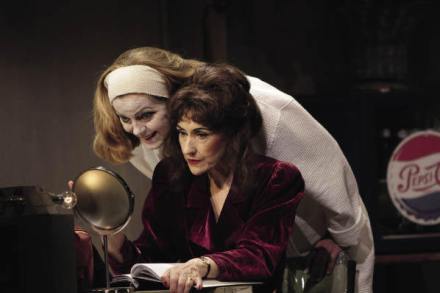
Lloyd Evans meets Niamh Cusack, who ‘absolutely wasn’t going to be an actress’ She doesn’t usually do it this way. When Niamh Cusack heard that the Old Vic was planning to stage Terence Rattigan’s final play, Cause Célèbre, she read a synopsis, found a part that excited her, and asked her agent to get her an audition. ‘I’ve never approached a production like that,’ she tells me. ‘But it’s a cracking play, really, well written — a rollicking courtroom drama with great characters and fascinating relationships.’ We meet in a dressing-room at the Old Vic and make ourselves comfortable amid the higgledy-piggledy apparatus of a Feydeau farce whose run is

Spellbound

English Touring Opera continues to be the most heroic of companies. This spring season it is performing at 17 locations, from Exeter to Perth, Belfast to Norwich. And in the many years that I have been going to its productions, there has been no compromise in standards and absolutely no contraction of repertoire to the familiar and the safe, if anything the reverse. Last autumn it premièred Goehr’s tough Promised End, an immense artistic achievement. And now they are putting on Tobias Picker’s Fantastic Mr Fox, an operatic adaptation of Roald Dahl, with young children from each of the relevant towns playing the fox cubs — and having their names

Three’s a crowd

According to some sources, the legendary impresario Sergei Diaghilev invented the mixed-bill formula for ballet. Whether or not this is true, there are times when one wishes he hadn’t. One century later, they increasingly come across as hurriedly and/or inharmoniously put together. Take, for instance, the most recent Royal Ballet triple bill. Frederick Ashton’s 1980 Rhapsody was created for the Queen Mother’s 80th birthday and as a vehicle for the megastar Mikhail Baryshnikov. Although the work has many subtle layers, it retains much of its original ‘party piece’ essence, which calls for grandeur and sparkle. Alas, the redesigned sets and costumes do not provide either, nor did the corps de

More 4

Big changes are happening to the airwaves, part of the frenetic technological revolution that’s been unleashed by the development of a digital language. Big changes are happening to the airwaves, part of the frenetic technological revolution that’s been unleashed by the development of a digital language. Radio, against expectations, is proving itself a vital force in these fast-moving times, because it’s flexible, adaptable and still compelling. The human voice, the imagination of sound, will endure when perhaps TV will fade out, evolving into another kind of internet exchange. Wireless itself now means something quite different from those first crystal receivers, but nothing it seems can kill off that intimate connection

Our island story | 26 March 2011

I vividly remember the moment when I saw my first black person. It was December in either ’68 or ’69, so I would have been three or four at the time, and my father’s works had arranged some kind of coach outing to meet Father Christmas. Seated near me was a black child a bit older than me, and I recall gazing fascinated at the blackness of his skin and noticing that it had white blotches on it like a mirror image of the dark freckles and moles on my skin. ‘Daddy, what are those white things?’ I asked, pointing at the boy’s skin. ‘Pigment,’ my father explained. I vividly

To pastures new

If you like to pass an idle half-hour, as I do, reading random entries in Who’s Who, you will be struck by how many distinguished people include gardening among their recreations. If you like to pass an idle half-hour, as I do, reading random entries in Who’s Who, you will be struck by how many distinguished people include gardening among their recreations. Indeed, it is the second most popular pastime — after golf, bizarrely — in the book. To pick just a few: the Duchess of Buccleuch and Queensberry, Lord Justice Goldring, Susan Hampshire, Mark Damazer, Maeve Binchy, Lord (Chris) Patten and Crispin Blunt MP all own up to spending

Out of place

Since pluralism in the arts became the order of the day, categories have been bursting at the seams, and the old definitions have lost validity. No longer does visual art denote painting, sculpture, printmaking and drawing, but all manner of extraneous and tangentially linked activities as well. Film, installation and performance are crammed in under the same umbrella as Michelangelo, Dürer and Monet, when it’s painfully clear they have almost nothing in common with such illustrious forerunners. In fact, it’s extremely doubtful whether much of the stuff that currently parades under the banner of art has any justification for being there. Quite obviously, all film and photographic work should be

Barometer | 19 March 2011

Midsomer and Soham The producer of ITV’s murder-mystery series Midsomer Murders was suspended after saying he didn’t want black characters on the show because it was ‘the last bastion of Englishness’. While many English villages still reflect Midsomer in their colour, it is over 200 years since a black man first settled in the English countryside. — Olaudah Equiano, a Nigerian-born slave who managed to buy his freedom, married in 1792 in the village of Soham, Cambridgeshire — now best known nationally for the murder of two school girls by Ian Huntley in 2002. — Equiano wrote an autobiography and died in 1797. His daughter Joanna married a clergyman with

Downhill all the way | 19 March 2011

What the world needs now, perhaps as a matter of some urgency, is love, sweet love, but, failing that, wouldn’t a decent, warm, engaging rom-com do? It might but, alas, it isn’t Chalet Girl. What the world needs now, perhaps as a matter of some urgency, is love, sweet love, but, failing that, wouldn’t a decent, warm, engaging rom-com do? It might but, alas, it isn’t Chalet Girl. I’d like it to be Chalet Girl. I wanted it to be Chalet Girl. It’s got two excellent Bills in it — Nighy and Bailey — which made me hopeful, initially. But? OK, because I don’t know how to let you down

Day tripper

Like a lot of classics, Blithe Spirit doesn’t quite deserve its exalted reputation. Like a lot of classics, Blithe Spirit doesn’t quite deserve its exalted reputation. Every time I see it I discover a little bit less. Catty, slight, charming, clever and a touch too pleased with itself, the play shapes up as nothing more than an ingeniously plotted sitcom. It’s no surprise to learn that it was written in six days. The Blitz and the threat of sudden death had fostered a mood of defiant merriment in the British people which the play, dashed off in 1941, captures very skilfully. Thea Sharrock’s production is competent, slick and faintly heartless.

A theatre reborn

The jam factory is no more. In one of the great theatrical transformations of our day, the RSC has unveiled its modernisation of Elizabeth Scott’s unloved theatre of 1932; unloved for its ungainly brick bulk on the Avon riverside but no less for the distance of its seating from the proscenium stage. There was much to be said for the earlier proposal of simply razing the building to the ground and starting afresh. What has actually happened is a classic British compromise whereby the best of the old has been spliced together with what is hopefully the best of the new. The jam factory is no more. In one of