Arts Reviews

The good, bad and ugly in arts and exhbitions

Eccentrics on parade

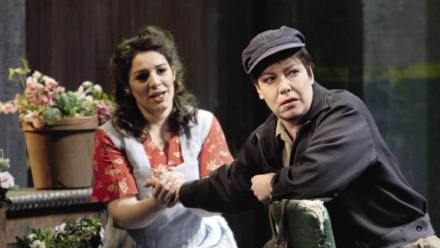
A young aristocrat and the daughter of a banished duke fall in love at a wrestling contest. Both are forced from court by family intrigue, and take refuge in the same enchanted forest. She recognises him, but not vice versa, since to avert assault she has disguised herself as a boy. Confusions ensue. Stephen Unwin’s production of As You Like It (at the Rose Theatre, Kingston, until 26 March) is hoppled from the start by an antipathetic Orlando. A few minutes into the play he charges across the stage and attacks his eldest brother violently from behind. We can only sympathise as Oliver (William Tapley) plots to have him killed

Order in chaos

The history of Western ballet over the past 40 years can easily be divided into two chapters: the pre- and post-William Forsythe eras. In the early Eighties, the multitalented American-born dance-maker brought Postmodernism into ballet, challenging formulae and tenets that were 400 years old. His radical approach to the old art made some scream with horror. But it also injected new life into a languishing art. Nothing escaped Forsythe’s radical but well thought-out approach. Body axis, symmetries, gravity and gravitas were questioned and reworked along with the many conventions and expectations that were central to both making and watching ballet. Crucial duets disappeared behind a wall, while curtains and lights

Literary junkyard

We critics know everything about the theatre. We see the best shows, we get the finest seats in the house and we’re occasionally treated to a fuming glass of vin ordinaire to lubricate our ruminations. And yet what do we really know? We critics know everything about the theatre. We see the best shows, we get the finest seats in the house and we’re occasionally treated to a fuming glass of vin ordinaire to lubricate our ruminations. And yet what do we really know? Last week a family funeral forced me to miss the press night of Frankenstein and when I logged on to the NT website I found it

Poor planning

Although I appreciate it is always hard to come down from the Oscars and that special, magical tingle in the air — if I hadn’t turned in after MasterChef, as I always do, I would have certainly stayed up all night to watch — it’s time to get back to business and this week’s big film The Adjustment Bureau, which could do with a significant amount of adjusting itself. Although I appreciate it is always hard to come down from the Oscars and that special, magical tingle in the air — if I hadn’t turned in after MasterChef, as I always do, I would have certainly stayed up all night

The real thing | 5 March 2011

I had prepared myself for another rant at Comic Relief, a grisly occasion on BBC1 in which every year parades of slebs preen themselves on their good works. What made my teeth curl was the way some comedian would announce that the Twistelton Lions had held a pram race through the town (with the mayor dressed as a baby!) and took £1,459, a fraction of what the sleb expects for a single performance. Last year we saw Jonathan Ross congratulating all those people who had climbed Kilimanjaro, so raising one-20th of Ross’s annual salary. Couldn’t he have saved them the trouble by writing a cheque? As Jeremy Hardy used to

Selective attention

Another vast exhibition at Tate Britain, but one which will no doubt prove popular with the public. Watercolour is a national pastime, and the English tend to wax proprietorial about it. As a painting medium it appeals greatly to amateurs because it’s nearly always possible to do something passable in watercolour which couldn’t be achieved in oil paint without more knowledge, application and experience. Passable, yes, but not distinguished: it takes a very great deal of skill to achieve the more than ordinary in watercolour, and herein lies its seduction and challenge. The stakes are raised by the existence of a tradition of great watercolour painting in this country, which

Cultural connections

Afghanistan has been subjected to centuries of turmoil, yet an astonishing collection of treasures survives and will be on show at the British Museum next week, as the exhibition’s curator St John Simpson explains Afghanistan is often described as the crossroads of Asia and of the ancient world, and a major new exhibition of objects loaned by the National Museum of Afghanistan in Kabul to the British Museum sets out to tell the story of its turbulent history and rich culture. By virtue of its position and physical geography, Afghanistan has always played an important role in the mediation of cultures between Iran, Central Asia and South Asia. The ebb

Dazzling feat

Legend has it that when the Romantic ballerina Marie Taglioni gave her farewell performance in St Petersburg a group of wealthy fans bought a pair of her slippers, and cooked and ate them as a token of their admiration. Shoe-fetishism has since reached new heights, thanks to Sex — on heels — in the City. Indeed, Sarah Jessica Parker/Carrie Bradshaw’s canonisation of one of the most idealised items of clothing plays a significant part in Shoes, which makes a welcome comeback to the West End. Although it is labelled a musical, Shoes draws upon the long-forgotten tradition of the old review, namely a series of almost independent song-and-dance numbers held

Flavour of freedom

Richard Bean is a creative nomad, a pix-and-mix sort of playwright who lights on subjects seemingly at random. He’s written about Brussels, racism, agriculture, social mobility and trawlermen. Now he’s taken on climate change and he’s hit the mark with delicious accuracy. This is his best play so far. The Heretic is set in a university earth-sciences faculty where Diane, a paleogeophysicist, has found incontestable proof that sea levels aren’t rising. A decade ago she planted a betel nut tree on a beach in the allegedly drowning Maldives. But instead of sinking, the tree is thriving. Her departmental head, Kevin, tells her that her findings may damage the faculty’s ‘business

Eavesdropping for free

Amid the fear and drear of cuts, and yet more cuts, Radio 3 has offered its fans an adrenaline boost by suddenly announcing a huge increase in the number of ‘live’ performances on the station. Amid the fear and drear of cuts, and yet more cuts, Radio 3 has offered its fans an adrenaline boost by suddenly announcing a huge increase in the number of ‘live’ performances on the station. ‘It’s not about cost,’ says Roger Wright, the controller, ‘it’s about the distinctiveness of the Radio 3 brand.’ By the middle of May, he promises, Performance on 3 will be truly live every weekday evening, and not just a specially

Shameful bias

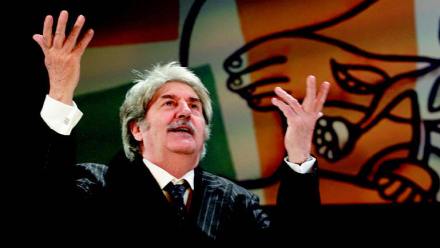
So you’re the leader of the Netherlands’ youngest, and now second-most-popular political party — and the reason you’re doing so well so soon is that your policies strike a chord with many Dutch. So you’re the leader of the Netherlands’ youngest, and now second-most-popular political party — and the reason you’re doing so well so soon is that your policies strike a chord with many Dutch. You believe in smaller government and lower taxes; you believe nuclear power is a safer bet than nuclear energy; and you believe that creeping Islamisation poses a serious threat to your country’s national identity. And now someone wants to make a guerilla documentary about

Family friendly

‘Can we go to Alton Towers? Please?’ Is there any request that strikes more gloom into the heart of a parent during the half-term holiday than that? The idea of spending an expensive day queuing for terrifying rides, in an environment of tacky, non-sustainable and old-fashioned consumerism, ensured that I steadfastly deprived my children of this ‘fun day out’ throughout their childhood. ‘Can we go to Alton Towers? Please?’ Is there any request that strikes more gloom into the heart of a parent during the half-term holiday than that? The idea of spending an expensive day queuing for terrifying rides, in an environment of tacky, non-sustainable and old-fashioned consumerism, ensured

Enter the Blue Dragon

Few living artists compare to Robert LePage when it comes to balancing sparkling, sizzling, soul-boggling technical virtuosity with profound emotional punch. The actor-director’s productions are usually heartbreaking multi-media installations that play with the isolation at the heart of human life. As Ian Shuttleworth put it back in 1991, ‘see Robert LePage and die’. LePage hasn’t killed me, but he nearly broke up my relationship: when my date, now my fiancé, failed to weep at a performance of The Anderson Project in 2005, I did wonder if I’d just become involved with a man without a soul. Evidently, the relationship survived, but it was touch and go for a while. Against

Fine lines

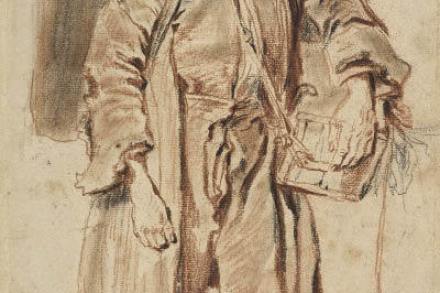
Drawings are often valued as an artist’s first thoughts, the most direct and intimate expression of his or her response to a subject. Drawings are often valued as an artist’s first thoughts, the most direct and intimate expression of his or her response to a subject. Looking at a drawing, you feel you can see the artist’s mind at work — in a much more spontaneous way than in a painting made from preparatory studies. Yet in the rather ridiculous established hierarchy of art, drawings are ranked much lower than paintings, perhaps because they are generally considered to be working tools, less durable than oil on canvas, and frequently not

On the road with an alien

Slam one down on the bar, scoop in some crushed ice and finish with a slug of grenadine. Paul is straight from the cocktail school of cinema. Which is to say, it contains a handful of familiar ingredients — the buddy movie, the road movie, Star Trek, stoner gags, granite-jawed FBI agents — all swept into the blender and spun, shaken and stirred into something that, in the end, turns out quite differently. Even by the brash standards of other sci-fi comedies, from Abbott and Costello Go to Mars (1953) to Galaxy Quest (1999), this film has chutzpah, delirious chutzpah. Most of that chutzpah, and a good slice of the

Cult of fear

Forty years ago kids assumed that when they grew up they’d fly to Mars. They didn’t expect to find a world that was too scared to turn on a lightbulb. Forty years ago kids assumed that when they grew up they’d fly to Mars. They didn’t expect to find a world that was too scared to turn on a lightbulb. Our timidity owes itself to the failure of science to devise impressive new large-scale pieces of kit. Every breakthrough these days takes place at the micro, nano and millimetric level, while up at the mega end nothing new has appeared since the jet. Space rockets are just a refinement of

Facing reality

Artistic integrity is the subject of Mieczysław Weinberg’s opera The Portrait, as it is of Gogol’s short story from which it is adapted. Artistic integrity is the subject of Mieczysław Weinberg’s opera The Portrait, as it is of Gogol’s short story from which it is adapted. And whatever one might feel about the work — and I enjoyed it a lot more than most of my colleagues seem to have — Opera North is unquestionably demonstrating artistic integrity by staging relatively or very unknown operas in productions which don’t have as their main selling point that the director has never seen, let alone directed, an opera before. On the contrary,