Arts Reviews

The good, bad and ugly in arts and exhbitions

Art and soul

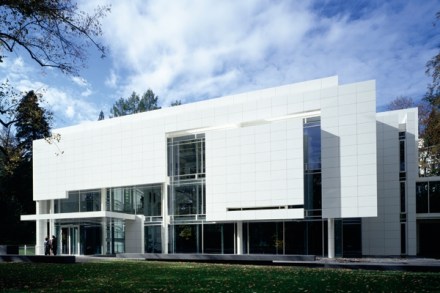
Imagine you had £20 million to spare, burning a big hole in your pocket. What would you spend it on? You could buy a stately home or a private jet, but that would be so boring. Surely the nicest way to spend it would be to ask one of America’s greatest architects to build a new museum in your hometown, to show the world your favourite paintings. Now that really would be fun. For the man I’ve come to meet today, this is no idle fantasy. It’s the story of his life. Ten years ago, Frieder Burda invited Richard Meier to design a gallery to house his art collection, here
The master’s lost voice

There is hardly ever one of Noël Coward’s old plays not on tour or in the West End. Sometimes you think the commercial theatre would collapse without him. A ‘new’ Coward is therefore an event. Never performed or published, Volcano was written in 1956 when Coward was living permanently in Jamaica as a tax exile. The play is the result of his life out in the tropics well away from the Angry Young Men in their winklepickers who were ruling the roost back in Britain. What a life it was! After a hard day’s snorkelling, Noël would sit outside his house, sipping a cocktail served by a white-coated native, the

Red alert

Rumours of disaffection were widespread even before I had seen this year’s RA summer extravaganza (sponsored by Insight Investment). The usual complaints about the hanging and selection had doubled or trebled, not just from non-members but from the Academicians themselves, but the critic tries to keep an open mind for as long as possible. Unfortunately, my equanimity did not survive the first room. This year, the visitor enters the exhibition via the Central Hall, where a gallimaufry of work has been hung against bright red walls. Some of it survives this shock treatment, but other exhibits are disastrously affected. Is it insensitivity or spite that accounts for the hanging of

Tales of the city | 16 June 2012

Last Wednesday two of the three live pooches that appeared in Pina Bausch’s Viktor did onstage what most dogs do when in a state of arousal. The incident, which elicited a great deal of audience laughter and repressed giggles on stage, would have amused the late Bausch. First seen in 1986, Viktor was the first of the many city-specific works that Bausch created and on which the current World Cities 2012 retrospective (at Sadler’s Wells and the Barbican) focuses. Viktor’s rhapsodic and episodic narrative comes from the theatricalisation of memories each member of the Tanztheater Wuppertal had of their experiences in a particular location. Viktor is about Rome, though not

Borsetshire blues

Will and Nic’s canoodling in the woods. Adam’s bashed-in head. Amy’s makeover from wholesome midwife to foul-mouthed stepdaughter. Ambridge, home to the Archers, the Grundys and of course Lynda Snell, has been transformed from a sleepy village in the heart of Middle England into a crime-ridden soap, fuelled not by the everyday happenings of ordinary folk but the high-octane antics of a new crew of emotion-hugging soap stars. Joe and Eddie Grundy have all but disappeared from the scene, as have Peggy, Jill and Clarrie. Now we know why. There’s been a TV takeover and the daily soap is now under the editorial control of John Yorke, who used to

Time travelling

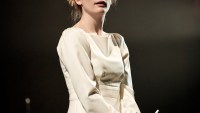
When should you set Antigone? Apparently not in the time of Antigone. The greatest classics these days seem to be aimed at the stupidest ticket-holders. And these hapless wretches can’t possibly be expected to understand anything outside their immediate experience. Polly Findlay’s version of Sophocles’ tragedy doesn’t even get modernity right. Her slightly out-of-date set design includes antique reel-to-reel tape machines and hefty old photocopiers the size of freezers. She’s taken Thebes and transplanted it to the studio of Crimewatch UK in about 1994. Very odd. The usual justification for these fast-forwardings is that they add relevance. They also close down curiosity and exempt directors from conducting the sort of

Culture notes: Pest control

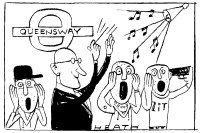
As an occasional user of Queensway Tube station, I have noticed that on exiting the lift I am met with the extraordinary and beguiling sounds of Mozart symphonies and piano concerti — well-chosen, beautifully played and blasted over the Tannoy system. There is something transporting about this post-underground experience, something I don’t expect after the humdrum of a packed commute. The other day, a TfL official was standing around and I had a few minutes to kill while waiting for the lift, so I asked her about this bizarre but welcome phenomenon. She explained that this was part of a controlled experiment in crowd management. Sensing my puzzlement, she explained

Setting the tone

The BBC has been heavily criticised for its coverage of the Jubilee flotilla, and the tone was incredibly annoying. All those smiley celebrities pretending to enjoy themselves! The tabloids, those for whom the Beeb can never do anything right, would have been just as mean if the treatment had been sombre and serious. ‘And we see a boat, followed by a barge, and next to that, another boat. And Her Majesty is waving, now to the crowds on the embankment, now to the next boat…’ The queue of vessels was a feeble idea, the rain made it worse and there was nothing anyone could have done. Bagehot himself would have

Disturbing relationships

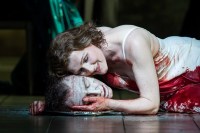
It struck me for the first time at the latest revival of David McVicar’s production of Richard Strauss’s Salome that this opera, Strauss’s first to maintain a place in the repertory, and its successor Elektra are, for all their differences, companion pieces. Even before reading the late Patrick O’Connor’s excellent article ‘Happy Families’, the best and least pretentious in the programme book, I’d been reflecting on how the two operas deal with the classic issue of the powerful and disturbing relationship between father and daughter: in the case of Salome, it is a stepfather in love with his stepdaughter, but that hardly alters the point; while in Elektra it is

Hay Notebook

The first Saturday of the Hay Festival is always a bit like the first day of term — bumping into people you’ve haven’t seen in months, sometimes for a whole year. Then there are the people down from London, dressed in mufti, sporting inappropriate sunglasses and crumpled linen jackets that haven’t been out of the wardrobe since the previous Hay Festival. I like to pick up my tickets, hang out in the green room and generally reacquaint myself with what is undoubtedly the greatest literary festival in the world. ••• I had planned to watch Hilary Mantel, Boris Johnson and Harry Belafonte, but a bout of food poisoning probably caused

Dangerous liaisons

A Royal Affair is a beautifully mounted historical drama which goes right where so many films of this type go wrong: it doesn’t get distracted by carriages and candlelight and pretty frocks and balls and sumptuous feasts, but keeps its eye firmly and surely on character and story and, my, what a fascinating story it is. Set in late-18th-century Denmark, it is the account of a love triangle between a German doctor, the Queen of Denmark and her imbecilic husband, the King, which sounds preposterous, but is actually based on a true event that not only led to scandal but also ultimately transformed the country. Although, at times, this is

In praise of Ray Bradbury

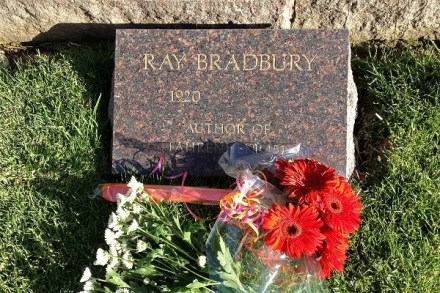
Sad to hear of the death of Ray Bradbury, although he enjoyed a good long life. He was a wonderful writer. Rather better, I think, than the more fashionable Philip K. Dick — certainly Bradbury was the superior story teller, and his fiction was as much about what it is to be human as the mildly sci-fi weirdnesses which I suppose gave him his early fame. Between the ages of 15 and 18, when I was besotted with US literature, he was one of my three favourites — along with Updike and Sinclair Lewis. An odd threesome, I suppose. Oddly, it wasn’t Bradbury’s acclaimed masterpiece, Fahrenheit 451, which captivated me;

Rain and royalty

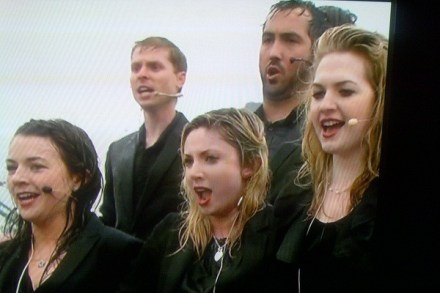
This picture, to me, sums up today’s Jubilee flotilla: drenched Royal College of Music students cheerfully singing Land of Hope and Glory at the end of a spectacle attended by over a million people. The rain, far from ruining the event, made it even more memorable and didn’t seem to deter the crowds. As the choir’s conductor put it: ‘freezing cold, wind, and rain but euphoric and unforgettable’. Sky News captured the spirit by covering its real source: the onlookers. ‘Even on the train down, people were talking to each other,’ a member of the public said. ‘It’s been amazing seeing the princess and the queen, I loved it,’ said

Changing tack

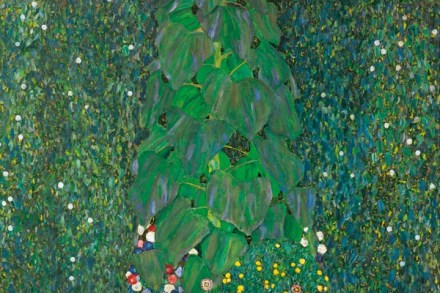
Gustav Klimt first came to Venice in the spring of 1899, in pursuit of Alma Schindler, the young stepdaughter of his friend and fellow artist Carl Moll. The nascent love affair between the artist, who was then in his late thirties, and the 19-year-old Alma was brought to an abrupt end when the girl’s mother read her diary and Klimt was asked to leave. Three years later she married Mahler. But before Klimt departed from Venice, Klimt and Alma had visited San Marco where, as Alma recorded, the Basilica’s mosaics, glittering in the half-light, made a profound impression on him. Although he had experimented with gold-painted highlights in his ‘Pallas

The art of monarchy

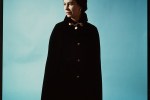
Andrew Lambirth reflects on the images that help shape our perception of the Queen Her Majesty the Queen has been a global celebrity for 60 years, and she carries her status with a naturalness and dignity that many of the more tearaway celebs would do well to emulate. She graduated from being a young and glamorous queen to a happy and fulfilled mother, but then had to settle for pausing in that most difficult of categories — middle age — for rather a long time, owing to the wondrous longevity of Queen Elizabeth, the Queen Mother. As the Queen now celebrates her Diamond Jubilee, in her own distinguished old age,

New build

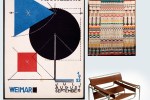
The Bauhaus was a sort of university of design, whose progressive ideas eventually fell foul of the Nazis. But as the exhibition Bauhaus: Art as Life is keen to impress, it was also a lifestyle, a modernist utopia, where staff and students were encouraged to mix freely, which they did with gusto. This, just as much as its reputation as a nerve centre for a new aesthetic, made it a magnet for the central European avant-garde. Among its teachers were some of the greatest artists and designers of the 20th century: Wassily Kandinsky and Paul Klee taught art; Marcel Breuer was responsible for furniture; Laszlo Moholy-Nagy for product design; Oskar

Unconditional love

Not many dance-makers have had their art celebrated in major, award-winning feature films. Pina Bausch has. Wim Wenders’s 2011 Pina and Rainer Hoffmann’s/Anna Linsel’s 2010 Dancing Dreams offered unique insights into her creative genius, facilitating the posthumous popularisation of a dance-specific phenomenon. Yet no film, no documentary and certainly none of the countless writings that popped up after the choreographer’s untimely death has managed to draw an exhaustive picture of Bausch or dispel the vagueness that surrounds what her Tanztheater was and still is about. Three years after her demise, Bausch and her work remain shrouded in mystery, resisting and eluding scholarly labelling or convenient pigeonholing. Central to such elusiveness

Problem play

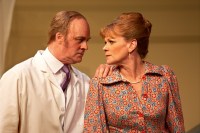
It’s all Kenneth Halliwell’s fault. By bashing in Joe Orton’s head with a hammer, he brought the playwright’s career to a premature halt when Orton was still experimenting with brittle and anarchic farces. Had Orton lived beyond 34, he’d have developed his technique and become a richer, truer and more rounded artist. And What the Butler Saw would now be a minor work by a major playwright. Instead it’s a major work by a minor playwright. Uneven in tone, lumpish in detail, unsure of its creative purpose, this is a problem play that doesn’t merit its status as a classic. Orton dashed it off in a few weeks and the