Arts Reviews

The good, bad and ugly in arts and exhbitions

Handelian pleasures vs modern head-scratchers

Opera seems almost always to have been acutely concerned with its own future. These days this is most often manifested in occasionally desperate, sometimes patronising attempts to entice new audiences to the art form. A new three-way initiative between Aldeburgh Music, the Royal Opera and Opera North takes a different tack by enabling a new generation of composers and librettists to try its hand in this most exacting art form. The initiative’s first fruit was a double bill premièred in Aldeburgh before being shown at Covent Garden’s Linbury Studio Theatre and Leeds’s Howard Assembly Room. That these two short pieces, about 45 minutes long each, should feel like studies for

What backing singers are really thinking behind the ‘ooh, ooh, oohs’

Have you ever looked at backing singers and thought: what is their story? Do they or have they ever prayed for their time to come? As they are going ‘ooh ooh, ooh ooh’ behind Kylie are they thinking, ‘I want to kill Kylie’? Do they mind that no one knows their name? Do they ever ponder why it’s so often white artists with black backing singers and never the other way round? I have often wondered about all this, and now realise if I’d stopped idling over such questions, got off the sofa and done some digging, I could now be in possession of an Oscar. I’m a fool to

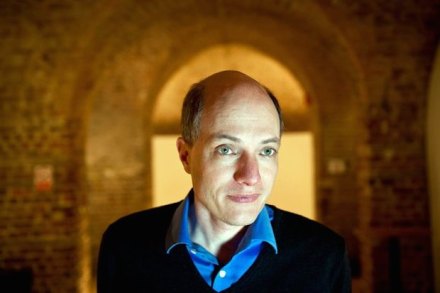
Alain de Botton: We need art to help us to live and to die

The world’s big national museums are deeply glamorous places. We keep quiet in their hallowed halls, we wander the galleries in reverence, we look at a caption here and there, but, sometimes, if we’re honest, deep in our hearts, we may be asking ourselves what we’re doing there. Art enjoys unparalleled prestige in the modern world, but the reasons for this are rarely explained in plain terms. Just why does art matter? When people want to praise art museums, they sometimes remark that they are our ‘new cathedrals’. This seems an extremely accurate analogy, because for hundreds of years, cathedrals were, just like museums, by far the most significant places

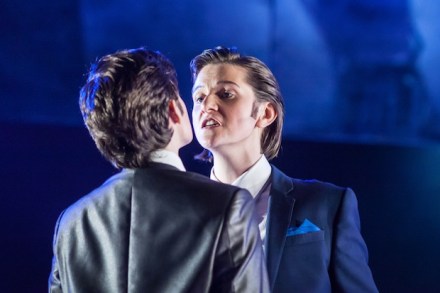
Julian Mitchell on Another Country: ‘I based it on my fury and anger and I wrote it fast and it flowed’

Today’s top public schools are plush country clubs with superb facilities, lovely food, first-class teaching, no fagging, no beating and, one imagines, minimal sexual interference from the staff. Most even have things called girls. While excellent at turning out world-class actors, the public schools these days are far too nice and unbrutal to be of any use as dramatic material for a play. Julian Mitchell’s play Another Country (1981) belongs to another era. It is a tale of sadistic, crumpet-munching prefects lording it over traumatised fags; homosexuality is rife and there’s brutal jockeying for position among the prefects — all good training for the cabinet jobs these teenagers one day

Upside down and right on top: the power of George Baselitz

It’s German Season in London, and revealingly the best of three new shows is the one dealing with the most modern period: the post-second world war era of East and West Germany and the potent art that came out of that split nation. In Room 90 is another immaculately presented British Museum show of prints and drawings, focused this time around Georg Baselitz (born 1938). Of the 90 works on display, more than a third has been donated to the BM by Count Christian Duerckheim, the remainder lent by this assiduous collector. The show begins with Baselitz’s contemporaries and I was surprised to find myself quite liking some things by

The tubular joys of Fernand Léger

In 1914 Fernand Léger gave a lecture about modern art. By then recognised as a leading Cubist artist, he had the year before signed up with the dealer Daniel-Henry Kahnweiler, who already represented Picasso and Braque. ‘If pictorial expression has changed, it is because modern life has necessitated it,’ Léger argued. ‘The existence of modern creative people is much more intense and more complex than that of people in earlier centuries…The view through the window of the railway carriage or the motorcar windshield, combined with the speed, has altered the customary look of things. A modern man registers a hundred times more sensory impressions than an 18th-century artist.’ However, Léger’s

A Short Attachment

I was in love for a whole week after Episode One: Your voice so tender, so knowledgeable, your slender hands and feet. In Episode Two, doubts crept in. Were you hogging the camera or was it just that the camera loved your profile, your man-of-the-people T shirts, your breeze-ruffled hair? Episode Three opens with you on a hill top, gesturing. Sighing with relief, I know it’s over, because you now remind me of that Irishman I met in Soho, and we know how that turned out.

Eton vs snobbery

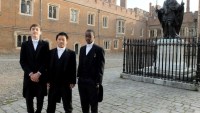
One of the stranger things about Eton is its near-total lack of class snobbery. Yes, all right, you still get the occasional away match where their supporters will chant at the opposition ‘You’ll be working for our Dads’ but that’s just badinage, not animus. I doubt it was always thus. Probably there was a time when every Etonian was acutely aware of which of his housemates was in line for a dukedom and which a mere baronetcy. But, as far as I can tell from my own experiences as an Eton parent, those days are gone. Today Eton is quite ruthlessly meritocratic and if you’re good enough you’re good enough,

These screen suicides deserve a nudge off the ledge

A Long Way Down is about four would-be suicides who meet for the first time on the top of a tall London building, intending to jump, but instead of jumping they decide to hang around and annoy the hell out of us for the next 90 minutes. Had I known what I know now, and had I also been on top of that tall building, I might well have given them all a hefty nudge. Based on the Nick Hornby novel, which, in itself, may not be the most successful of Hornby’s novels, it opens on New Year’s Eve on top of that building as our suicidal quartet truck up.

A gaggle of husbands and a pair of piglets

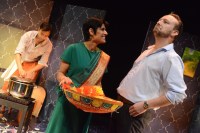
Here’s a great idea for a play. Turn the polygamy principle upside-down and you get a female egoist presiding over a harem of warring husbands. Sharmila Chauhan’s drama, The Husbands, introduces us to a pioneering sex maniac, Aya, who founds a commune in India where women take as many spouses as they fancy. Aya herself has three blokes on the go and is about to get married again.  Curtain up and we meet her pre-existing husbands, Sem and Omar, who get along together very nicely. Both are childishly besotted with Aya. Which is also nice. Anticipating the arrival of husband number three, the hubbies quietly vacate the bedroom and start

The dancers who said ‘no’ to postmodernism

It all started in 1971, when a group of physically and artistically talented youngsters decided to create a dance company and call it Pilobolus, after a fungus. Not unlike this barnyard micro-organism, which ‘propels its spores with extraordinary speed and accuracy’, the company was soon propelled to international success. But it was not an easy time to make ‘new dance’ in the US. On the one hand, living monuments such as Martha Graham, Merce Cunningham and Paul Taylor were still in full creative mode and dominated modern dance. On the other hand, the innovators of postmodern dance had given new meanings and directions to the art. Pilobolus took something from

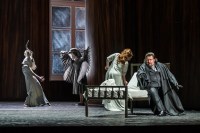
The Royal Opera House’s Die Frau ohne Schatten – a dream solution to Strauss’s problem opera?

If ever an opera was weighed down by its creators’ joint ambition, it is Die Frau ohne Schatten. Richard Strauss and his librettist Hugo von Hofmannsthal quickly began to imagine their third true collaboration, produced during the 1910s but not premièred until 1919, as their masterpiece. But it turned into a complex and unwieldy embarrassment of riches, albeit a glorious one. The charge that this enormous fairy tale represents the librettist and composer at their most pretentious and overblown is difficult to refute, and such charges are compounded by the fact that the surface message of its plot — in which a shadowless and infertile spirit Empress learns compassion and

So now we know – the BBC is more scared of offending Muslims than gay people

Are there enough black and minority ethnic people on our television screens? The comedian Lenny Henry thinks not and has proposed targets to ensure better representation. Lenny means stuff like Midsomer Murders, I think, which famously avoided using people of colour for a very long time in its absurd but strangely comforting dramas. I think this was to cater for people like me who enjoy watching affluent white people bludgeon each other with candlesticks in the library. In fairness, even Midsomer Murders once had some gypsies play a pivotal role in one episode — they lived in a gaily painted horse-drawn caravan, and were scrupulously tidy and probably filed their

Småland

Småland’s wooden cottages with sunflowers lack nothing. Brightly-painted, small in the distance like stories, they call the eye on and on. Their painted wood is clean as thought, as the clean-cut hearts let into their shutters.

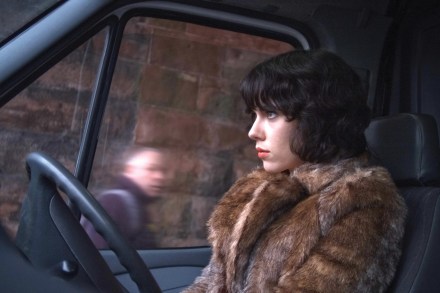
Under the Skin: one second of tits to every three minutes of glen

‘I thought it was supposed to go on for another half hour!’ said a man in the foyer on the way out. ‘When the alien got burnt to death I thought thank fuck for that.’ Before you get annoyed with me for giving away the ending, let me explain that this is one of those films where plot takes a back seat. More than that, it’s been tied up, gagged and locked in the boot. I can’t stand it when people give away the ends of films, which is why I never read reviews before going to the cinema. Too many reviewers have no respect for plot. So I didn’t know that

The Picasso muse who became an artist

With her long blonde hair tied in a ponytail, Sylvette David is familiar from many of Picasso’s paintings. She met the artist in the South of France as a teenager and became one of his models – his muse but never his mistress — during the spring of 1954 (Picasso’s relationship with Françoise Gilot had ended and he hadn’t yet met Jacqueline Roque). A collection of drawings, paintings, metal sculptures and ceramics documenting their relationship can now be seen in the Kunsthalle Bremen’s exhibition Sylvette, Sylvette, Sylvette: Picasso and the Model (until 22 June). And in London, the Francis Kyle Gallery, 9 Maddox Street, W1, is showing some of Sylvette’s

Rome, Open City still shocks

Roberto Rossellini shot his neorealist landmark Rome, Open City while the war still raged and rubble littered the freshly liberated capital. Based on real experiences from the ten-month German occupation, the film follows ordinary Romans, some active dissenters, some just trying to get by, as the Nazis and the Italian fascist authorities mount a search for a Resistance fighter freshly arrived from outside the city. Actress Anna Magnani established her screen persona as the indomitable battler from the streets, and renowned stage comedian Aldo Fabrizi (above) turned in a performance as great as any in cinema as Don Pietro, the priest whose faith in God and his fellow man never

The sound of growing rhubarb

When the BBC proposed to do away with 6 Music a few years ago, the media-savvy fans of the station created such a fuss on Twitter and Facebook that the Corporation caved in. Threat of closure was exactly what the station needed to grow its listener-base, now almost as big as Radio 3, and growing (up to 1.96 million per week in the latest Rajar figures, as opposed to Radio 3’s 1.99 million). The Asian Network, too, has flourished after suggestions that it would also have to be shut down if the BBC was to survive financially in the new digital age. But what’s good for them has now spelt

If you’re going to adapt a bestseller, don’t choose the A-Z

What’s the quickest way to create a hit musical? Base it on a bestselling book. The writers of The A-Z of Mrs P have done just that. But they’ve chosen the wrong book. You twits. You need to pick a popular novel, not the London street directory. The main character, Phyllis Pearsall, spent years trudging the pavements of the capital creating her catalogue of 23,000 streets. In this show, the character of Mrs P, a posh and self-contained bumpkin, proves dramatically inert. The writers seem to have twigged that she’s a dud, so they’ve turned their attention to her uppity Hungarian father and his sozzled Irish wife. But these two