Arts Reviews

The good, bad and ugly in arts and exhbitions

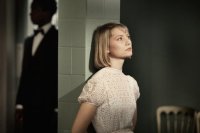
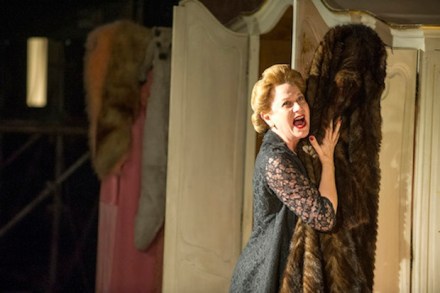
Powder Her Face: Amanda Roocroft would never give a random bell-boy a blowjob

Before we talk fellatio, let me get the boring, snide observations out of the way. It’s great to see the ENO experimenting with space etc – exploring ‘new’ venues, going outside their comfort zone blah, blah, blah – but they really need to do better than this. Ambika P3 is a fantastic industrial box in the middle of Marylebone (where they made the concrete to build the Westway). It’s not as undiscovered as the ENO like to think it is (it’s been around for nearly a decade) but still, good on them for finally realising it’s here. For them to then ignore the glories that the space has to offer
Ledbury Road

Two poems in memory of Mick Imlah 1. ‘Hardy and Housman lived round here,’ I said, slumped in an armchair in your flat. ‘Compared to those two, we’re small beer — Hardy and Housman, geniuses crowned here! No blue plaques for us, who’ve gone to ground here… We’re pygmies, compared to giants like that, Hardy and Housman, who lived round here,’ I said; slumped. In an armchair. In your flat. 2. I don’t remember, Mick, if ‘Ca the yowes’ Was one we listened to together, Long after closing time, in your small flat With the almost-derelict sofa, the bows Of our boat heading into heavy weather (How so?), the whisky

Michael Craig-Martin pokes a giant yellow pitchfork at the ordinary

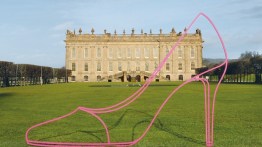
Visitors to Chatsworth House this spring might wonder if they have stumbled through the looking-glass. The estate’s rolling parkland has been invaded by an army of vibrantly coloured, outsized garden tools, whose outlines seem to hover, mirage-like, over the landscape. These painted-steel 2D ‘sculptures of drawings’ are the brainchildren of the conceptual artist Michael Craig-Martin. Craig-Martin finds poetry in the everyday and here he has taken 12 commonplace objects — a wheelbarrow; a spade; a lightbulb — and transformed them into something extraordinary. He also believes that context is everything when it comes to art and the works have been carefully positioned. While ‘High Heel’ (above) speaks to the decadence

Simon Cowell’s latest attempt at global domination

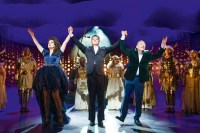
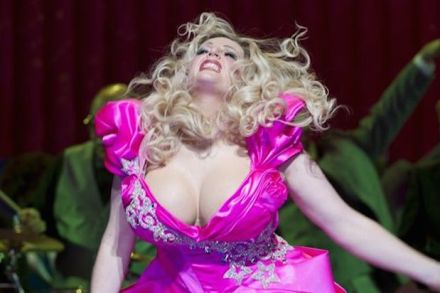
I Can’t Sing! is a parody of The X Factor, which already parodies itself at every turn. Quite a tough call. The heroine is an oppressed no-hoper stuck in a tiny caravan under the Westway with her crippled dad who lives in an iron lung. She longs for a chance to win stardom and wealth on a TV talent show. So this is the Cinderella story with a lot of grotesque and absurd modern detailing. Is it good? No. It’s spectacularly brilliant. A hit musical needs to get everything right and this one does just that. The sets are lavish and sumptuous. The costumes are razor-sharp parodies of underclass loser-wear.

European postmodern dance can be just as boring as American postmodern dance

What’s in a definition? As far as theatre dance is concerned, quite a lot. Labelling — and often labelling for the mere sake of it — is integral to our dance culture. Take, for instance, the various A-level dance syllabuses, the curricula of most dance-studies departments and, most of all, those dance-history manuals that slavishly perpetuate simplistically formulated principles and equations. Any of those will provide you with a neat definition of postmodern dance, stating that it started in the early Sixties, when some US-based artists decided to fight convention by stripping dance of its most traditional characteristics. What most of these sources don’t tell you, though, is that there’s

The snobbery and sweaty brows of watching opera in the cinema

I remain puzzled that, so far as I know, no daily or weekly paper carries reviews of the New York Met opera relays (I’m not a denizen of the blogosphere, where they may well swarm). To judge from the number of cinemas that show these live relays, and from how crowded most of them are, clearly more people see opera in this form than in any other. And many of those people will be experiencing opera live for the first time in cinemas, and may well never go to an opera house. I suspect there is a strong element of snobbery involved on the part of non-reviewers, as if one

The Double will stay in your mind, like a bit of food caught in a tooth

I should warn you that if you go see The Double it is one of those films that will trouble you long after the event. It will trouble you at breakfast and it will trouble you at lunch and it will trouble you as you go about your business, whatever that might be. Yes, a pain — haven’t I got enough troubles of my own? Haven’t I got enough to think about as it is? — but it is so singular and compelling, there is every chance it is worth it. It’s directed by Richard Ayoade, his second feature after the terrific Submarine, who is known to TV viewers as

April

Spring again   But from where no telling     Sweet as the spring       That went before         Same old story     But still compelling   Blossom reminding What blossom is for   Question the trees   But they’re not telling     How they obey       An impossible law         Question the mind     But it’s not telling   How it gives back What was gone for sure   Something stirs   In a blacked-out dwelling     Forces the lock       Of a double-locked door         That face again!  

Russell Crowe and Darren Aronofsky’s ‘Noah’ is thoroughly weird

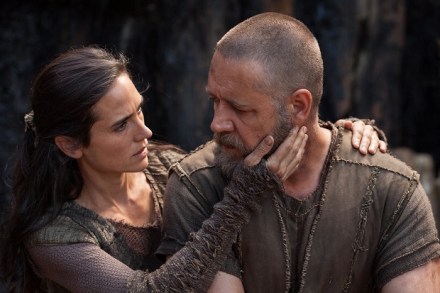
The Archbishop of Canterbury has had himself photographed with Russell Crowe, after attending the screening of Noah in which Russell C has the title role. ‘A great visit…impressive,’ he tweeted of Crowe. Which was one way round saying that the film itself was tripe, though his spokesman said that he found it ‘interesting and thought-provoking’, which is presumably an Anglican way of saying ‘rubbish’. The Archbish may have been completely thrown, in fact, by Darren Aronofsky’s entirely personal take on the flood story in Genesis.  In the Bible, God destroys the earth and the animals with a deluge that undoes his own work of creation, and then remakes it all

Opera tickets are too cheap

A revival of Anna Nicole will open the Royal Opera House new season, it was announced today. And students will be able to get in for £1, tweeted Kasper Holten proudly. A quid! So that’s an orchestra, an excellent cast of 17, a chorus, a production team of two or three dozen, two hours of words and music and a very good conductor all for less than one pot noodle. The news might baffle. The received wisdom is that opera tickets are too high. Far too high. So high that they are the principal (if not sole) reason why the art form has fallen behind the others in the popularity stakes.

Televising theatre and opera will not attract new audiences. It will repel them

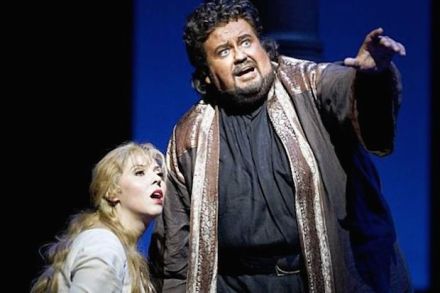
Always try to get the worst seats for the opera. Upper circle. Foyer. Toilet. The nearest bus stop. The further back the better. You’ll regret it if you don’t. There really is nothing more off-putting than being able to see the singers. Opera up close, as Princess Margaret once said, is just two fat people shouting at each other in a large room. And then there’s the clown make-up and trannie costumes to deal with. It all makes much more sense from afar, where it assumes a lovely dreamy abstract fuzz. Was that a smile? Or a stroke? Who knows. The words and music will carry you along. But even ‘good’ theatrical

Why are Shakespeare’s women so feeble?

There’s a problem, as we all know, with female roles in the theatrical canon, and it reaches all the way back to the Bard. Shakespeare’s women lack the richness and variety of his male characters. Modern theatre practitioners have tried all kinds of ploys to correct this imbalance. Next month the RSC launches a season of dramas, Roaring Girls, written during Shakespeare’s lifetime and featuring women in pivotal roles. This is bound to reopen the question of Shakespeare’s approach to women and their subordinate position in his work. It’s easy to argue that Shakespeare’s art simply reflects his habitat. Wealth, freedom and influence were the preserve of men, so he

Julian Cooper’s rock profiles

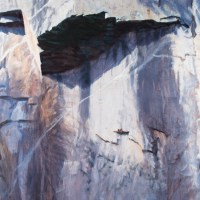
Like most ambitious artists, Julian Cooper has been pulled this way and that by seemingly conflicting influences. The son and grandson of Lake District landscape painters — his mother was a sculptor — he fell among abstractionists at his London art college, Goldsmith’s, in the late 1960s. But when I first saw his work in the early 1980s, he had emerged as a flagrant figurative painter, with a series of large canvases depicting scenes from Malcolm Lowry’s novel Under the Volcano. There was no subterfuge about these works; they went straight back to Manet and Degas, not as imitations but developments. Whether from heredity or early practice at his father’s

Arise, Kermit, Freefrog of the City of London

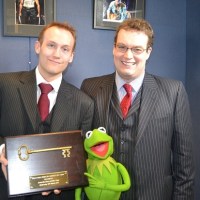
Move over Dick Whittington and his cat, the City of London has a new folklore hero. Yesterday Kermit the Frog was made Honorary Bridge Master of Tower Bridge. Mr S suspects this might be something to do with the fact that the latest Muppets film was shot extensively in the Square Mile. Sadly, rain stopped play so Kermit was unable to open the Bridge as planned, though that could well have been an excuse for the fact that he lacks the opposable thumbs needed to turn the key.

The art of data

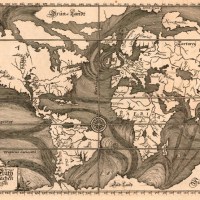
When you’re next waiting for a train at King’s Cross, don’t waste time window shopping on the concourse. Instead, pop round the corner to the British Library to see Beautiful Science: Picturing Data, Inspiring Insight (until 26 May). It’s not an enticing name for an exhibition, I grant you. But the show is beguiling: small, thoughtful and free. As ever with the British Library, the viewer is treated to rare historic publications. Robert Fludd’s The Great Chain of Being (1617) is particularly memorable for its depictions of the ‘tree of life’, a diagram that encapsulates what this show is about: data representation as a means of storytelling, as artful and

How Radio 5 Live transformed the airwaves

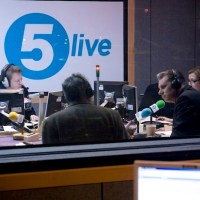
It’s amazing to think that it’s 20 years since the launch of Radio 5 Live. But it was bright and early on the morning of 28 March 1994 (long before Princess Diana’s death, 9/11, the Iraq war, the London bombs, the Asian tsunami, the ‘Arab spring’) that Jane Garvey announced, ‘Welcome to a new network.’ Not an impersonal statement, ‘This is Radio 5 Live’, as you might have expected from the BBC. But an inviting ‘Welcome’. Come in. Join us. We want to hear from you, just as much as you are going to hear from us. Interaction was what gave the station its USP, its distinctive character. Yet this

Kings of Dance: a show to keep the Sun King happy

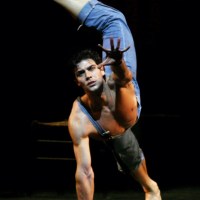
Louis XIV might have been a narcissistic and whimsical tyrant, but he did a lot for dance. An accomplished practitioner, he made ballet a noble art and turned it into a profession with the creation of the Académie Royale de Danse, the first institution of its kind, though not the first ballet school as some badly scripted television programmes would lead us to believe. More significantly, he showed the world that ballet can be a male art, something that 2014’s Kings of the Dance proves too. Ever since French Romantic choreography relegated male dancing to a lesser status, ridicule of and prejudice against guys in tights are still rife. Alas,