Arts Reviews

The good, bad and ugly in arts and exhbitions

Trash, review: trash by name, trash by nature

Trash is the sort of film one desperately wishes to be kind about — heart supremely, if not burstingly, in the right place and all that — but it doesn’t make life easy for itself. Directed by Stephen Daldry, with a script by Richard Curtis, and set amid the kids who work the rubbish dumps of Rio de Janeiro, this aspires to combine (I think) the lively spirit and warmth of Slumdog Millionaire with the hard-hitting social agenda of City of God, but in working both angles, it doesn’t pull off either one. It also culminates in the most implausibly happy ‘feelgood’ ending known to man (and here I am

London International Mime Festival review: on juggling, dance and Wayne Rooney’s hair transplant

January is something of a palate-cleanser for the year, as the London International Mime Festival flies in plane-loads of companies bearing gnomic names in a kind of dance-world Desperanto that’s equally incomprehensible in every language. Like cars or tourist T-shirt slogans, titles like Plexus or Ephemeral Architectures label what’s now called ‘visual theatre’, with copious explanatory notes translated between four languages, gaining comic value at every stage. I don’t know why they don’t just write, ‘We’re playing. The sponsor paid.’ (Mark Morris is the only choreographer I know who says, ‘I make up dances and you watch ’em.’) In LIMF you get acrobats, puppetry and circuses, but also some pretty

My Night With Reg at the Apollo Theatre reviewed: a great play that will go under without an interval

Gay plays crowd the theatrical canon. There are the necessary enigmas of Noël Coward, like The Vortex or Design For Living, which are slyly aimed at an audience of knowing code-breakers. There are the proud, defiant (and rather tedious) pleas for understanding like La Cage Aux Folles. And the gayest of them all, My Night With Reg, is also the least overtly gay because it dispenses with all homosexual caricatures. There isn’t an interior designer, a flight steward or a hair stylist in sight, let alone a Liberace fetishist, or a Maria Callas wonk. The characters are mainstream yuppies who are exactly like hetero folk, except that they seduce one

Persuasions

Persuasions of shattered glass, fifty rounds bringing carnage, injury, terror, bereavement. What can preserve the State? Citizen A calls an ambulance, rips his shirt up for bandages, risks his neck to protect others. Persuasions of word and image, graphics of ridicule, of subversion. Who should enforce their silence? Citizen B’s undeceived, seeing the hypocrite-bigot untrousered, the judge in the brothel, the Faith- Founder, hand on the trigger. Of the two modes of persuasion which gives the greater offence? which does the greater good? The response of the dead is muted but citizens in their millions packing streets shoulder to shoulder in freedom’s name give their answer.

What happened to virtuosity in dance?

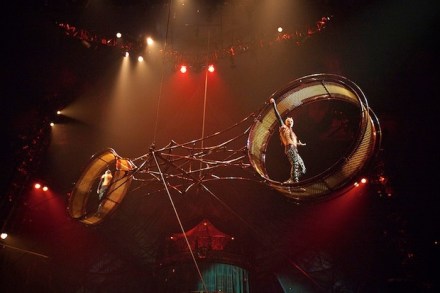
I was watching the Cirque du Soleil’s Kooza at the Royal Albert Hall last week, thinking how much base, uncomplicated enjoyment can be had away from dance. Such relief to watch contortionists, trapezists, high-wire cyclists and crazed men skipping on the Wheel of Death, such relief just to be amazed. If they didn’t make my palms pour sweat with fear, my jaw drop with disbelief, I’d feel dreadfully let down. I wonder what happened to being amazed in dance. I was talking with a friend last week about the lack of amazement offered by the bulk of ballerinas in current productions of the 19th-century warhorses Don Quixote (Royal Ballet) and Swan

How will the British public take to Rubens’s fatties?

This week a monumental exhibition, Rubens and His Legacy, is opening at the Royal Academy. It makes the case — surely correct — that the Flemish master was among the most influential figures in European art. There are few painters of the 18th or 19th century — from Joshua Reynolds to Cézanne, Watteau to Constable — who were not affected by his work. It will be interesting, however, to discover what the London art public feel about Rubens himself. The British have had a complicated relationship with the great man. Its apex is represented by his residence in London — admittedly for a brief nine months in 1629–30 — his

Mohammed — in pictures

Two months ago I was sitting beside the tomb of a descendant of the Prophet Mohammed, telling a story about the last week of the Prophet’s life. It was detailed enough to paint an imaginary portrait of him and included a mildly ribald joke from one of his wives, told to him on his deathbed when he was racked with fever. This kind of story often perplexes my rationalist friends back home. ‘Why can you describe the Prophet but not draw him?’ ‘Why can you make jokes but not draw cartoons?’ Where does this idea that it is forbidden to represent the Prophet come from? There is no line in

Wolf Hall, BBC Two, review: ‘actually rather good’

It starts in darkness. And no, it’s not a metaphor for the crooked timber of the human heart, it’s just bad lighting. Stanley Kubrick sourced his cameras from NASA in order to capture candlelight in his eighteenth-century epic Barry Lyndon; director Peter Kosminsky’s techniques in Tudor drama Wolf Hall seem decidedly sublunary by comparison. And it’s not just the odd interior scene: twilight, candlelight, or moonlight, a nation of viewers tuned into learn about Henry VIII’s Great Matter and instead spent the opening credits frantically ascertaining how to adjust our TV dials. But if all I’ve got to kvetch about is colour contrast, it’s because as a story, Wolf Hall’s opening episode last night was

The Deer

In the summer fields your life left you. She ran out from under the hood of your heart and tottered across tarmac on clippy-cloppy hoofs like a teenage girl in heels. No time to notice the strange evening light, the sun low down on the green high crops, only time to brake and watch her go first one way then the other, undecided at the sight of your wide, loud car; alien, yes, off-white and wild; you glimpsed her on a patch of burned waste ground a farmer must have scorched for a reason, and passed.

A Most Violent Year, review: mesmerising performances – and coats

A Most Violent Year is a riveting drama even though I can’t tell you what it’s about, or even what it actually is. (What’s new?) Set in New York City in 1981, against the improbable background that is the heating oil business (it’s sexier than you’d think), this isn’t quite a gangster film and it isn’t quite a thriller and it isn’t quite a morality play and it isn’t quite an exploration of the American Dream and it isn’t one of those parables about the evils of capitalism either. This is discombobulating, initially. We are used to the familiarity of well-defined genres. ‘Where is this going?’ you will keep asking

Broadchurch, review: ‘unwatchable’

Probably the two greatest advances in western culture in my lifetime have been the Sopranos-style epic serial drama and the advent of TV on demand and/or the DVD box set. I don’t think I’m saying anything weird or contentious — or indeed original — here. For example, I’m writing these words at the end of a week with the Fawn in the Canaries, a holiday which I just know wouldn’t have been half as pleasurable if we hadn’t been able to retire to our room every evening after another hard day’s beach work to the solace of two more episodes of the Nordic miseryfest that is The Bridge. And just

Radio 4’s War and Peace: almost as good as the book

To have listened to Radio 4’s marathon ten-hour adaptation of Tolstoy’s War and Peace as it was being broadcast on New Year’s Day must have been both wonderful and a bit weird. Like soaking in an ever-replenishing warm bath, indulgent, luxuriant, all-absorbing. Yet at the same time I imagine it was quite hard by the end to step back into your own world after being so taken over by the fictional cares of the Rostov, Bolkonsky and Bezukhov families. Needless to say, I caught barely one episode on that day (how many, I wonder, did listen all the way through?). Fortunately, there’s a chance to catch up in the old-fashioned

Andrea Chénier, Royal Opera House, review: like a Carry On – but without the jokes | 21 January 2015

Andrea Chénier Royal Opera House, in rep until 6 February Who on earth could have predicted that a hoary old operatic melodrama set in revolutionary France would find resonance in the present where the pen as a weapon against bigotry and hypocrisy has suddenly achieved iconic status. But hold up, let’s not get carried away. We’re talking about Giordano’s Andrea Chénier. Though its eponymous poet does indeed extol free expression at the service of love, the sentiments — the voices of reason in a time of high anxiety — don’t run too deep. And so we’re back where we started, with a hoary old melodrama. So how to stage something that only

Blunt is right. Being posh in the arts is career suicide

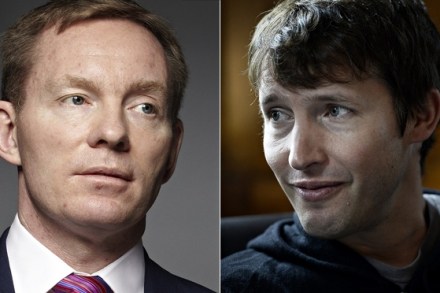
Yesterday saw Labour’s shadow minister for the arts, Chris Bryant MP, amusingly and justly savaged by the pop star James Blunt for some ill-advised remarks about the predominance of public school boys in the arts: he cited both the Old Harrovian Blunt and the Old Etonian Eddie Redmayne as evidence of a lack of diversity. Now, I am sure the multi-award-winning, multi-platinum-selling former Captain Blunt can look after himself, and during awards season, the Oscar-nominated Redmayne has other things on his plate, but it reminds this former actor of how narrow the arts really are. It was after my first successful audition in 2007, for a part in a Jacobean tragedy

Met Opera Live’s Merry Widow, review: kitsch, glorious kitsch

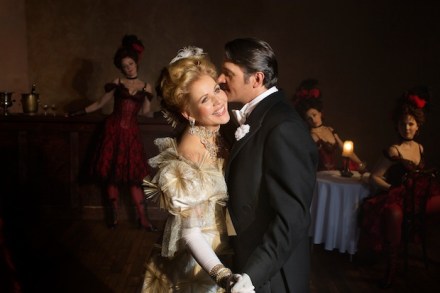
The Merry Widow Met Opera Live ‘Even today, at 75, the waltz from The Merry Widow sends me into a fit of rage,’ wrote Richard Strauss to his close collaborator Clemens Krauss in 1940. In a brilliant piece in his book Essays and Diversions Robin Holloway discusses why that waltz, and indeed the whole of Lehar’s masterpiece infuriated Strauss so much, and mainly concludes that Strauss was jealous of the man who could write the ‘deathless’ tunes of The Merry Widow. Five years before, Strauss had complained ‘to think that one must get to be 70 years old to discover that one’s best gift is for kitsch!’But that only shows

How Kraftwerk did more to shape modern music than anyone since the Beatles

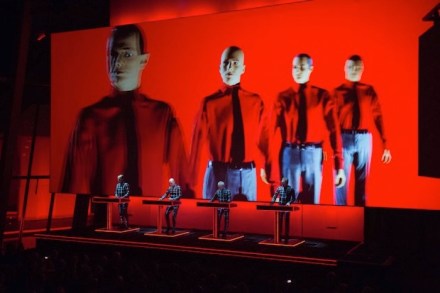
Normally, few things in life are quite so tedious as listening to a bunch of academics discussing pop music. However this week’s Kraftwerk Konferenz at Aston University may be the chinwag that refutes this rule. Why so? Well, speakers includes former Kraftwerk member Wolfgang Flur, plus Stephen Mallinder from Cabaret Voltaire and Rusty Egan of Visage – remember them? OK, so these real-life pop stars are still outnumbered by a host of earnest academics, delivering lectures with mind-numbing titles like ‘Kraftwerk and the Issue of Post-Human Authenticity’ and ‘Kraftwerk and the Cultural Studies of Cycling’. However if any band can withstand two days of pointy-headed discourse, it must be Kraftwerk.

Shirley Williams: Saving my mother from the scriptwriters

Shirley Williams sits at the head of a table in a large conference room in Lib Dem HQ. She will be 85 this year, but still has a finger in many a pie, most of which we’re not to talk about here, including the predicted wipe-out of a generation of her party’s MPs at this year’s election. It’s one of the reasons she never made it to see the Tower of London poppies. Too busy. She also had to dash to Russia where she is on the board of the Moscow School of Political Studies. ‘It is all about teaching people about democracy and has fallen under the frown of

Geometry in the 20th and 21st centuries was adventurous – and apocalyptic

Almost a decade ago, David Cameron informed Tony Blair, unkindly but accurately, ‘You were the future once.’ A visitor to the Whitechapel Gallery’s exhibition, Adventures of the Black Square, might mutter the same words in front of the first exhibits. It is now a century since Kazimir Malevich painted the starkest abstractions in the history of art: one simple geometric shape painted on a background of another colour. It was not, one might have thought, an idea with much mileage. Yet those early geometric abstractions had the compressed power of revolutionary manifestos. For good or ill, there has followed 100 years of modernist, post-modernist, and now post-post-modernist geometry in art.

Bike

I sold the sleek black bike you said I should buy. My special treat, in the shop, on my own, I couldn’t fulfil. It took your love, your woman’s will to tutor me in the art of self-giving and not to fear the gifts that feed. My self-denial father’s handed down creed. Cycling was the emblem of our in-love-fun. We headed out evenings after work, met near the deer park, rode out that summer to an unending, un-setting sun. What now our love is done?