Raymond Keene

Double fianchetto

From our UK edition

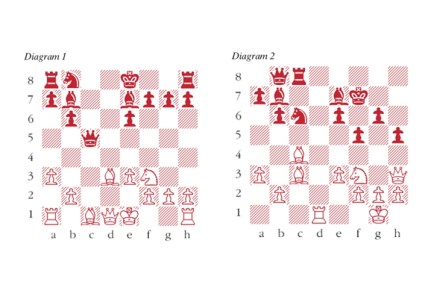
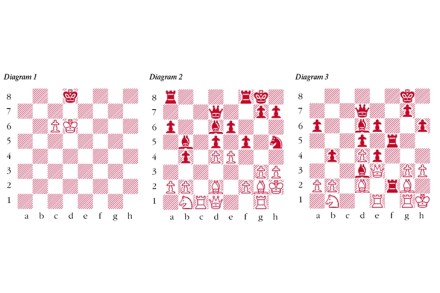
In my pantheon of heroes a particular place of honour is occupied by the hypermodern grandmaster Richard Réti, the first to adopt the double fianchetto since the days of Howard Staunton.   Réti-Yates: New York 1924; Réti Opening (See diagram 1)   12 Rc2 This manoeuvre connected with this rook move must have struck onlookers as nothing short of revolutionary. Réti is planning to place his queen, the most powerful piece, on the extreme flank at a1. This is consistent with his theory that occupying the centre with pawns in classical style, as Black has chosen to do, exposes the pawns to pressure from the wings. 12 ...
no. 573

From our UK edition

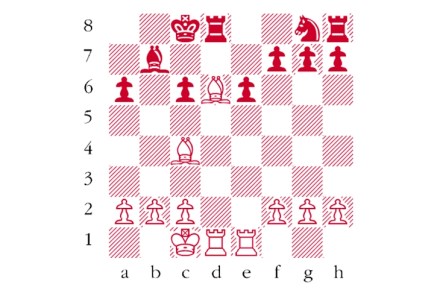
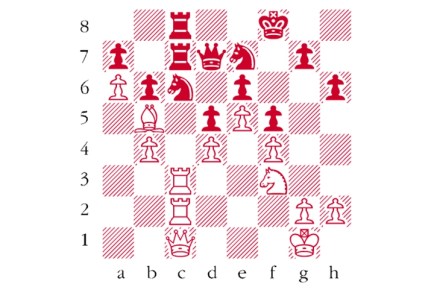
White to play. This position is from Van Foreest-Bortnyk, St Louis 2019. How did White break through on the kingside with a fine blow? Answers to me at The Spectator by Tuesday 1 October or via email to victoria@spectator.co.uk. There is a prize of £20 for the first correct answer out of a hat. Please include a postal address and allow six weeks for prize delivery.

no. 572

From our UK edition

White to play. This is from Nguyen-Alekseenko, Khanty-Mansiysk 2019. White’s queen and rook are both attacked. How does he maintain material parity? Answers to me at The Spectator by Tuesday 24 September or via email to victoria@spectator.co.uk. There is a prize of £20 for the first correct answer out of a hat. Please include a postal address and allow six weeks for prize delivery.

Adopt a hero

From our UK edition

I am often asked which players I admire most and which grandmasters, writers and champions exerted the most influence on my own chess development. In general I was most impressed by the strategists and writers such as Richard Réti, whose games were brilliantly elucidated in an anthology by grandmaster emeritus Harry Golombek OBE, and Aron Nimzowitsch, who expounded his own theories in the two didactic masterpieces, My System and Chess Praxis. Others who fall into the strategic category are Mikhail Botvinnik and Tigran Petrosian; and two superlative tacticians in the persons of Alexander Alekhine and Mikhail Tal.   In the weeks ahead I will be coupling creative achievements by these heroes with games of my own which were plainly inspired by illustrious forebears.

Benko’s endgame

From our UK edition

The Hungarian/American grandmaster Pal Benko has died at the age of 91. Among his numerous distinguished achievements was his double qualification for the World Championship Candidates tournaments of 1959 and 1962, eight victories in the US Open, his invention of the Benko Gambit (1 d4 Nf6 2 c4 c5 3 d5 b5) and his prowess as a subtle composer of endgame studies. Over the board, he defeated such eminent opponents as Tal, Fischer, Petrosian, Smyslov, Korchnoi, Keres and — as seen in this week’s game — Najdorf.

no. 571

From our UK edition

White to play. This position is from Benko-Jeney, Budapest 1950. Benko has just sacrificed rook for knight. What is his idea? Answers to me at The Spectator by Tuesday 17 September or via email to victoria@spectator.co.uk. There is a prize of £20 for the first correct answer out of a hat. Please include a postal address and allow six weeks for prize delivery.   Last week’s solution 1 ...

Ding an sich

From our UK edition

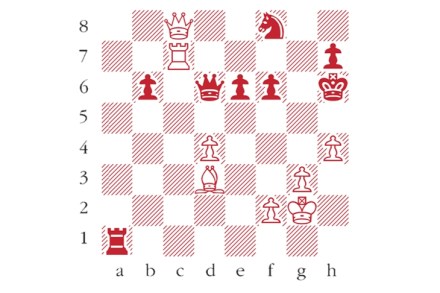
Ding Liren, the Chinese grandmaster, has scored a career best in the Classical time limit section of the Grand Tour in St Louis which concluded late last month. Ding tied for first prize with world champion Magnus Carlsen in the main tournament, and then went on to crush the champion in the quickplay tie-break.   Carlsen was on the verge of holding a draw in this game, until Ding decanted a vintage win in the endgame.   Ding-Carlsen, St Louis 2019 (see diagram 1)   This is the position from the first play-off game where Carlsen lost on time. Black has control over the g8-square so the win is not straightforward. The key to White’s winning plan is to relocate the rook to the a-file and establish the bishop on the a1-h8 diagonal.

no. 570

From our UK edition

Black to play. This is from Carlsen-Ding, St Louis 2019. The black pieces are converging on the white king but he must deal with the threat of Qf8 mate. How did he do this while bringing his own attack to a conclusion? Answers to me at The Spectator by Tuesday 10 September or via email to victoria@spectator.co.uk. There is a prize of £20 for the first correct answer out of a hat. Please include a postal address and allow six weeks for prize delivery.   Last week’s solution 1 ...

no. 569

From our UK edition

Black to play. This is from Nepomniachtchi-Anand, St Louis 2019. How did Anand exploit his opponent’s lapse? Answers to me at The Spectator by Tuesday 3 September or via email to victoria@spectator.co.uk. There is a prize of £20 for the first correct answer out of a hat. Please include a postal address and allow six weeks for prize delivery.

Peace conference

From our UK edition

The classical section of the elite Grand Tour event in St Louis, which ended earlier this week, resembled a peace conference rather than a chess tournament. Well past the halfway stage, less than 10 per cent of the games had been decisive. Something must be done about this tendency and there are various solutions.   The first and most obvious is to switch to considerably faster time limits. There has been a nod in this direction by Grand Tour organisers, with their addition in St Louis of both a rapid and blitz section. Ramping up time limits, however, means sacrificing the games’ quality, which diminishes as the time limits decrease.

No garlands

From our UK edition

At St Louis, world champion Magnus Carlsen met with unexpected setbacks in both the rapid and blitz sections. In both cases his play was unusually lacklustre and his self-assurance seemed to crumble. I can’t imagine Capablanca, Alekhine, Botvinnik or Kasparov ever uttered such words about their own play as Carlsen did when he said: ‘Everything’s going wrong. My confidence is long gone and now I just don’t really care anymore. My number one wish now is for the tournament to be over, it cannot come soon enough.’ Lev Aronian was the overall winner.   Yu Yangyi-Carlsen: St Louis Blitz 2019 (see diagram 1)   19 Nxf6+ Bxf6 20 gxh5 c3 21 Qg2 Kh7 This defensive measure proves too slow. The best chance was counterattack with 21 ...

no. 568

From our UK edition

White to play. This is from Aronian-Mamedyarov, St Louis 2019. We are only just out of the opening but White has a killing blow. What is it? Answers to me at The Spectator by Tuesday 27 August or via email to victoria@spectator.co.uk. There is a prize of £20 for the first correct answer out of a hat. Please include a postal address and allow six weeks for prize delivery.

Zugger zugged

From our UK edition

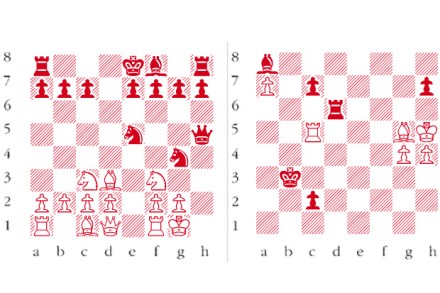
The German expression zugzwang means ‘compulsion to move’ and is most often seen in the endgame. Consider the following position on Diagram 1.   It is Black to move. If Black were not obliged to move he could draw by waiting for White to play 1 c7+ Kc8 2 Kc6 with a draw by stalemate. Instead Black is compelled to move, thus losing after 1 ... Kc8 2 c7 Kb7 3 Kd7 winning by pawn promotion to queen or even rook.   The most famous zugzwang occurred in this week’s game, a classic, where the great Aron Nimzowitsch reduced his opponent to an utter paralysis on a board full of pieces. Notes based on those by Garry Kasparov in his My Great Predecessors series (Everyman Chess).

no. 567

From our UK edition

White to play. This position is from Alekhine-Nimzowitsch, San Remo 1930. Can you spot the quiet move that puts black in zugzwang? Answers to me at The Spectator by Tuesday 20 August or via email to victoria@spectator.co.uk. There is a prize of £20 for the first correct answer out of a hat. Please include a postal address and allow six weeks for prize delivery.

Adams Avalanche

From our UK edition

Mickey Adams won the British Championship, which finished last week in Torquay, for the seventh time. Leading scores (out of nine) were as follows: 1. Adams 7½; 2. Howell 7; 3= Haria and Palliser 6½; 5= Gordon, Tan and Houska 6. Jovanka Houska has now won the British Women’s Championship a record nine times.   The key element in Adams’s success was his deadly ability to score with the white pieces, racking up five wins from five games as White. This week, an excursion around the Adams Avalanche.   Adams-Gordon: British Championship, Torquay 2019 (see diagram 1)   Black is relying on the pin along the a4-e8 diagonal to regain his pawn but he is in for a nasty surprise. 15 b6!

no. 566

From our UK edition

White to play. This position is a variation from Adams-Pigott, Torquay 2019. How can White crash through to gain a winning position? Answers to me at The Spectator by Tuesday 13 August or via email to victoria@spectator.co.uk. There is a prize of £20 for the first correct answer out of a hat. Please include a postal address and allow six weeks for prize delivery.

Game plan

From our UK edition

What distinguishes the expert from the amateur in chess is partly tactical fluency, but also the ability to map out long-term patterns, in other words to visualise a distant goal. Some champions were distinguished by their talent for rough-and-tumble tactics; among such illuminati one could mention Alekhine, Tal and Kasparov. Others, such as Capablanca, Reti, Nimzowitsch, Smyslov and Karpov, stood out by virtue of their ability to foresee routes to victory that could only have been vaguely discernible to the average chess eye. A new book Planning: Move by Move by Zenon Franco (Everyman Chess) explains this long-range vision and how to improve one’s prospects of achieving it.

no. 565

From our UK edition

White to play. This position is from Capablanca-Lasker, Havana 1921. Capablanca was another great champion famed for his ability to plan. How did he finish off here? Answers to me at The Spectator by Tuesday 6 August or via email to victoria@spectator.co.uk. There is a prize of £20 for the first correct answer out of a hat. Please include a postal address and allow six weeks for prize delivery.

no. 564

From our UK edition

White to play. This is from Giri-Mamedyarov, ­Croatia 2019. White is a piece down and needs a dramatic continuation. What did he play? Answers to me at The Spectator by Tuesday 30 July or via email to victoria@spectator.co.uk. There is a prize of £20 for the first correct answer out of a hat. Please include a postal address and allow six weeks for prize delivery.

Black Death

From our UK edition

There are comparisons to be made between tennis and chess. Player X (aka White) serves. Player Y (Black) responds. The advantage of playing White in chess and serving in tennis are similar. Losing your serve is nearly as bad for a tennis player as losing with White is for a chess player. But some champions have made a speciality of winning with the black pieces — Alexander Alekhine, Mikhail Tal, Bobby Fischer and Garry Kasparov spring to mind. Magnus Carlsen does not readily fit into this category, but his increasingly dramatic victories with Black are becoming more common. This week, three Carlsen Black wins, out of five, from a recent elite event. The demolition of Anish Giri is particularly spectacular.