Arts Reviews

The good, bad and ugly in arts and exhbitions

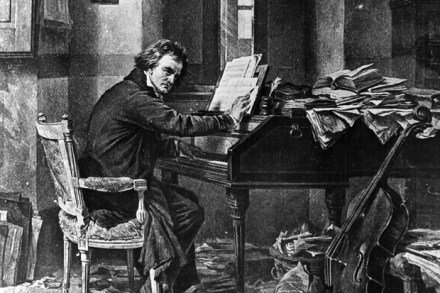
Was Beethoven influenced by yoga?

How many digital radios have you bought over the years? How many are still working? Of the four I used to have, only two are now working and those only in certain parts of the house. I wonder, if a nationwide audit were conducted, how many DAB sets would be found that are still up and running and in daily use? It’s far easier for me to take a laptop into the kitchen and listen online than to struggle to hear through the wheezes and pops emitted by the DAB radio. Why the signal never seems to improve, even in crowded urban areas, is a puzzle. Meanwhile the amount of
Wild made me want to puke

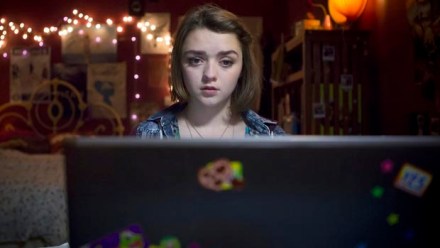
Wild is yet another film based on a true story, as currently seems to be in vogue for some reason. (See The Imitation Game, Foxcatcher, The Theory of Everything, Testament of Youth etc.) Maybe the film world has run out of made-up stories, which was bound to happen sooner or later, as you can’t just pluck them out of the air? I don’t know. I can only tell you that this is the story of Cheryl Strayed who, after a series of personal struggles, opts to rebuild herself by walking 1,000 miles of the Pacific Crest Trail, from the Mojave Desert to the Oregon/Washington border. This is a female on-the-road

Old Vic’s Tree: Beckett plus Seinfeld – plus swearing

‘Fucking hell. You twat. Fuck off. Fuck. Fuck.’ These dispiriting words are the opening line of Tree, a newish play by the lugubrious comic Daniel Kitson, whose stand-up show once transported me into the heavenly arms of Lethe. His script opens with a chance encounter between two oddball smart Alecs. The outdoor setting, borrowed from Beckett, is a suburban cul-de-sac where a single tree is about to shed its autumn raiment. One man crouches in the branches, another stands below. They exchange confidences, observations, food and witticisms. At the end, one departs. This is a play of quips and anecdotes but no significant action. The tree-dweller is an eco-warrior protesting

Royal Opera’s Orfeo, Roundhouse: shouts its agenda so loudly the music struggles to be heard

What a week to stage an opera about art’s power to challenge institutional authority, oppression — even death itself. Orfeo’s weapon might be a lyre rather than a pen, but the metaphor is silhouetted clearly against the monochrome backdrop of the Royal Opera’s new production of Monteverdi’s opera. Director Michael Boyd, former artistic director of the RSC, has taken a world of nymphs and shepherds and stripped it for conceptual parts. A battle between Gods and men is reinvented as a struggle between individual creative autonomy and faceless obedience to church and state. In Tom Piper’s designs, meadows and bucolic loveliness are out and 24-style metal walkways and gantries are

ENB’s Swan Lake: the rights and wrongs of ballet thighs

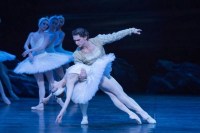
There’s been heated disagreement over the past week about what’s right and wrong. Is the rocket-propelled ex-Bolshoi enfant terrible Ivan Vasiliev ‘right’ for Swan Lake? Is English National Ballet right to accept such huge thighs in this of all classics, when the sizeist cohorts of the Russian establishment always said nyet to the sturdy, forceful Belarussian? That peculiar balletic categorisation ‘emploi’ has been invoked even by British critics. Emploi means ‘rightness’ as a ‘type’ for a role. Emploi was what drove Mikhail Baryshnikov, another short man condemned at home by his build to demi-caractère parts, to quit Russia and its narrowmindedness and redefine himself as danseur noble in the West.

Royal Opera’s Orfeo, Roundhouse: shouts its agenda so loudly the music struggles to be heard

Orfeo Royal Opera, Camden Roundhouse, in rep until 24 January What a week to stage an opera about art’s power to challenge institutional authority, oppression — even death itself. Orfeo’s weapon might be a lyre rather than a pen, but the metaphor is silhouetted clearly against the monochrome backdrop of the Royal Opera’s new production of Monteverdi’s opera. Director Michael Boyd, former artistic director of the RSC, has taken a world of nymphs and shepherds and stripped it for conceptual parts. A battle between Gods and men is reinvented as a struggle between individual creative autonomy and faceless obedience to church and state. In Tom Piper’s designs, meadows and bucolic loveliness

Eddie Redmayne reigns as king of the Hawkings

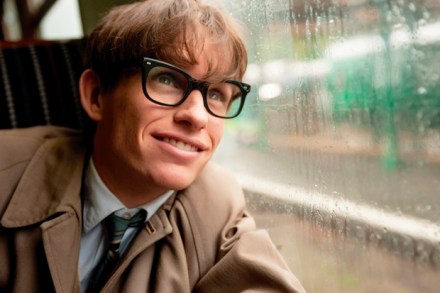
Mr S’s colleague Tanya Gold writes in this week’s issue of The Spectator, that Eddie Redmayne is ‘very good’ in The Theory of Everything even if the Stephen Hawking biopic fails to mention that the physicist was ‘a very bad husband indeed’. Script issues aside, the judges at the Golden Globes were also won over by Redmayne’s performance, awarding the Old Etonian the gong for Best Actor in a Motion Picture (Drama). In his acceptance speech, Redmayne found time to praise both Hawking and the physicist’s former wife Jane, on whose memoir the film is loosely based. ‘Stephen, Jane, Jonathan and the Hawking family allowed us into their lives and entrusted us with their story,’

What unites Churchill, Dali and T.S. Eliot? They all worshipped the Marx Brothers

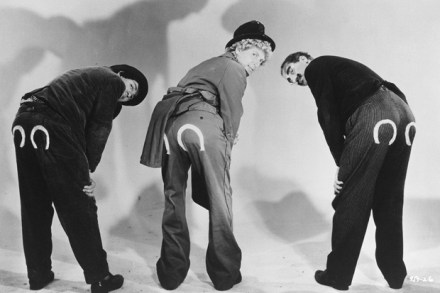
‘I had no idea you were so handsome,’ Groucho Marx wrote to T.S. Eliot in 1961 on receiving from him a signed studio portrait. The Missouri-born Eliot was the Marx Brothers’ devoted fan; three years later, in June 1964, Groucho called on the 75-year-old poet at his home in London. Eliot was interested in the Marx Brothers’ first undisputed film masterpiece, Animal Crackers (1930), while Groucho wanted only to quote from ‘The Waste Land’; however, the men agreed that they shared a love of cats and fine cigars. Winston Churchill was another who admired the Marxes and their deliciously mad repartee. During an air attack on London in May 1941

Stalker

The moon comes knocking on our door; a slavish stalker who hangs around all night. The slowest of walkers, he matched at an equal distance each of our homeward steps. We close our door on him, push him out only to find he’s already skirted the house, taken the side alley, slipped the padlocked gate, jumped the flowerpots and several four foot pines and is staring fixedly through our unlit bedroom windows. He’ll watch all night, like this, through his scarf of cloud, the broken drape; while we count faceless sheep he waits. He holds the hours we conflate. The night marked down to his pin-point satisfaction he lets us

Foxcatcher: piercing, shattering, spellbinding

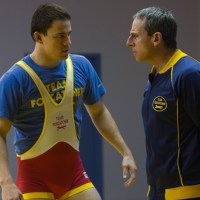
Foxcatcher is a crime drama (of sorts) that has already been dubbed ‘Oscarcatcher!’ as it barely puts a foot wrong. It is tautly directed, deftly written, thoroughly gripping and offers psychological heft as well as sublime performances all round, even from Steve Carell’s prosthetic nose, which deserves a nomination in and of itself. (Schnozzle of the year?) It’s also based on a fascinating true story, although the less you know about this story, particularly how it ends, the better. I would even advise you to stop reading right now, but I need the money, plus the abuse in the comments section below. My life wouldn’t be worth living without that.

Young Vic’s Golem: its status as a cult hit fills me with troubled wonder

The Young Vic produces shows that please many but rarely me. Its big hit of 2014, A Streetcar Named Desire, won virtually every prize going apart from the one it deserved: the year’s deadliest assault on a much-loved classic. The modernised setting offered us a tactless, shirty Blanche DuBois, played by Gillian Anderson as a stupefied boob-job victim searching for a rich jerk to bankrupt. The Young Vic’s new year programme kicks off with Golem, adapted from Gustav Meyrink’s 1914 novel about a rabbi who fashions an automated slave from some discarded bits of candle wax. The show is created by a posse of euro-troubadours, with the confusing name 1927, who

It’s because Corden is such a dick that The Wrong Mans was so blindingly brilliant

God, it must be awful to have been at school with James Corden. As he sat fatly at the back of the class farting and flicking bogies and distracting the teacher with his relentless smartarsery, you’ll have consoled yourself with the happy thought that at least this repellent, maddeningly irritating waster was never going to make anything of his life… Then, years later, you’ll have opened the papers to read rave reviews of his hit sitcom Gavin & Stacey. A fluke, you’ll have thought, till you saw the similarly impressive notices of his West End triumph One Man, Two Guvnors. And any schadenfreude you might have experienced over the recent

Black Knight

A few forgotten objects Dad passed on: copperplate pens with long nail nibs, still stained black, one coal-fire red, laid to rest for twenty years in the shed’s office chest; a Monopoly set yanked by a seaman uncle from his sinking merchant ship U-boat torpedoed at the beginning of the second world war, but minus the board; the pine green balsa houses, the pink prim hotels strewn on the field of our living-room floor, much else that was yours: the board, this uncle and your gambling father, we never saw. And the chess pieces we played and played; of our two wooden box sets, the best hand carved, you varnished

James Walton’s five favourite TV programmes of 2014

1. Fargo, Channel 4 In a particularly strong year for thrillers (Line of Duty, The Missing and Homeland ­among them) this was for my money the best of the lot, with a fantastically sinister central performance from Billy Bob Thornton, and story-telling that remained entirely sure-footed throughout, no matter how weird the events became. 2. Detectorists, BBC4 When it comes to sitcoms, the words ‘gentle’ and ‘idiosyncratic’ are often euphemisms for ‘not funny’ – but not in the case of Mackenzie Crook’s affectionate and affecting story of two metal-detecting friends in small-town Britain. 3. The Roosevelts: an Intimate History, PBS One for fans of old-school documentary-making: seven two-hour episodes covering

2015 in exhibitions – painting still rules

The New Year is a time for reflections as well as resolutions. So here is one of mine. In the art world, media and fashions come and go, but often what truly lasts — even in the 21st century — is painting. Over the past 12 months, there has been a series of triumphs for pigment on canvas, including the glorious Veronese exhibition at the National Gallery, and a demonstration by Anselm Kiefer at the Royal Academy that we still have painters of towering stature among us. What will 2015 hold? Well, as far as painting is concerned — both old master and contemporary — there are some extremely promising

Solitude

Together, they wrote a book. Its title was Solitude, or Every Man his own Hermit. They wrote alternate chapters in a small room with one chair and a desk hardly bigger than A4. Bip wrote on Saturdays, Mondays and Wednesdays, Bop on the other days. On Sundays, neither wrote. On Sundays, they went together to search for the stuff of fiction. They travelled, gambled, dug gardens, dated deep women, whose talk they would agonise over on weekdays at that desk, working out meanings.

Why Serial is the future of radio

The fuss may now be over, the last episode of Serial revealed. But if the global success of WBEZ Chicago’s latest weekly podcast is a portent, then the future of radio lies not in static daily programming but in the fleeting pursuit of the latest internet download. No scheduling necessary. Listeners can just choose what they want to hear (based on what’s trending online), sign up for the podcast, and listen to the episodes any time they want, once they have been released for download. Just imagine how much easier and cheaper this could be for production companies. Non-stop, live, on-air programming would become redundant. The listener would no longer

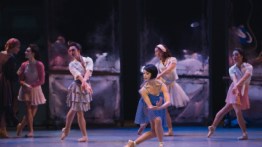
An American in Paris: a zingy new Wheeldon dance-musical that you won’t want to miss

A new year must start with hope and resolution, and if you’re very rich, with influence in the highest places, I’d urge you to resolve to dust off the private jet and get to Paris quick this weekend hoping to find a ticket somehow for the last Châtelet performances of An American in Paris, Christopher Wheeldon’s s’wonderful, s’marvellous new staging of the Gershwin/Minnelli musical film. Or book for New York in March when the show moves to its second home on Broadway. But surely there must be a UK run soon. It’s the first big dance-musical of the Royal Ballet’s favourite son, which is why we should pay attention. The