Culture

Culture

The good, the bad and the ugly in books, exhibitions, cinema, TV, dance, music, podcasts and theatre.

Bohemian bliss

Theatre

Strange sort of classic, Hay Fever. Written when Noël Coward was an unknown actor, it won him no converts among producers. He couldn’t get anyone to stage it. The title is weak and vague. The script lacks incident and action. And the humour is more subtle than audiences were used to. Only after Coward had broken through with his auntie-blasting Oedipal shocker, The Vortex, could he find managers ready to take a second look at his back catalogue. Hay Fever introduces us to a family of maddeningly self-indulgent Bohemians, the Blisses, whose home is swamped by a quartet of weekend guests. A gruesome house party follows. All the wrong people flirt with each other. A few hasty kisses and some overfrantic proposals ensue. Then everyone leaves and the Blisses carry on as before.

Retro rubbish

Theatre

Joy of joys. Huge, fat, inebriating doses of adulation have been squirted all over Josie Rourke’s first show as the châtelaine of the Donmar Warehouse. It’s a breakthrough production in many ways. You have to break through the treacly tides of critical approval. Then you have to break through the Donmar’s overenthusiastic heating system, which sends unwary play-goers to sleep long before their bedtimes. Finally you have to break through the script — The Recruiting Officer by George Farquhar, one of those neglected classics that everyone agrees is marvellous and no one bothers to read. Hardly surprising. We’re in Herefordshire in 1706.

Callas versus Callas

Theatre

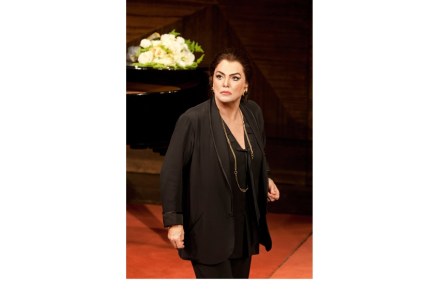
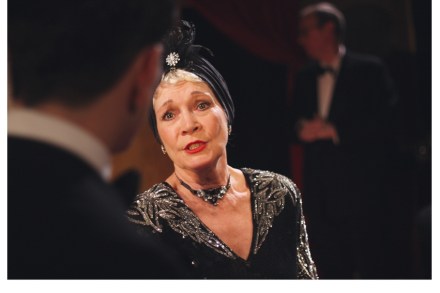
As a human, Maria Callas was a diva. As a musician, she was a divinity. In the early Seventies she came down from Olympus to share her wisdom with us mortals and gave a series of open classes at the Julliard in New York. These seminars inspired Terrence McNally to create a full-scale portrait of opera’s greatest star. The play opens as a biting slice of character comedy as Callas inflicts her brand of ‘coaching’ (i.e., character assassination) on three wannabe soloists. It’s amazing. She’s back. The legend walks the earth again in all her gorgeous and contradictory coloration. She’s exacting, brilliant, charming, shy, arrogant, needy, fragile, evasive, fiery, frigid, miserable, exuberant. She’s magnificently paranoid and heroically lonely.

Songbird in a gilded cage

Theatre

Sister Juana Inés de la Cruz is accounted the most considerable literary figure in 17th-century Latin America. I’m happy to take this on trust, remembering with great pleasure her comedy The House of Desires, a palpable hit when given in 2004 as part of the RSC’s still memorable festival of plays from the Spanish Golden Age. Sister Juana, born in 1651, was a favourite in the viceregal court in Mexico City. She shared the court’s delight in the cloak-and-dagger comedies of Calderón. But as a scholar and poet who expressed ‘abhorrence’ for matrimony, she had no option but to take the veil. Although this gave her the freedom to write, it didn’t allow her to leave the convent to see her play performed.

Unfinished business | 18 February 2012

Theatre

Absent Friends is the least technically adventurous of Alan Ayckbourn’s plays. Yet Jeremy Herrin’s revival (Harold Pinter Theatre, booking until 14 April) seems determined to display all its workings. The fact that the action unfolds in real time is thrust in our face with a big clock on the back wall, and an even bigger one on the curtain (lest we forget during the interval). Of the three couples who meet for a reunion, one is flattened into a caricature, with David Armand overplaying John’s fidgetiness, while Kara Tointon’s Evelyn (above) takes taciturnity to an exhibitionistic extreme. And then each awkward conversational pause is held just enough seconds too long for it to seem that the play is acting the actors, not the other way around.

Marshmallow drama

Theatre

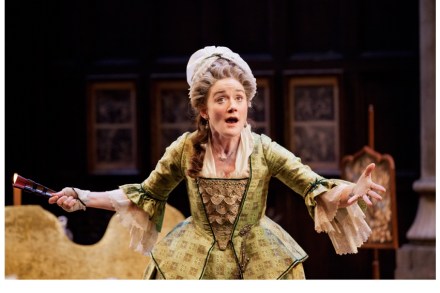
An outbreak of heritage theatre at the National. She Stoops to Conquer, written by Oliver Goldsmith in 1773, is the ultimate mistaken-identity caper. A rich suitor woos his bride-to-be while under the impression that the home of his future in-laws is an upmarket inn. Boobs and blunders multiply until love triumphs and harmony is restored. This is marshmallow drama. Nothing is required of the audience but immobility and the occasional polite chortle. Jamie Lloyd’s handsome production gets virtually everything right. The sets by Mark Thompson are five-star stunnahs. The 18th-century drawing room, with a baronial mantelpiece and a fireplace big enough to roast an ox, will please the most avid property-porn addict. The exterior forest scene is extraordinarily lovely.

Royal regret

Theatre

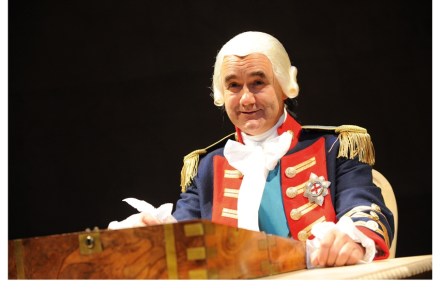
Here he comes. Royalty’s favourite crackpot is back. Alan Bennett’s trusty drama, The Madness of George III, doesn’t really have a plot, just a pathology. The king is fine, he then goes barmy, he stays barmy for a bit, he gets bashed about by sadistic healers, then he recovers. It’s less a play and more a monologue amplified by a cast of glove puppets. Each supporting character is given, at most, two attributes. William Pitt drinks and keeps his counsel. The queen snorts and whinnies like a German weightlifter. Pious equerries proclaim their loyalty. Various doctors wheedle and pontificate. The Prince of Wales, an overdressed slob, waddles in and out sounding greedy. The aristocratic Lady Pembroke trundles around like a wax cleavage in a noose of pearls.

All the world’s a bed

Theatre

While it appears good sense to ask a woman director to grapple with the seemingly misogynistic Taming of the Shrew, there’s a serious snag. For as Gale Edwards remarked apropos her 1995 RSC production, any woman director ‘might as well get a loaded shotgun and put it against her temple’ because half the critics will find your effort insufficiently radical and feminist, while the other half will ‘shoot you down in flames’ because any feminist slant would be untrue to a play that is ‘meant to be about the surrender of love’. This at least lays out the challenge. The good news from Stratford is that the RSC’s latest director, Lucy Bailey, meets it so brilliantly as to be in no danger from any shotgun.

Borat with a beard

Theatre

Last November I suggested that Nicholas Hytner had gone mad. Now he confirms the diagnosis with a new satire by Nicholas Wright, Travelling Light, which is the most embarrassing and mindless blunder I’ve ever seen on a subsidised stage. Hytner’s November crime was to mount a retro sitcom about Stalin’s terror. Now he baits the Russians again with a sketch-show set among the Tsarist peasantry. Wright’s play, which Hytner directs, asks what might have happened if a crew of Jewish bumpkins had made a movie in 1900 using an early hand-cranked camera. We meet Motl Mendl, a jabbering numbskull armed with some film gear. He shoots five minutes of dreary footage in his shtetl and exhibits the results to his neighbours.

Secret History

Theatre

A year late but worth the wait. Last year’s centenary of Terence Rattigan’s birth brought two excellent revivals of lesser-known works, Flare Path and Cause Célèbre, to London. But the playwright’s personal story remains a subject of uncertainty and guesswork. Giles Cole’s little gem of a play, The Art of Concealment, brings the dramatist’s secret history to life. Rattigan complained that to outsiders his success seemed quite effortless. In fact, his whole career was a fluke. After dropping out of Oxford without a degree, the young wannabe was given an ultimatum by his boorish, womanising father: succeed as a playwright or take a job in the Foreign Office. Rattigan failed. Every play he sent out came boomeranging back by return of post.

Pessimism fiesta

Theatre

In early new year, we play-goers hunker down at home. We shiver and fast, we murmur and groan. We sweat off the excesses of the Christmas wassail. No impresario will launch a West End opening with the audience in recess. And into this brief void surges the Finborough Theatre in Earls Court. Fog is a brand-new play with an eccentric parenthood. Actor Toby Wharton and his mother’s lesbian lover, Tash Fairbanks, co-wrote an audition piece for young Toby’s Rada interview. When the distinguished panel of thesps heard the candidate perform his self-penned piece, they were so impressed that they commanded a full-length version. Here it is. The setting is a London housing estate where various no-hopers are scrabbling around trying to escape the scrapheap.

Behind the scenes | 7 January 2012

Theatre

Frank Rich loved it. ‘Noises Off,’ said the great N’Yawk critic, ‘is, was and always will be the funniest play written in my lifetime.’ Michael Frayn conceived the idea of writing a farce about farce while watching one of his early plays from the wings. The frantic hustle-bustle of the actors behind the scenes was far funnier than anything on stage. So Frayn, the West End’s brainbox-in-residence, wrote an intricate play-within-a-play where he showcased every theatrical blunder imaginable. Just describing his amazing creation requires quite an investment of mental energy. So here goes. The inner play, Nothing On, is a traditional farce featuring three couples, each oblivious of the other two, arriving at an unoccupied mansion for a dirty weekend.

Girl Power

Theatre

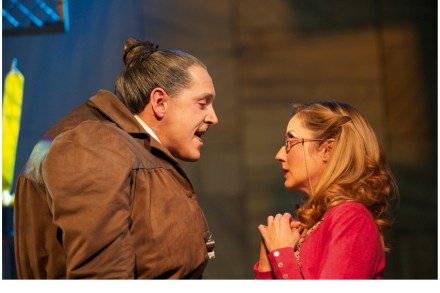
Those seeking to banish the January blues should hotfoot it to the Cambridge Theatre for a gloriously uplifting injection of energy and exuberance courtesy of the RSC’s Matilda the Musical. Roald Dahl’s celebration of the redeeming power of the imagination is magically translated to the stage by writer Dennis Kelly and lyricist Tim Minchin. Watching pint-sized prodigy Matilda, champion of justice and mistress of her own destiny, triumph over a truly toxic trio of odious parents and diabolical headmistress is both enormous fun and unexpectedly moving. The role was expertly played by mini powerhouse Kerry Ingram (who alternates with three other girls).

Glorious farewell

Theatre

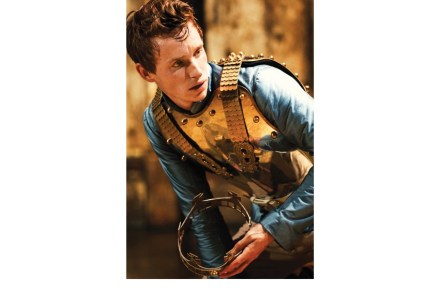
Michael Grandage says farewell to the Donmar with a farewell play. Richard II tells of a glorious but profligate king compelled to hand over his realm to a workmanlike, Steady Eddie successor. Entirely devoid of romantic interest, and with only teeny-weeny roles for women, this is not a show-stopping Shakespeare favourite. It appeals to specialists who note that it marks the Bard’s transition from medieval thriller-writer to dramatic philosopher. Grandage rises to this level and puts on a production that will satisfy the most ardent purist. Richard Kent’s ecclesiastical set is ravishing. The clever split-level arrangement of arches and tracery creates a versatile warren of spaces that are entirely practical but also fully evocative of religious awe.

A laughing matter

Theatre

Barry Cryer, defiantly old-fashioned in a dinner suit and red-velvet waistcoat, sits in a director’s chair and addresses his audience as if they are devoted friends. Most of them are: every joke he tells is met with affectionate laughter of a kind given only to national treasures. Butterfly Brain, which is currently touring, is structured around the alphabet, but each letter is simply a starting point for masterly flurries of unconnected comedy. Some of these, such as ‘My Old Man’s a Dustman’ sung to the tune of ‘Heartbreak Hotel’, come directly from I’m Sorry I Haven’t a Clue, on which Cryer has appeared ‘since before sound’. Others are anecdotes collected across a lifetime of listening to backstage stories.

Indefatigably British

Theatre

My German grandmother never understood the point of pantomime. She’d lived in England for more than half her life, spoke English like a native (actually, a good deal better) and had a sound appreciation of English humour, from Lewis Carroll to The Good Life. However, she was happy to admit that the panto bug had completely passed her by. She knew that pantomime was the one art form that was indefatigably British, and that no foreigner could ever hope to decipher it. Of course she was absolutely right. No other entertainment sums up our innate Euroscepticism quite like panto. And no British Christmas is complete without a chorus of ‘Oh, no you’re not!’ or ‘He’s behind you!’ That’s not to say, though, that we actually enjoy it.

Not strictly panto

Theatre

My friend Robin, a retired financier, is a fine comic actor but he’d be the first to admit he has a problem with lines. He bursts on to the rehearsal stage in a huge grey wig and launches into an anarchic approximation of his part as the Magistrate at Calcutta in Around the World in Eighty Days — my adaption of Jules Verne’s classic, and this year’s Christmas show at Helmsley Arts Centre in Yorkshire. Robin is off-piste from start to finish, but with gusto and style. The sentences he imposes on Phileas Fogg and Passepartout (for the latter’s failure to remove his hat and shoes in the pagoda of Malebar, you may recall) are rarely the sentences, in either sense, that Verne or I wrote.

Those I have loved

Theatre

It is one of Kenneth Tynan’s most-quoted observations. After seeing the first night of Look Back in Anger at the Royal Court Theatre in May 1956, the mustard-keen young critic could not contain his enthusiasm for John Osborne’s play. ‘I could never love anybody,’ he wrote, ‘who did not want to see Look Back in Anger.’ On reflection it says rather more about Tynan’s eagerness to be recognised than about the play’s merits, but the phrase has entered the language. From this distance Look Back in Anger does not look particularly lovable. It was important, certainly, in the sense that there were English plays before, and after, and they were not the same. Tynan was the first man to spot Osborne’s talent, and wanted others to know it.

Dollop of woe

Theatre

Juno and the Paycock is a slice of documentary realism from the earliest years of the Irish Free State. The skint Boyle family are living like a gang of hobbits in the leprotic ruins of a grand Dublin townhouse. The paint blisters and peels. Diseased mortar crumbles into scabby flakes. The plaster-work centrepiece on the ceiling is like a charred meringue the size of a cartwheel. It’s grim. Money’s tight, food is scarce. Everyone’s depressed. There’s no work. The pride of the family, young John Boyle, would probably give his right arm to get a job if it hadn’t been blown off during the civil war. Then a glimmer of hope. Cap’n Jack Boyle inherits a small fortune from a forgotten cousin. Hooray! The happy times are here. The Boyles go bananas.

Knock-off news

Theatre

The Onion is a comic giveaway American newspaper that satirises the awfulness of most American newspapers. ‘Doofus Chilean miner stuck down there again’ is one of their recent headlines, along with ‘Parents honor dead son by keeping up his awful blog’. Now we in Britain can watch the television version, Onion News Network (Sky Arts 1, Saturday). It is the latest spoof of 24-hour news. The first, and probably the best, was Armando Ianucci and Chris Morris’s much-too-brief The Day Today back in 1994. You may remember the hopeless Peter Hanrahanrahanrahan. Morris used to duplicate those cosy chats between reporter and presenter except that in this case he would tear Hanra’s reports to shreds.

Conjuring with morality

Theatre

You can see why Harold Bloom, in his marvellous book Shakespeare: The Invention of the Human, should have called Measure for Measure one of Shakespeare’s most ‘rancid’ plays. But it’s also one that he greatly admired, though it takes a good production like Roxana Silbert’s new one at Stratford to show you just why. Bloom’s rancidity resides in the unpleasantness of the characters, and in the way in which even the seemingly virtuous go about their morality. Wisely eschewing any overly specific setting, Silbert lets the costumes do the work.

Geometry lesson

Theatre

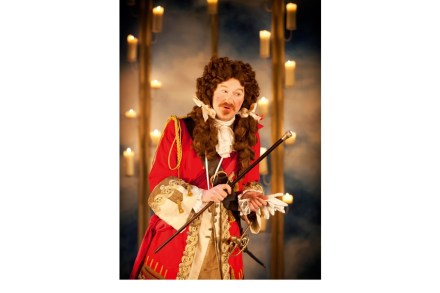
It’s the usual old muddle. You take a Shakespeare classic and you time-travel it to an alien century, usually the present one, which has no connection with its historic setting. The plan, we’re always told, is to generate that supremely irrelevant attribute, ‘relevance’. Director Dominic Cooke has fast-forwarded The Comedy of Errors to modern London and I have to confess it works extremely well. For once, it’s OK to have wrong-era costumes and juggled chronologies and a visual setting that’s out of whack with the literary context because Cooke is simply mimicking Shakespeare. The Bard nicked a Roman favourite, The Menaechmi of Plautus, and dolled it up in the culture and lingo of London’s red-light district, Southwark.

Power games

Theatre

Plays used to end in marriage. Then they anatomised the highs and lows of life as a couple. Now — at least in Neil LaBute’s latest London première — the relationships are all either over or heading that way fast. Reasons to Be Pretty (Almeida, until 14 January) gives a spot-on depiction of those no-man’s-land months following a break-up, when relations between exes are loaded with an electric ambiguity, and contradictory feelings alternate with bewildering rapidity. After an apocalyptic row in the first scene, estranged Greg and Steph keep bumping into each other about town.

Anatomy of an uprising

Theatre

They can’t even be bothered to think of a decent title. Good thing too. The Riots, at the Trike, is a rush job, a gripping and pacey attempt to analyse the disturbances that engulfed Britain last August. Cops, criminals and community leaders have been interviewed by Gillian Slovo, who fashioned their statements into a dramatic investigation. The riots might never have happened if more prudent tactics had been used at the start. The family of Mark Duggan, shot dead by police on 4 August, staged a demonstration outside Tottenham police station two days later. Police refused to speak to them, claiming that the independent investigation into Duggan’s death obliged them to remain tight-lipped. The family didn’t believe this.

Forthright to a fault

Theatre

Her mother was Ellen Terry, the most admired actress of the day. Her brother was Edward Gordon Craig, the celebrated stage designer. Little wonder then that Edith Craig was overshadowed for most of her life by two such towering figures. Yet her theatrical achievements were substantial. She was a talented costume designer and maker, the founder of the radical theatre group the Pioneer Players, and an indefatigable producer and director of countless plays and pageants. She was also an important figure in the suffrage movement, staging many feminist plays, and lived in a famous artistic lesbian ménage-à-trois.

Historical knockabout

Theatre

It’s a palace drama with all the trimmings. Trevor Nunn’s new production, The Lion in Winter, plunges us into the court of Henry II and his spurned wife, Eleanor of Aquitaine, as they struggle to decide which of their three sons should inherit the throne. Eleanor, held prisoner in a deluxe royal fortress, has been granted leave to join the family at Christmas. ‘Thanks for letting me out,’ she says, on their first meeting. ‘It’s only for the holidays,’ jokes Henry. Clearly a king who locks his wife in the broom cupboard won’t pay much heed to her views on the succession. So there’s an emotional and dramatic illogicality here right from the start. And, right from the start, the playwright couldn’t give a stuff. Which helps.

Bishops and ploughboys

Theatre

The delectable drama student who served dinner beforehand in the Rooftop Restaurant told us she’d much enjoyed Written on the Heart but that it was a bit intellectual. As David Edgar’s new play is about the making of the King James Bible, this wasn’t altogether surprising. How do you make a play about the deliberations of some 54 bishops and scholars who fine-tuned William Tyndale’s English translation of c.1525–34 into the KJB of 1611? One place to start is to have the scholars haggle over ‘delectable’ or ‘very pleasant’ as alternatives for Na’ ameta li meod in II Samuel 1: 26, not that they’d glimpsed our waitress in the restaurant.

Sheer madness

Theatre

‘I’m off to see a play about a man who kills his dad,’ I told my five-year-old as I left the house. ‘Because he didn’t give him any ice-cream?’ he said. Mmm, I wondered, it’s possible that Hamlet harboured some childhood grudge against Claudius over a Mr Whippy refusal episode. But such meta-textual speculation is extremely perilous. And when I reached the Young Vic I realised just how grave the danger can be. Ian Rickson’s bumptious show sets the play in a loony bin. Banana yellow walls. Tannoy announcements. Leering staff wearing canvas security uniforms. Claudius, in a three-piece suit, setting chairs in a semi-circle for Hamlet, Gertrude and the court. Visually this is clear enough but narratively it creates disorder.

Blood-stained humour

Theatre

I take no pleasure in saying this but the director of the National Theatre, Nicholas Hytner, appears to have lost his sense of propriety. Or possibly the balance of his mind. He’s asked John Hodge (author of the Trainspotting screenplay) to write a sitcom about the Great Terror. And, rather than bunging it in the nearest skip, Mr Hytner has decided to direct it at the Cottesloe. The blood-stained gag-fest begins in 1938 when a secret policeman orders Russia’s leading satirist, Mikhail Bulgakov, to write a play about Stalin’s early life. Bulgakov meets the Great Leader and Teacher and finds him keen to assume personal control of the scriptwriting. So Bulgakov takes over Stalin’s day job, running Russia. This inspires many hilarities in the horror-slapstick genre.