Culture

Culture

The good, the bad and the ugly in books, exhibitions, cinema, TV, dance, music, podcasts and theatre.

Fantasy auction

Theatre

Have you ever felt the urge to rush backstage, brushing aside the objections of minders, and introduce yourself to a favourite actor? Or perhaps you’ve fantasised about dressing up in the old clothes of a Hollywood star? Don’t blush and walk away! We can reveal exclusively that you have nothing to be ashamed of. On the contrary, the future of British theatre could well be in your hands… Starting out as a producer of big commercial shows like Yes, Prime Minister or South Pacific is a hazardous business. It takes not just an eye for a good idea, and a firm managerial hand, but a hefty capital investment to boot. And if putting money into new arts projects seems foolish to private investors at the best of times, at times like these it can easily appear deranged.

Splendid dereliction

Theatre

Long may it lie in ruins. Wilton’s Music Hall, in the East End of London, is a wondrous slice of Victoriana which exploits its failing grandeur to the max. All visitors are implored to find a couple of quid for the restoration effort. But decay and dilapidation are the best things about it. Every wrinkled façade, every petal of tarnished gilding, is like a tear shed for an age that will never return. It’s wonderful. The administrators have realised this, too. Ruination is their main selling point. The cover of the brochure shows a heart-rending image of the terracotta entrance flaking and declining beautifully. If the renovation campaign were to find enough loot for a proper facelift, the place would go bust overnight. No one wants a squeaky-clean music hall.

Birmingham Royal Ballet

Theatre

Contrary to general belief, there is little glamour in the professional life of a dance critic. What there is, though, is a considerable amount of time spent confronting painfully unsuccessful attempts at making art or, at least, making something worth seeing. What makes one digest those endless stretches of choreographic drabness is the promise — sometimes the mirage — of rare moments of pure bliss. Which is what I experienced last week when, for the first time in years, I struck it lucky and sat through three superb performances in a row. Signs that the Birmingham Royal Ballet’s brief run at Sadler’s Wells was going to be a hit were evident from the moment the curtain went up on its Autumn Glory programme.

Marat/Sade

Theatre

Peter Brook’s 1964 staging of Peter Weiss’s Marat/Sade for the RSC was one of the most enjoyable experiences of my life as a young journalist. The magnificently titled Persecution and Assassination of Marat as performed by the inmates of the Asylum of Charenton under the direction of the Marquis de Sade was a knockout. With Patrick Magee as de Sade, Ian Richardson as the Herald (later as Marat) and Glenda Jackson as Charlotte Corday, the play’s argument between de Sade’s belief only in the warts and all of one’s own self and Marat’s faith in utopian socialist revolution made spellbinding theatre, the dialectics irresistibly packaged with song and dance routines and the brilliance of Peter Brook’s production.

Inadmissable Evidence

Theatre

Fashionable Londoners go to the Donmar Warehouse to engage in shut-eye chic. It’s a weird way to relax. You buy a ticket to John Osborne’s 1964 classic, Inadmissable Evidence, and you sleep through most of its two and a half hours. All around me were seats full of happy dozers. How I envied them. Mind you, I felt bad for the cast because the snoozers were nodding and drooling in full view of the stage. Entertaining the unconscious isn’t what thesps go into showbiz for. Still, they’d read the script so they knew the scale of their enemy. Osborne’s bright idea was to create a self-loathing misanthropist and to watch his world collapse around him.

The Pitmen Painters; Honeypot

Theatre

At last, it’s reached the West End. Lee Hall’s hit play, The Pitmen Painters, tells the heartening tale of some talented Geordie colliers who won national acclaim as artists during the 1930s. Hall, who wrote Billy Elliot, has done extremely well from a pretty limited set of dramatic techniques. He draws each of his coal miners from a couple of opposed attributes: youthful but jobless; single-minded but foolish; erudite but insensitive; unhealthy but idealistic. His dialogue consists of gentle interrogations and nothing else. It’s like a cop show for kids. Every scene involves a misunderstanding — caused by ignorance, stubbornness or some cultural confusion — which has to be resolved by characters cross-examining each other.

False expectations

Theatre

Here’s an idea from the heyday of radio comedy. A soap star about to get the chop improvises an unscripted deathbed recovery during a live broadcast in order to save his career. I think it was Tony Hancock who starred in that sketch. To expand it into a full-length play would be quite a challenge. And in the 1960s Frank Marcus, a showbiz journalist, took on the job. And he struck gold. The Killing of Sister George triumphed in London and on Broadway. Now it’s back with a cast of starry comediennes. Sister George, a district nurse, is the leading character in a popular Radio 4 soap opera. One day, on a whim, the BBC execs decide to bump off the character.

Get that girl

Theatre

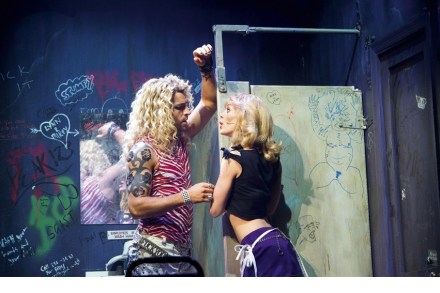
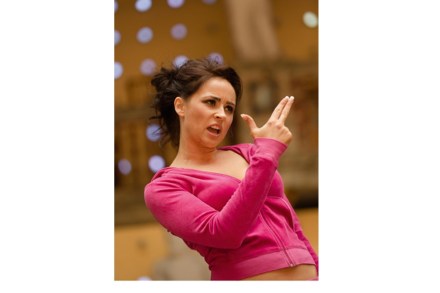
L.A. The Eighties. Hard rock is alive and well. Two smalltown hopefuls, Drew and Sherrie, arrive on Sunset Strip, as a German property developer is threatening to flatten it. Both find work in the same bar, and Drew has just plucked up the courage to tell Sherrie, ‘I think you’re really rad,’ when jaded rock star Stacee Jax (Shayne Ward) comes between them — just because he can. Waitresses in bodice and suspenders pelvic-thrust to rock classics, oblivious. Rock of Ages (Shaftesbury Theatre) has more layers than your average musical. There are some witty Family Guy-style cutaways, and parts of Simon Lipkin’s versatile narration seem on the point of founding a new genre: the mockumusical.

The leprechaun factor

Theatre

Riots at theatres, commonplace before the Great War, have mysteriously gone out of fashion. J.M. Synge’s classic, The Playboy of the Western World, was disrupted many times during its opening week in 1907 by Dubliners who objected to its portrayal of the rural poor in the west of Ireland. Strange that, feigning outrage on behalf of an alien caste. It’s like insider trading with an ethical twist. You borrow someone else’s moral identity and sell it at a value which has been inflated by your act of adoption. Even today this peculiar mechanism keeps the grievance industry going. The protesters in Dublin, many belonging to Sinn Fein, gave up when they realised that the protests were effectively advertising the show.

Unrequited love

Theatre

It’s a record breaker. The Trafalgar Studio is staging a rare revival of Christopher Hampton’s breakthrough play, written when he was 18, which made him in 1966 the youngest writer ever to have his work staged in the West End. This record has now stood for so long that it could probably do with a lie-down. The plot, meticulously fashionable and youth-orientated, focuses on an unrequited affair between Ian and his flatmate Jimmy. Hampton’s conception of personality is underdeveloped. And overdeveloped, too. Most of his characters are handsome, vague, middle-class numbskulls, posh little tadpoles wriggling around a cosy pond. But the central character, Ian, is a brilliant study of brooding, adolescent misogyny.

Losing the plot | 24 September 2011

Theatre

A world première at the Almeida. My City written and directed by Stephen Poliakoff. Is it any good? Well, let’s see. Plot, first. It’s not that Poliakoff can’t write a plot; he can’t even think one up. Instead he sets himself a high-minded riddle and examines its possibilities. Take an archetype, ‘the kid-fearful-of-the-dark’, turn it inside-out and you get ‘the adult-fearful-of-the-light’. That’ll do for starters. Bung in a few extra brushstrokes and you’re off. An insomniac teacher (Tracey Ullman with too much grey hair) bumps into two former pupils and tells them about her odd little secret. Every night she trudges London’s streets encountering weirdos and listening to their offbeat chitchat.

Mammoth enterprises

Theatre

Next month it will be five years since the death of my former boss, Peter Hepple, and I still miss the man who saved my career and very possibly my sanity. Peter was for 20 years, from 1972–92, the editor of the Stage newspaper, often affectionately known as the actors’ Bible. But he contributed to it for more than half a century. His first article appeared in 1950, a review of the long-forgotten male impersonator Ella Shields who was topping the bill at the Queen’s Theatre, Poplar. His last, a piece on stage psychics, appeared posthumously in the week of his death. Peter would review almost anything that moved, from strippers to Strindberg, from high opera at Covent Garden to cheesy tribute bands in working men’s clubs.

Essay in off-beat grief

Theatre

Well done, the Royal Court. It’s got the art of audience abuse down to a tee. The queue for the tiny studio theatre snakes up an airless flight of stairs and bottlenecks into a doorway where each play-goer receives a personalised earbashing from an usherette. ‘Hello, did you hear all that? It’s one hour straight through. No readmission. No recording. No photography. No mobile phones. No sitting on the reserved chairs. No treading on the floor on the way to your seat. Enjoy the show. Hello, did you hear all that...?’ and so on. The floor we mustn’t tread on is strewn with a layer of sacred grit which the director insists will remain untouched by human sole before the show begins.

Divine punishment

Theatre

Once or twice a season Shakespeare gets booted out of the Globe. In his place a modern author is given a chance to shine. The Scottish writer Chris Hannan’s new play, The God of Soho, opens with a frolicsome nod to classicism. We are in heaven where two demotic deities, Mr and Mrs God, engage in caustic marital banter. Mrs God wears a colostomy bag and her affliction triggers many a harrumphing sound of flatulence from an on-stage tuba. This is hilarious, of course, and even more hilarious if you happen to be six years old. Hannan’s carping immortals turn out to be very hard to engage with. Perhaps he assumed that divinities would be fun to write. But they’re devilishly hard, bordering on the impossible. Nothing is at stake in heaven.

Speech impediment

Theatre

Anna Christie, an early Eugene O’Neill play, has brought Jude Law to the tiny Donmar Warehouse. Set in New York among migrant longshoremen, the script takes ages to get to the point. Mat Burke, a randy Oirish loon, wants to marry Anna, a winsome worldly blonde, but faces opposition from her narky, knife-wielding dad, Chris. But never mind the drama, listen to the accents. Jarring phonetics dominate the stage. David Hayman’s Chris spits out gnarled Scandinavian curses. ‘I svair to Gott, Anna, I don’t font hear it.’ Ruth Wilson’s Anna has a hard-to-place American accent which harbours many a stowaway syllable. And Law, playing de Oirishman, speaks a dialect that’s packed with extra fruity flavours.

Power games in Stratford

Theatre

There’s something decidedly odd in being part of a largely grey-haired audience sitting respectfully through a play about the discomforts of a cantankerous old butcher’s ménage consisting of a chauffeur, pimp, demolition worker and, ah yes, a professor of philosophy incomprehensibly returning from his American campus to the bosom of his dysfunctional family. This revival of The Homecoming is also Harold Pinter’s return to the RSC after a long absence and it’s part of the company’s celebration of its 50th birthday. In 1965, the premiere of The Homecoming was a landmark of Peter Hall’s early years as founder-director of the RSC. The play was then as iconoclastic as Waiting for Godot and Look Back in Anger.

Pushy mothers

Theatre

Weird experiments in stone and glass clutter the South Bank opposite the Tower of London. The near-spherical City Hall looks like a speeding squash ball photographed at the moment of impact with a racquet. Around it stretches an acre of sloping flagstones, ideal for freestyle biking and skateboarding. (Sure enough, both activities are vigorously suppressed by patrols of scowling guards.) Nearby, the Scoop is a roofless amphitheatre fashioned from a crater of layered granite. It’s an eerie and compelling sight, as if a divine whirlwind had ripped deep spirals out of a barren moonscape to produce a huge grooved funnel. As I took my place on a freezing seat, I sensed that the artificiality of the space seems to work against the warmth and intimacy it’s supposed to generate.

Culture notes: The Beauty Queen of Leenane

Theatre

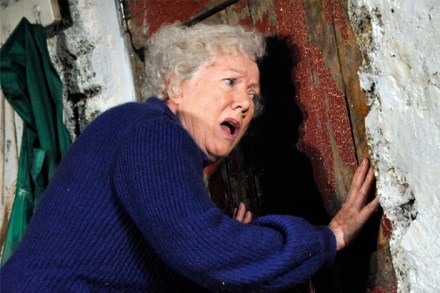
Take one chip pan full of cooking oil, one crippled old lady and one strong-framed Irishwoman in her prime. Let the younger one heat the oil till it’s scalding, and pour it on to the older one’s trapped hand so she screams and screams (make the older one her mother, for good measure...). When she has the information she needs, have the torturer casually toss the remaining oil in her victim’s face and walk away. Now get every soul in the auditorium rooting for the daughter. Not possible? Go to see The Beauty Queen of Leenane (Young Vic, until 3 September) — and think again. In Martin McDonagh’s tightly woven little masterpiece, the hilarious and the spine-chilling are uncomfortably well blended.

Double sensation

Theatre

Loyalty at Hampstead is two sensations in one. First, it’s a sensational drama written by the partner of a key Blair aide, Jonathan Powell, about the build-up to the invasion of Iraq in 2003. Second, it’s a sensational finale to Mr Powell’s career. The author, Sarah Helm, records events unfolding in London and Washington from her unique perspective at the epicentre of world politics, in her bedroom. Overheard phone conversations and a single visit to Downing Street form the entire corpus of her research. To make the thing larky and good fun she splices the tense international negotiations with domestic jinks, flooded pipes, broken burglar alarms, toddlers with bashed bonces, and so on.

Tudor sensibilities

Theatre

Kafka, I was informed at school, was a genius. Now that I’ve grown up a bit I can see that my teachers were being typically overgenerous in their estimate of moderate abilities. Kafka was a cartoonist. He’s the Magritte of literature. His outlandish surrealism is so potent that it has succeeded in occupying the imaginations of people who’ve never encountered the work in person. Much of his mystique rests on his name. If he were called King, not Kafka, and Stephen, not Franz, he’d attract far less pious adulation. But he’s all right, Kafka, if you fancy an hour or two of Tremulous Significance. His short story, In the Penal Colony, has been regularly adapted for the stage and at the Young Vic a Palestinian troupe, ShiberHur, is having a crack at it.

Keeping the show on the road

Theatre

Lay Me Down Softly (Tricycle Theatre, until 6 August) is set in Delaney’s Travelling Roadshow, sometime in the 1960s, in the middle of the Irish countryside — even the characters don’t know where. A string of exciting crimes of passion is being committed at the rifle range, in Paddy Hickey’s Mercedes and by the bumper cars. But we only hear about these. Our view is dominated by the boxing ring, which Theo Delaney (Gary Lydon, above) himself admits is a sideshow. We don’t even see the fights, as these take place in the blackouts between scenes in which Roadshow staff pick up chip papers, swap unsparkling banter and talk over each other about the remote past. Life, it seems, is elsewhere.

Macabre knockabout

Theatre

The Royal Court’s at it again. The Royal Court’s at it again. The boss, Dominic Cooke, likes to place his theatre at the disposal of Sloaney young princesses with an itch to write. It’s a great policy — mad, innovative, unpredictable and at times revelatory. Some of these women are seriously talented. Trouble is, Mr Cooke has now glutted the market with a particular brand of upper-class angst. Every month or two we’re invited to witness yet another dark sexual melodrama featuring posh birds in distress. The latest, by Penelope Skinner, takes us to East Anglia where we meet frustrated Becky, two months pregnant, and her elaborately tedious husband John, an eco-prig and all-round worry guts, who’s gone off sex. ‘I don’t want to kill the baby!

Lampooning the royals

Theatre

After all the splendiferous photographs of the Duke and Duchess of Cambridge, how about something more subversive? That is what Kew Palace delivers in its exhibition of George III caricatures from the collection of Lord Baker. This is royalty filtered not through the flattering lenses of the modern photographer, but through the sharp nibs of 18th-century cartoonists such as James Gillray. The results are vicious. Delightfully so. The fashion among Gillray and his co-conspirators was to lampoon the King for his interest in agriculture. ‘Farmer George’ is shown as more mouldy peasant than monarch, with billowing lips and the shoulder-heavy gait of an ox. But this is nothing compared with the satirical treatment of his wife, Queen Charlotte.

Electrifying Spacey

Theatre

Was it curvature of the spine? Was it a club foot? Was it just an epic dose of facial acne? We don’t know exactly where, how or in what degree Richard III’s deformities manifested themselves. Was it curvature of the spine? Was it a club foot? Was it just an epic dose of facial acne? We don’t know exactly where, how or in what degree Richard III’s deformities manifested themselves. Nor did Shakespeare. So he just went with a hunch. In Sam Mendes’s modern-dress production, Kevin Spacey offers us Richard as a double paralympian. He has a mini-excrescence, like a junior dinosaur egg, obtruding meekly from the back of his crisply laundered white shirt.

Nothing earned or learned

Theatre

Sir Tom and Sir Trevor — Stoppard and Nunn — have teamed up to realise Sir Trevor’s ‘40-year dream’ of bringing Sir Tom’s breakthrough play to the West End. Sir Tom and Sir Trevor — Stoppard and Nunn — have teamed up to realise Sir Trevor’s ‘40-year dream’ of bringing Sir Tom’s breakthrough play to the West End. I couldn’t make the opening night and Sir T (x 2) had restricted press seats to that performance only so I had to make my own arrangements. What a bunch of highwaymen those ticket agencies are! (I’ll get to the play in a second.) You have to pay for the privilege of paying for the privilege. The fee amounted to 20 per cent of the entire outlay.

Schiller’s killer Miller

Theatre

I bumped into a restoration expert last week. ‘What’s new in heritage these days?’ I asked him. ‘Oh, same old, same old,’ he told me. I bumped into a restoration expert last week. ‘What’s new in heritage these days?’ I asked him. ‘Oh, same old, same old,’ he told me. In similar vein, London has been enjoying a spate of classic revivals on stage. At the Donmar a production of Schiller’s Kabale und Liebe (Intrigue and Love) has been barmily retitled Luise Miller. This promotes a minor character to the protagonist’s role. It incorrectly suggests the atmosphere of Romford roundabouts and roaring hen parties.

Academic loser

Theatre

Here’s the thing. This box-set business. Do you get it? I tried. I failed. But everyone else goes stark raving mad about these fictional treasures. Once you’ve sampled a box set (or boxed-set?), you’re hooked. Here’s the thing. This box-set business. Do you get it? I tried. I failed. But everyone else goes stark raving mad about these fictional treasures. Once you’ve sampled a box set (or boxed-set?), you’re hooked. You won’t be seen again until you’ve visited every corner of the dream kingdom encased within its magical walls. Didn’t happen to me, though. I sat through the first six minutes of The Wire in total bafflement.

Crosspatch

Theatre

Rupert Everett doesn’t care for critics. Rupert Everett doesn’t care for critics. ‘You see them coming into the theatre,’ he says, ‘like the homeless who’ve lost their soup-kitchen, shuffling in with their plastic bags, deranged and vacant.’ After watching him play Henry Higgins in Pygmalion the reviewers have dumped poor Rupe in the poop. ‘Sad to witness,’ said one. ‘Lacking in intellectual joie de vivre,’ lamented another. ‘Respectable,’ said a third. (I bet that hurt.) And Everett, a leading practitioner of bitchcraft, lashed out and accused his attackers of not being able to afford their own sandwiches.

No laughing matter | 4 June 2011

Theatre

A miracle at the Barbican. I reached the venue after a mere half an hour blundering around following directions from helpful staff. The main stage, which is so vast it feels like an open-air theatre, is the result of an alluring misconception of scale. You build a venue the size of the cosmos and you get universal art. But art finds its own measure. If the habitat suits the substance all should be well. The latest delight here is an update of Sheridan’s The School for Scandal directed by Deborah Warner with a very classy cast and an absolute ton of money. Warner, a recent arrival at Obvious Island, wants us to know that today’s fashion-obsessed culture is just like the beau monde of the 18th century. Wow. Not much gets past you, eh, Debs? Everything is a mishmash.